Хочете будувати кар’єру в Data Science та AI? Vodafone Big Data Lab відкриває новий набір —>
Ігор Вишневський War
8 June 2026, 11:16
2026-06-08
How to organize the work of a private air defense company in accordance with the norms of current legislation. A step-by-step guide from experts
Recently, the Association of Manufacturers of Unmanned Systems and Related Technologies «ARMADA» shared information that is extremely useful for businesses and owners of critical infrastructure facilities in wartime — how to organize the work of private air defense in accordance with current legislative requirements.
Recently, the Association of Manufacturers of Unmanned Systems and Related Technologies «ARMADA» shared information that is extremely useful for businesses and owners of critical infrastructure facilities in wartime — how to organize the work of private air defense in accordance with current legislative requirements.
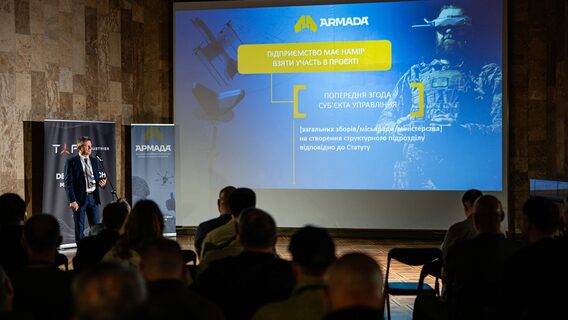
Previously, dev.ua already wrote about air defense as a service, namely, how Ukrainian business creates a private shield against drones under the patronage of the state. During the presentation of the project «Critically Protected» by the association «ARMADA», there was an opportunity to detail the legal and organizational track of this process, especially considering the sensitivity of the topic. After all, private air defense is still a service that somewhat goes beyond the usual, and proper interaction with the state in this aspect plays a key role.
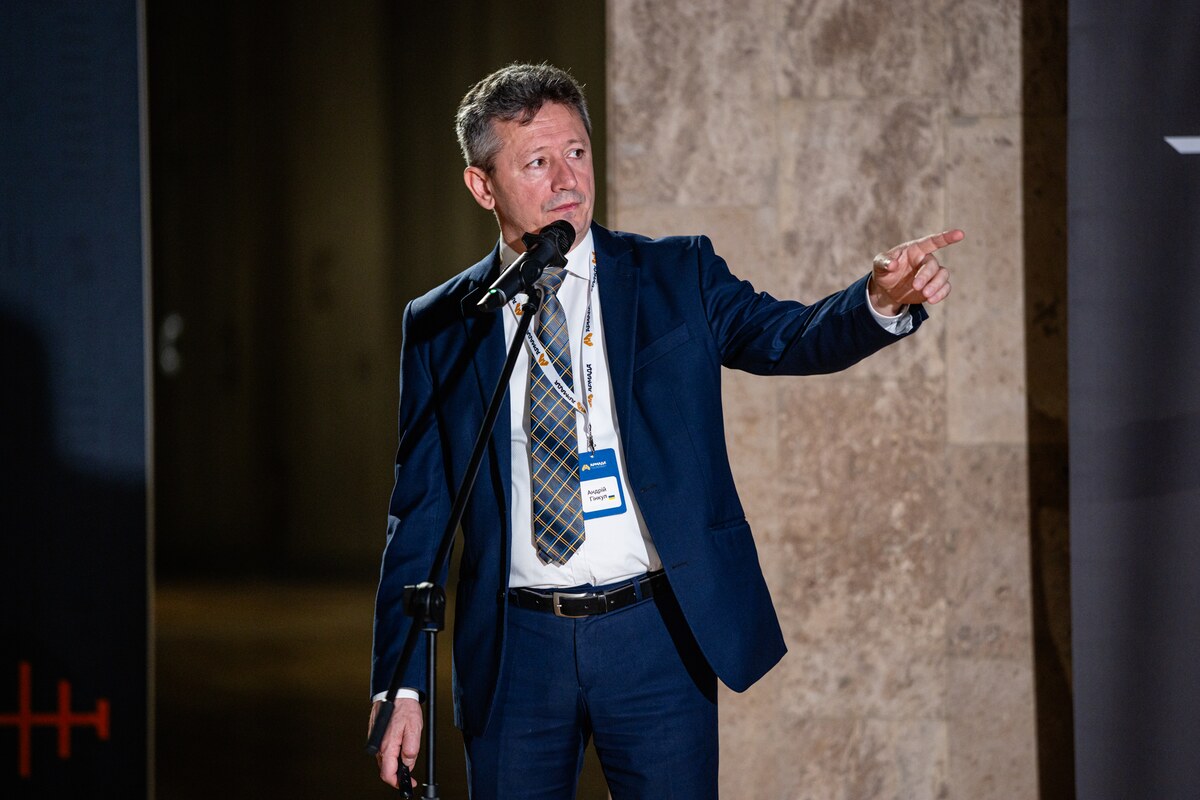
Executive Director of the ARMADA Association Andriy Ginkul emphasizes — whether we like it or not — but the realities in Ukraine are as follows: the protection of any facilities is, first of all, the business of those who own these facilities. «We have the opportunity to physically organize this process at any enterprise, regardless of who it belongs to: whether it is the critical infrastructure of state-owned enterprises, whether it is municipal enterprises, or whether it is private enterprises. Any facility, any warehouse, even any private residence can be critically protected. And, fortunately, now there are all the regulatory grounds for this, as well as technical solutions. The only thing that is needed is to simply act,» Ginkul claims.
What does the resolution say?
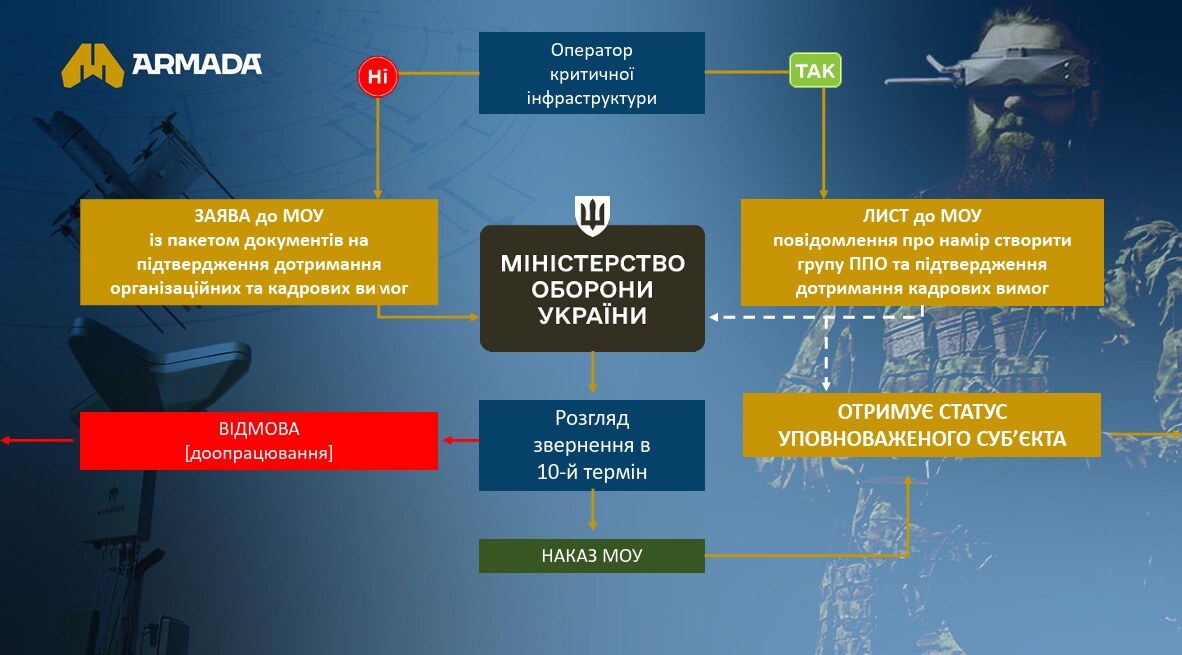
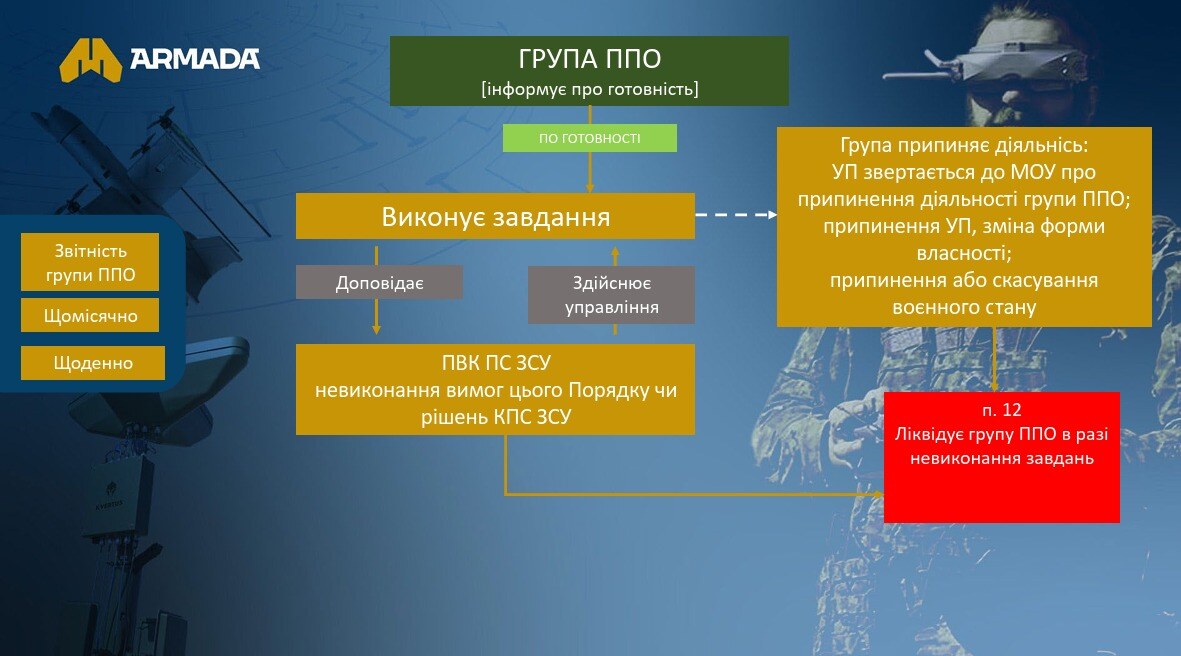
ARMADA has provided three separate instructions on organizing air defense groups for private companies, for utility companies, as well as critical infrastructure facilities and state-owned companies. Depending on the type of facility, or rather, who owns it, the legal mechanism may be slightly different (the instructions themselves are available via QR code).
As Ginkul says, the main regulatory document regulating this issue is Cabinet Resolution No. 1506 of November 19, 2025.
Its title is «On the implementation of a pilot project to strengthen the air defense of the territory of Ukraine by involving enterprises, regardless of their form of ownership, in the formation of air defense groups.» According to the expert, the first thing to start with, regardless of the entity and its form of ownership, is a decision on the need to create such an air defense group. And this decision, of course, must be legally formalized.
«For critical infrastructure facilities, the procedure is more simplified, because they already have many of the elements needed to protect the infrastructure. And for those enterprises that are not critical infrastructure facilities, this does not mean that they cannot protect themselves or cannot organize a protection group. They can do it, but they just have to follow a slightly different procedure,» Andriy Ginkul explained during the presentation of the «Critically Protected» project.
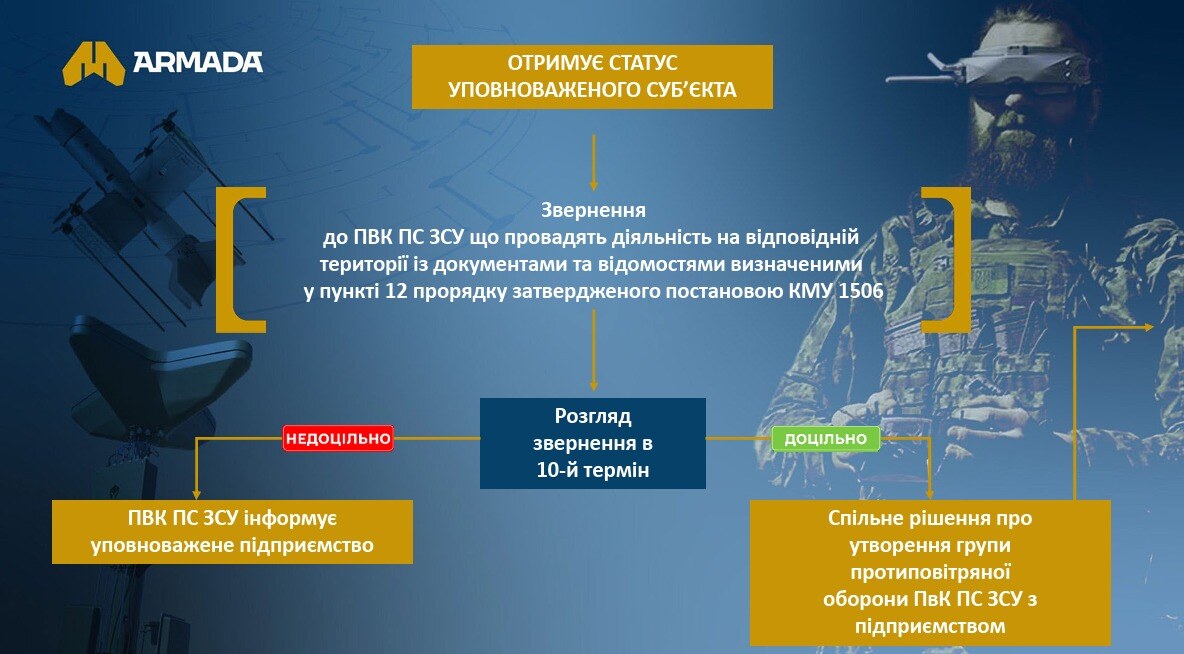
According to the expert, in order to protect an object with an air defense group, it is necessary to obtain the status of an authorized enterprise, which is granted by the Ministry of Defense. The latter must make a decision on this issue within ten days.
«Having received such status, the next step is to apply to the Air Command in the relevant territory in order to fit into the team’s work system. There can be no unregulated, independent principle of work, there must be synchronization,» noted the executive director of the ARMADA association.
Ginkul explained that the company submits a package of documents to the Ministry of Defense, and the ministry determines the feasibility of creating an air defense group for it. But even if at a specific moment this decision is recognized by the Ministry of Defense as inexpedient, the expert claims that nothing prevents such requests from being submitted again, and the decision may change.
«Inexpediency does not mean that it will last forever. Repeated applications are not prohibited. You can apply in a month. The situation may change. By making such an application, you have recorded your desire and capabilities, you have shown yourself to the Air Command as a partner and as a party. So it is very possible that the Air Command will find you even after refusals. But the resolution does not provide for any ban on an infinite number of applications,» Andriy Ginkul commented.
When size does matter: a small warehouse or Kryvorizhstal
According to the executive director of the ARMADA association, the number of air defense groups and corresponding posts even within the same enterprise can vary greatly, because there are huge facilities for which one or even several groups will not be enough to protect.
«It all depends on the size of the facility, because it’s one thing when you have a relatively small rectangular warehouse, and another thing when you are „Kryvorizhstal“. Then you will have a dozen, if not two dozen, security posts,» he says. The expert emphasizes that in this case, it is important to follow the sequence of procedures, and not the number of air defense groups that will protect your enterprise.
As Andriy Ginkul explained, when assessing an object, the Air Command takes into account a huge number of potential parameters — the influence of neighboring assets, the influence of neighboring groups, the territorial aspect, relief, signal transmission, coordination, etc.
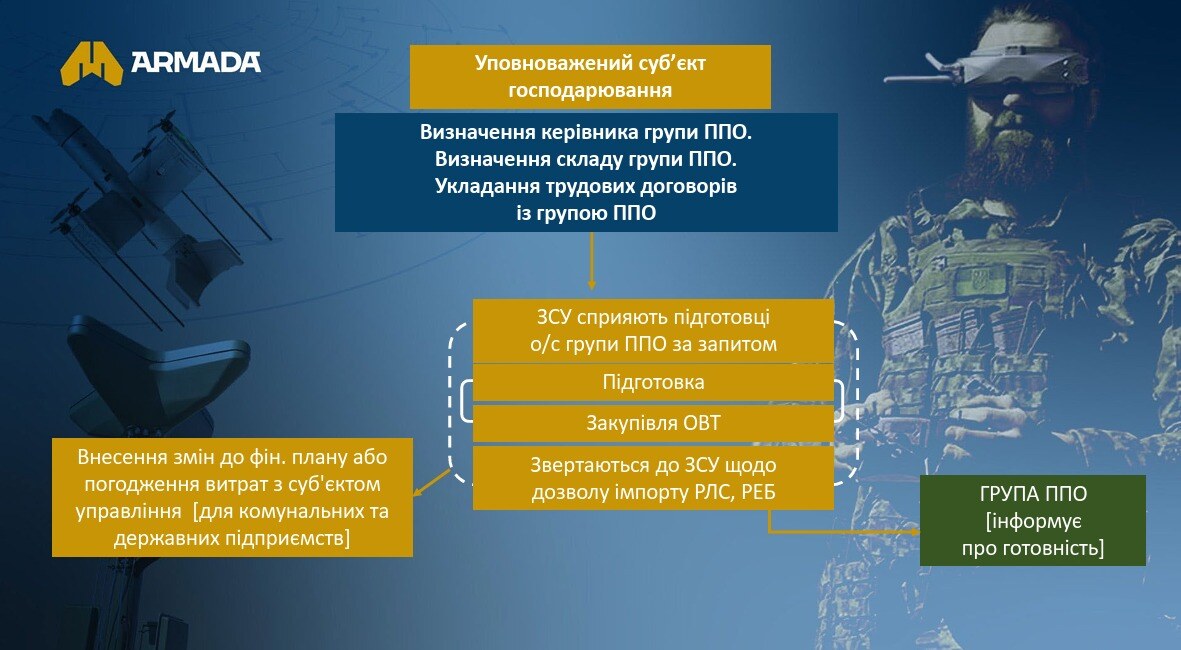
An important aspect that the expert focused on is who exactly will work in the air defense groups of a particular enterprise.
Ginkul advises involving employees of your company, although it is not legally prohibited to involve other people.
«It is not necessary to involve military personnel, but it is obviously very desirable,» he emphasized.
The expert also recalled that employees involved in the work of the enterprise’s private air defense and in the relevant groups are not subject to mobilization.
«The resolution directly indicates this. This means that the problem that existed before with the DFTG groups has been resolved in a regulatory manner. That is, people who officially work at the enterprise and are members of this group, provide protection on a periodic basis according to the appropriate schedule, are not subject to mobilization,» the specialist stated.
Finally, after completing these procedures, routine interaction with the Air Command begins regarding task execution, mutual information, tracking the movement of enemy vehicles, surveillance, etc.
By the way, the ARMADA association is ready to advise businesses on this issue, mainly on a free basis.