To track the process of physical rehabilitation, Ukrainian developers, together with scientists and doctors, created the Vidnova AR application.
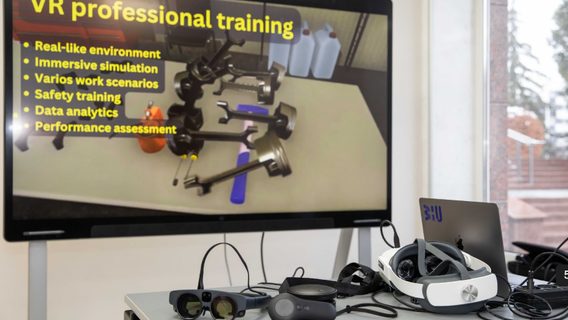
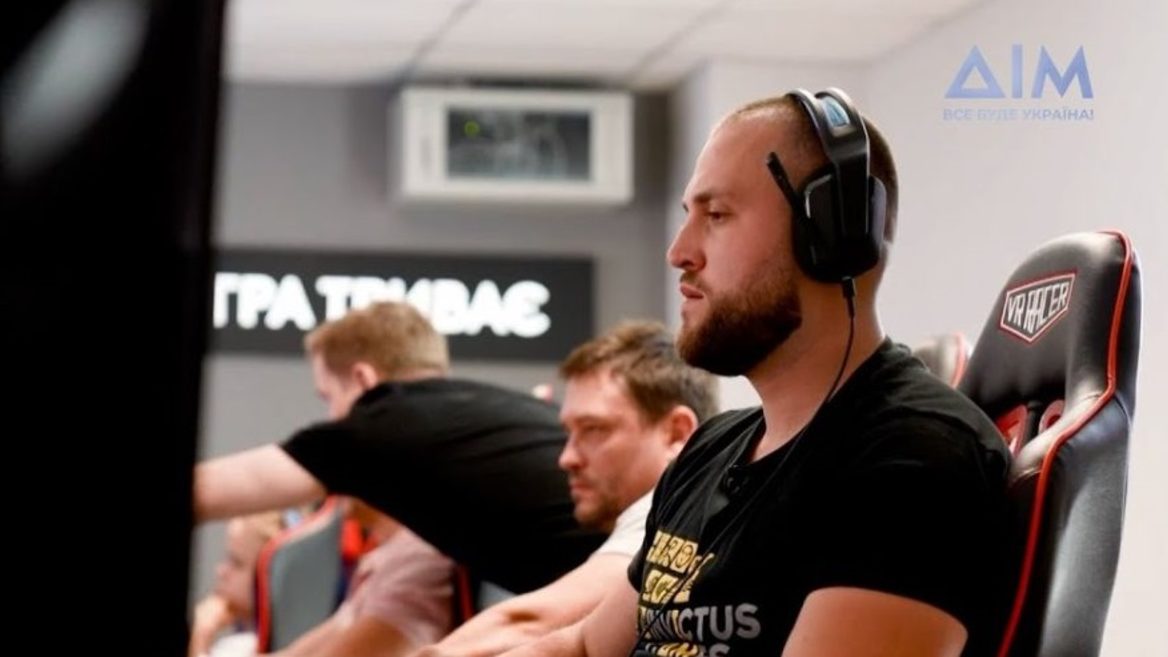
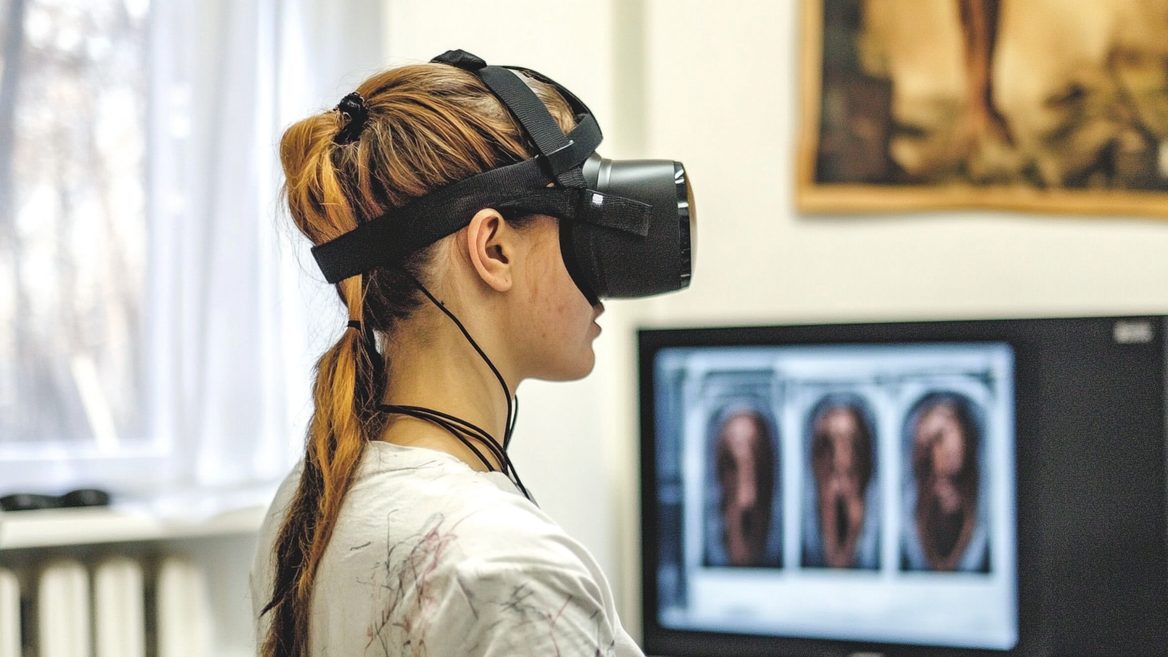
According to ITS, this took place at the «Immersive Multifunctional Hub» at the Western Ukrainian National University in Ternopil.
How diagnostics work
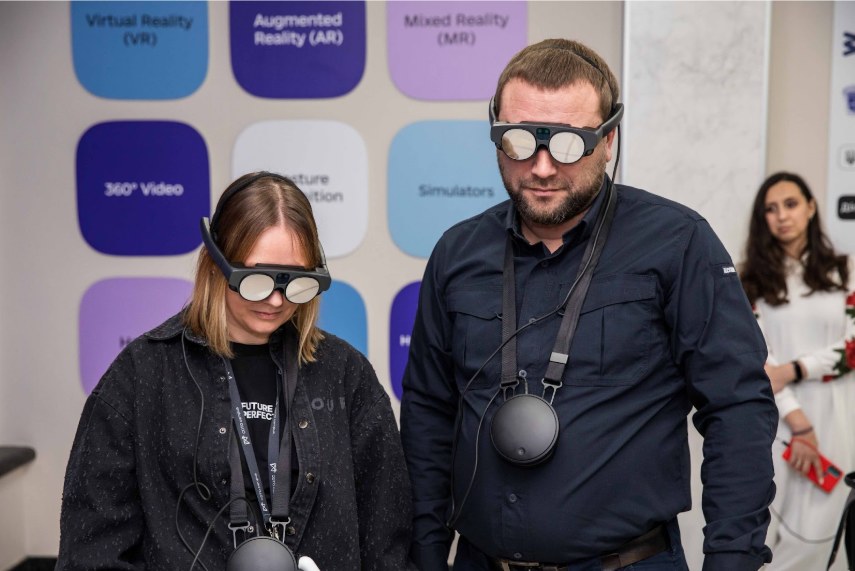
The process takes place through art therapy, namely drawing. For this, the patient must be in a hub with the necessary equipment: augmented reality glasses and a camera. Before starting the diagnosis, the person puts on glasses, where the patient’s application is integrated. The doctor, who can be either in the hub or remotely, launches the therapist’s application. They choose a drawing template, size, angle of inclination and height relative to eye level and start the session.
The patient draws on a virtual canvas that they see before their eyes. The same image is broadcast to the therapist’s monitor. In addition, the doctor and patient see each other in a window at the top of the screen and can communicate.
«If a person has injured hands, it is difficult to measure the progress of their recovery. However, in virtual reality, progress can be measured more accurately: algorithms can estimate the amplitude of movements with an accuracy of up to a degree,» explains Daria Fedko, CEO and founder of WE/AR Studio, which specializes in the development of AR and VR projects.
The camera records the patient’s movements, including joint angle data. The therapist sees these results in real time, and after the session, the data is stored and displayed on a graph that shows progress compared to previous sessions.
The Vidnova application also integrates a database of 12,000 diagnoses, from which the doctor can choose the appropriate one.
What they say about the app
According to the head of the department at Ternopil National Medical University, Darya Popovych, art therapy was not chosen for diagnosis by chance.
«As a physical and rehabilitation medicine physician, I need to see how range of motion changes during rehabilitation and compare that data to the healthy limb. This is an evidence-based method that allows us to see how range of motion changes during a task,» she says.
According to Popovich, the technology allows you to track not only the progress of physical rehabilitation, but also the patient’s psychological changes: for this, Vidnova integrated a test from the Anima platform, which diagnoses the psycho-emotional state using eye tracking.
The algorithm for such screening is based on the concept of attention distortion, that is, it takes into account what a person focuses on.
Deputy Minister of Digital Transformation for European Integration Valeria Ionan at the opening of the hub
«Vidnova is a project that implements modern Medtech solutions and trains clinical specialists to work with VR technologies. And the hub as a whole is an example of how the strategy is implemented at the community level. Thanks to this space, local specialists use innovative technologies to implement practical tasks. We hope that the example of Ternopil will inspire leaders of other regions to open similar projects in their own countries,» emphasizes Volodymyr Orlov, head of the Country Digital Acceleration program in Ukraine.
Vidnova is currently in the final testing phase. After release, the application will be used directly in the rehabilitation process.
The necessary equipment — AR glasses and a camera — can be installed in any physical rehabilitation room in Ukraine, and specifically for the «Immersive Multifunctional Hub» in Ternopil, they were provided by Cisco Ukraine.