Валентин ШнайдерAround IT
27 November 2025, 18:40
2025-11-27
The EU has agreed new rules that will force banks to better protect customers from online fraud
The European Union is strengthening protection for users of financial services online. The European Commission, member states and the European Parliament have agreed on a package of rules that places greater responsibility for online fraud on banks, payment services and large online platforms.
The European Union is strengthening protection for users of financial services online. The European Commission, member states and the European Parliament have agreed on a package of rules that places greater responsibility for online fraud on banks, payment services and large online platforms.
According to Reuters, the new rules will require payment service providers to compensate customers if they fail to provide adequate fraud prevention mechanisms. Banks and financial institutions will also be required to automatically «freeze» suspicious transactions until the circumstances are clarified.
A separate part of the package concerns large online platforms. If a social network or marketplace does not remove fraudulent ads related to financial schemes, they may be forced to pay banks' costs of compensating affected customers. Thus, the EU is trying to force Big Tech to be more active in cleaning up ads for pseudo-investments, phishing sites and other financial scams.
The regulation also streamlines payment fees: users should clearly see how much they are paying and for what, without «hidden» surcharges. A separate block concerns access to cash — member states must guarantee it even in rural areas, where banks are closing branches en masse. For payment services themselves, the rules should simplify access to data necessary to detect suspicious transactions.
Another change directly concerns customer service: banks will be required to provide access to «live» operators and cannot be limited to chatbots. This is a response to complaints from users who are often unable to dispute a suspicious transaction or block a payment through automated support systems.
The new package of rules fits into the EU’s broader strategy to modernize the payment services market (initiatives such as PSD3) and complements the already existing Digital Services Act, which regulates the liability of online platforms for illegal content and advertising. Brussels expects that increased liability of banks and platforms will reduce the scale of online fraud, which has been growing rapidly in recent years along with the digitalization of financial services.
The rules will enter into force after formal adoption by the European Parliament and the Council of the EU and subsequent implementation at the national level. After that, banks, fintech companies and online giants will have a limited time to adapt their security and customer service systems to the new requirements.
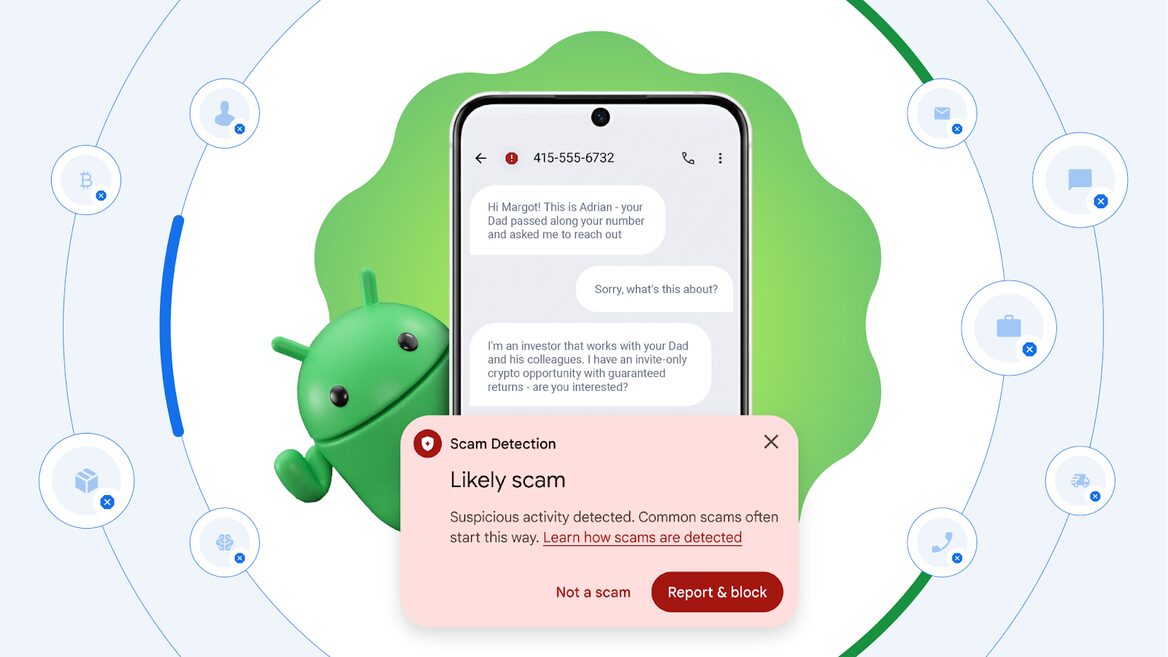
Previously, dev.ua wrote about how Google updated the protection in its services so that users are less likely to encounter phishing links, more easily verify the interlocutor, and more quickly regain access to their profile after a hack or loss of their phone.