Валентин ШнайдерScience Pop
15 December 2025, 11:28
2025-12-15
YouTube blogger builds a bike with powerful magnets replacing the suspension
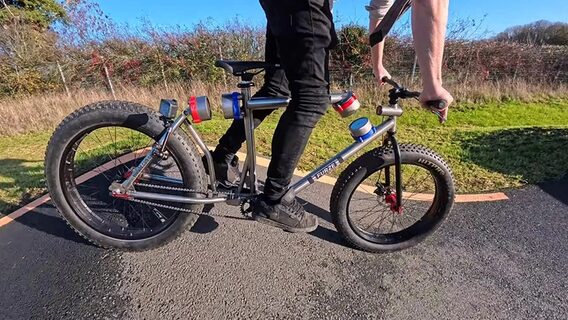
Enthusiastic engineer and YouTube blogger Colin Furze has shown off an experimental bike in which the classic springs and shock absorbers have been replaced with a magnetic system built directly into the frame. The author tested whether such a design is able to function normally while riding.
Enthusiastic engineer and YouTube blogger Colin Furze has shown off an experimental bike in which the classic springs and shock absorbers have been replaced with a magnetic system built directly into the frame. The author tested whether such a design is able to function normally while riding.
According to New Atlas, for his project, Furze used pairs of powerful industrial magnets mounted at the front and back of the assembly under the seat. The magnets work by repulsion and act as a suspension, responding to vertical loads during movement.
Before the final assembly, the blogger tested different magnet configurations separately on a homemade stand to find the strength that was enough to hold the rider’s weight and absorb bumps. In the final version, he used two pairs of magnets with a pulling force of over 1,100 pounds each, equivalent to about 500 kilograms.
The design required a complete redesign of the frame: the bike was fitted with bearing assemblies and guides that prevent the elements from shifting sideways. The large magnets give the bike an unusual appearance, with massive round blocks visible in the seat area, which actually replace the traditional suspension.
During test runs, the system showed that small bumps and vibrations on asphalt and dirt roads are indeed smoothed out, and the ride becomes softer. At the same time, on large undulations of the terrain and sharp changes in height, the magnetic circuit works worse than classic shock absorbers, since the repulsion force changes sharply as the elements approach each other.
In a nearly half-hour video, Ferz explains in detail the limitations of this approach. The main problem is the complexity of the predicted suspension travel: without complex mechanics or electronic control, the magnets cannot provide a smooth response across the entire load range.
The project does not claim to be in serial use, but it demonstrates that even radical alternatives to classic suspension can work in real-world conditions — albeit with significant compromises.
Previously, dev.ua wrote about how eight enthusiastic engineers from the Netherlands built the world’s longest bicycle, measuring 55.16 m. The team was led by 39-year-old Ivan Schalk, who had been planning this since childhood.