Хочете будувати кар’єру в Data Science та AI? Vodafone Big Data Lab відкриває новий набір —>
Ігор Вишневський Science Pop
13 February 2025, 09:00
2025-02-13
“No state is ready to share advanced developments”. What are the rules of “scientific state order” and what do scientists think about the new funding principle?
Last year, the state announced a competition for scientific research for the first time using a new principle, determining what it needed and addressing scientists as executors of a specific government order with clear terms of reference. As a result, this year the Cabinet of Ministers has allocated funding for 22 research projects based on the results of the competition, providing scientists with a total of UAH 186 million and setting a two-year deadline. These funds are to be used to fulfill «scientific state orders» for 10 agencies: the Ministry of Defense, the Ministry of Strategy, the Ministry of Digital Transformation, the Ministry of Internal Affairs, the Ministry of Environment, the Ministry of Infrastructure, the Ministry of Energy, the Ministry of Health, the Ministry of Agrarian Policy, and the State Special Communications Service.
However, apart from a few posts by Deputy Prime Minister Mykhailo Fedorov and a small amount of news on the website of the Ministry of Education and Science as the organizer of the competition, there is little information on this topic. The list of developments within the framework of the state order for scientific and technical products in 2025-2026, approved by Cabinet of Ministers Resolution No. 38-r, contains information for official use. Given that some of the developments relate to topics that are quite sensitive for the state’s defense capability, this is logical.
Last year, the state announced a competition for scientific research for the first time using a new principle, determining what it needed and addressing scientists as executors of a specific government order with clear terms of reference. As a result, this year the Cabinet of Ministers has allocated funding for 22 research projects based on the results of the competition, providing scientists with a total of UAH 186 million and setting a two-year deadline. These funds are to be used to fulfill «scientific state orders» for 10 agencies: the Ministry of Defense, the Ministry of Strategy, the Ministry of Digital Transformation, the Ministry of Internal Affairs, the Ministry of Environment, the Ministry of Infrastructure, the Ministry of Energy, the Ministry of Health, the Ministry of Agrarian Policy, and the State Special Communications Service.
However, apart from a few posts by Deputy Prime Minister Mykhailo Fedorov and a small amount of news on the website of the Ministry of Education and Science as the organizer of the competition, there is little information on this topic. The list of developments within the framework of the state order for scientific and technical products in 2025-2026, approved by Cabinet of Ministers Resolution No. 38-r, contains information for official use. Given that some of the developments relate to topics that are quite sensitive for the state’s defense capability, this is logical.
All we know is that some of the research is dedicated to defense, hydrogen fuel production technologies, overcoming the consequences of hostilities for agricultural land and the environmental disaster at the Kakhovka HPP, new methods of treating and diagnosing cancer, and the development of AI-based rehabilitation medicine and digitalization.
Nevertheless, not all information about this is restricted. Therefore, dev.ua spoke with Deputy Minister of Education and Science Denys Kurbatov, who directly oversees this area of work in the ministry, to understand how the competition was held and who was eligible to apply for it, which scientific developments were the most competitive, and how the funds were distributed.
We also asked several Ukrainian scientists for their opinions on the new principle of state ordering for scientific inventions — is it an effective approach and is it practiced abroad? Read more about this below.
How the competition was held and where the idea came from
According to Denys Kurbatov, the Ministry of Education and Science has been holding such a competition since 2011, but previously the topics were formed by scientists themselves.
«But in reality, scientists do not always clearly understand (and this is not their main task) what applied requests there are in certain areas of the economy, in specific government agencies, and in the state as a whole. That is why last year we started formulating these applied topics from the top — not from scientists, but from the state,» explains the Deputy Minister of the Ministry of Finance.
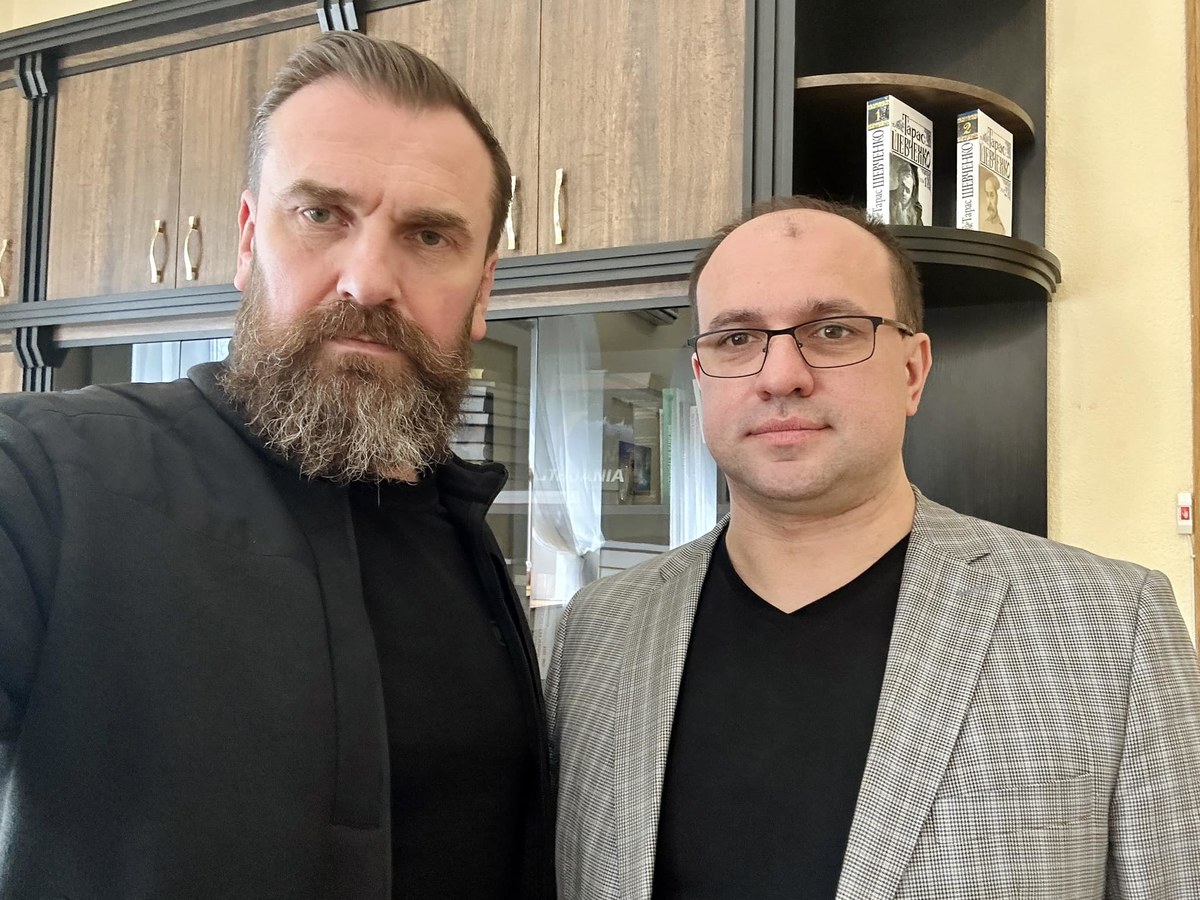
Oksen Lisovyi and Denys Kurbatov. Photo from Facebook by Oksen Lisovyi
Kurbatov notes that he came up with the idea of holding the competition according to the new principle while working at Sumy State University. There, he was in charge of the research department, and one of his main tasks was to find funding for research and development both domestically and abroad, as well as to promote their implementation in the real economy.
«We had quite good successes, annually the university fulfilled hundreds of contracts ordered by businesses and international partners. As an example, in some years the university paid more taxes on research projects than it received funding from the state. That is, Ukrainian science has a huge untapped potential that needs to be tapped,» he says.
Therefore, when Kurbatov and his team came to the ministry, they decided to rebuild the competition from the top down. According to the deputy minister, 25 topics with clear terms of reference were formed for the state order in 2024, which detailed what exactly was to be obtained as an output, in what quantities, with what parameters and characteristics. These terms of reference were put up as lots for the competition, for which teams of researchers competed.
«The teams were formed by legal entities — research institutes and universities. But we did not limit the participation of businesses. That is, an R&D business that has solutions to the problems that were presented could also come to this competition,» Denys Kurbatov elaborated on the topic.
As a result, 107 applications were submitted for 25 topics. They were distributed differently for each topic, but the minimum number of applications was three. «Some had five, and the maximum, I think, was one of the lots with 11 offers,» he stated.
According to Kurbatov, the issue with the maximum number of proposals was submitted by the Ministry of Agriculture and related to soil restoration after hostilities. but many proposals — on average, at least 5-6 per lot — also had defense topics. According to the deputy head of the Ministry of Education and Science, contracts are currently being signed with the winners of the selection and funding for development is beginning.
Denys Kurbatov also explained why last year the competition was announced for 25 positions, but only 22 applications were approved.
«Unfortunately, there were no solutions for three topics in this competition. These were the technology for producing green ammonia, the technology for producing certain steels and the technology for aiming from behind cover. We have not yet found any proposals for such developments in this first competition,» the Deputy Minister specified.
Denys Kurbatov added that the competition was held in three stages. «The first stage was a peer review of the evaluation within the electronic system. After all, we have a special electronic scientific information system URIS, where projects were uploaded electronically, and three experts evaluated each of them within the system,» the MES representative said.
At the next stage, the applications of the contestants were evaluated in separate sections. «We have set up an interagency working group between all ministries, where experts in these developments are represented. And each section could add or subtract a point from the experts, i.e. give an additional assessment, taking into account the practical component and value,» comments Denys Kurbatov.
According to him, the third and final stage was actually pitching, that is, an open presentation of projects by their authors and a story about the benefits of their developments, their compliance with the ToR, prospects for scaling, etc.
The MES representative added that the new approach was supported by Deputy Prime Minister Mykhailo Fedorov, as well as Prime Minister Denys Shmyhal and the government as a whole. Denys Kurbatov believes that such competitions provide a chance to create a technological breakthrough, including in the defense industry.
«Despite the fact that Ukraine is grateful to its partners for the large number of arms transfers, no foreign country will be ready to share with us its advanced developments that are not publicly available, not put into production, precisely because of their criticality,» he explains.
How is the control carried out?
dev.ua also asked the Deputy Minister of Education and Science how the implementation of this state order should be monitored, since scientific inventions are not a field where something can be guaranteed with 100% certainty.
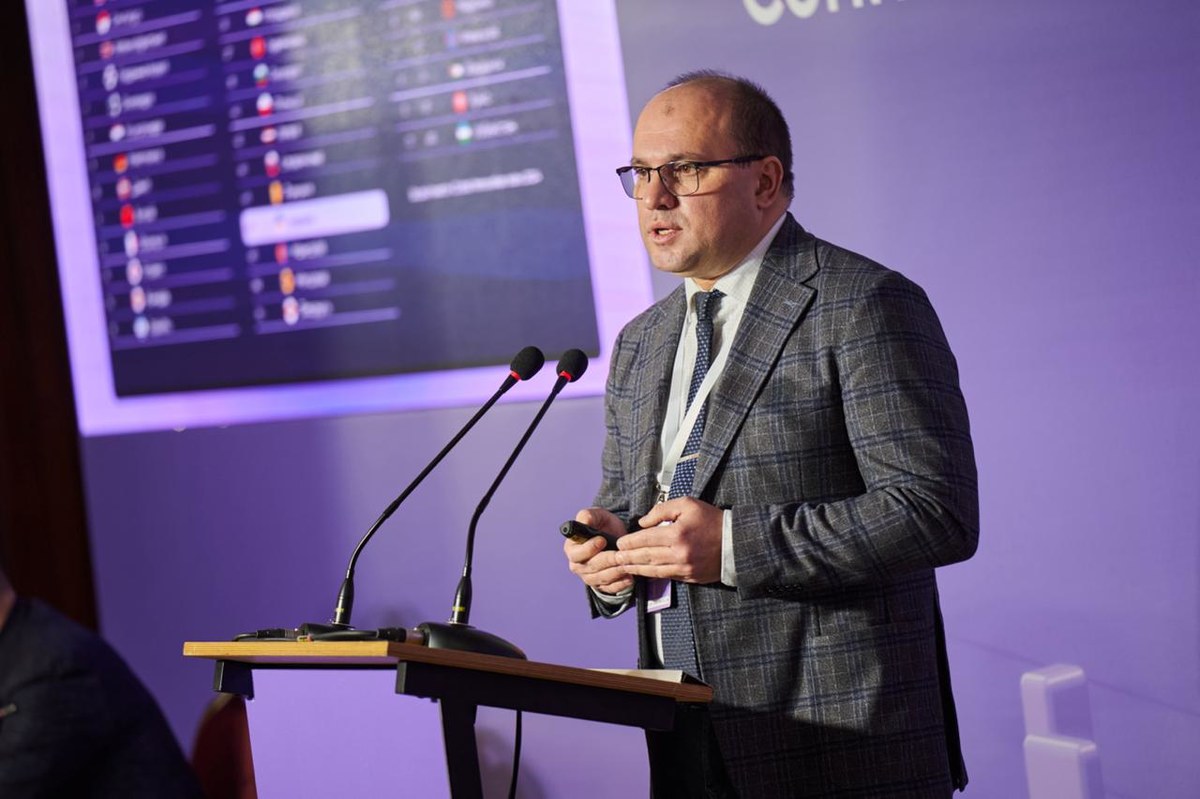
Denys Kurbatov. Photo by the Ministry of Education and Science, author — Vitaliy Golovin
«We definitely don’t execute people,» Denys Kurbatov jokingly says, «but it’s obvious that the system of forming a state order and participating in the competition is designed so that participants show their previous experience and developments in this area to the maximum. Therefore, we tried to minimize this potential negative result already at the time of application.»
In addition, according to a representative of the Ministry of Education and Science, the so-called institute of curators was introduced during the competition. «Representatives of the ministries that authored these topics and terms of reference, as end users, appoint a curator from their ministry to each of the developments. This supervisor signs off on all technical documents and contracts, and his main role is to direct the progress of the development in such a way that its result is as practically significant as possible and can be implemented,» Kurbatov explained.
At the same time, the Deputy Minister states that the success of the project depends on a large number of factors and cannot be 100% guaranteed.
Is this model popular in the West?
Denys Kurbatov makes it clear that even if the new R&D funding scheme proves to be effective in Ukraine, only applied science can be partially funded in this way. But its existence is impossible separately from the fundamental one.
«There are basic research competitions that cannot be formed from above. That is, basic science, or Excellent Science, is developing in the world through academic freedom. Without basic science, applied research is impossible, and without applied research, effective development is impossible. This is the triumvirate that should exist in our field,» explains the Deputy Minister of Education and Science.
Denys Kurbatov cites DARPA, the U.S. Department of Defense’s Defense Advanced Research Projects Agency, as an example of a similar approach to funding research abroad.
Collage from intelligence-artificielle.com
«DARPA also puts up certain lots and different teams come with their ideas. But the peculiarity of DARPA is that they very often fund two or even three competing ideas in parallel,» he clarifies.
Kurbatov believes that it would be advisable for the organizers of the Ukrainian research competition to do the same, but unfortunately, we cannot afford it yet due to lack of funding.
How the funds were distributed among scientists
We know that 22 scientific developments are to be funded for UAH 186 million, but we also decided to ask Denys Kurbatov about the principle of allocating these funds. After all, if you simply divide the numbers mathematically, you get a funding amount of just under UAH 8.5 million per project. However, the deputy minister notes that there is no «equalization» here, so some projects may receive less funding and some more.
«We have project estimates and everyone has their own application. The only thing is that, of course, there is an upper limit. We cannot finance infinitely large amounts. But I want to say that we have significantly increased the cost of one two-year project in this competition — up to UAH 10 million,» Kurbatov said.
According to the deputy minister, this is a significantly higher figure than the ministry’s practice before, because in general, state funding for scientific research was previously limited to amounts of UAH 1-1.5 million, with a maximum of UAH 3 million per project.
Another advantage of this competition for scientists is that the cost of equipment is allowed to be included in the funding. «Certain developments require modern research equipment, materials, and reagents,» the Deputy Head of the Ministry of Education and Science states.
He also noted that the competition and subsequent funding took into account the priority of increasing salaries.
«The salary of a researcher in Ukraine is extremely low, its average level is UAH 12,000, if we take the total with the academies of sciences. It is clear that this is a non-competitive story,» Kurbatov says.
At the same time, he said, the law «On Scientific and Scientific-Technical Activities» stipulates a certain amount of subsistence minimums, which is equivalent to about UAH 35,000. It is on the basis of this amount, which in fact does not work in the law due to the lack of an appropriate budget, that the funds were allocated for project financing.
«That is, it is a significantly increased salary and increased logistical support,» explained Denys Kurbatov.
What about the future?
According to the Deputy Minister of Education and Science, a new competition is expected to be held this year based on a similar principle, meaning that the state order for scientific inventions will continue.
«We are now collecting new challenges, technical problems, topics, and tasks. Perhaps the Ministry of Education and Science will also enter the competition with certain tasks of its own,» Denys Kurbatov said.
The deputy minister assures that interest in the second competition, both in the government and among researchers, is already higher than last year. So, perhaps, there will be more applications for inventions. But specific figures are not yet clear.
«We have a certain budget for this year, which is more or less the same as for this competition. But we are also working with international partners to raise additional funds and finance more projects. The Ministry of Strategic Industries alone submitted more than 30 requests for this competition… Accordingly, we are looking for resources,» Denys Kurbatov explained the financial realities.
He added that different funding models are currently being considered, and it may be a joint financial resource of ministries that have more funds for research.
«The first proposal is to search for international funds, partners and donors. The other is redistribution between ministries so that we can really do things that are important for the state,» the deputy minister specified.
Kurbatov added that one of the key issues is to determine the priority areas of scientific research at the state level, because funding is correlated with this.
«Only last year, together with the Verkhovna Rada, we included security and defense in the priority areas. Just so you understand, the country did not have a corresponding priority area in science until last year… Why is that? Well, this is a rhetorical question… The only thing I can say is that we are changing it,» summarized Denys Kurbatov.
Ministries do not disclose information
dev.ua sent inquiries to several ministries that commissioned scientific developments, but none of them provided a direct answer to our question.
Given the confidential nature of this information, we asked only how many orders for scientific inventions were made by the ministries and for what total amount, without asking for details of these inventions and the executors of the order. However, the Ministry of Digital Transformation replied that it did not have the information requested. The Directorate of Digital Transformation in Defense of the Ministry of Defense referred to the limited access to information, while the Ministry of Agrarian Policy only told us about some bureaucratic details of the state order, sending our request «as appropriate.» The Ministry of Internal Affairs, in turn, noted that the information contained in the request required additional study, so the deadline for its consideration was extended.
What do Ukrainian scholars think about this?
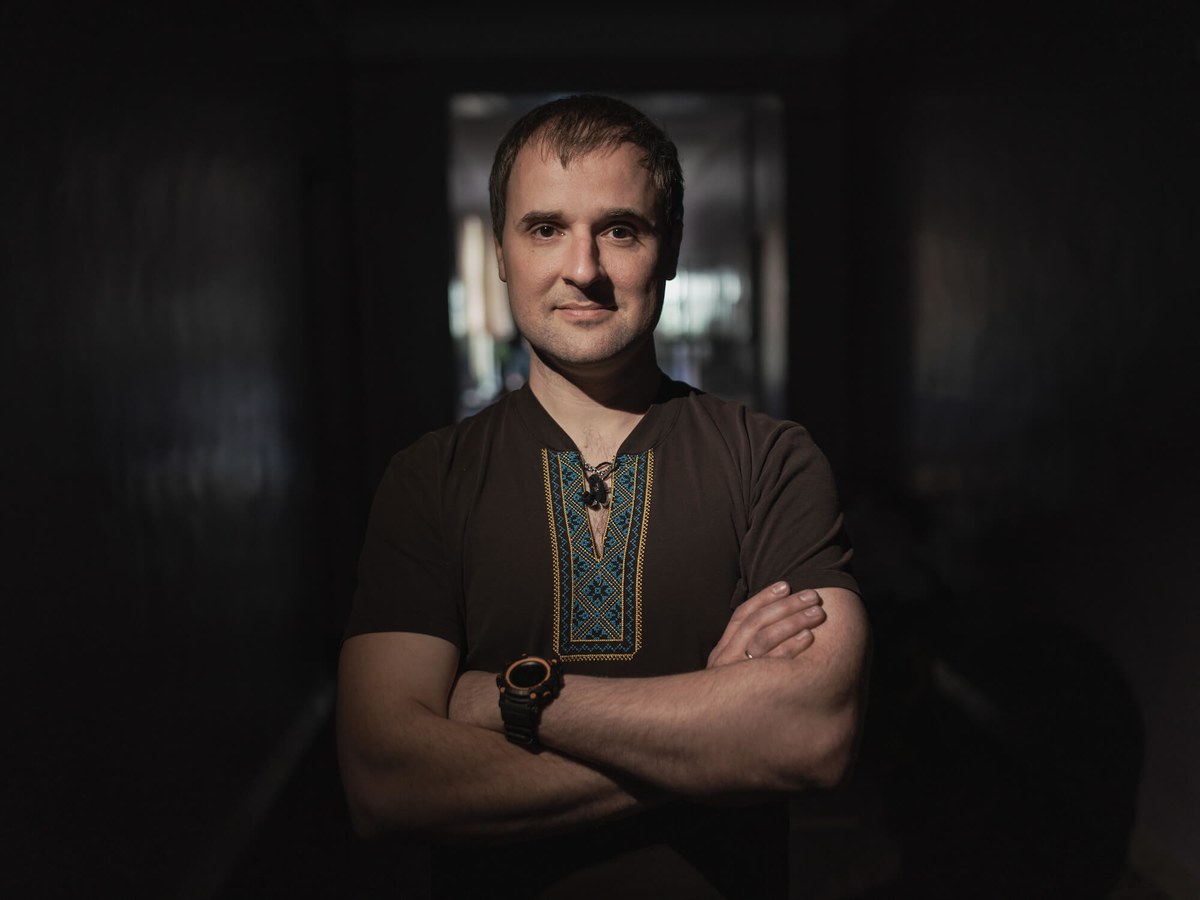
In a comment to dev.ua, Anton Senenko, a senior researcher at the Department of Physical Electronics at the Institute of Physics of the National Academy of Sciences of Ukraine and a member of the Supervisory Board of the State University «Kyiv Aviation Institute», says that applied science is based on fundamental science as firmly as a modern smartphone processor is based on semiconductors discovered many decades ago. «Because the phenomenon of the p-n junction is fundamental knowledge, and the processor is already a practice,» the scientist says.
Anton Senenko Photo: The Ukrainians
The state, in his opinion, should by default fund the scientific sphere in its fundamental research and «knowledge extraction.»
«There is no developed country on the planet where fundamental research is funded with a request for specific implementation. Yes, scientists are always required to „foresee“ the applicability of their discoveries, but these are rather the whims of bureaucrats who, for the sake of self-soothing, need to put at least some theses to justify the budgets for the construction of a conditional „Large Hadron Collider“ or to find out the effect of gravity on some cells of a plant in the root area. Similarly, the state should (if possible) invest in specific areas or topics if the state is interested in solving certain issues, such as national security,» Senenko believes.
He considers the approach to financing specific topics and developments to be normal and correct, especially during the war, but this approach cannot be the main one, because the entire scientific sphere «forges» the personnel and teams for this approach. «If you do not water the entire 'lawn', you cannot be sure that flowers will bloom somewhere,» Senenko analogizes.
As for the amounts of money allocated for the above-mentioned developments, Senenko believes that they are ridiculous compared to Western practices. «Moreover, the amounts are not just ridiculous, but also burdened with a bunch of bureaucratic papers and reports. But this is only if we compare with the West. In the Ukrainian realities of the last three decades, this is very decent money! And this may make sense if we are talking about „bringing to mind“ developments that are in a significant degree of readiness,» the scientist concludes.
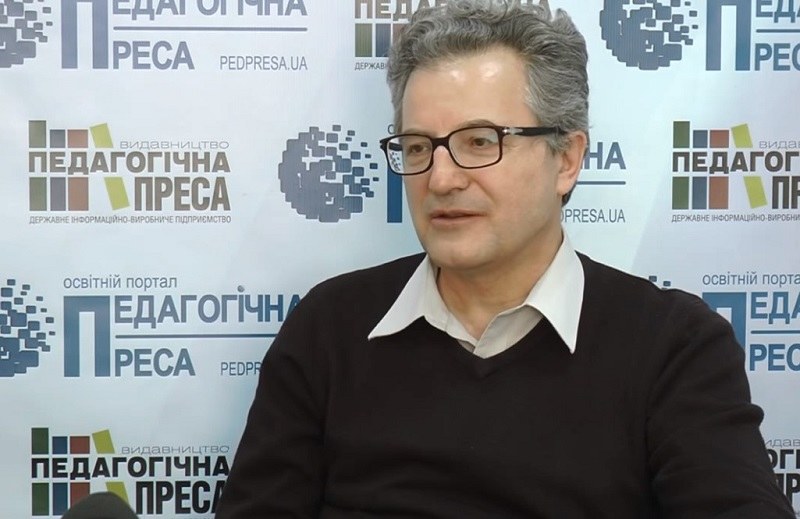
Volodymyr Bakhrushyn Photo: «The Fourth Estate»
In his turn, Volodymyr Bakhrushyn, Chairman of the Academic Council of Zaporizhzhia Polytechnic National University and Doctor of Physical and Mathematical Sciences, in his comment to dev.ua, notes that the approach of funding specific projects rather than scientific fields is not only common, but probably the main one in the EU countries.
«However, at first, they still determine at least the approximate total amount of funds for projects within certain industries. For Ukraine, competitive project funding is not something new. In particular, there is funding from the National Research Foundation. But the procedure for competitive funding needs to be significantly improved, and its volume needs to be significantly increased,» commented the professor of Zaporizhzhia Polytechnic.
According to Bakhrushyn, basic funding is necessary for the maintenance of institutions (utilities, premises, administrative and support staff, etc.), and the question of what the ratio between competitive and basic funding should be is currently the subject of heated debate among scientists. «But many of them are inclined to believe that the share of competitive funding should be higher than it is today,» he says.
As for the funds, the scientist considers the conditional UAH 8.5 million (or about 400,000 euros) for a large-scale two-year project to be a small amount. «But it’s better than nothing. In some cases, there may be additional research funding from other sources,» Bakhrushyn adds.