Наталя ХандусенкоSpaceTech
1 December 2025, 15:19
2025-12-01
Mysterious mushrooms from Chernobyl "eat" radiation: how this mold can protect astronauts in space
Black mold, discovered by a Ukrainian scientist back in 1997, has great space potential, as evidenced by recent experiments conducted on the International Space Station.
Black mold, discovered by a Ukrainian scientist back in 1997, has great space potential, as evidenced by recent experiments conducted on the International Space Station.
Mushrooms that feed on radiation
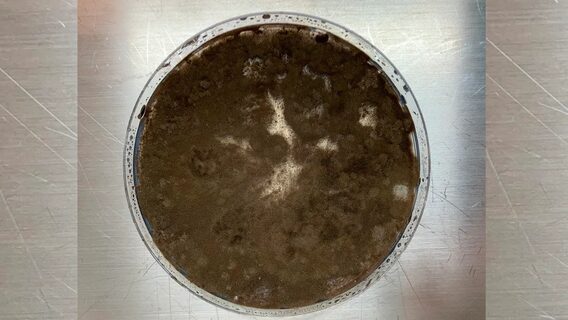
In 1997, Ukrainian scientist Nelly Zhdanova discovered black mold colonizing the highly radioactive ruins of the Chernobyl nuclear power plant. It was growing on walls, ceilings, and even inside the reactor building, writes Interesting Engineering.
The study showed that instead of avoiding toxic environments, the fungi were uniquely attracted to ionizing radiation, which normally damages DNA and cells. It turned out that the radiation became a nutrient for these fungi.
The secret seemed to be melanin. The same pigment that gives us our different skin tones and protects us from UV rays is packed tightly into the cell walls of these Chernobyl fungi. Initial theories suggested that melanin protected the black mold.
However, a 2007 study by other scientists revealed a key fact: melanized fungi showed a 10% faster growth rate when exposed to radioactive cesium. This indicated that they were actively using radiation as a source of metabolic energy. This process was called radiosynthesis.
"The energy of ionizing radiation is about a million times higher than the energy of white light, which is used in photosynthesis," Kateryna Dadachova, a nuclear scientist, told the BBC. "So you need a fairly powerful energy converter, and that's what we think melanin can do - convert ionizing radiation into useful energy levels."
The cosmic potential of mold
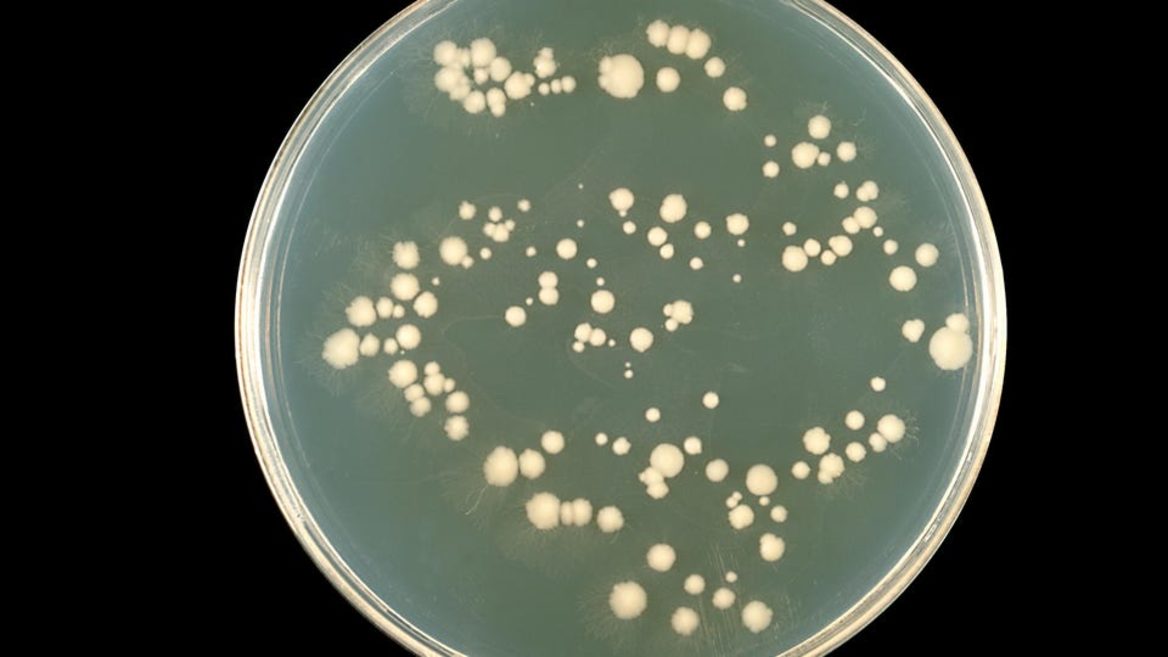
Intrigued, international scientists sent samples of Cladosporium sphaerospermum — the same strain found in Chernobyl — to the International Space Station (ISS).
When exposed to intense cosmic radiation, the fungi actively multiplied, showing a growth rate 1.21 times higher than that of control samples on Earth.
Interestingly, the ISS experiment also demonstrated the potential of mold as a protective barrier. As the fungi grew, they shielded a significant amount of radiation compared to control areas.
From these experiments, experts suggest that the alleged radioprotective benefits of mold may not be due solely to melanin, but perhaps to other biological components, such as water.
Galactic cosmic rays, a storm of high-speed charged protons from exploding stars, are the "biggest hazard" for astronauts venturing beyond Earth's protective atmosphere.
Standard protective solutions, such as heavy metals, are expensive and difficult to launch into space. This Chernobyl-style form offers a simple biological alternative.
NASA astrobiologist Lynn J. Rothschild proposes the concept of “myco-architecture”: creating living modules from mushrooms directly on the Moon or Mars. These “living walls” would not only serve as a structure, but also be self-healing radiation shields grown in situ, which would dramatically reduce the cost of space launches.