Хочете будувати кар’єру в Data Science та AI? Vodafone Big Data Lab відкриває новий набір —>
Наталя ХандусенкоAI Eng
11 March 2026, 10:10
2026-03-11
AI-powered apps struggle to retain users, but are better at monetizing their downloads, says RevenueCat report
RevenueCat, a subscription management tool used by over 75,000 developers, found in its State of Subscription Apps 2026 report that AI integration is no guarantee of long-term user retention. On the contrary, AI-powered apps have a hard time retaining subscribers. According to the report, users cancel annual subscriptions in such apps on average 30% faster than in traditional services.
RevenueCat, a subscription management tool used by over 75,000 developers, found in its State of Subscription Apps 2026 report that AI integration is no guarantee of long-term user retention. On the contrary, AI-powered apps have a hard time retaining subscribers. According to the report, users cancel annual subscriptions in such apps on average 30% faster than in traditional services.
For reference
The report is based on an analysis of subscription app providers that use RevenueCat tools to manage over 1 billion in-app transactions. These transactions generate over $11 billion in revenue for developers each year. As one of the most popular solutions in this niche, RevenueCat data is a representative sample for analyzing market trends.
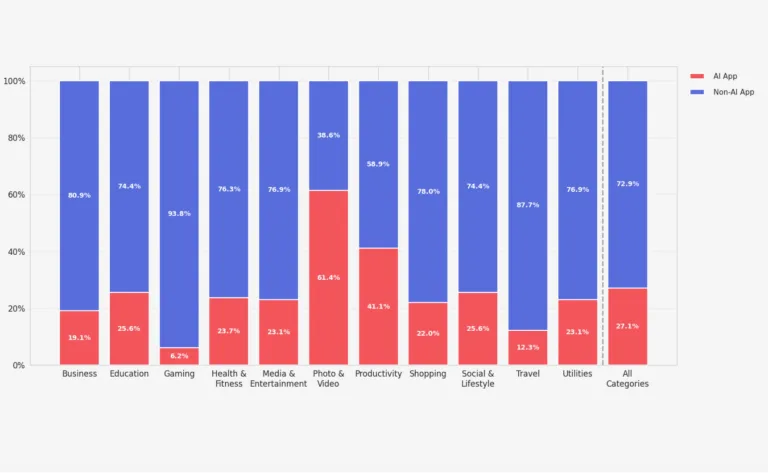
The report notes that most apps using the company’s platform don’t yet have AI features. AI apps account for 27.1% of all categories, compared to 72.9% for traditional services. However, this category is growing rapidly: about one in four apps now uses AI, TechCrunch reports .
Photo and video apps have the highest share (61.4%) of AI-powered apps, while gaming has the lowest share at 6.2%. Travel (12.3%) and business (19.1%) are also segments with low AI usage.
Source: TechCrunch
Additionally, RevenueCat data shows that AI-powered apps show lower customer retention rates on both a monthly and annual level.
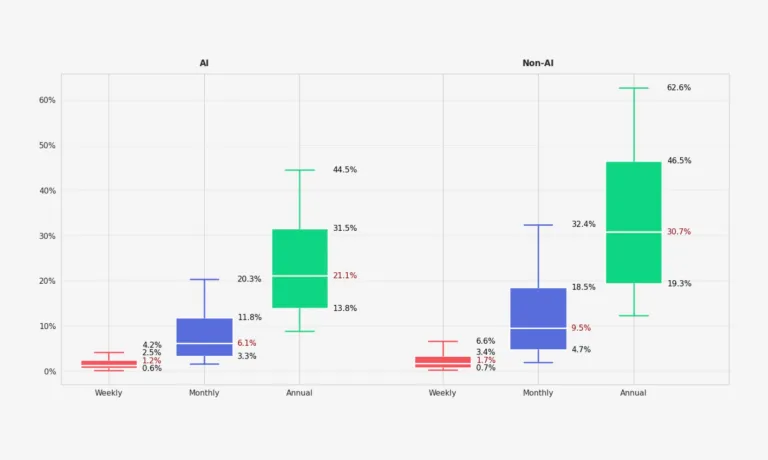
Annual retention — a measure of an app’s ability to retain subscribers after 12 months — was 21.1% for AI apps, compared to a higher 30.7% for traditional services. As for monthly retention, AI apps were 6.1% versus 9.5% for traditional apps — a difference of 3.4 percentage points.
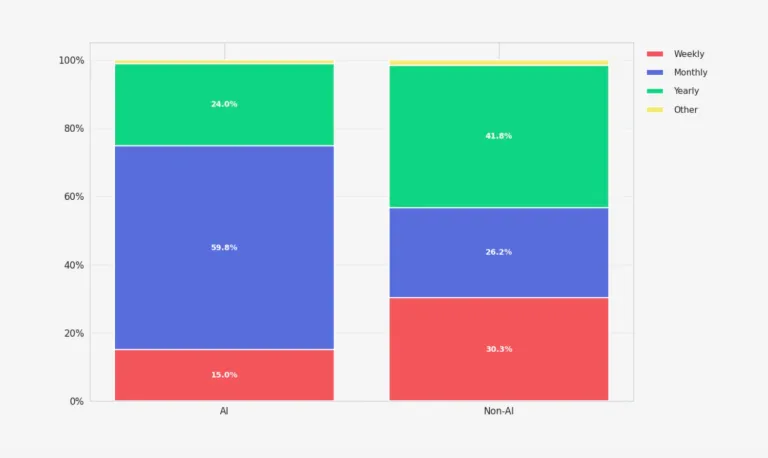
The only area where AI outperformed its competitors in terms of retention was weekly subscriptions, with AI apps having a 2.5% retention rate compared to 1.7% for regular apps. However, it’s worth noting that weekly subscriptions are not the most popular option for AI services.
Source: TechCrunch
These metrics may be affected by the rapidly changing state of AI technologies, which may lead to users switching more quickly between different AI-based applications, trying to find the one with the latest technology.
Source: TechCrunch
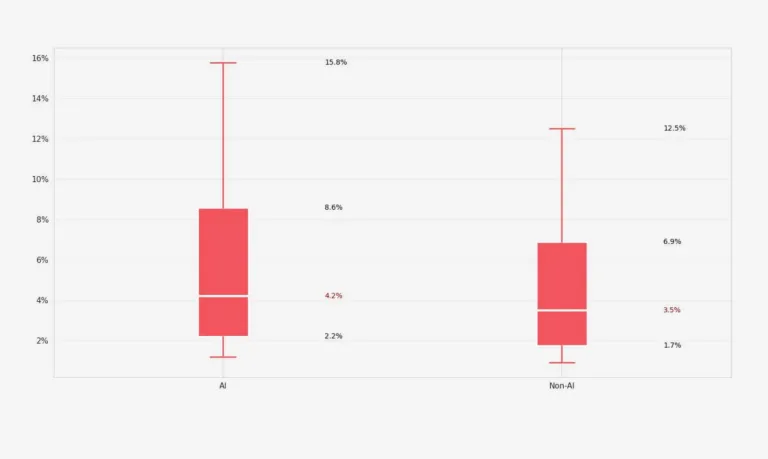
As customers experiment with a growing number of AI-powered apps, they are also more likely to find that some of them don’t meet their needs. The report notes that AI-powered apps have 20% higher refund rates (4.2% vs. 3.5% median) than those without AI.
The upper bound on AI app refund rates is also higher (15.6% vs. 12.5%), which the report notes indicates “greater volatility in actual revenue and more serious issues with user value, user experience, and long-term product quality.”
At the same time, the data indicates that being in the AI application cohort has certain advantages.
RevenueCat found that AI-powered apps convert trial users to paying customers 52% better than traditional apps (8.5% on average vs. 5.6% median). Additionally, AI-powered apps monetize their downloads about 20% more effectively than non-AI apps (2.4% vs. 2.0% median).
AI apps also generate 39% or more higher monthly realized lifetime value (RLTV) — a metric that measures the actual net worth of the average payer over the entire lifetime of use. The median of this metric for AI apps is $18.92 per month, compared to $13.59 for traditional apps. On an annualized basis, AI apps also drive 41% higher RLTV — $30.16 versus $21.37 (median).
The report’s main conclusion: AI can provide powerful and rapid monetization early on, but these applications struggle to maintain their value to customers in the long term.
Як нейромережі бачать вільну та незалежну Україну? Тест dev.ua
Нейронні мережі для генерації зображень бачать світ по-своєму, їхню логіку зрозуміти часом зовсім неможливо. Але таки хочеться. На честь Дня Незалежності України редакція dev.ua вирішила провести невеликий експеримент.
Ми задали чотирьом різним нейронним мережам п’ять однакових запитів: «прапор України», «День Незалежності України», «український Крим», «перемога України» та «українці». Отриманими результатами ми ділимося з вами нижче.
У TikTok тепер можна генерувати фон за допомогою нейромережі. Ми протестували її та ділимося результатами
У TikTok з’явилася нова функція «Розумний фон». З її допомогою як фон для тіктоків можна підставляти згенеровані нейромережею зображення. Редакція dev.ua протестувала цю технологію і ділиться своїми враженнями.