Хочете будувати кар’єру в Data Science та AI? Vodafone Big Data Lab відкриває новий набір —>
Марія БровінськаWeapon
6 January 2026, 09:00
2026-01-06
"We don't coordinate developments with the General Staff - otherwise they would have been going to the front for years." How the Third Army Corps' R&D Works
Strong engineers are needed everywhere today — in IT, defense, startups. But in military R&D, they compete not with salaries, but with meaning and speed of impact.
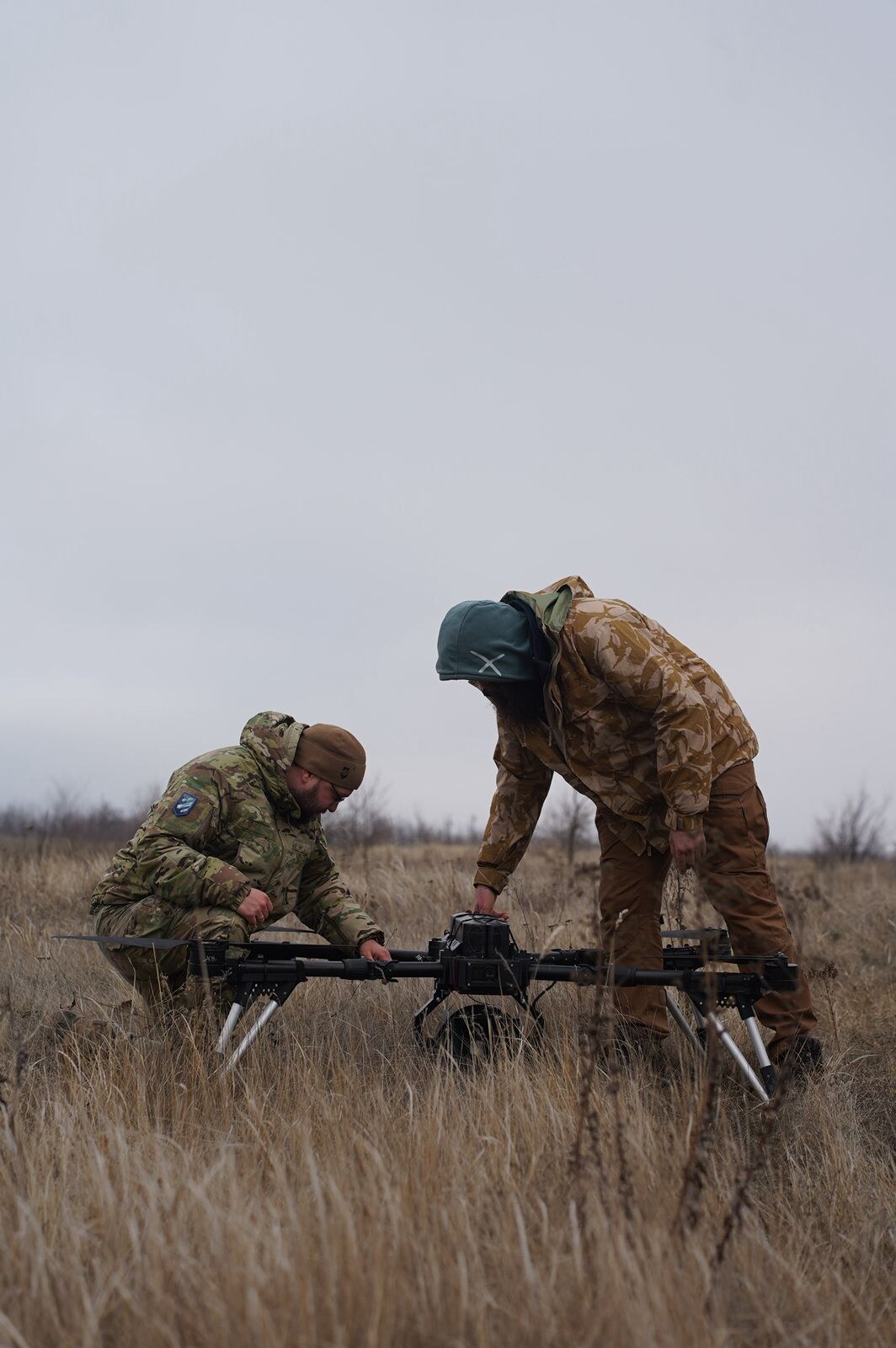
In the Third Army Corps, R&D has grown from field FPV workshops to a separate department that works directly with combat units. Here, they test electronic warfare solutions, create repeater drones and kamikaze aircraft, and implement them not «on paper,» but in positions.
dev.ua asked the R&D manager with the call sign Dolyna about how the team is formed, why bureaucracy slows down the war, and what technologies will define the coming years.
Strong engineers are needed everywhere today — in IT, defense, startups. But in military R&D, they compete not with salaries, but with meaning and speed of impact.
In the Third Army Corps, R&D has grown from field FPV workshops to a separate department that works directly with combat units. Here, they test electronic warfare solutions, create repeater drones and kamikaze aircraft, and implement them not «on paper,» but in positions.
dev.ua asked the R&D manager with the call sign Dolyna about how the team is formed, why bureaucracy slows down the war, and what technologies will define the coming years.
Content
About joining the army and R&D
How did you end up in the army and why in the field of R&D?
I joined the Armed Forces in 2022, during Russia’s full-scale invasion of Ukraine. I started with essentially no combat experience, so I was initially sent to serve in logistics — the then Azov Military District in Kyiv.
Later, we were transferred to the Zaporizhia direction. I myself am from Zaporizhia, I was born in this city, and at some point I realized that I did not want to remain in a rear position.
I asked to be transferred to a combat unit — and that’s how I ended up in an anti-tank battalion, where, in fact, my combat journey began.
Already in the anti-tank battalion, when we worked in the Bakhmut direction, we, together with our comrades from the second mechanized and first assault battalions of the Third Separate Assault Brigade, began to develop the direction of FPV drones. At that time, it was all very specific, but it quickly became clear that technologies needed to be developed systematically. This is how separate workshops began to appear.
The R&D sphere itself appeared in the military not so long ago. I would say this is something new for the army in this format.
Valley
How did the history of R&D in the Third Army Corps begin?
In the Third Army Corps, the history of R&D began with the Third Assault Brigade. It was then that the first FPV groups were formed in assault, mechanized, and anti-tank battalions.
Each unit had its own workshops: they prepared drones there, repaired them, and implemented new solutions — for example, new frequencies for both video and control. Even today, each battalion has workshops that prepare drones directly for combat use.
At the same time, we began to encounter active opposition from enemy electronic warfare (EW) equipment. This created the need to find solutions to circumvent and overcome this opposition so that the effectiveness of our drones would not decrease. This is where, in fact, the birth of R&D in the brigade began, which eventually grew to the corps level.
About the team
What are you doing now?
Today, I head the R&D unit in the 21st Separate Unmanned Systems Regiment «Kraken 1654». Currently, our R&D unit has about 35 people.
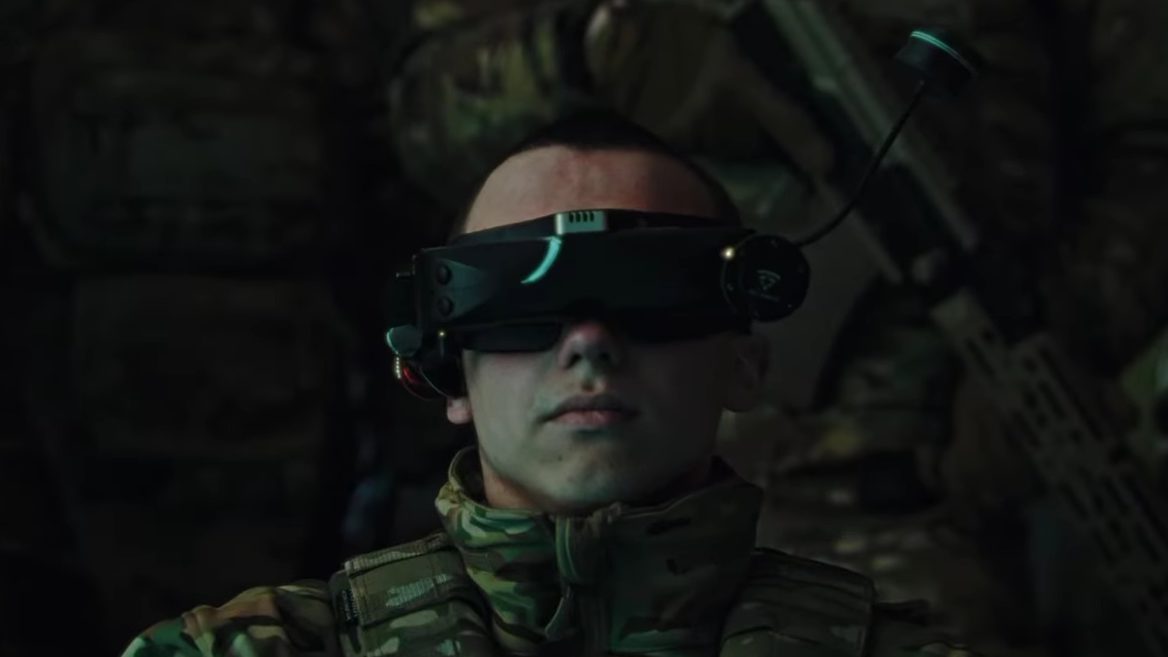
This is a team of various specialists: engineers, IT specialists, scientists, as well as military personnel with combat experience. Some of them were previously combat pilots — both FPV and kamikaze drones or reconnaissance drones like the Mavic.
Who are these people by profession and how is your work structured?
We have all the tasks divided into streams. There is an engineering direction — people there work strictly according to their profile. There are IT people who deal with software, improving communication, interfaces, so that the tool is user-friendly.
Radio engineering scientists also work there. And separately, military personnel with combat experience who directly test our solutions in combat conditions and implement them in combat crews.
The most difficult moment in this story is the introduction of something new into combat units. That is why we have a separate direction — testing and implementation, which deals with this systematically.
How is the team formed? Can a civilian specialist join you?
The team is formed based on a specific request from a combat unit. For example, a unit faces a specific problem — and we form a specialized team for this task so that everyone does what they are truly strong at.
The main goal is to solve the task as quickly as possible.
Civilian specialists can come to us. Our doors are open, especially if the person is qualified. If some skills are lacking, we are ready to teach, transfer our knowledge, and train the person to our specifics.
About recruiting
What is the recruitment procedure for civilians?
The procedure is standard. A person submits an application, undergoes basic military training, and then ends up in our unit.
Before that, we always conduct an interview: first a phone interview, then a video call. In some cases, we give small test tasks to see the level of qualification and understanding.
Is it possible to transfer specialists from other departments to you?
As for transfers between units, they are only possible with the commander’s approval. This is a complicated process, as strong specialists are reluctant to be let go.
At the same time, the Third Assault Brigade and the Third Army Corps are understanding about this. Thanks to this, I was able to assemble a strong team — this is our foundation, which was formed in the «troika» and continues to work in the 21st Regiment as an R&D unit.
Can R&D guarantee service in your unit?
There are no official R&D units in the full-time sense in the army yet. We work, in essence, on the trust of the command. We are given full-time positions and the opportunity to work on solutions — both means of destruction and support systems.
We do not issue an official «relationship». But if a person is interviewed and comes to us, we accompany them. There are real cases when people immediately came to us after the BZVP and now serve in our team.
What about people with disabilities?
Yes, we are looking at them. This is a good opportunity for wounded or amputated soldiers to remain useful. Through technology, they can continue to contribute and destroy the enemy, even when they are no longer on the front lines.
What technical roles are currently in the highest demand in your R&D — in civilian IT terms? What kind of specialists are you looking for?
Initially, we expected that the most problematic vacancies would be coders, but it turned out that there were actually more of them than anything else, with over 95% of job applications coming from programmers.
The hardest thing to find are 3D modelers, mechanical engineers, and truly talented project managers, which is what we are currently looking for.
What is the most difficult thing for civilian IT workers after moving to military R&D?
The hardest thing for any civilian is to get into the pace of work that is the norm in the service. 100,500 projects, constant change of priorities, constant change of technologies and the enemy is constantly catching up with us, so we need to speed up. It is especially difficult for IT workers to adapt to the lack of a schedule, there is a task — we work until we solve the problem, not from 9 to 6. Also, a person often falls into a stupor when the elements of the task go beyond their competence, people are used to the fact that there are specialized specialists on certain issues, they did their part of the work — they gave it away, conditionally for integration, but here it often happens that there is no one to give it away to, so you carry out the integration yourself.
Is there a risk that talented engineers don’t go into military R&D because it’s easier to work in an IT company?
Of course, this is true because our current military base salary is 20,000-25,000 UAH, depending on rank. Of course, this is very little.
Therefore, some specialist, a real specialist, will choose to stay in the city, go to some civilian drone production facility, get a booking there, and work and receive much more money.
Or he will go to some IT company, which will provide him with armor and he will be able to work in this field and receive a high salary. This is a really big problem, but we cannot equate the salary of an infantryman with the salary of an engineer, because an infantryman risks his life. He is in a trench, he is not in a workshop, he is not in an apartment, not somewhere else. He is constantly under fire, risking his life, so before raising salaries for engineers in R&D teams, in order to attract really great specialists, we need to completely review the entire financial support of the military of the Armed Forces of Ukraine. If we raise the salary of an infantryman, an assault rifle, respectively, we will be able to raise the salary level of engineers. But you can never equalize the salaries of these two professions, so to speak, the military.
About developments in the R&D of the Third Army Corps
What areas of development are your priorities right now?
The front dictates our priorities. Where there is the greatest need, we join in.
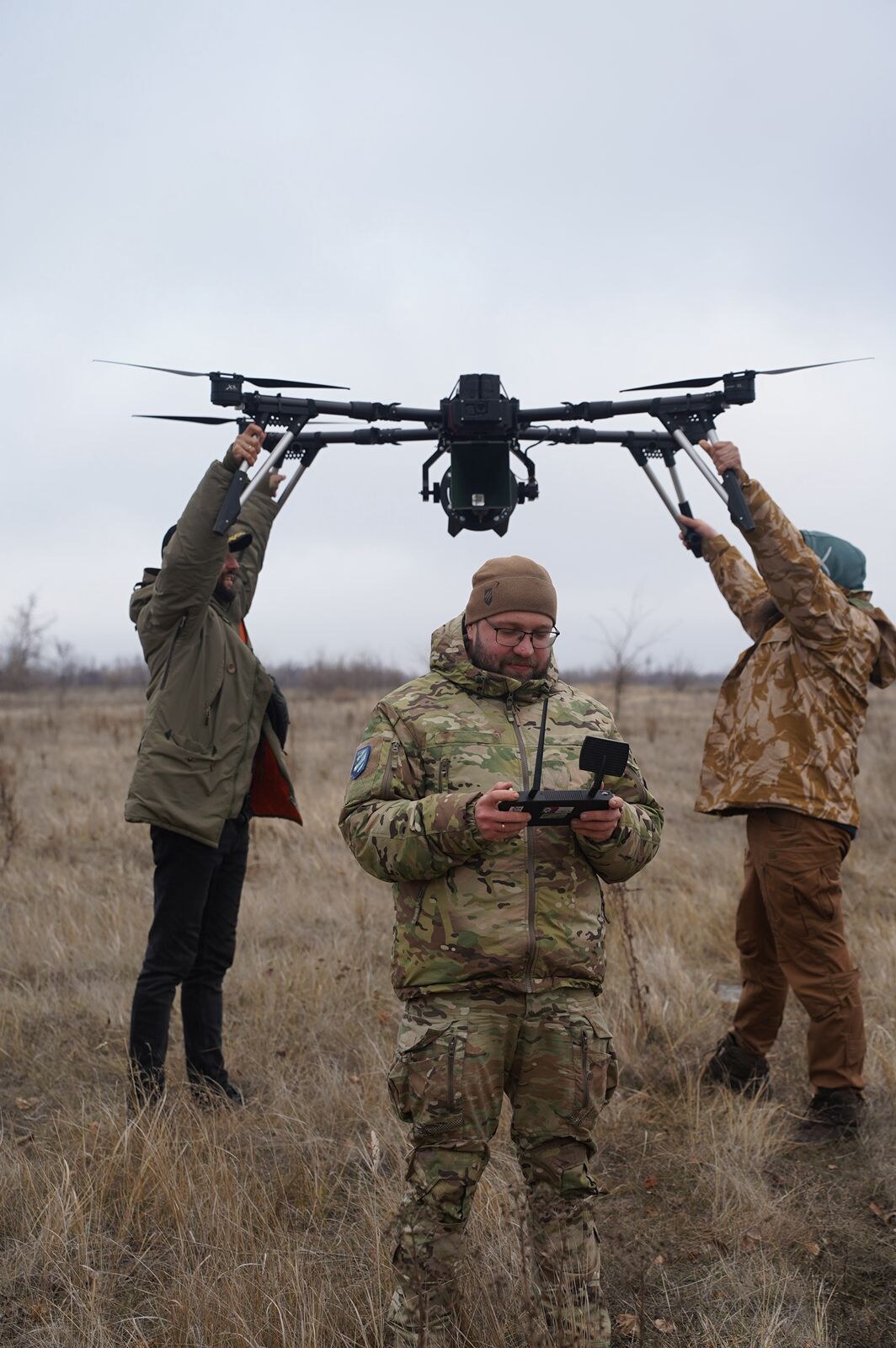
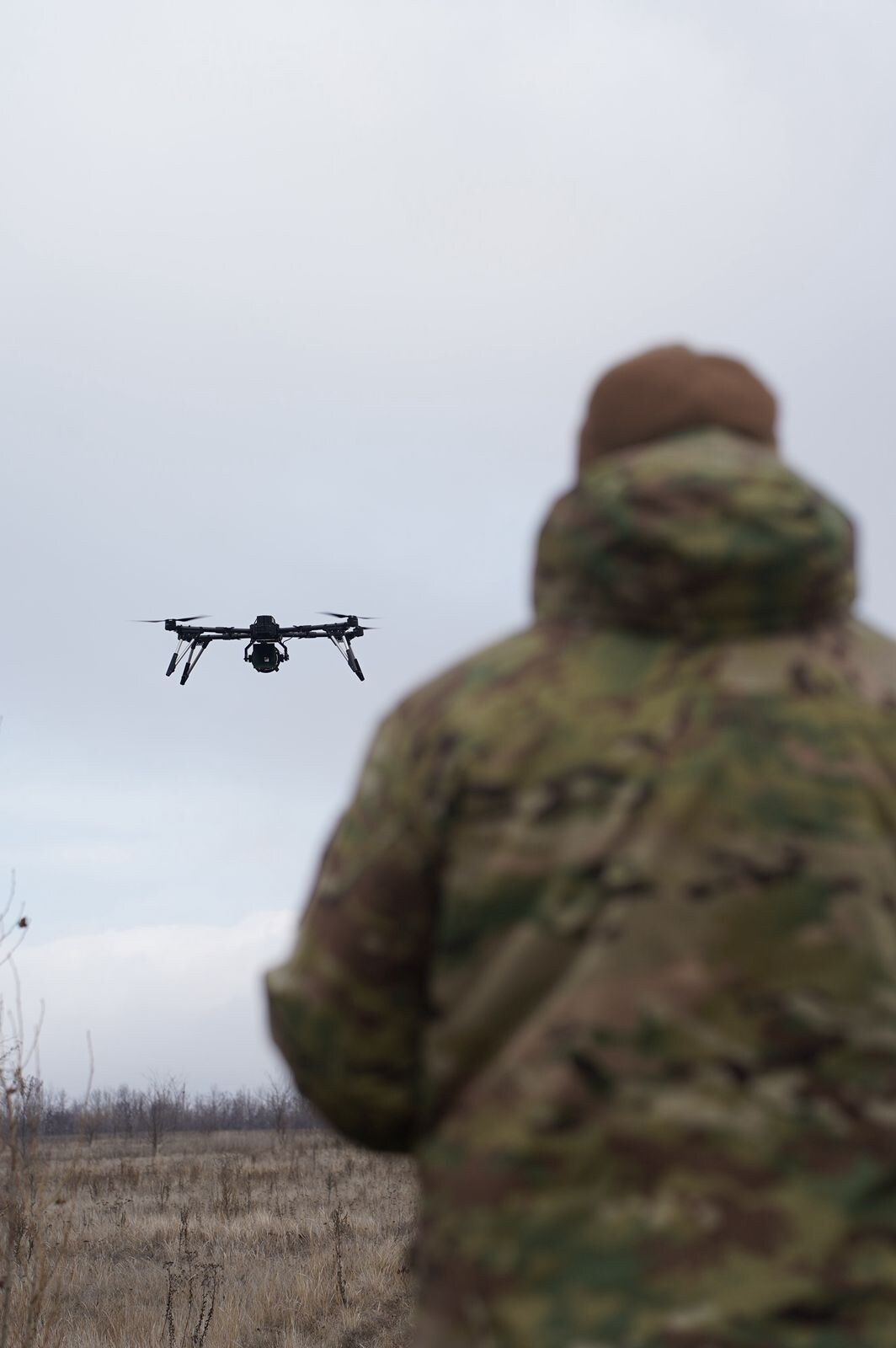
One of the key developments is the repeater carrier drone with a built-in repeater «Dophin Spider». This is a development of our Lumiere Tech team. It has already been codified — it is the first codified repeater carrier drone in Ukraine, which can be purchased for ePoints on marketplaces.
We are currently working on a smaller version, the Ant. It is already in the final stages. It is also a repeater carrier drone, which allows for a better picture, more stable control, and greater range behind enemy lines.
In addition, we are working on a kamikaze drone aircraft «Paskuda». It will cost up to a thousand dollars, and will be able to carry up to 8 kg of payload. The front needs cheap and effective solutions. These are the three main projects that we are currently working on, plus there are a number of smaller ones.
Do you coordinate developments with the General Staff or the Ministry of Defense before starting work on them, and do you receive permission before use on the front?
No, if we did all this, it would make our work many times more difficult and the implementation of these projects would drag on for years, because all these bodies greatly reduce the speed of project implementation and even more so their application at the front.
We coordinate the developments with our command, brigade commander, battalion commander, regiment commander, and on this, so to speak, horizontal level, we begin to implement this or that project into life.
How much does it actually cost to develop one such solution — from idea to serial use?
Depending on the project, because there is a big difference between a strike drone and a new communication or carrier, the amount of money spent is incomparable in these projects.
Currently, we are taking on projects that will cost no more than $100-150 thousand in development, because budgets are not flexible.
But again, the front doesn’t always need some super funds, for example, we are currently working on a very interesting and potentially very useful project, the development of which will cost us up to 150 thousand UAH. But potentially this is a really cool thing, we can’t talk about it yet.
What is more expensive: development or scaling and front-end support?
Definitely scaling and support. I would also add implementation here, because the first samples need to be distributed to the front even before the deployment of full-fledged production, codification, etc. Support does not take much, maybe 20% of the development cost per year. For implementation, 100%-200%, but for scaling, 1000% or more is needed. In fact, at the scaling stage, there is much more documentation, communication, and work.
What are the main challenges you face in R&D?
The biggest problem is scaling. It’s one thing to make a working prototype, and quite another to put it into production, supply it with components, train people, and set up maintenance.
Another difficulty is bureaucracy. It has not disappeared, even during the war. There is codification, there is approval, there are documents. This often slows down the process, although everyone understands that time is critical.
But I wouldn’t say it’s «evil for evil’s sake.» In many cases, bureaucracy is about security and responsibility. Another issue is that the system has not yet had time to adapt to the pace of modern warfare.
What is more difficult: creating something new from scratch or improving existing designs?
In my opinion, it is more difficult to improve existing samples, especially if these existing samples were not developed by us, if they were developed by some other team, and we start to climb there ourselves, and we encounter many problems, with miscalculations that we made in the previous sample, because they are not available to us.
And so we face many pitfalls that slow down our speed of implementing the product we have made and sending it to combat testing. It is much faster when we start completely from scratch, but we do everything ourselves, we make all the calculations: from the motors, to the regulators, the flight controller, the cameras, the communication system.
And when we build this drone ourselves, it moves a little faster than when we modify something that’s already finished. Again, this depends on what kind of project it is.
If we mean a regular FPV drone, where you need to change the video transmitter and control receiver, then, of course, it is easier to remake what exists, rather than making and assembling a new ten-inch drone from scratch.
Does it happen that your ideas are not accepted by the army or command?
Yes, I’ll repeat what I said before — it’s very difficult to integrate anything new into a combat unit, because people often get used to one thing, it more or less works for them with some nuances, but they’re already used to these nuances, so it’s hard for them to switch to something new.
If we provide some new technology, some new product, we try to integrate all of this through our groups that do testing and implementation in combat units.
Because our groups come to the positions, work together with calculations, show all the advantages of our product, why it is better than what they have now, in this way the integration is carried out more qualitatively and more quickly than simply giving the product. and saying you will figure everything out there. No, this is a very important point, this is constant communication with the people to whom we transfer our product. Therefore, we try to put a lot of emphasis on this.
Do you have any developments that are conditionally ahead of the front’s request and have not yet found application?
At this stage, I don’t see such developments here, but I can say that the guys from our team have been developing a drone missile like the «Sting», an interceptor of shaheeds, for more than a year. But at that time they were not so relevant. And this development remained on the shelf, we kept it as a souvenir.
How is R&D integrated into combat units? Who orders the solutions: the military, at the front or headquarters?
The most important thing in R&D units, in workshops is constant communication with combat groups, with chief sergeants, with calculation commanders, control points. They see the problems that appear in the positions of their pilots. This constant communication gives rise to some kind of solution. And the solution is actually ordered by the military at the front. Not the headquarters, this is 100%.
How is your development tested in combat conditions?
We don’t have something that we just invent and immediately launch into production. Any solution goes through several stages. First, laboratory and field tests in controlled conditions. We look at how the communication behaves, how the system reacts to loads, to different frequencies, to interference.
After that comes the combat testing stage. We transfer the solution to a specific unit and see how it performs directly on the front. Feedback from pilots and combat calculations is very important here. Often they notice things that are simply impossible to catch in the laboratory.
It happens that after combat tests you have to go back and redo the solution almost from scratch. But this is a normal process. It is better to spend time on refinement than to launch something into production that will fail at a critical moment.
How quickly can a new solution be implemented in the military?
It all depends on the complexity of the solution and how critical it is to the front. If we are talking about something that really gives an advantage right now, the process can be very fast.
There are no classic «long development cycles» in war. If something works and meets a specific need, it should get to the units as quickly as possible. But there is another side to this: we cannot afford mistakes, because they are too expensive.
Therefore, the balance between speed and quality is a constant tension. And this is probably one of the most difficult parts of our job.
What decision do you consider your biggest failure — and why didn’t it work? Was there a time when you believed in technology, but the front «killed» it?
There were various cases, and I consider the biggest failure to be the moment when we were developing a strike weapon for air defense and in principle it was already ready, but we lacked people, time, finances and faith in the project to finish it. Then, about half a year later, analogues of this weapon from civilian manufacturers began to appear — and they showed really cool results, and when we had the opportunity to finalize ours, such a need no longer existed, since there were enough analogues.
There were so many cases when technology seemed cool but was not useful on the front that you can’t even remember them all, but it also happened that after six months or a year the technology did come in handy, so almost all inventions that did not become useful are put in a separate box and wait for their time.
About technologies in development
What technologies do you most often use when developing solutions?
Artificial intelligence, 3D printing, sensors, communication. It all depends on the project. In principle, we are faced with all this, starting from 3D printing — this is for some individual parts of the body, modeling the body itself, cutting carbon, developing communication, developing software for the interface for our drone, for control systems for the remote control, for ground stations.
In principle, it is all a combination of these factors, they are always applied plus or minus in equal degrees during development and implementation.
What languages / stacks / frameworks are used? (at the level of «Python/C++/Rust», without details)?
We mainly work with C / C++, and also perform a typical range of IT tasks: requirements gathering, analysis, validation, and verification.
To implement tasks, we are flexible in choosing technologies: if necessary, we use React if you need to quickly create a clear and neat frontend.
Important: Deep knowledge of Linux is a key competency for most of our projects.
What percentage of R&D is software and what percentage is hardware?
The ratio of software and hardware in projects depends on the task and stage of development, but on average it is 50/50.
We work on a full product development cycle, which includes:
writing and adapting software to your own needs;
creating physical prototypes, since none of our software makes sense without being tied to a real hardware solution;
the phase of testing, debugging, and integration of software with hardware.
In all projects, we have to create a hardware prototype — there has never been a single task where we would work only with the software part without a physical implementation.
We also develop hardware solutions that include tasks with:
Circuit engineers,
Radio engineers,
mechanical design.
It’s impossible to give a direct number, it depends on the project. There are tasks where 90-100% is software, and there are vice versa. In total, for all our projects, I would say that code is somewhere around 30-35%.
About the state, cyber resilience and defence-tech
What is the role of the state: support, financing — or is it more the initiative of the military themselves? What funds are generally used to finance the development?
This is actually a very painful issue. Because in fact, everything is financed through the initiatives of the military themselves and the command, which sees potential in this and trusts the team of engineers working on the developments.
At this stage, the state is not involved in this process. Everything is done either at the expense of volunteer funds — we open auxiliary banks — or at the expense of our own money.
When we were still working in combat calculations, receiving full financial support with bonuses, we would contribute some of this money to a common fund. It was with this money that we did some of the developments that later brought real results on the battlefield.
How do you work with sensitive data and the issue of confidentiality in development?
We conduct all our development work in a narrow circle — within the team and in constant communication with combat units. Therefore, we very rarely reveal these developments to external manufacturers.
There are several friendly manufacturers with whom we have been working for a long time: we codify and scale products with them.
In general, there is nothing «super-secret» in the classical sense. The main thing is not to bring the details of the technology into the public space. Because if the solution becomes too public, the enemy will very quickly copy and scale it. And this trend, unfortunately, has already confirmed itself more than once.
Is there competition or duplication of work between different military R&D teams?
Unfortunately, yes. And that’s the problem now. But we try to communicate as much as possible with other units — not only at the front, but also outside our corps, even outside the Land Forces.
The goal is simple: to avoid duplication. Because it is much more efficient to combine the efforts of several brigades or corps to solve one problem than to do the same project in different «camps» and stretch it out for months. Communication and information exchange here really save time and resources.
About the future
What technologies do you think will be decisive for the war of the future?
We are already seeing — both from the enemy and from our side — the active use of fiber-optic drones. They show very good results and high electronic warfare immunity, because electronic warfare means are virtually ineffective against them.
The direction of kamikaze aircraft, which operate at distances from 30 to 100 kilometers, will also be actively developed. A separate big focus is communications. The transition from analog to digital, the integration of smarter guidance systems that allow you to capture targets from a greater distance or work with targets that are below the radio horizon — for example, in the folds of the terrain.
Do you see yourself and your team as the foundation for Ukraine’s post-war defense cluster?
Everything will depend on what kind of support and conditions the state can offer. But, to be honest, after the war, we will all want to take a break: to spend time with our families, visit the graves of our fallen comrades, and recharge a little.
However, we understand perfectly well that with a neighbor like Russia, we will have to constantly develop technologically and be ready for any scenarios. Therefore, after a certain time, yes, I think we are ready to join in and continue working in a different format.
If you imagined victory tomorrow, how would you apply your experience to peaceful life?
This is a complex and very rhetorical question. First of all, I would like to give the guys a chance to rest. And give them decent conditions — a normal job, a decent salary, so that people don’t end up on the sidelines of life after the war.
I believe that this experience can be very useful for the state — both inside the country and abroad. We could not only continue to work, but also transfer Ukrainian experience, showing that Ukraine is not only about war, but also about technology, engineering and strong teams.