Хочете будувати кар’єру в Data Science та AI? Vodafone Big Data Lab відкриває новий набір —>
Валентин ШнайдерWar
18 November 2025, 09:00
2025-11-18
3D printing for the Armed Forces of Ukraine: how to join the "army of printers" and what is needed for this
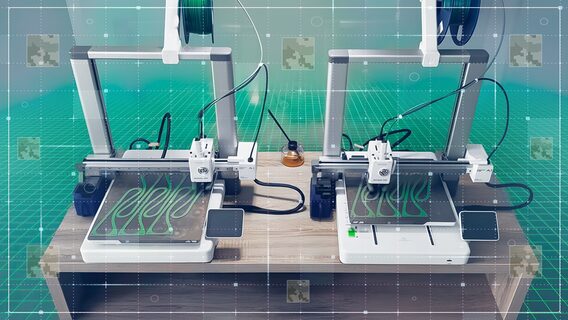
Volunteers with 3D printers have become an integral part of providing the Ukrainian army with important small parts and devices. Eduard, a volunteer from Kharkiv, who has been printing necessary things for the Armed Forces of Ukraine on his 3D printer for several years, shares his experience on where to start such an activity and what nuances should be taken into account.
Volunteers with 3D printers have become an integral part of providing the Ukrainian army with important small parts and devices. Eduard, a volunteer from Kharkiv, who has been printing necessary things for the Armed Forces of Ukraine on his 3D printer for several years, shares his experience on where to start such an activity and what nuances should be taken into account.
During the full-scale war, a whole community of 3D printing enthusiasts has formed, making useful things for the front: from drone elements to medical instruments. So, let's consider the main aspects of this volunteer direction. Using the example of an engineering student Eduard from Kharkiv, dev.ua learned what you need to have in order to start printing on a 3D printer for the Armed Forces of Ukraine and what the main problems and challenges you may encounter.
Minimum equipment and cost
Obviously, the first thing you need to do is have a 3D printer. The market offers many affordable models, so the entry threshold is not too high. A simple entry-level printer can be purchased for about 5,000-8,000 hryvnias, depending on the company and configuration.
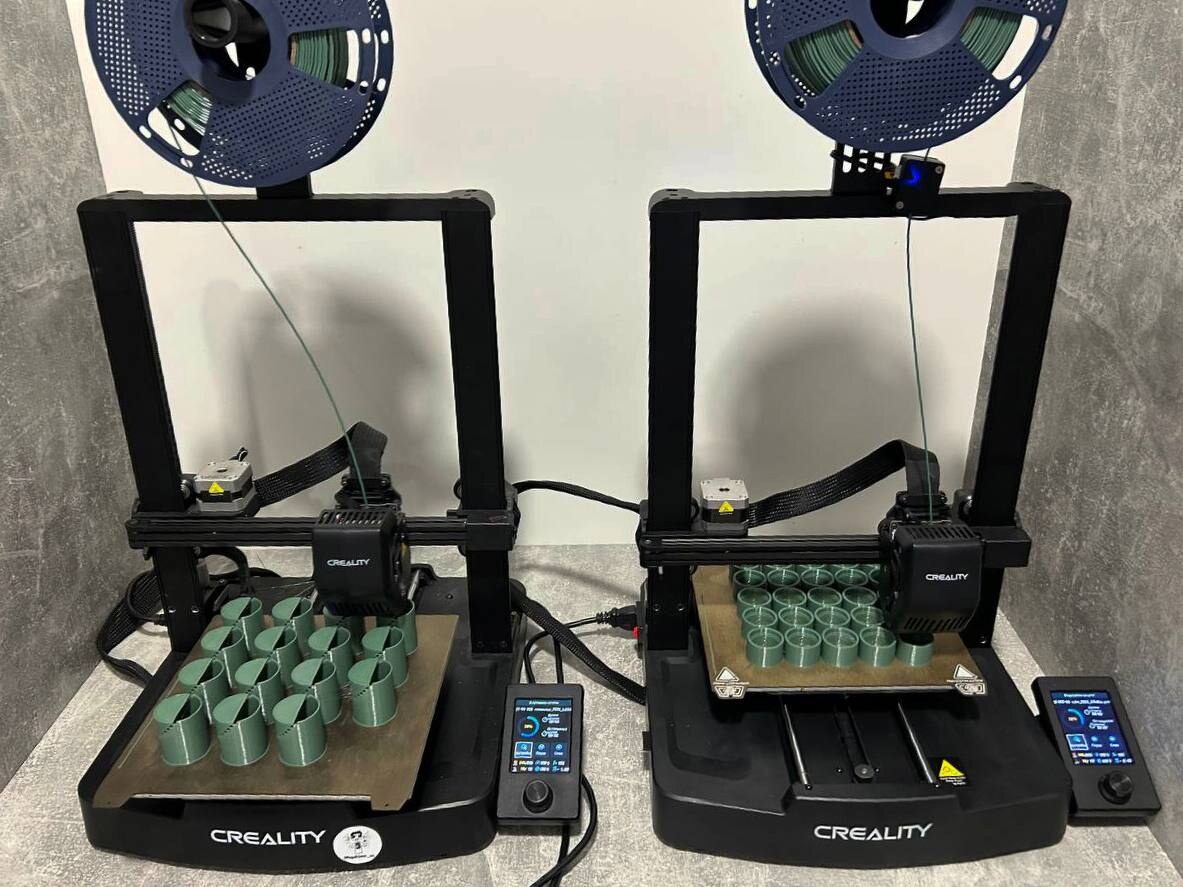
Eduard confirms that the cost depends heavily on financial capabilities: "There is no specific amount here, because it depends on your wallet. You can buy a printer for 16,000 or 5,000. The simplest one that will print normally costs about 7,000 hryvnias for Alik - it's the Ender V3 SE," he explains.
This model is enough to start printing simple products. If necessary, you can purchase other equipment over time.
Additionally, you should consider purchasing a special dryer for filament (plastic). It is not mandatory, but it helps keep the material dry, which is important for high-quality printing.
"You can also buy a dryer for plastic. The dryer also costs about 1,000 UAH, maybe two, it depends on what kind of dryer it is, you can even make it yourself."
Indeed, plastic filament is hygroscopic: it absorbs moisture from the air, which degrades print quality, so it sometimes has to be heated and dried before printing.
3D printing volunteer communities
Is it necessary to join an organized community to help the army with 3D printing? As Eduard himself notes, this is not a strict necessity:
"You don't have to join. You can write to military friends yourself or just take orders, so to speak, in chat rooms."
Many volunteers do this, contacting units or individual soldiers directly and finding out exactly what needs to be printed.
At the same time, there are also large coordinated movements, such as “DrukArmiya.” This is perhaps the most famous volunteer community of 3D printers in Ukraine.
A little more about "DrukArmiya"
The "PrintArmy" community was created with the beginning of the full-scale invasion and now unites approximately 8,000 enthusiasts across the country. Each participant has from 1 to 15 of their own printers and prints products ordered by military units or volunteer organizations. You can register on the official website of the movement and receive tasks: detailed instructions and a list of parts needed for the front that need to be manufactured are published in your personal account. There is also a forum for exchanging experience and there are curators to whom you can contact with questions.
So, joining a community helps you find proven 3D models, get support, and be sure to deliver the printed product as intended. On the other hand, no one prevents a volunteer printer from working individually.
Consumables: plastic and its features
The main consumable for 3D printing is plastic filament (a strand of plastic on a spool). Eduard emphasizes that the choice of plastic determines both the price and quality of future products:
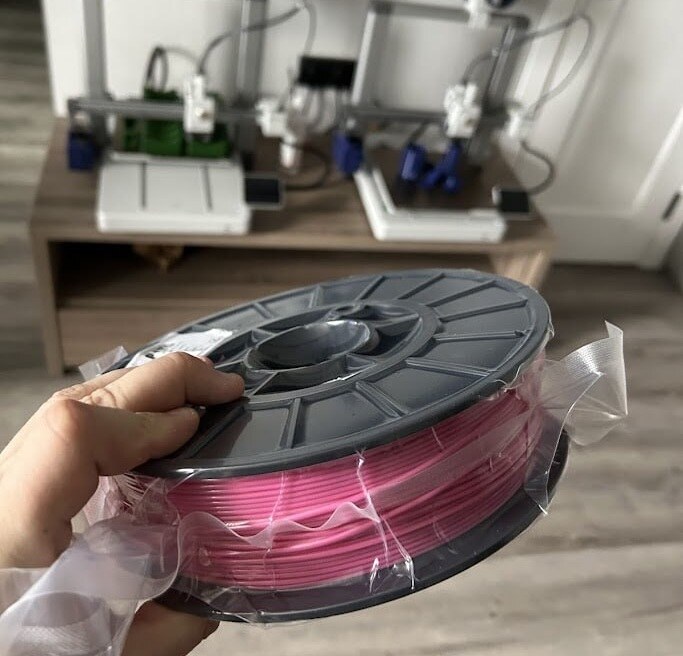
"Depending on its type and manufacturer, the price may vary. In fact, price and quality are interrelated. There are types, such as PET, ABS, PLA. And there are types of its winding - it is refill or on reels, the price may also differ there. I buy wholesale (minimum order from 30 kg), there it turns out 280 hryvnias per kg."
Indeed, the type of plastic has a significant impact on printing characteristics. Beginners are usually recommended to use PLA, as it is a bioplastic made from corn starch, which is easier to print and less demanding on settings. PLA plastic is cheaper, prints quickly, but products made from it are not very durable: they do not withstand high temperatures and mechanical loads well. For more durable parts, many volunteers switch to PETG, which is almost an engineering plastic, a little more expensive and prints more slowly, but is resistant to weather conditions and is stronger. Some specific tasks may require other materials (ABS plastic, nylon, flexible TPU, etc.), but their use requires experience and often closed-type printers with ventilation (since ABS emits toxic fumes when heated).
As for the cost of plastic, it varies depending on the type and manufacturer. The price of a kilogram of filament in Ukraine is from ~250 to 500 UAH, that is, a 3 kg spool will cost approximately 1200–1500 UAH. When ordering large batches in bulk, you can reduce the price. As Eduard mentioned, he buys plastic wholesale for 280 UAH/kg (but you need 30+ kg at once). Some also save money by buying refills — this is plastic without a plastic spool, which is a little cheaper and more environmentally friendly, although it requires an additional reusable spool for use.
Typical difficulties in the printing process
Technically, 3D printing is relatively easy to master, but beginners should be aware of a few potential problems. Eduard notes that there are no serious internal difficulties with printing, as modern printers are quite reliable. The main challenges are related to external conditions and the quality of materials:
"The worst thing is probably the problems with light. Sometimes it happens that unscrupulous plastic manufacturers come across. The thickness of the rod can 'walk', so to speak, and because of this the nozzle can get clogged. If the printer is set up correctly and looked after, there will be no problems," says Eduard.
In other words, with good setup and regular maintenance (cleaning the nozzle, lubricating the guides, etc.), the printing process itself is stable. However, there are times when defective or wet plastic does not feed well and can clog the extruder.
It is worth checking the diameter of the plastic filament from a new manufacturer right away. If it fluctuates more than the norm, it is better to choose another supplier to avoid damaging the printer.
Another nuance is the duration of the print. Some parts print for hours and even days, so it is important to monitor the printer during long sessions. It happens that a small malfunction (for example, the model peeling off the table) can ruin the product closer to completion. Experienced printers use cameras and remote monitoring to notice the problem in time, and also break the order into several parts for parallel printing on different printers, as this is both faster and more reliable.
Power outages and 3D printing
A separate problem that Ukrainian volunteers faced (as mentioned above) is power outages. A sudden power outage can lead to failed printing, especially if there is no uninterruptible power supply.
“Printing is paused. On some printers, you can resume it, but not all printers can continue it,” Eduard explains the capabilities of the technology.
Modern models often have a Resume function (continuing printing after power is restored), but there is no guarantee of success. The fact is that during the shutdown, the platform and nozzle cool down, and the adhesion of the model to the table may weaken.
“If the printer turned off, the model “cooled down” and probably peeled off the table… It can just go that way at the beginning of printing and there will be “macaroni”,” Eduard describes the consequences.
That is, after the printer resumes operation, the layer that is printed next shifts, and instead of a high-quality part, a ball of plastic threads is obtained.
There is another risk: voltage drops when the electricity returns. The volunteer warns that the current can turn on with a sharp jump and this can disable the printer. Some printers install additional stabilizers or UPS (uninterruptible power supplies) to smooth out such jumps. During the period of planned power outages, other tricks were practiced: adjusting the printing schedule to the power supply schedule, printing several smaller parts in turn to have time to finish them before the power goes out, etc.
Work efficiency and feedback from the military
Many volunteers are interested in the question: how effective is their work and whether it really helps the front. It is not easy to directly measure the result, because the contribution of each printer is a small part of a big cause.
"I can't assess the effectiveness, because in fact only the military can assess it. I think that the contribution is enough and that's all."
Volunteers, as a rule, do not see the result of each printed product in battle with their own hands, but are guided by feedback from soldiers. According to Eduard, there is feedback from the military and it is positive. In his Telegram channel, the volunteer published examples of messages of gratitude from servicemen who received printed things. When defenders confirm that the part is suitable and helped to solve an urgent need, this is the best assessment of the work of the 3D printer.
Volunteer assistance with 3D printing also receives positive feedback from unit commanders. After all, in fact, caring people at home make items that would be difficult or take a long time to obtain through official supplies. During the first months of the war, this flexible technology proved to be extremely effective: for example, a group of just over 100 Ukrainian makers printed over 3,000 parts for ~930 finished military products in 16 days in March 2022. In conditions of equipment shortages, such initiatives literally saved lives on the front line.
What exactly is printed for the army?
The range of printed products for the Armed Forces of Ukraine is striking in its diversity. It is impossible to single out one most requested item, as needs vary greatly depending on the unit and the situation on the front.
"Here, physically, no one can single out anything specific," confirms Eduard.
According to him, they print almost everything that can be made from plastic and that will be useful to the military:
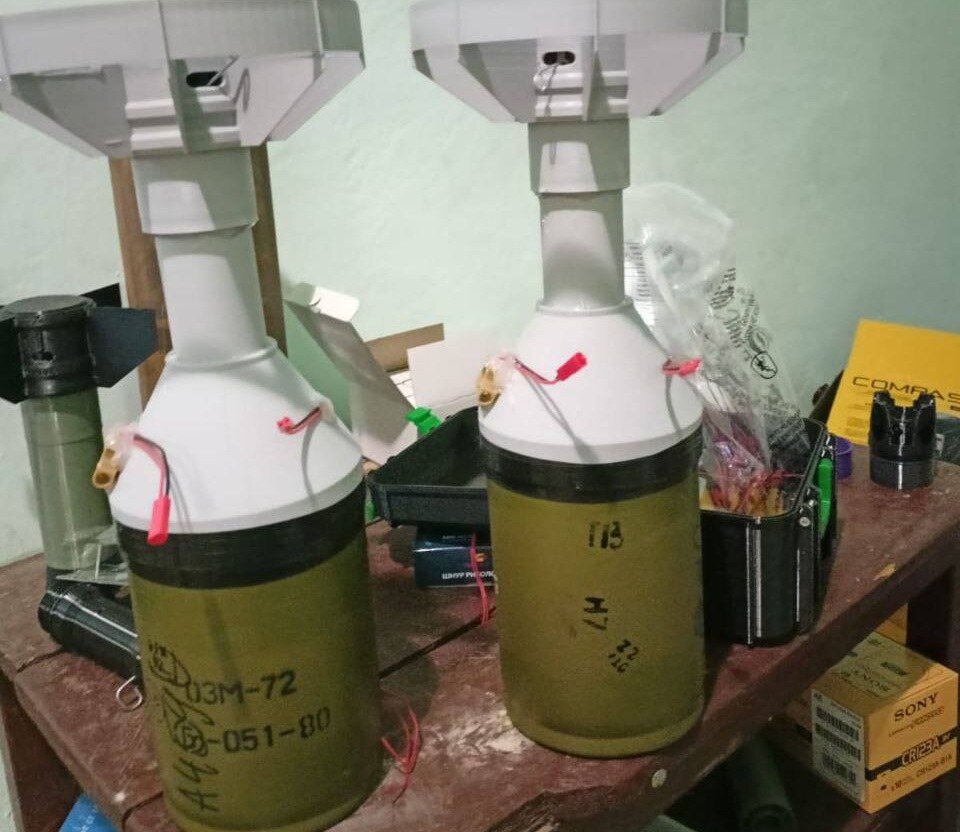
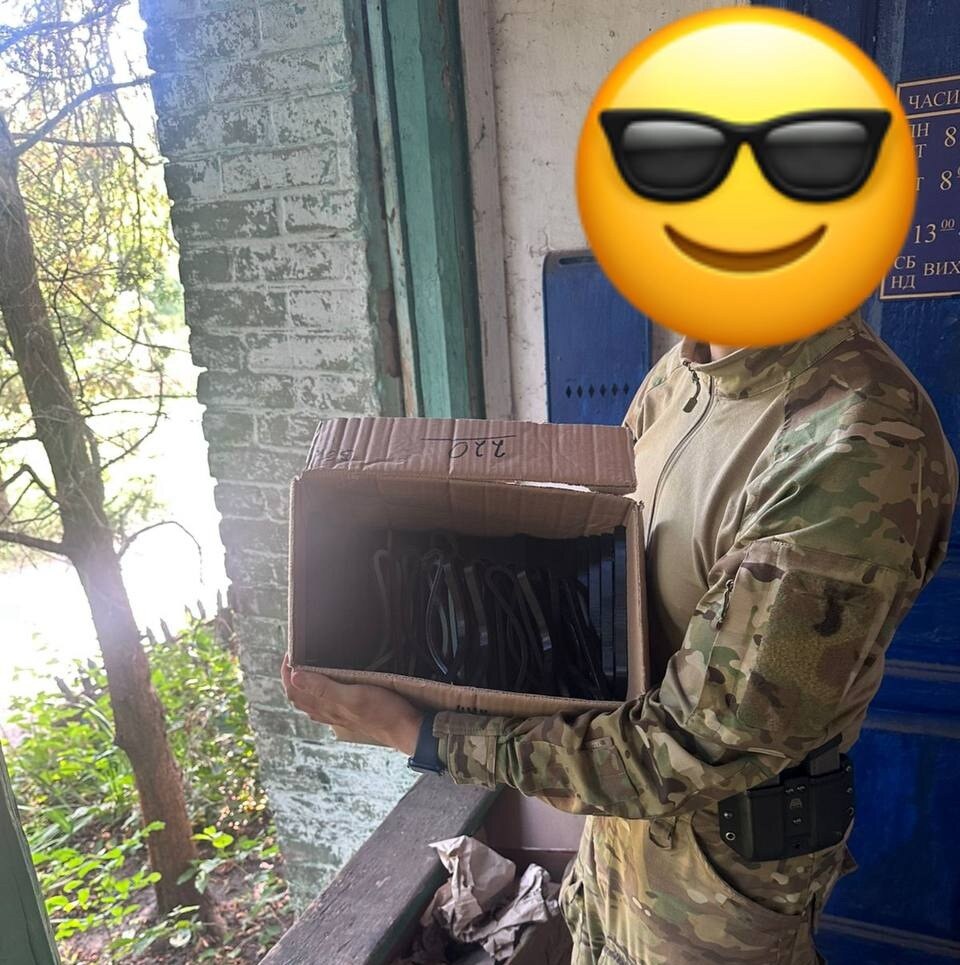
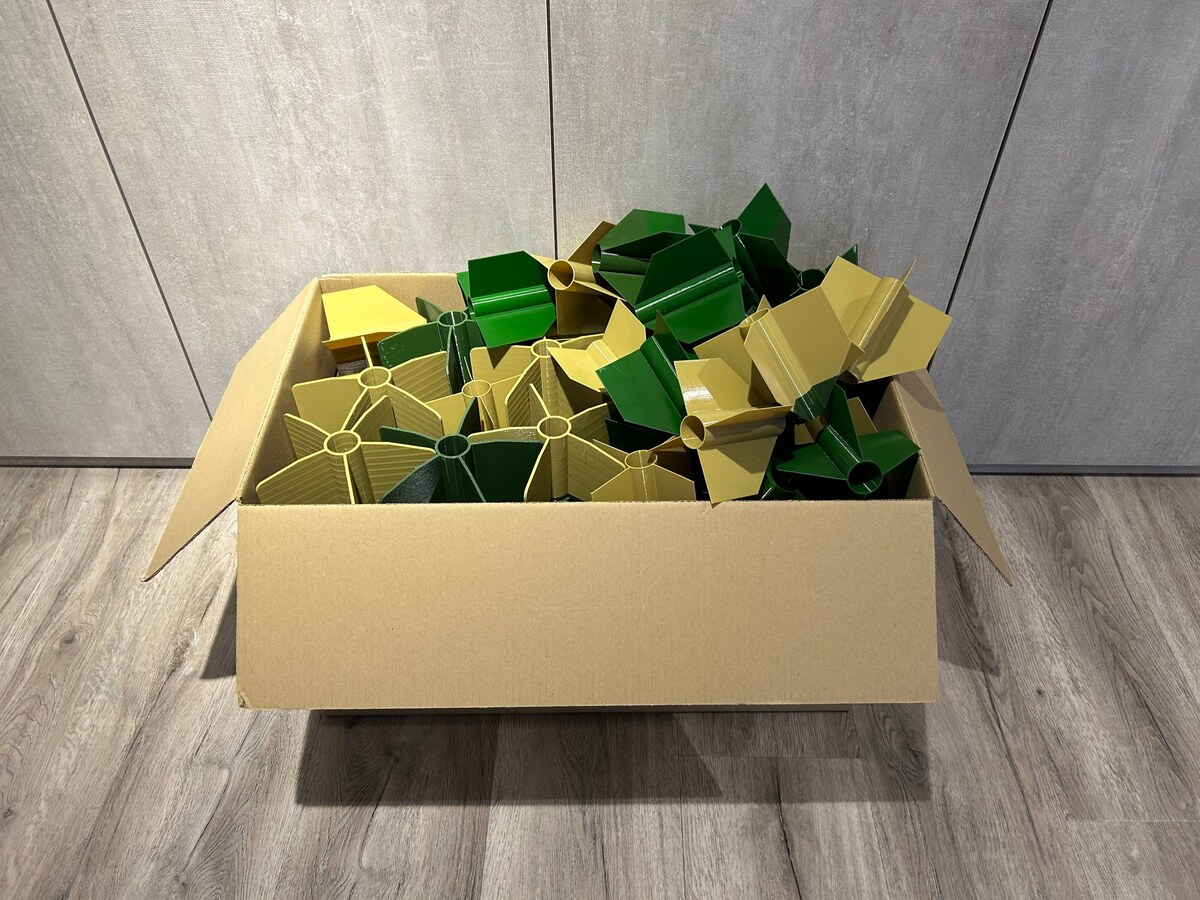
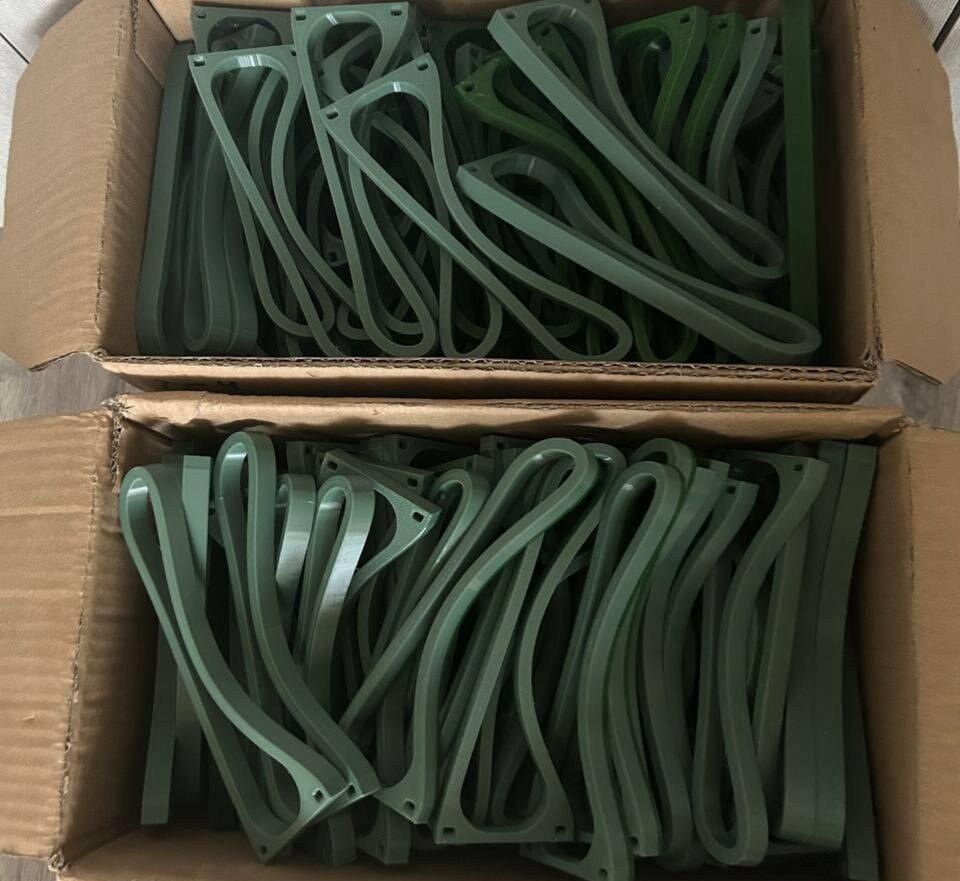
"These are both mines for remote mining of the territory, and 'tails', roughly speaking, for dumping, and the dumping itself, bodies, and so on. The more the number, the better."
That is, volunteers make mine and grenade casings (which are then filled with explosives), stabilizers-tails for dropping from drones, entire bomb-dropping systems from drones, and numerous small components. In addition to purely combat items, they also print training models, periscopes, chargers, components for walkie-talkies, medical instruments, etc. According to the DrukArmia community, among the frequent orders were, for example, connectors for Starlinks, adapters, mounts, elements for weapon modernization, drone parts, and much more.
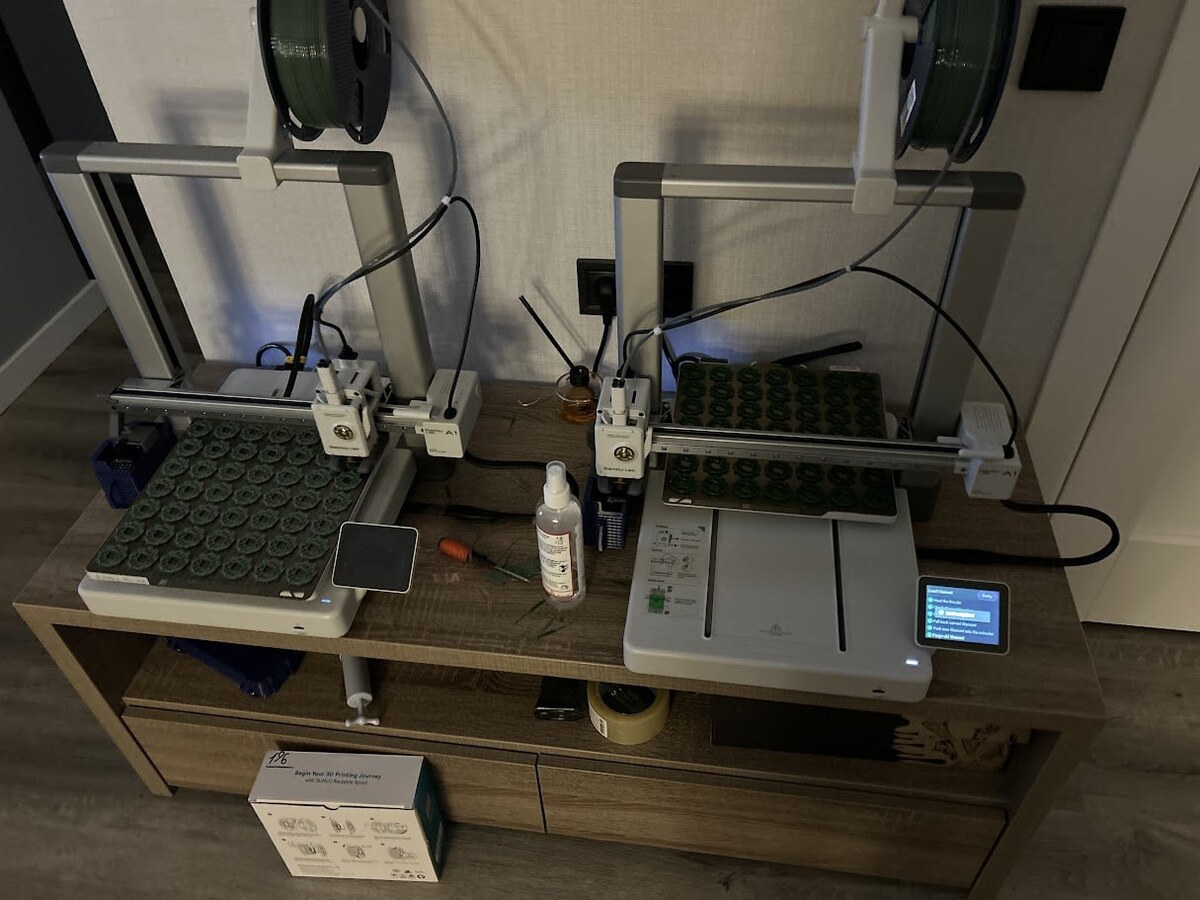
The production volumes depend on the capabilities of a particular volunteer: some have one printer and print a few parts per week, while others (like Eduard) have set up a whole farm at home from a bunch of printers and stamp dozens of kilograms of plastic every month. As mentioned, some have already printed hundreds and even thousands of units of various products for the Armed Forces of Ukraine.
So, with minimal investment, having purchased a budget printer and mastered the basics of printing, anyone can join the common cause and produce useful things for the front. The experience of Eduard and other volunteers shows that the difficulties are completely surmountable: materials are available, the community supports with knowledge, and the results justify the resources spent. Parts made on home 3D printers are already helping Ukrainian soldiers every day: from everyday trifles to elements of weapons. And although one printer does not win the war, thousands of such printers in the hands of dedicated people contribute to our victory.
“Є мрія - відсканувати “Азовсталь”: інтерв’ю з дизайнером, який створює 3D-музей війни
Тривимірний музей української війни, придатний для експонування в Метавсесвіті, вже створюється онлайн — фактично, кожна людина з будь-якої країни просто зараз може подивитися, як виглядають наслідки російського вторгнення в 3D. Робить його дизайнер Яро, він же — Yaro Pro, громадянин Словаччини, з 4 років живе в Києві, випускник Інституту журналістики, зараз увесь вільний час їздить зруйнованими містами та селами та сканує шматки історії, після чого створює моделі об’єктів і розміщує їх в мережі. Зараз моделі Яро — частина дослідження японського вченого, котрий раніше створив цифровий архів Хіросіми та битви за Окінаву. Історія — в інтерв’ю dev.ua.
Хочеш стати 3D-художником у геймдеві та створювати героїв, що підкорять серця гравців? 5 курсів, які допоможуть це втілити
Мрієте потрапити в геймдев, щоб оживляти героїв і малювати фантастичні об'ємні образи, які б захоплювали та дітей, і дорослих? Тоді вам у 3D. Але цьому доведеться повчитися. І dev.ua знає, де почати і як покращити скіли вмілим художникам.
«Скільки ще разів українцям пояснювати цим створінням, що це наша батьківщина»?! Добірка робіт діджитал-художників, в яких вони висвітлили війну в Україні
Як багато болю і страждань завдала всім війна. Та найгостріші переживання потребують виходу. І один з них — це творчість, де найболючіші удари війни знайшли свій відгук.
Ми зробили добірку атмосферних робіт цифрових художників, що ілюструють війну чи ту реальність, у якій ми всі зараз перебуваємо.
Якщо ви вважаєте, що є роботи, які варті окремої добірки, прошу надіслати інформацію про них до електронної пошти [email protected]
Have important news to share? Message our Telegram bot
Key events and useful links in our Telegram channel
А як з юридичної точки зору?
Можна наприклад повернути ПДВ із закупленого принтера, якщо друкую для армії? Думаю держава може собі дозволити знижку, якщо людина допомагає державі











А як з юридичної точки зору?
Можна наприклад повернути ПДВ із закупленого принтера, якщо друкую для армії? Думаю держава може собі дозволити знижку, якщо людина допомагає державі