Хочете будувати кар’єру в Data Science та AI? Vodafone Big Data Lab відкриває новий набір —>
Олександр КузьменкоAI Eng
26 May 2025, 18:13
2025-05-26
Meta's Chief Artificial Intelligence Scientist Names Four Characteristics of a Smart Being That AI Lacks
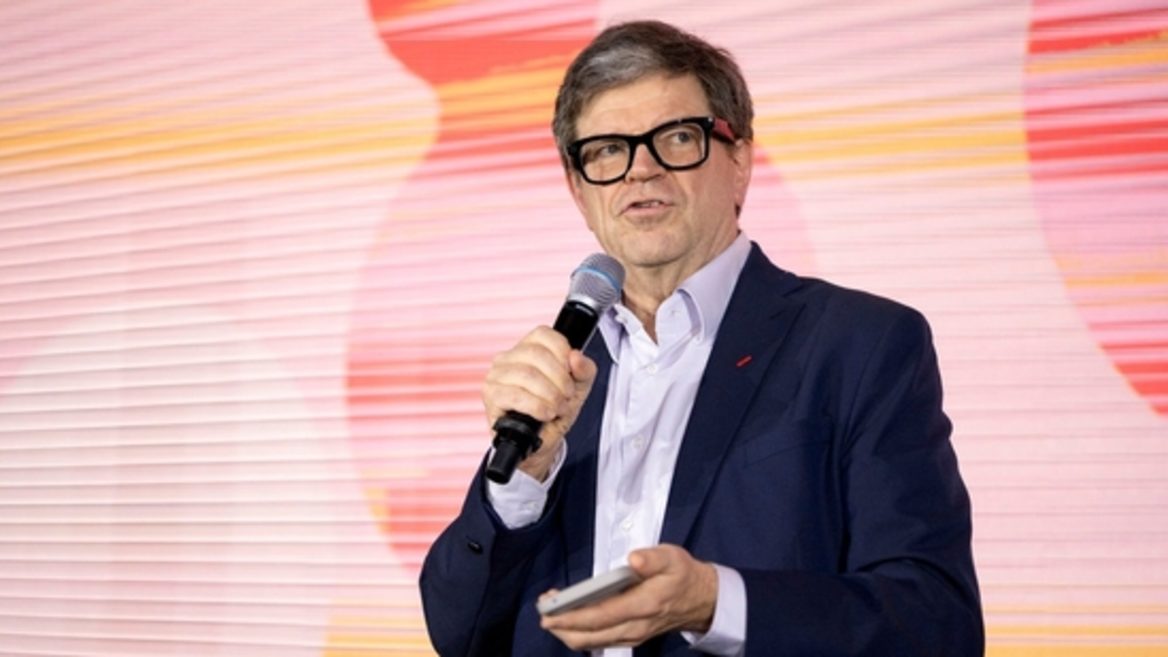
Meta’s chief artificial intelligence scientist, Yann LeCun, outlined four key characteristics of intelligent behavior that even large language models have failed to achieve.
Meta’s chief artificial intelligence scientist, Yann LeCun, outlined four key characteristics of intelligent behavior that even large language models have failed to achieve.
According to LeCun, these are: understanding the physical world, having a stable memory, the ability to reason, and the ability to plan, and «to plan complex actions, especially hierarchically.» This is what Business Insider writes .
Yann LeCun notes that AI, especially large language models, is not yet at this level, and incorporating these capabilities will require changes in the way they are trained. That is why many of the largest technology companies are trying to implement new capabilities into existing models.
«For understanding the physical world, you train a separate vision system. And then you hook it up to the LLM. For memory, you use RAG, or you hook up associative memory to it, or you just make the model bigger,» he said. RAG (retrieval augmented generation) is a way of improving the performance of large language models using external sources of knowledge, which was created at Meta.
LeCun has repeatedly talked about an alternative he calls world models. These are models that are trained on real-life scenarios and have a higher level of cognition than template-based AI.
«You have a certain idea of the state of the world at a certain point in time, you imagine what action it can take, the model of the world predicts what the state of the world will be as a result of this action,» the scientist says.
He explained that the world evolves according to an infinite and unpredictable set of possibilities, and the only way to train for them is through abstraction. Meta is already experimenting with this with V-JEPA, a model it released to the public in February. Meta describes it as a non-generative model that learns by predicting missing or masked parts of a video.
«The basic idea is that you don’t predict at the pixel level. You train the system to run an abstract representation of the video so that you can make predictions in that abstract representation, and hopefully that representation will remove all the details that can’t be predicted,» said Yann Lecoun.
This, he said, is reminiscent of how chemists established a fundamental hierarchy of the building blocks of matter.
«We created abstractions. Particles, at the top are atoms, at the top are molecules, at the top are materials. Every time we go up one layer, we eliminate a lot of information about the layers below that is not relevant to the type of problem we want to solve,» explained the chief artificial intelligence scientist at Meta.
«В жовтні випускаємо VR-шолом для аватарів, в «чіпування» Neuralink Маска вірю мало». Про що глава Meta Цукерберг 3 години говорив в подкасті Джо Рогана
25 серпня вийшла чергова серія популярного подкасту The Joe Rogan Experience, гостем якого став глава компанії Meta Марк Цукерберг. Розповідаємо про головне з майже 3-годинного інтерв’ю.
Як нейромережі бачать вільну та незалежну Україну? Тест dev.ua
Нейронні мережі для генерації зображень бачать світ по-своєму, їхню логіку зрозуміти часом зовсім неможливо. Але таки хочеться. На честь Дня Незалежності України редакція dev.ua вирішила провести невеликий експеримент.
Ми задали чотирьом різним нейронним мережам п’ять однакових запитів: «прапор України», «День Незалежності України», «український Крим», «перемога України» та «українці». Отриманими результатами ми ділимося з вами нижче.
Have important news to share? Message our Telegram bot
Key events and useful links in our Telegram channel