Хочете будувати кар’єру в Data Science та AI? Vodafone Big Data Lab відкриває новий набір —>
Олег ОнопрієнкоWeapon
30 April 2026, 09:00
2026-04-30
Air defense as a service. How Ukrainian business creates a private shield against drones under the patronage of the state
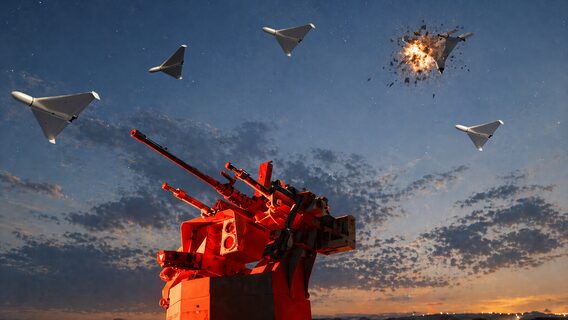
Ukraine became the first country in the world to legalize and implement a private air defense mechanism. As of April 2026, 16 companies have already joined the pilot project, having received appropriate permits from the Ministry of Defense. Private groups are already successfully destroying air targets, including Shahed kamikaze drones, Zala reconnaissance UAVs, and even the latest jet versions of Shaheds. We tell you how private air defense works in Ukraine.
Ukraine became the first country in the world to legalize and implement a private air defense mechanism. As of April 2026, 16 companies have already joined the pilot project, having received appropriate permits from the Ministry of Defense. Private groups are already successfully destroying air targets, including Shahed kamikaze drones, Zala reconnaissance UAVs, and even the latest jet versions of Shaheds. We tell you how private air defense works in Ukraine.
Why did the state share the sky?
There are over 6,000 critical infrastructure facilities in Ukraine, and no army in the world is capable of deploying a Patriot division near every warehouse or elevator. In November 2025, the Cabinet of Ministers of Ukraine adopted Resolution No. 1506 , which allowed enterprises to create fire protection groups at their own expense. It came into force in March of this year.
As Defense Minister Advisor Serhiy "Flash" Bezkrestnov notes : "This is not about autonomous loners. This is a private unit in a unified air defense network that becomes part of the country's overall defense."
The state has actually offered businesses a deal - you pay for the protection of your walls yourself, but you work according to our rules and under our command.
The logic of such decentralization of defense is that the private sector is much more flexible than a bulky military machine. Companies purchase equipment faster, innovate more quickly, and are not burdened by the long bureaucratic chains typical of state structures. This allows us to close the very “lower echelon” — the space between strategic air defense systems defending large cities and the roof of a specific workshop or logistics hub.
Security market
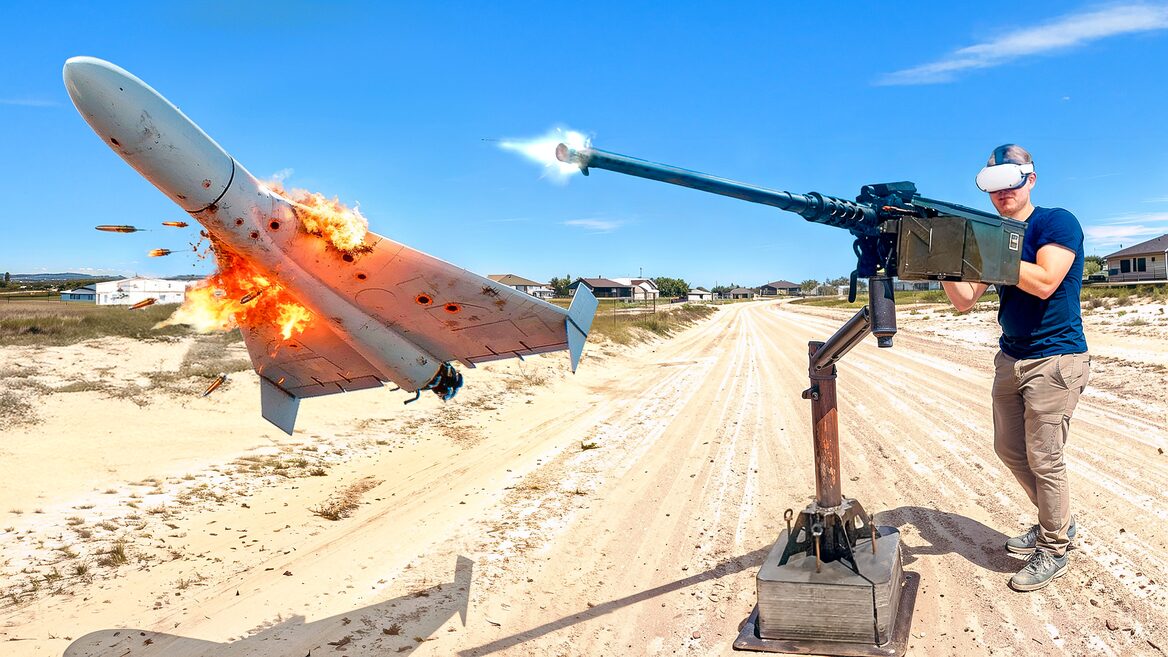
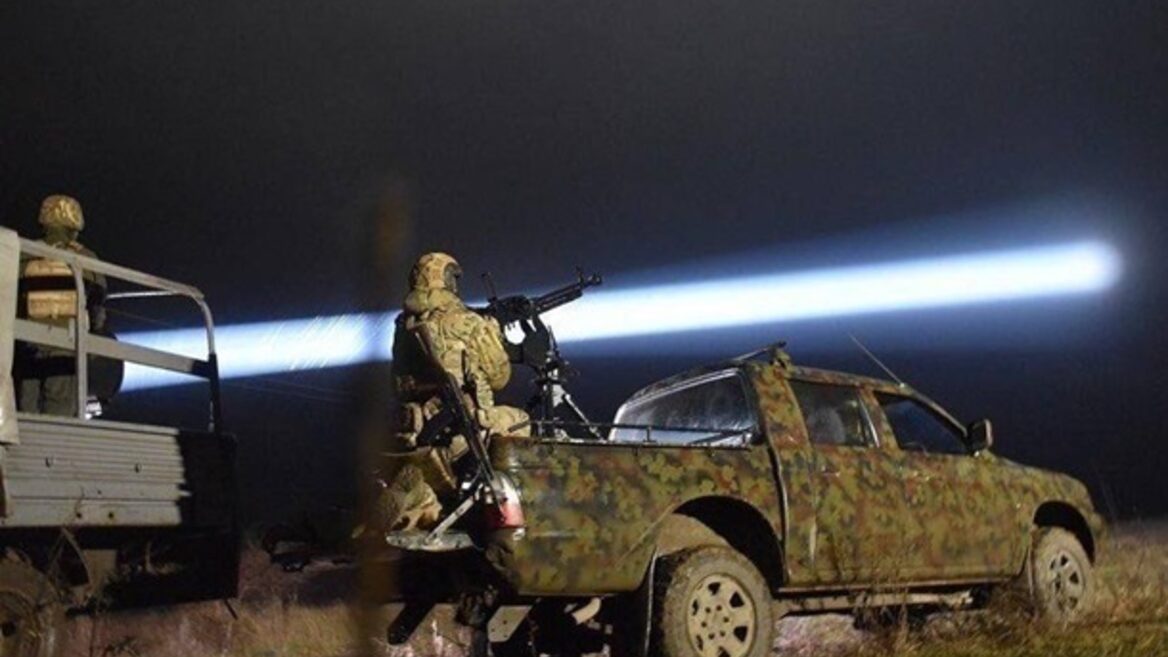
Companies apply, undergo inspections, form an air defense group from their own or hired employees, and receive permission to purchase weapons (interceptor drones, electronic warfare, radar, machine gun turrets, etc.). Such groups operate only under military command, can use weapons only within a designated area, and are included in the general air defense system, rather than “hunting” independently around the region.
Once the rules of the game were established, businesses were faced with a choice: create their own service from scratch or hire professional “drone hunters.” Most agricultural and logistics giants chose the second path—outsourcing.
Creating your own unit requires licensing, personnel certification, and the purchase of specific weapons, which is too complicated for a non-core business.
Due to martial law and the sensitivity of the topic, most of the names of companies that have created their own air defense groups or are clients of private providers are deliberately not published, so there is no complete open list and it is unlikely that it will appear until the end of the active phase of the war.
However, major players have emerged, such as Carmine Sky, which was one of the first to deploy networks of towers with automated turrets, and the Guardia security service, which specializes in training mobile teams and interceptor drone operators.
In the first four months of operation, Carmine Sky shoots down up to 85% of Russian UAVs entering the strike zone.
Roman Korzh, head of the Guard personnel training department, explains the customers' motivation simply: "It is more efficient to invest in air defense equipment than to later restore what has been destroyed.
According to him, businesses are gradually coming to understand that the threat of drones will not disappear tomorrow, and therefore systematic countermeasures are not a luxury, but a necessary condition for the survival of the enterprise.
Symbiosis with the military: who really "presses the button"?
Despite the fact that the air defense is private, it is not autonomous. This is the key fuse of the system: each turret, each mobile group is integrated into a single situational awareness system - "Sky Map" or "Graphite".
"We are an experimental project, but we work together with the Ministry of Defense. We ourselves do not make the decision to open fire - the operators receive the command from the Air Force control points," representatives of the Carmine Sky company emphasize.
This means that a private operator can see the target on his monitor thanks to artificial intelligence, which highlights the "shaheed" among the clouds, but he has the right to press the "fire" button only after confirmation from the military.
Serhiy Bezkrestnov emphasizes that such strict control is necessary to avoid chaos in the sky:
"The decision to target and open fire remains with the military. This model maintains state control over the sky and reduces the risk of friendly fire," said "The Flash."
According to the Minister of Defense, all these private groups operate under the coordination of the Air Force, are integrated into a single control system, and complement the state air defense, relieving front-line units and strengthening the protection of specific facilities.
From couriers and taxi drivers to AI operators. Who is knocking down the targets?
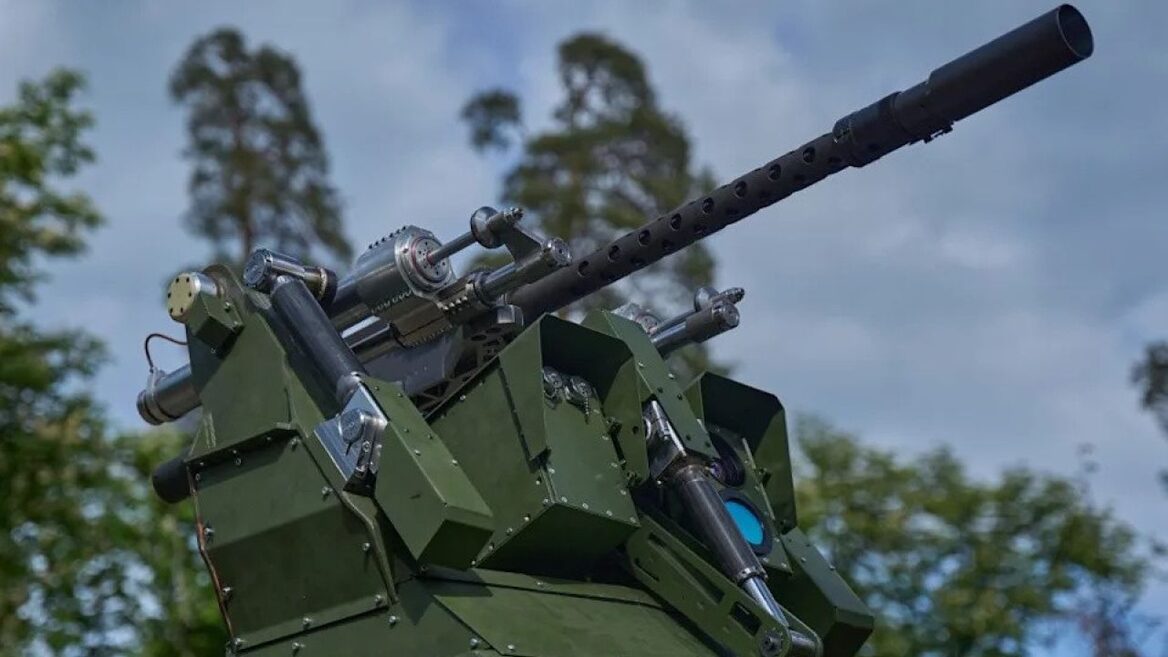
The main “working tool” in Carmine Sky is the Sky Sentinel turrets, equipped with M2 Browning machine guns. But this is not just a machine gun on a tripod - it is a “machine vision” platform, where artificial intelligence helps find targets and guide them into the sights, eliminating the human factor during aiming.
In addition to turrets, private companies use interceptor drones, electronic warfare systems, and mobile fire groups.
The personnel composition of these units is another surprising feature of the new reality. Former taxi drivers, IT workers, veterans, and even former Glovo couriers work here. For many, this is an opportunity to defend the country without being mobilized into regular units of the Armed Forces of Ukraine.
"We employ civilians from all fields of activity. Training for someone without experience lasts about a month, and on simulators they practice skills until they become automatic," Carmine Sky says.
Legal minefield and future risks
Despite initial successes, the path of private air defense is fraught with challenges. Experts' main fear is "friendly fire." If a private group mistakenly identifies a target or, due to a communication failure, does not receive the "stand down" command in time, its own plane or helicopter may be hit. The issue of cybersecurity is also acute: access by private structures to military data networks creates potential loopholes for enemy hackers.
Legal liability for the consequences of a downing also remains a subject of debate. Who will be held responsible if the debris of a downed drone falls on a residential building? Who bears criminal liability in the event of operator error?
Roman Korzh from the Guard notes that the legal field has not disappeared: "Operators sign documents on full responsibility, and each firing position is agreed with the military to minimize risks to people around."
Ukraine is now effectively testing the defense model of the future. In a war where cheap drones have become weapons of attrition, the response must be equally distributed and technological.
The development of a multi-level air defense system and the development of interceptors is one of the main performance guidelines of Mikhail Fedorov at the head of the Ministry of Defense. The interception rate should be at least 95% of missiles and drones, and private air defense should help in this.
As of now, 16 companies have already received permits to create their own air defense, and in total, private air defense groups are being formed at approximately 19 enterprises across the country.
As Serhiy Bezkrestnov summarizes: "The final decision will be in speed. We must be one step ahead of the enemy, and private air defense is one of those tools that allows us not just to catch up, but to prepare for tomorrow's threats today."
Hunting for "Shaheeds": How a dev.ua journalist trained to shoot down kamikaze drones in VR and what he got out of it. Report from the military-tech showroom of L7 company