Хочете будувати кар’єру в Data Science та AI? Vodafone Big Data Lab відкриває новий набір —>
Оксана СтепураAI Eng
2 October 2026, 11:38
2026-10-02
GPT-6 Astra helped decipher a Napoleonic military letter that remained unread for 217 years
An engineer from SentinelOne used GPT-6 Astra to decipher a military letter to French General Auguste de Marmont that had remained unread for 217 years. The work took about six hours.
An engineer from SentinelOne used GPT-6 Astra to decipher a military letter to French General Auguste de Marmont that had remained unread for 217 years. The work took about six hours.
He, Carter Church, reported this on his blog. There, the engineer published a transcription, a recovered key, code, and other materials with which the result can be verified and reproduced.
The document dates from late March 1809, about two weeks before Austria began its war against France and its allies. On March 16, Napoleon ordered his stepson, the Viceroy of Italy, Eugène de Beauharnais, to give Marmont encrypted information about the location of the French and allied armies.
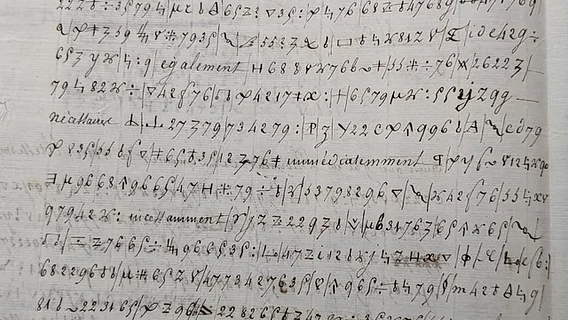
The only surviving copy of the letter is a black-and-white reproduction, published in a French military magazine in 1969 and later digitized by Persée. The first line was written in plain French, followed by 24 lines of two-digit numbers, letters, and hand-drawn symbols. The key to them has not been preserved.
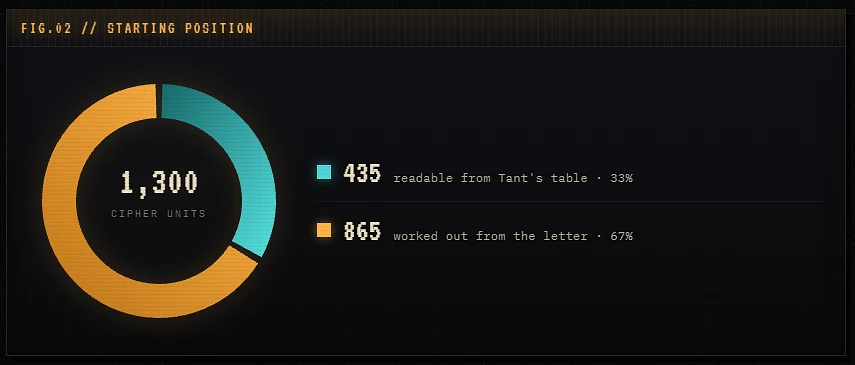
In total, the letter contains 1,300 encrypted elements and 155 different characters. To the work of Ch.However, the researchers knew the meaning of only 33 of them, meaning they could read about a third of the document.
Church had never done cryptanalysis before. He gave Astra a scan of a document, and the model cut the image into lines, recognized hundreds of characters, and tried to figure out which of them were actually different versions of the same character.
Astra then took the known meanings of the symbols as clues, and for the rest, wrote a program that went through the possible options and checked how similar the resulting text was to 19th-century French.
At some point, the model noticed another trick in the cipher: some characters did not represent a single letter, but an entire word. Astra then checked each suggested match in all the places where that character appeared in the letter.
The decrypted text turned out to be a pre-war military briefing. Marmont was told where the Bavarian, Polish, Saxon, and French forces were, as well as where the Austrian troops were likely to be concentrated.
In it, Marmont was convinced that Austria was being attacked from several directions at once and that it was “hurrying to its doom.” The general was also advised to advance after receiving the order and not to allow himself to be intimidated by “a few armies or a mass of nakedness.”
There are five ambiguous characters left in the decryption, but according to Church, they do not change the overall meaning of the document.
Previously, dev.ua wrote that the Ministry of Economy and the State Archives are working on a database of Ukrainian handwritten texts for training AI.
Previously, dev.ua wrote that Ukraine has started collecting handwritten texts to expand the RUKOPYS dataset. It is used to train AI models for recognizing Ukrainian handwriting.
«Чи є у мене талант, якщо комп’ютер може імітувати мене?». Штучний інтелект пише книги авторам Amazon Kindle. The Verge поспілкувався з авторами та виявив багато цікавого
Письменники-романісти використовують штучний інтелект для створення своїх творів. Видання про технології The Verge поспілкувалося з письменницею Дженніфер Лепп, яка випускає нову книгу кожні дев’ять тижнів, й дізналося про те, як працює штучний інтелект для написання романів. Наводимо адаптований переклад статті.
Have important news to share? Message our Telegram bot
Key events and useful links in our Telegram channel