Хочете будувати кар’єру в Data Science та AI? Vodafone Big Data Lab відкриває новий набір —>
Олександр КузьменкоSpaceTech
16 January 2025, 11:55
2025-01-16
Jeff Bezos' Blue Origin launches its New Glenn rocket into orbit for the first time. It outperforms the most common SpaceX Falcon 9 rocket
The launch of the almost 100-meter New Glenn rocket, which was finally achieved by Blue Origin, revived the space race between two billionaires — Elon Musk and Jeff Bezos.
The launch of the almost 100-meter New Glenn rocket, which was finally achieved by Blue Origin, revived the space race between two billionaires — Elon Musk and Jeff Bezos.
How the New Glenn launch went
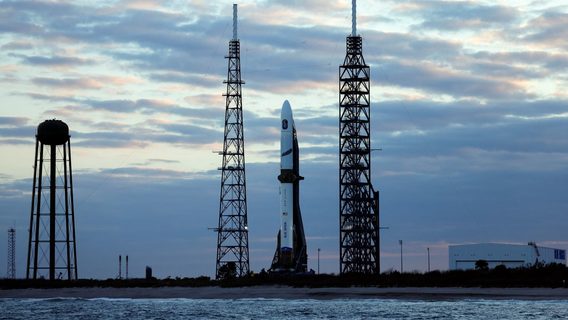
According to Universe Magazine, the New Glenn rocket launched from Cape Canaveral in Florida at 02:02 local time (07:02 GMT).
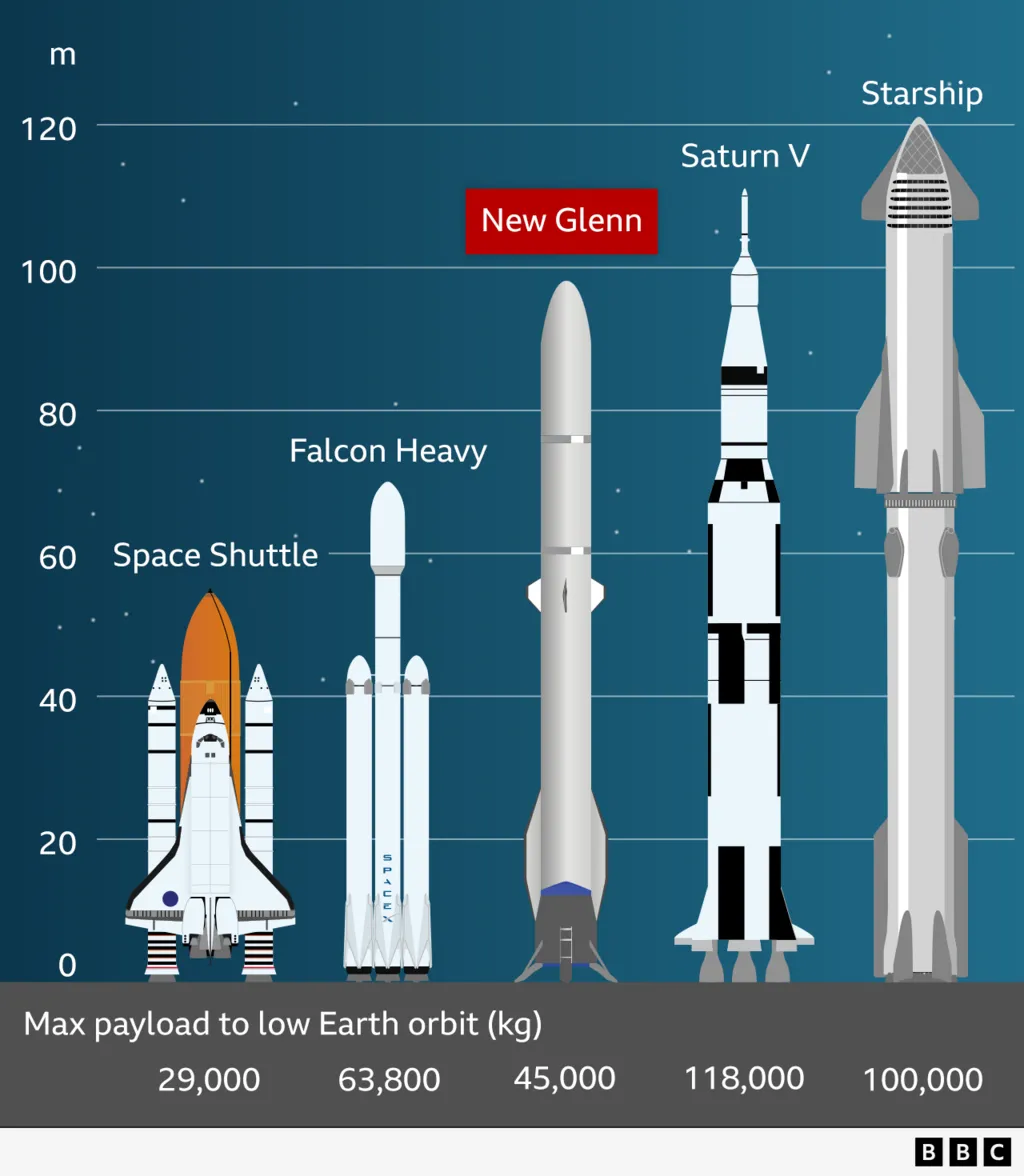
The New Glenn rocket has a two-stage design. It is 98 meters tall and 7 meters in diameter. The first stage of the rocket is powered by seven BE-4 engines, which use methane as a fuel and liquid oxygen as an oxidizer. The second stage is equipped with two BE-3U engines, which operate on a mixture of liquid hydrogen and oxygen.
New Glenn is capable of delivering up to 45 tons of cargo to low Earth orbit and 13 tons to geostationary orbit. The first stage of New Glenn is reusable. After separation, it is intended to land on a barge in the ocean, similar to the first stage of the Falcon 9.
The first flight date of New Glenn was postponed several times, but finally took place on January 16, 2025. After separation, the first stage began a reentry maneuver, but its telemetry was lost shortly after braking began. Blue Origin later confirmed that the stage was unable to land on the barge.
The second stage successfully entered low-Earth orbit with a payload — a prototype of the Blue Ring satellite platform. It is designed as a versatile vehicle that can perform a variety of tasks — from orbital refueling and propulsion to data relay. The prototype will not separate from the New Glenn second stage. The bundle will spend six hours in space, after which it will be deorbited and burned up in the atmosphere.
Despite the failed first stage reentry, the mission was a significant success for Blue Origin overall. New Glenn managed to reach orbit on its first attempt, something few launch vehicles have managed to do, potentially challenging SpaceX’s rockets.
Comparison of the most powerful space vehicles. Image BBC
Blue Origin vs. SpaceX
The two richest people in the world, Musk and Bezos, have long been competing in the commercial space race, building bigger and more powerful rockets.
Their companies want to launch numerous satellites into orbit, launch private space stations, and provide transportation for regular human flights to the Moon.
Blue Origin, which Jeff Bezos founded 25 years ago, is struggling to match the pace set by SpaceX, and the launch of New Glenn will be seen as a major step forward for the business.
The New Glenn rocket was named after John Glenn, the first American astronaut to orbit the Earth more than 60 years ago.
It is more powerful than SpaceX’s most popular rocket, the Falcon 9. New Glenn can also carry more satellites, and Bezos wants to use it as part of his Project Kuiper, which aims to deploy thousands of low-orbit satellites to provide broadband services.
This project will directly compete with Musk’s Starlink service.
Bezos says he wants «millions of people to work and live in space.» For years, Blue Origin has been sending a smaller, reusable rocket called New Shepard to the edge of Earth’s atmosphere, carrying passengers and payloads, including Bezos himself in 2021.
But SpaceX has far outpaced Blue Origin, launching its rockets 134 times last year. Plus, SpaceX’s next-generation rocket, called Starship, is even more powerful.
Some experts say that a successful launch of the New Glenn rocket will create real competition between the two companies and could lower the cost of spaceflight.
«You will see these two companies challenging each other to achieve even greater success,» suggests Dr. Simeon Barber of the Open University in the UK.
«Those willing to pay a lot, with a lot of zeros, the money will not be transferred to planet Earth.» Blitz with a space expert about suborbital tourism after another launch of the Blue Origin rocket
Божество, зореліт, уламок планети: що людство знає про Місяць і як збирається туди повертатися
16 листопада 2022 року NASA успішно запустила місію Artemis 1 до Місяця. Ракета Space Launch System (SLS) і корабель Orion стартували о 8:47 за Києвом із космічного центру Кеннеді на мисі Канаверал. Задача корабля Orion — покрутитися навколо супутника Землі шість днів і повернутися на Землю, після чого можна запускати людей. Якщо все пройде успішно, уже за кілька років ми побачимо грандіозний камбек і реюньон людства на супутник Землі. Що ми знаємо про Місяць, чому так довго його ігнорували та як будемо повертатися — в оновленому завдяки успішному старту (нарешті!) суперексплейнері від dev.ua від 29 серпня 2022 року.
Потрібне щось надійне та стабільне в хаотичному світі? Зверніть увагу на гравітацію: вона була однакова завжди
Дослідники темної енергії довели, що одна з основних сил — гравітація — залишалася константою завжди. Це значить, що Ейнштейн був правий, а нам доведеться розбиратися, що саме стоїть за нинішнім розширенням Всесвіту. Universe Today публікує велику історію про це відкриття. dev.ua дає основне.