Хочете будувати кар’єру в Data Science та AI? Vodafone Big Data Lab відкриває новий набір —>
Наталя ХандусенкоHot News
11 September 2025, 13:07
2025-09-11
A developer from Ukraine accidentally discovered his own rogue clone on a Belarusian freelance website
Middle Unity Developer Maksym Moskalyk from Rivne decided, out of curiosity, to use Google to search for photos on his Telegram and Instagram avatars. This ended with a report of fraud to the Cyber Police.
Middle Unity Developer Maksym Moskalyk from Rivne decided, out of curiosity, to use Google to search for photos on his Telegram and Instagram avatars. This ended with a report of fraud to the Cyber Police.
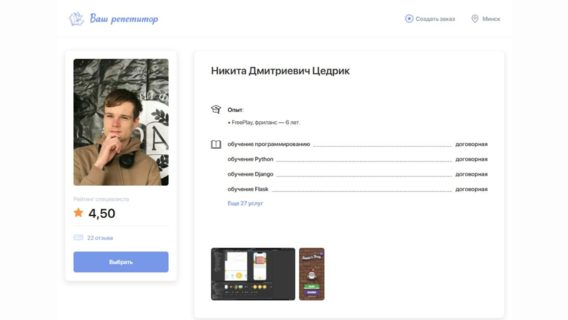
As Maksym Moskalyk accidentally discovered, there is a profile with his photo on a Belarusian website for tutors and freelancers under a different name — Nikita Tsedryk. What’s more, it even lists the same development skills that the Ukrainian possesses — Unity and C#, and he also does online tutoring, just like Maksym himself. The scammer also added a bunch of other programming languages.
"With this, I began to pretend that I was doing freelance work (mainly developing games on Unity, which is what I really do), and also working with students as an online tutor (which I really also practice as a hobby)," Maksym wrote on LinkedIn.
The developer believes that this could also carry serious reputational risks. In addition to the fact that this is a Belarusian site, this scammer is also deceiving people.
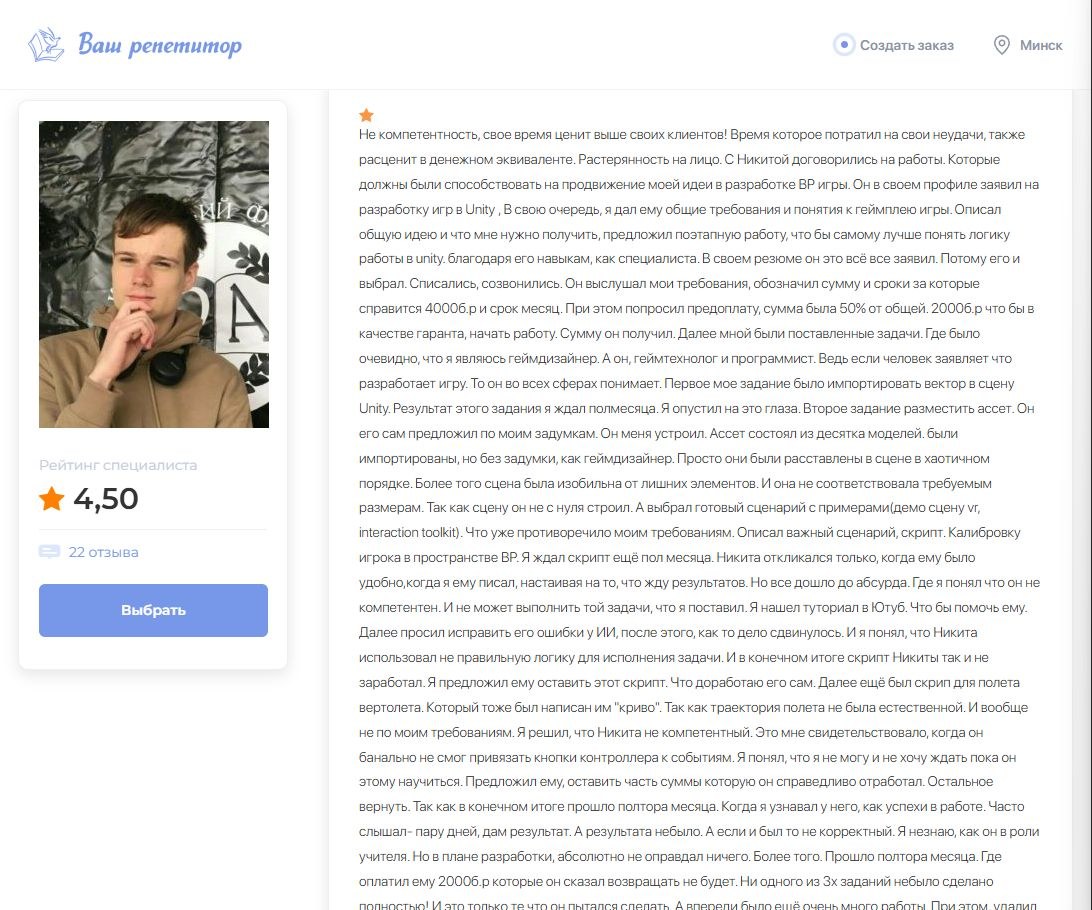
"Already in his reviews there is a negative one on a whole page from a person whom he cheated out of money by not fulfilling a freelance order, deleting chats, and misappropriating advance payment," the Ukrainian notes.
Maksym filed an online complaint with the Cyber Police. Over time, the police called him back. They said they would try to do something.
"I made this post more so that later no one would think that I was really throwing people for money on that Belarusian website. And, as it turned out, it's quite important to sometimes be interested in how and where your photos are used," the IT worker concluded.
“The scammers got smarter, it looked as believable as possible.” The developer talked about a new scheme of scammers-recruiters on LinkedIn. Claude helped to identify the dangerous code