Blue Origin suspends space tourism flights to focus on the Moon
Jeff Bezos' space company Blue Origin is suspending its space tourism flights for at least two years to focus all its resources on future missions to the Moon.


Jeff Bezos' space company Blue Origin is suspending its space tourism flights for at least two years to focus all its resources on future missions to the Moon.
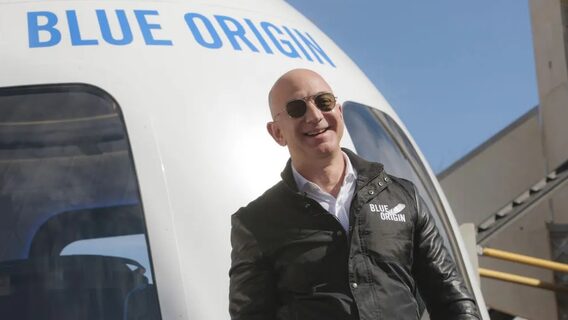
Jeff Bezos' space company Blue Origin is suspending its space tourism flights for at least two years to focus all its resources on future missions to the Moon.
This decision temporarily halts the program, through which Blue Origin has been sending people beyond the Karman Line, the officially recognized boundary of space, for the past five years, TechCrunch writes .
Blue Origin made the announcement just weeks before the expected third launch of its New Glenn mega-rocket, scheduled for late February. The company had previously suggested it was going to use the third New Glenn launch to send its robotic lunar lander to the moon, but that spacecraft is still undergoing testing at NASA's Johnson Space Center in Texas.
Since taking office again, President Donald Trump has been pressuring NASA to send astronauts back to the Moon by the end of his second term, paving the way for companies other than SpaceX to compete for those missions.
"This decision reflects Blue Origin's commitment to the nation's goal of returning to the Moon and establishing a permanent, sustainable presence on the Moon," the company wrote on Friday.
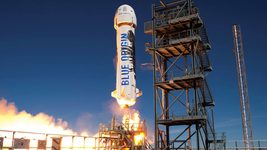
Blue Origin first flew its New Shepard rocket more than a decade ago, becoming the first rocket to launch into space and land safely on Earth. However, unlike SpaceX's Falcon 9, the New Shepard rocket was never intended to reach low-Earth orbit. As a result, its use has been limited to space tourism, which allows passengers to experience weightlessness for about four minutes in a Blue Origin space capsule, and scientific missions.
The company said New Shepard has flown 38 times and carried 98 people into space, as well as more than 200 scientific and research payloads.