Хочете будувати кар’єру в Data Science та AI? Vodafone Big Data Lab відкриває новий набір —>
Ігор Вишневський Weapon
17 September 2025, 09:00
2025-09-17
“You can pour $1.5 million into developing a technology, but just certifying the product can cost $800,000.” Dwarf Engineering CEO on old monopolies and bureaucracy in the EU arms market
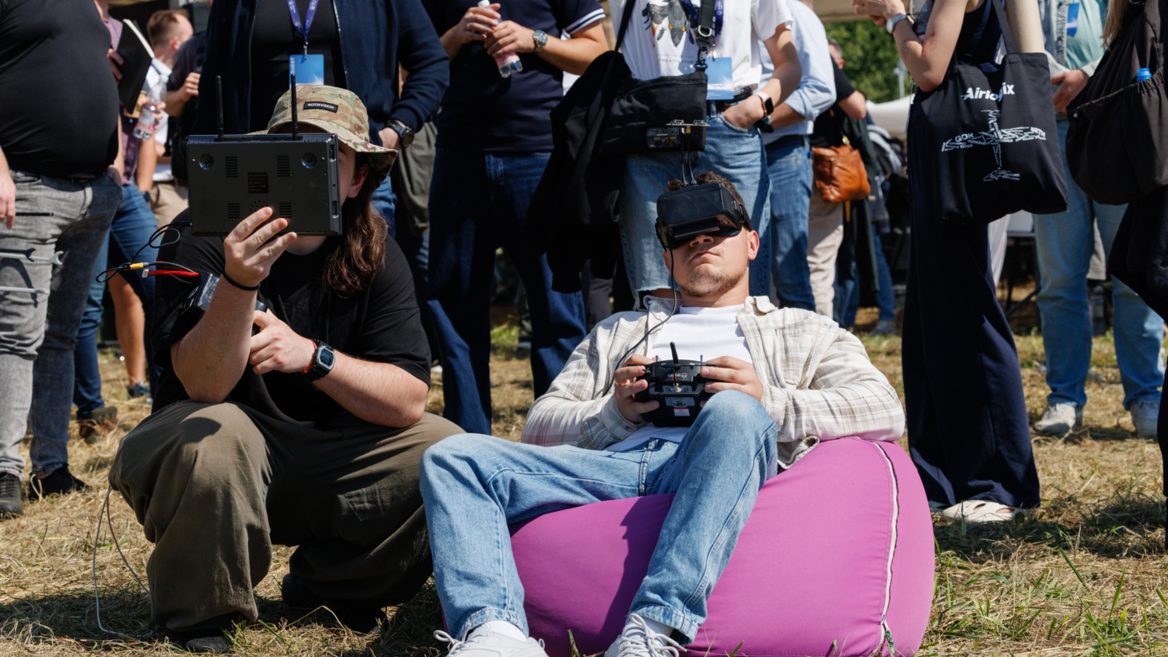
At the end of August, Denmark traditionally hosted the annual DALO Industry Days exhibition, the largest forum of arms manufacturers in Scandinavia. Among the Ukrainian companies participating was Dwarf Engineering, which recently presented the work of the Narsil autonomous control module for FPV drones.
The company’s CEO Vladyslav Piotrovsky spoke about the Dwarf Engineering product, his impressions of the forum, and the problems of arms manufacturers in Europe on the sidelines of one of the dev.ua miltech events. Below is his direct speech.
At the end of August, Denmark traditionally hosted the annual DALO Industry Days exhibition, the largest forum of arms manufacturers in Scandinavia. Among the Ukrainian companies participating was Dwarf Engineering, which recently presented the work of the Narsil autonomous control module for FPV drones.
The company’s CEO Vladyslav Piotrovsky spoke about the Dwarf Engineering product, his impressions of the forum, and the problems of arms manufacturers in Europe on the sidelines of one of the dev.ua miltech events. Below is his direct speech.
About the Narsil autonomous drone control module
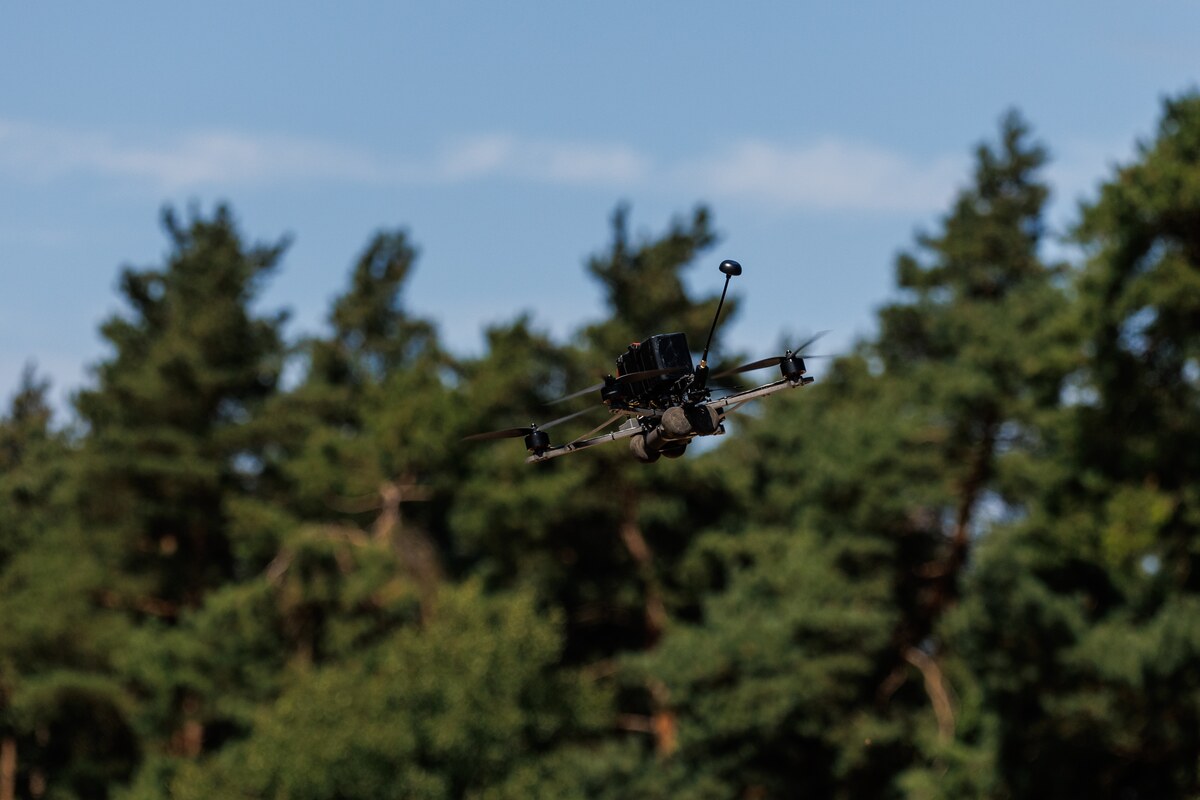
At the forum, they presented their autonomy module, which is installed on our partner drones. In essence, it gives the combat pilot a kind of «pilot assistant», the so-called copilot, who will support the drone in case of loss of control, even if the loss of communication is complete. That is, when the drone begins to be choked by electronic warfare, it automatically switches to «cruise» mode and continues to fly — just like a car drives in a similar mode. Then the drone establishes contact when it flies through the electronic warfare zone. When it has fixed a point, it can work out the same proof: even when it passes the radio horizon and communication is lost, the drone will still hit the target.
This costs less than 10% of the cost of the drone, but increases its efficiency from 30% to 80%. These calculations were made, among others, by Brave1.
In general, most of the proofing systems available on the market are not ideal, but our product already creates a sufficient economic difference to use this development.
As for the event in Denmark, it was a conference, exhibition, and training ground where Nordic defense companies exhibited. They wanted to get to know the Ukrainian defense industry, and we wanted to share our experience, so we invited a number of Ukrainian companies to the event.
«No matter how much we scream, they still won’t be hurt»
The event in Denmark is far from the first major defense forum I have attended, and not the first experience of international communication on the topic of defense technologies. Previously, I went to study in the USA, we presented Ukraine in Japan, and I also went to an exhibition in the UAE — but everywhere it is the same situation.
I don’t know what else needs to happen for the event to «double.» It’s just their pace, and I don’t think it’s going to change.
When your country is not at war, your loved ones are not dying, and you do not see suffering every day, then you will not be particularly moved by it. Even when representatives of Western defense concerns or governments come to Ukraine and see the shelling with their own eyes, they still do not fully understand the situation. No matter how much we shout, they still will not be hurt — not because they are bad, but because they simply do not have this experience.
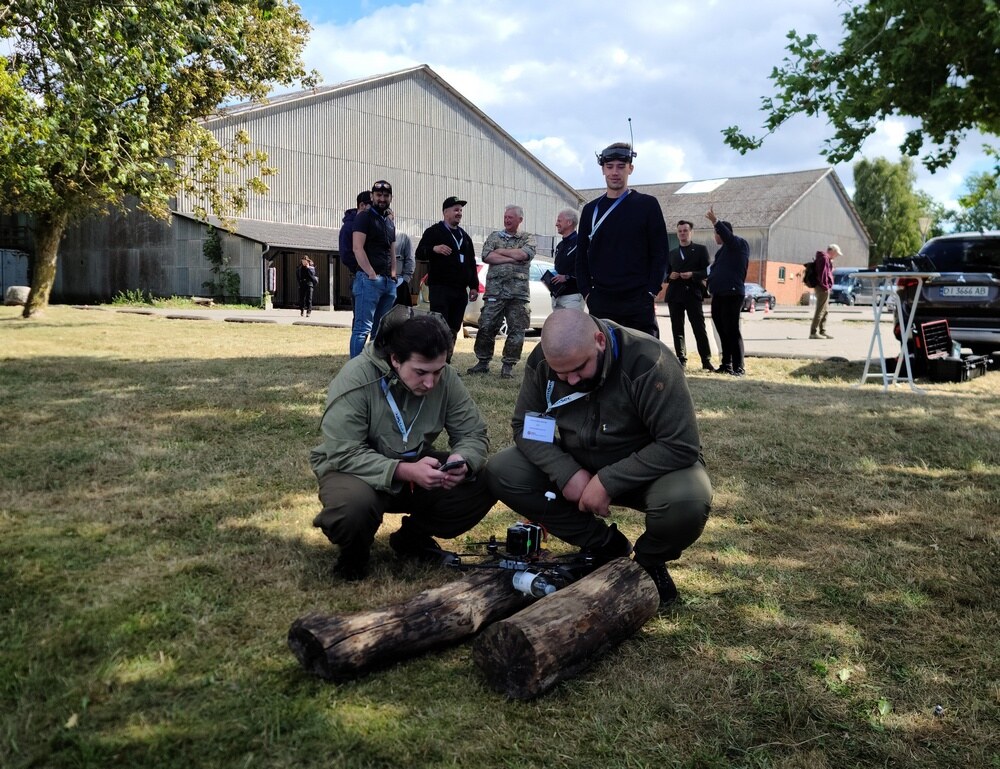
Vladyslav Piotrovsky during an event in Denmark
When I arrived in Denmark and came to the hotel for breakfast, I just heard snippets of communication — other forum participants, local residents, students, tourists. I realized how measured and comfortable their lives were. It even made me feel a little uncomfortable that Europe can live in such comfortable conditions, and we have to return to Ukraine, and then — communicate with the military, solve difficult issues, go to the east, look for money and invent various technologies to somehow influence the course of the war. They swim in the pool, eat pizza, relax and so on — in a circle. It just seems to me that if war comes to them, no one will fight there.
On the problems of Western defense
Now they have one place on fire, and they are allocating huge funds, trying to pour them into defense and R&D to diversify the market. The defense market abroad remains significantly consolidated, as it was before the full-scale war and here. There is no market there that you fight for.
In the West, you have huge government contracts for R&D, and companies are big monopolists. And they have their own lobby to keep everything the way it is.
Most of our investors are feverishly asking whether our products are dual-use? Because if some small Ukrainian company enters the European defense market purely, it will not be able to survive in European procurement. There you will have to fight for money with other companies not in conditions of war, but in conditions of bureaucracy, when you have to fill out a 400-page grant application.
We don’t have this bureaucratic machine now, and these processes are not provided for within our companies, because our process works for the purpose of producing weapons. But they don’t work that way there. And, accordingly, they themselves try to break what they have built into some smaller parts.
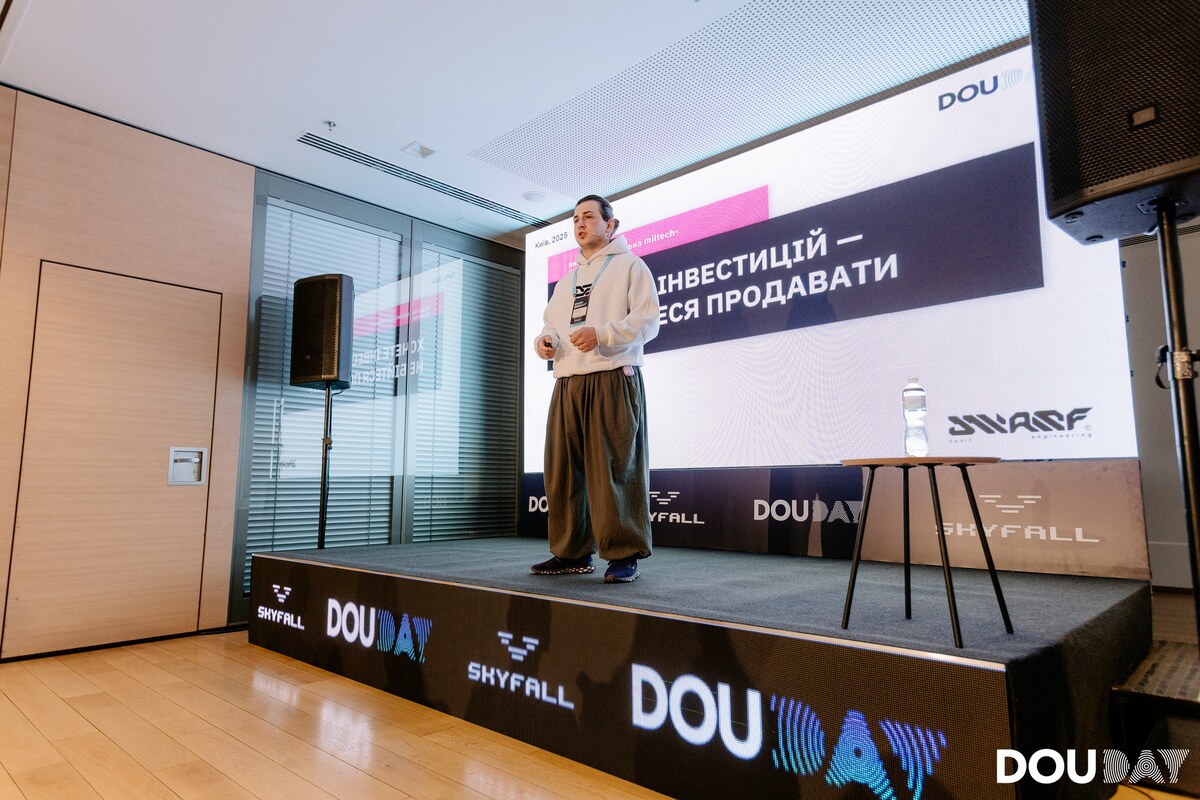
Vladyslav Piotrovsky during his performance at DOU DAY
What do they need? We need to break up military companies so that they all compete with each other and generate new products.
Drones manufactured by Western companies cost two to three times more than our counterparts.
And it’s not because they’re stupid and can’t assemble them. It’s because their military standards include a number of very meticulous requirements, for example, logistics requirements — how the product tolerates salt water, high and low temperatures, high vibrations, and everything that will happen during transportation in deserts or by airplanes, dumping containers, transporting them by sea. A Western drone, according to these requirements, must withstand all this and then launch. But if our drones can’t do this, it’s not because we make bad drones. We simply don’t have such requirements, because if we were doing this, everyone would have died in war a long time ago.
Old monopolies vs new technologies
A small company can become big with a constant turnover of drones, and they have a fixed order, and it is not known whether there will be the next one. It is incredibly difficult for a small company to plan its budget in the European arms market. So huge companies simply enter there.
To produce weapons according to European standards and enter this market, you need a lot of money, so some conventional startup will never be able to do it.
They have no way for a small company to get into this military procurement.
«It costs less than 10% of the cost of the drone, but raises its efficiency from 30% to 80%»
No matter how much money is poured into developing technologies, they don’t reach contracting — there’s simply no direct path. That is, they need to somehow try to break down this overgrown legacy infrastructure. Our infrastructure is completely different — conditionally, 300 drone manufacturers plus 1,500 technological military startups. A lot of them duplicate each other, but that’s exactly why they compete and try to do something new.
No one will go down this path and decompose Rheinmetall.
Europeans are in a kind of impasse — in order to build something new, you have to destroy the old. And no one will give in to the old — because there are huge monopolies there.
In our country, it collapsed organically: the monopoly did not hold up in the conditions of a full-scale war, so a market appeared for new companies that began to squeeze the old monopoly. But this does not happen in Europe.
That is, the Europeans are shouting «we need startups,» but where will these startups go, who will buy them? You can pour $1.5 million into a company to develop a technology, but just certifying that your product meets certain requirements can cost $800,000 there with an investment of one and a half million. So how to do it? There is simply no answer. This is where all the «exits to Europe» and negotiations end.
«Anyone can register a company abroad, make a new iteration of a product and write that it is Germany original.» Why the «iron curtain» will not stop the outflow of Ukrainian Miltech to Europe and what the authorities should do to prevent this from happening