Марія БровінськаStartup
19 November 2024, 12:27
2024-11-19
Challenger AI invites AI startups to the acceleration program. Who can participate and what will the teams get?
How to improve the project, seal the startup to investors and find hundreds of new acquaintances among the startup community? There are many options, and one of them is advised by Natalia Limonova, CEO of the Ukrainian startup GIOS, which has developed an interactive mathematical platform based on artificial intelligence in the style of TikTok with elements of gamification. Natalia is a graduate of the international acceleration program Challenger AI, which takes care of AI startups, and is currently conducting the third set of teams, in particular from Ukraine.
How to improve the project, seal the startup to investors and find hundreds of new acquaintances among the startup community? There are many options, and one of them is advised by Natalia Limonova, CEO of the Ukrainian startup GIOS, which has developed an interactive mathematical platform based on artificial intelligence in the style of TikTok with elements of gamification. Natalia is a graduate of the international acceleration program Challenger AI, which takes care of AI startups, and is currently conducting the third set of teams, in particular from Ukraine.
«Challenger AI is a very balanced program with the opportunity to both deepen theoretical knowledge and receive practical advice from startup founders and experts in various fields. Networking and new acquaintances became valuable, an incredible match with a mentor, there was also a cool Pitch Day with valuable feedback, and I was lucky enough to become a member of the delegation to Estonia from the accelerator, where I found new clients and concluded partnership contracts with a representative in Central Asia Nataliya tells dev.ua.
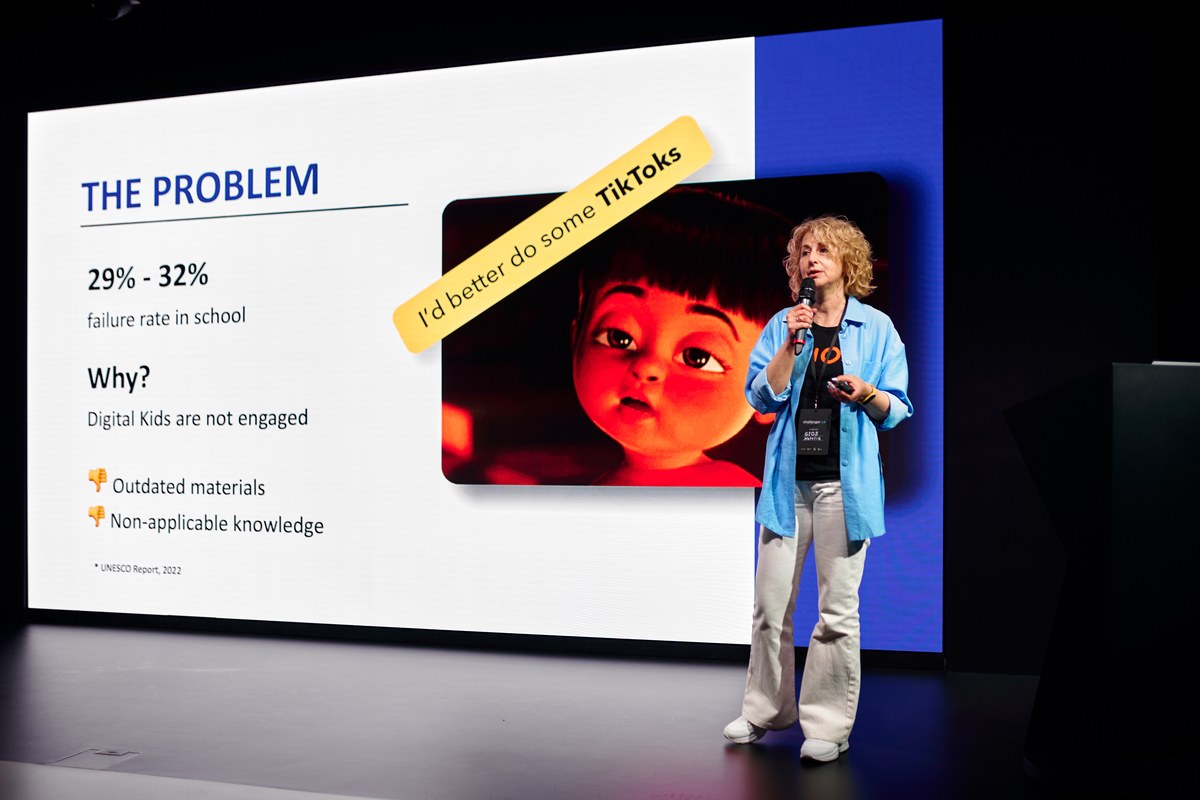
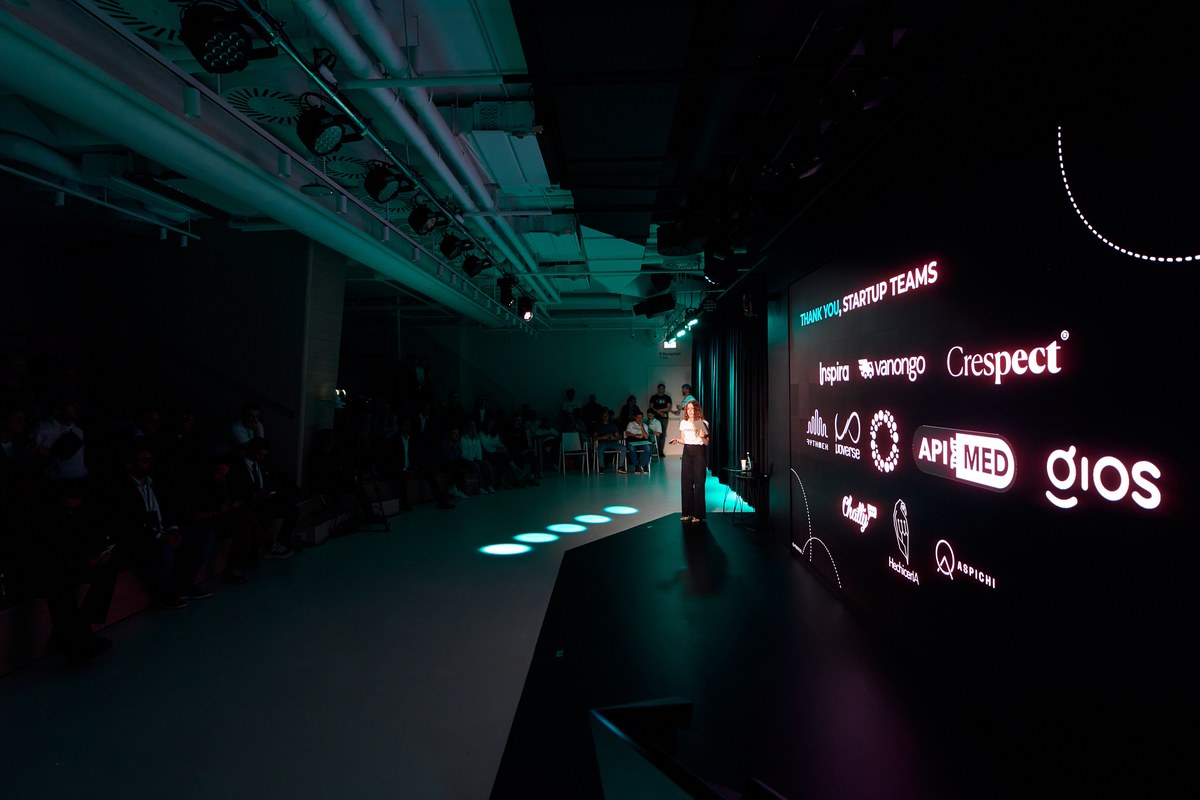
Natalia Limonova, CEO of GIOS during the Challenger AI 2.0 Demo Day
The mentor who cooperated with GIOS, Karin Künnapas, venture partner of Tera Ventures and managing director of EstBAN, notes that this is her first experience working with a Ukrainian startup. «I think that the most I managed to help GIOS focus and set priorities, and understand that it’s okay not to try to do everything at once,» Karin told dev.ua.
According to the expert, going through acceleration programs is a very important stage for new startups, because there are many steps that need to be taken to increase the probability of success at the beginning of building a business. «The accelerator can help to do this systematically. Plus, you’ll meet amazing people who are on the same journey as you, and you’ll build a support system for yourself. That’s exactly what Challenger AI does and why it’s such a valuable program,» Karin argues.
dev.ua spoke with Olena Shershun, Challenger AI program manager and Associate Partner at the founding company of the Civitta accelerator, about the features of acceleration, the bet on AI and opportunities for startups from Ukraine.
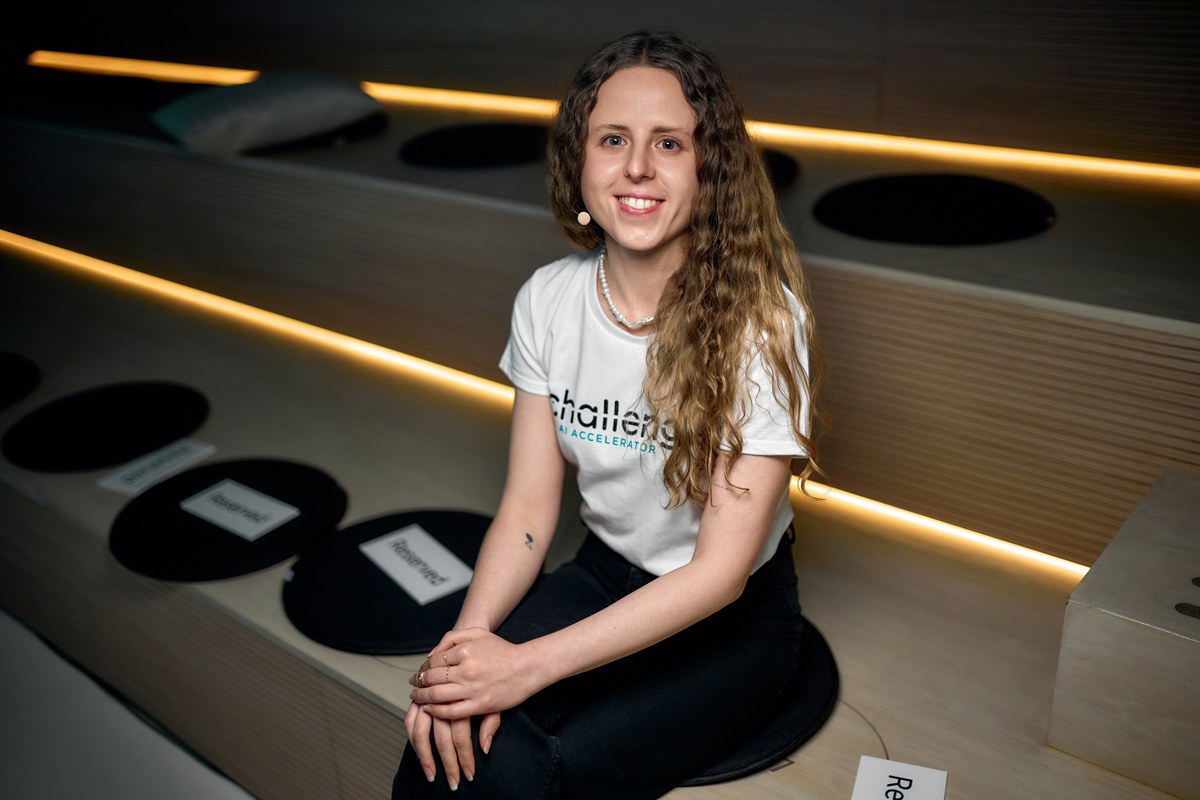
Olena Shershun, program manager of Challenger AI
REFERENCE
Challenger Accelerator is a project of the international consulting company Civitta, which operates in more than 20 countries. The Challenger team works with small, medium and large businesses, helping to increase their level of innovation through hackathons and specialized business idea launch programs.
In addition, challengers are actively building a startup ecosystem. In particular, they organize acceleration programs for startups from all over the world, helping them pump their product, implement technological solutions, enter new markets and attract investments. The Challenger Accelerator portfolio includes 50 implemented acceleration programs in various fields in Estonia, Slovakia, Lithuania, Ukraine, Armenia and other countries. In total, their graduates have attracted more than 2 billion euros of investments. Challenger AI Accelerator is a project actively implemented and implemented by Ukrainian and Estonian teams.
— How did Challenger AI appear?
The Challenger Accelerator brand was born in 2019. At that time, the Civitta team already had 10 years of experience in cooperation with startups and implemented many programs in various fields: urban planning, in Health and Deep-Tech, Green & Digital, Diversity spheres, and also supported the development of women’s entrepreneurship. We realized that it was time to convert our experience into a separate brand of acceleration programs.
Challenger Accelerator combines several programs. In particular, Challenger Science for scientific solutions, Challenger EDU — for ed-tech projects, Challenger Cassini business accelerator and Challenger AI Accelerator. We launched the last one in 2021.
Challenger AI is an accelerator for AI startups or those teams that plan to integrate AI into their solutions. The program is financed by ESTDEV — the Estonian Center for International Development and UMAEF (Ukraine-Moldova American Enterprise Fund). In addition, this year we involved the support of two corporate partners from Estonia — Helsing and TRINITI. This allows us to work on the concept of equity-free, that is, we do not take money for participating in the program and do not ask for a share in the business.
The idea of the challenger is to make not a general, but a specialized accelerator for those startups that plan to effectively integrate artificial intelligence into their solutions.
These can be startups from completely different industries: health-tech, edu-tech, beauty fields or even jurisprudence.
The focus on AI allows you to increase added value by working with highly specialized experts, whose experience can be adopted by every startup. After analyzing the list of unicorns from Ukraine, we realized that Ukrainian startups have great potential in AI. That is why we decided to launch the Challenger AI Accelerator here.
— Did the full-scale invasion affect your work in Ukraine?
When the full-scale invasion began, we suspended operations. Later, in about six months, we resumed work: we restarted the program, started a new selection of projects.
In 2023, we graduated the first cohort of participants, and in the spring of 2024 there was a second batch. Among our graduates, in particular, the Ukrainian SaaS platform Rythmex, Health-tech startups Apixmed, CheckEye, Ed-tech project GIOS, Mental Health startup Scally, Legal startup Inspira and others.
We are currently conducting the third set of projects, which will last until November 24. Therefore, I encourage all those who wish to apply.
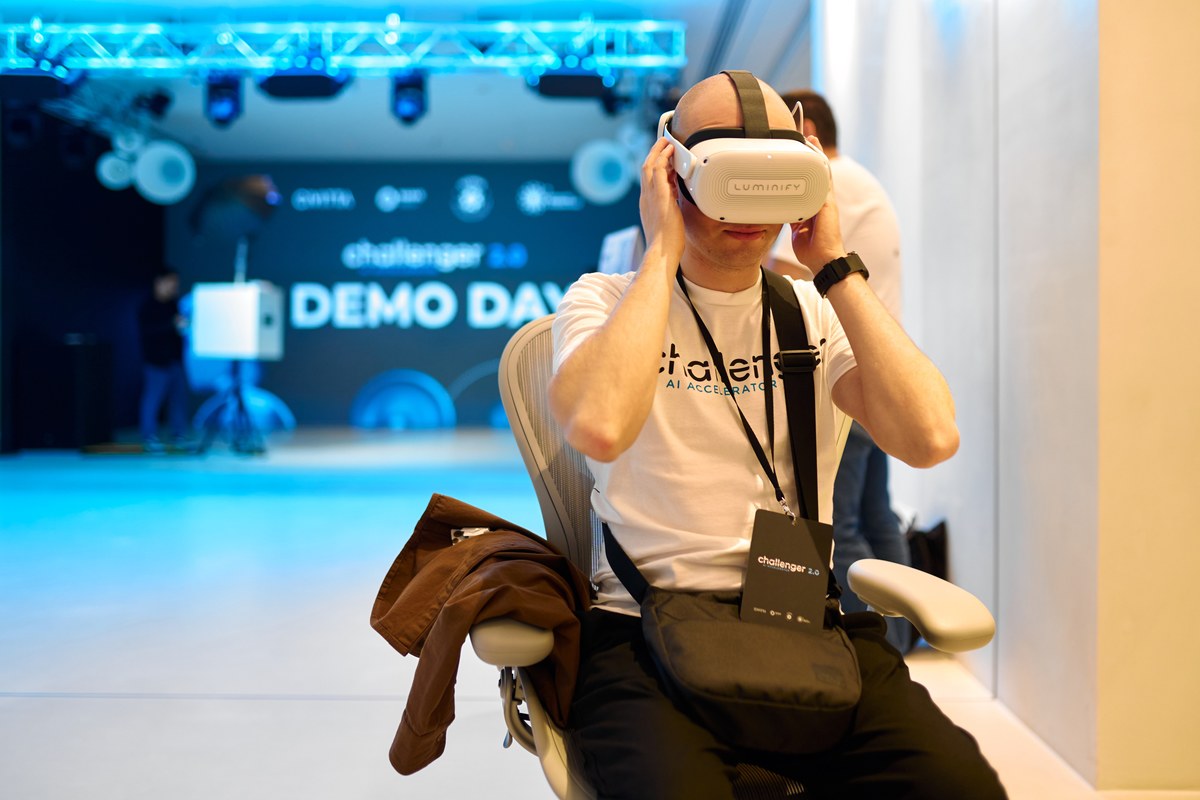
Challenger AI 2.0 Demo Day
— Since you work with many markets, tell us whether Ukrainian startups have certain features or are different from their foreign counterparts?
Ukrainian startups prevail here, but there are also foreign ones. Our mentors and investors are mostly foreigners. In particular, they include managing partner at Meemaeger Capital Lev Dolgachov, Erki Mölder from Verge HealthTech Fund, founding partner of Specialist VC Riivo Anton, co-founder of Soulie Triin Agan, head of product at Verticals at Veriff Raoul Liive and many others. We want the accelerator to help startups reach a qualitatively new level, immerse themselves in the international community.
From the differences between European and Ukrainian founders, it is noticeable that Ukrainian startups do not always immediately think about acceleration programs, do not always understand their value, unlike their Western colleagues.
There, startups often go through several acceleration programs, they try to expand their network as much as possible, get mentorship, and use these programs very actively.
The local Ukrainian startup ecosystem, of course, began to develop later, we are very young, so the value of such projects is not so obvious for teams. However, in recent years, this trend is changing: more and more teams are applying to programs and passing them. They understand that accelerators are a great chance for improvement and learning, an opportunity to communicate with mentors, investors, other startups from other countries.
— Do you have taboo niches for startups?
We do not work with gambling and are not an accelerator for Web3. Instead, Challenger AI is open to the rest of the industry. When selecting, we give preference to startups that already work with AI and have an MVP. At the same time, if the team only plans to integrate artificial intelligence into its solution and has at least a product demo, it also has a chance to get into the program. Another condition is to have at least 3 people in the team.
Separately, I will note that we work less with B2C, we have greater expertise in B2B, so most of our projects are B2B solutions.
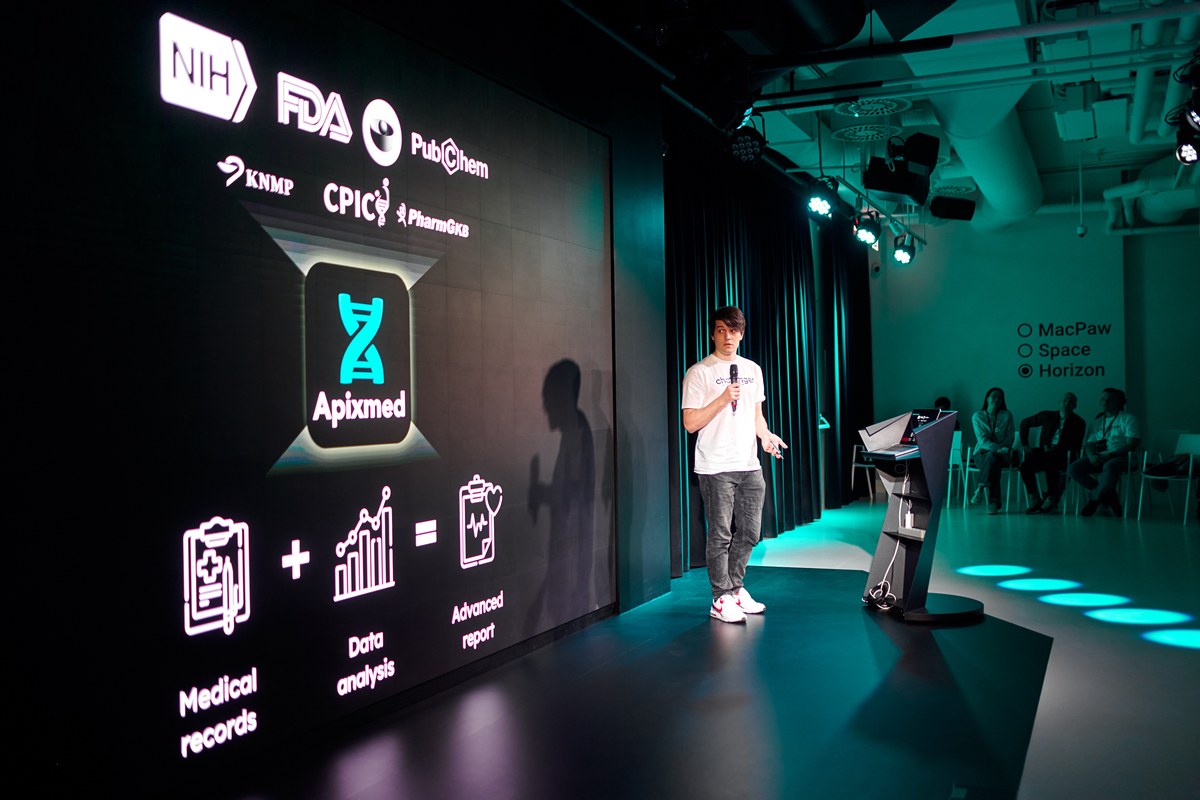
Apixmed startup pitching during the Challenger AI 2.0 Demo Day
— Do you pay attention to diversity in teams? Could it be all-male teams, for example?
Of course, we would love to have more startups with diverse founders, but we will not discriminate against an all-male team if they have a good solution and meet all the criteria. We certainly encourage female founders, we always have female founders in the cohort. In the last cohort, there were three founders from among the founders of 12 projects.
— Is there high competition among Ukrainian inventors to get to you for acceleration?
The ecosystem is actively developing, but not as fast as it could if there was no war. From the experience of the two previous sets, we received 100 applications each in the first and second selections in Challenger AI. Of these, 20 projects were accelerated: 8 startups in the first cohort and 12 in the second.
We are currently recruiting for the third cohort, so I invite startups to apply. You can read more about the criteria and the program on the accelerator’s website.
— What does a startup that gets into acceleration get?
We put a lot of emphasis on mentoring, so a big part of our program is mentoring. This is our strong point. Each startup in the cohort receives a lead mentor, who from the beginning to the end of the acceleration works closely with the team and processes all the team’s requests, guides, and gives advice. In addition, we have technical mentors who have an AI background and can advise and help startups in terms of technical product development. We also offer an additional third type of mentoring — mentoring from session experts on request. This is especially useful when a startup feels it needs additional knowledge, such as marketing, or legal advice. Requests can have different specificities, so we try to find a person in our network who can specifically help with this.
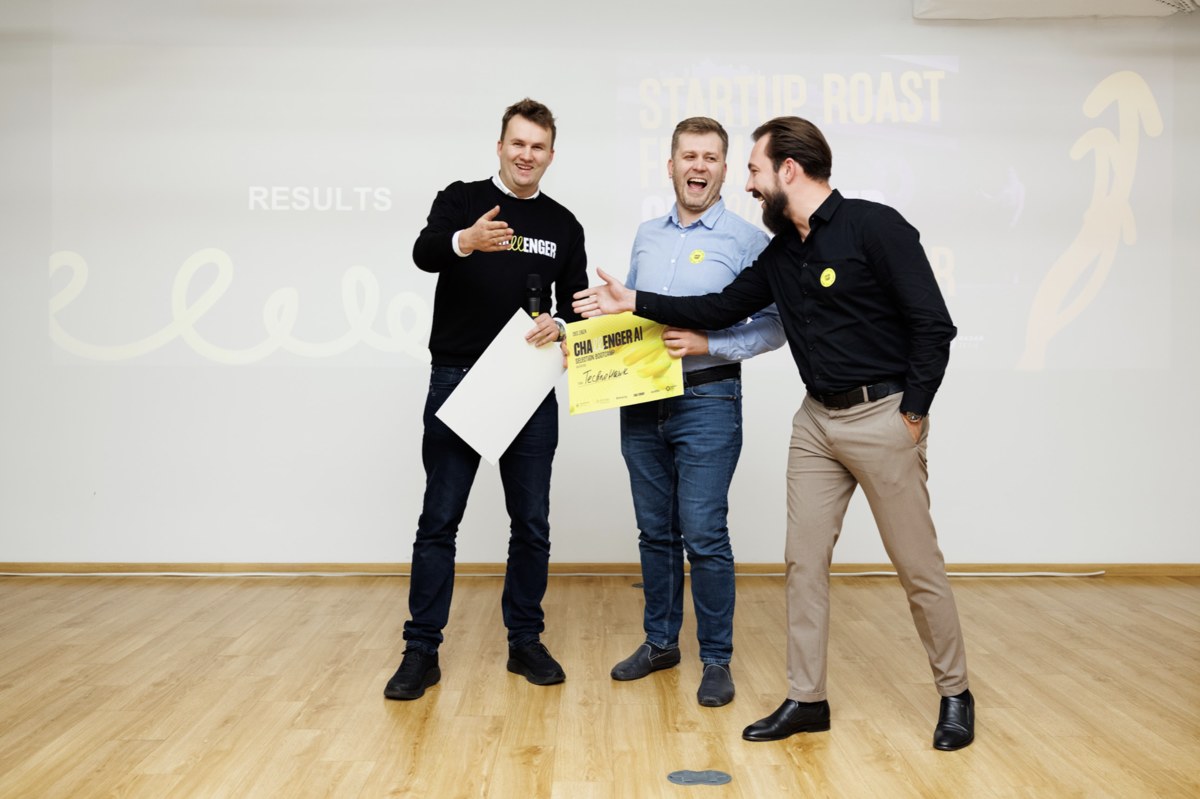
Startup roasts also take place within the acceleration: we invite investors, they listen to startup pitches and ask questions, give feedback.
Startup Roast from Challenger AI
In addition, startups participating in acceleration receive prizes from program partners. In Challenger AI 3.0, our partners at UMAEF provide a grant of $25,000 to the best startup team, which will be determined by the jury during the Demo Day. USF (Ukrainian Startup Fund) will also distribute $75,000 in AWS credits equally between the three best teams. The rest of the partners provide free subscriptions for a period of 3-12 months.
In general, the acceleration process has four components:
Curriculum and trainings. There are five modules: business model creation, product development, company and team management, scaling to new markets, and increasing investment attractiveness.
Mentoring support. For each startup, the organizers choose mentors — business mentors, technological mentors who have the appropriate expertise and experience. In Challenger AI 3.0, there will also be an opportunity to receive mentoring from session speakers on request, which I mentioned above.
Getting to know investors. Startups participate in Startup Roasts and pitch their solutions to international and Ukrainian investors to improve their pitches.
Meetings with successful founders. The accelerator team invites successful Ukrainian and foreign founders to participate. This way, the participants will learn about the relevant experience of those who have already gone through the path of entering new markets or raising investment rounds.
Perhaps the greatest value of any acceleration program is the network, the contacts that startups get throughout the program. The program is customized for each new cohort.
You can learn more about the modules here.
Module 1: Business model and product-market fit
In this module, startups understand the formation of a business model and the uniqueness of their own product. Beginning founders with projects in the early stages need to understand what mechanism will help to develop and scale the startup in the future.
Module 2: Product development
Participants will analyze how AI technologies can improve their product and add competitive advantage in the market. A lot of attention is paid to scalability thanks to the use of artificial intelligence by leading expertise.
Module 3: Company and Team Management
Key aspects of this module are financial and legal management. For novice startups, it is important to learn how to manage existing project budgets and maintain PnL reports. Also prepare a working financial model and necessary financial documents/forecasts/indicators for attracting investments.
Module 4: Scaling into new markets
In this module we spend time building a marketing strategy, sales and scaling the product into new markets. Participants, together with mentors, work out the needs of the team and discuss possible expansion strategies.
Module 5: Increasing investment attractiveness and attracting finance
The last module is devoted to attracting external finance. The Civitta team has its own in-house financing expertise.
Once we’ve selected participants for a new Challenger AI cohort, we review their requests and can modify the program accordingly to meet the startups' needs.
Challenger AI 2.0 Demo Day
— How does Challenger AI differ from other acceleration programs that are available for Ukrainian startups? What is your advantage?
If we talk about other accelerators, then, first of all, we are the first specialized accelerator. That is, we build a program around AI so that startups receive concentrated knowledge that they can apply in the development of their product. Secondly, we are equity-free. Thirdly, we are an international accelerator, this is also important. In Ukrainian programs, mentors and experts are mostly Ukrainian. This is not bad, it is very useful for early-stage startups, but no one has such an international network as ours in the Ukrainian market.
— And what is the share of Ukrainian projects in the acceleration program usually?
Two thirds exactly. In the last set, we had 8 Ukrainian teams out of 12. And this year, our plan is to have at least as many Ukrainian teams.
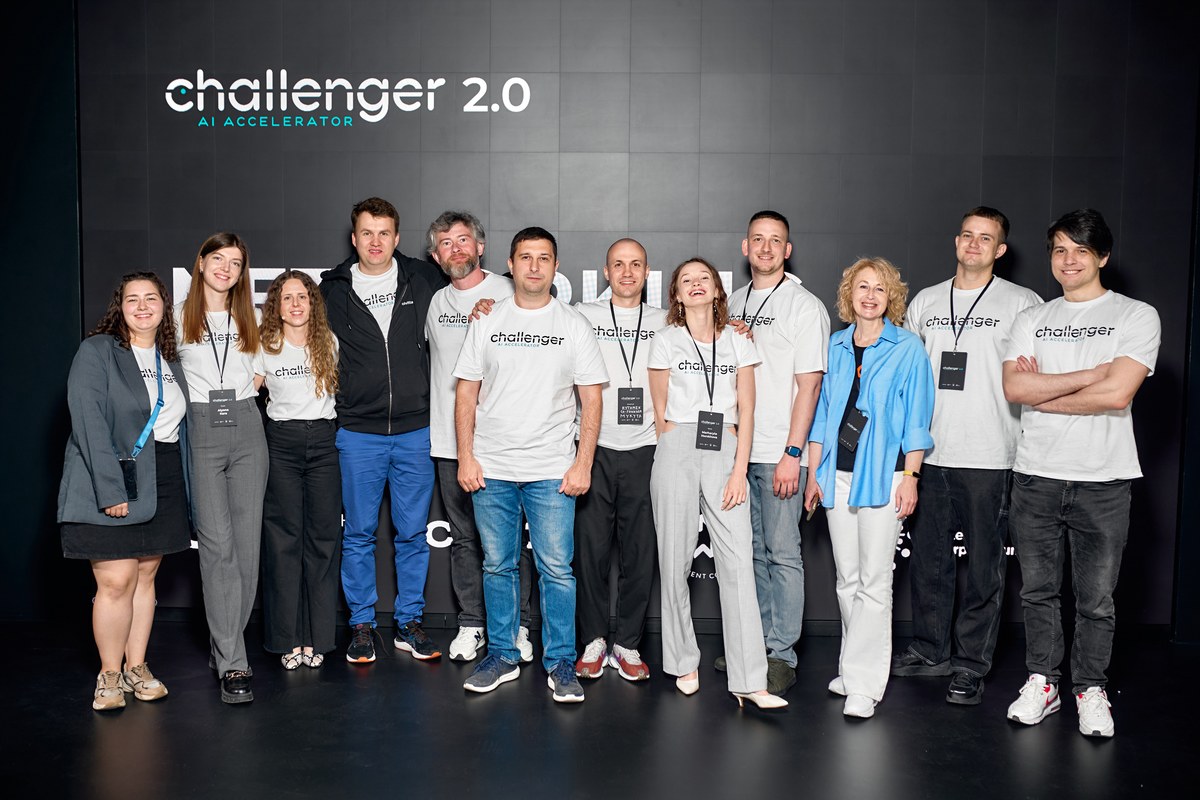
Challenger AI team with startups
— In what format do meetings take place within the program?
Globally, it is an online format with hybrid elements, because most of the speakers are international. This means that all trainings are conducted online. Demo Day takes place in an offline format with the possibility to participate remotely if the team cannot come to Ukraine. But this year we are still thinking about holding more physical activities in Ukraine for Ukrainian founders.