Хочете будувати кар’єру в Data Science та AI? Vodafone Big Data Lab відкриває новий набір —>
Ігор Вишневський That's Life
13 January 2026, 09:00
2026-01-13
Will the points of invincibility have guaranteed internet via xPON or Starlink during blackouts? What does the government resolution say about this and will it help Ukrainians stay connected?
In the last week, the full and high-quality functioning of the invincibility points has again become more than relevant, if not to say — a matter of life and death. Let’s avoid excessive hyperbolization and unnecessary tragedy, but objectively — millions of people were left without electricity and heat in cold winter weather for a fairly long period of time. So here it really is no joke.
The latest hostile attacks on energy and other critical infrastructure have plunged the million-strong cities of Kyiv (partly) and Dnipro into darkness, as well as such large industrial centers as Zaporizhia and Kryvyi Rih. This also applies to many other settlements in the Kyiv, Dnipropetrovsk, Zaporizhia regions and beyond. Unfortunately, with sub-zero temperatures, a significant part of the residents of these regions (mainly Kyiv and the Kyiv region) were also deprived of heat and water. And while the water supply was restored quickly, in some places they are still fighting to restore full-fledged energy and heat supply. We almost thought that as of today, the situation had basically stabilized. But at the moment we do not yet fully understand the future consequences of today’s new missile attack on Kyiv. At least, Bucha, Gostomel and Irpin, where the author lives, are also in a blackout. And we haven’t even mentioned how shortly before that, the residents of Odessa found themselves in a total blackout for at least a few days.
In the last week, the full and high-quality functioning of the invincibility points has again become more than relevant, if not to say — a matter of life and death. Let’s avoid excessive hyperbolization and unnecessary tragedy, but objectively — millions of people were left without electricity and heat in cold winter weather for a fairly long period of time. So here it really is no joke.
The latest hostile attacks on energy and other critical infrastructure have plunged the million-strong cities of Kyiv (partly) and Dnipro into darkness, as well as such large industrial centers as Zaporizhia and Kryvyi Rih. This also applies to many other settlements in the Kyiv, Dnipropetrovsk, Zaporizhia regions and beyond. Unfortunately, with sub-zero temperatures, a significant part of the residents of these regions (mainly Kyiv and the Kyiv region) were also deprived of heat and water. And while the water supply was restored quickly, in some places they are still fighting to restore full-fledged energy and heat supply. We almost thought that as of today, the situation had basically stabilized. But at the moment we do not yet fully understand the future consequences of today’s new missile attack on Kyiv. At least, Bucha, Gostomel and Irpin, where the author lives, are also in a blackout. And we haven’t even mentioned how shortly before that, the residents of Odessa found themselves in a total blackout for at least a few days.
In this material, we will not retell all the chronicles of the latest blackouts and related problems — everyone who has electricity and the Internet has already had the opportunity to read hundreds of messages and news about this. And many, unfortunately, have experienced it on their own (or are still experiencing it). But we would like to update the problem of providing Internet points of invincibility, especially since this issue was recently raised by the government itself in Resolution No. 1736 of December 24, 2025.
Will there be 100% guaranteed internet in points of invulnerability and can the above-mentioned resolution bring us closer to this? Will this provide people with at least the opportunity to contact their relatives during blackouts? We discussed this issue with Stanislav Prybytek, Deputy Minister of Digital Transformation for the Development of Digital Infrastructure, experts and representatives of the authorities in the regions. We also interviewed residents of Kyiv, Dnipro, and Kryvyi Rih about the current experience of providing internet in points of invulnerability during the recent blackouts. An obvious spoiler for everyone — unfortunately, the situation is still far from ideal.
xPON or Starlink — at every point of invincibility
On Christmas Eve, the Ministry of Digital Affairs announced that «the government is changing the rules for the operation of hotspots so that every Ukrainian can stay connected even during blackouts.»
The government decided to ensure this solution by establishing a mandatory requirement by Resolution No. 1736 — each point of invulnerability must have a network connection via xPON or Starlink. The document also establishes another requirement — regarding a static IP address at points of invulnerability: this will allow centralized control of the availability of the Internet and possible technical malfunctions.
«This will allow us to automatically check the network operation at a specific point. If the connection disappears, we will instantly see it and react before you arrive at the point,» the Ministry of Digital Affairs promises somewhat overly optimistically in a press release about this.
Why these rules were introduced only now, when the full-scale war is approaching its fourth anniversary, is an open question, but, as they say, better late than never.
But what is more worrying is not even this, but the very possibility of somehow centrally controlling a huge network of indestructible points, given that most of them are on the balance sheet of various local government structures, and only a relatively small part is in the area of responsibility of the State Emergency Service and other law enforcement agencies (for example, the National Police). In addition, a certain number of indestructible points have been deployed by Ukrzaliznytsia (the other day even «indestructible cars» with Starlink appeared), as well as by socially responsible businesses.
The wagon of invincibility. Photo by UZ
Commenting on this during the current collapse, Prime Minister Yulia Svyrydenko reported that a total of 6,908 checkpoints have been deployed in Ukraine, but at the same time called on local authorities to prepare additional ones.
At whose expense should the issue be resolved?
Another problem is not only centralized control, but also funds. By issuing this resolution, the government, of course, did not foresee any expenditures for the specified purposes. Should local government funds be spent additionally for this? Theoretically, yes, but this also has its own bureaucratic procedural aspects.
«Resolution No. 1736 does not really define individual sources of funding, since no changes to the legislation regarding funding were envisaged,» Stanislav Prybytko notes in a comment for dev.ua.
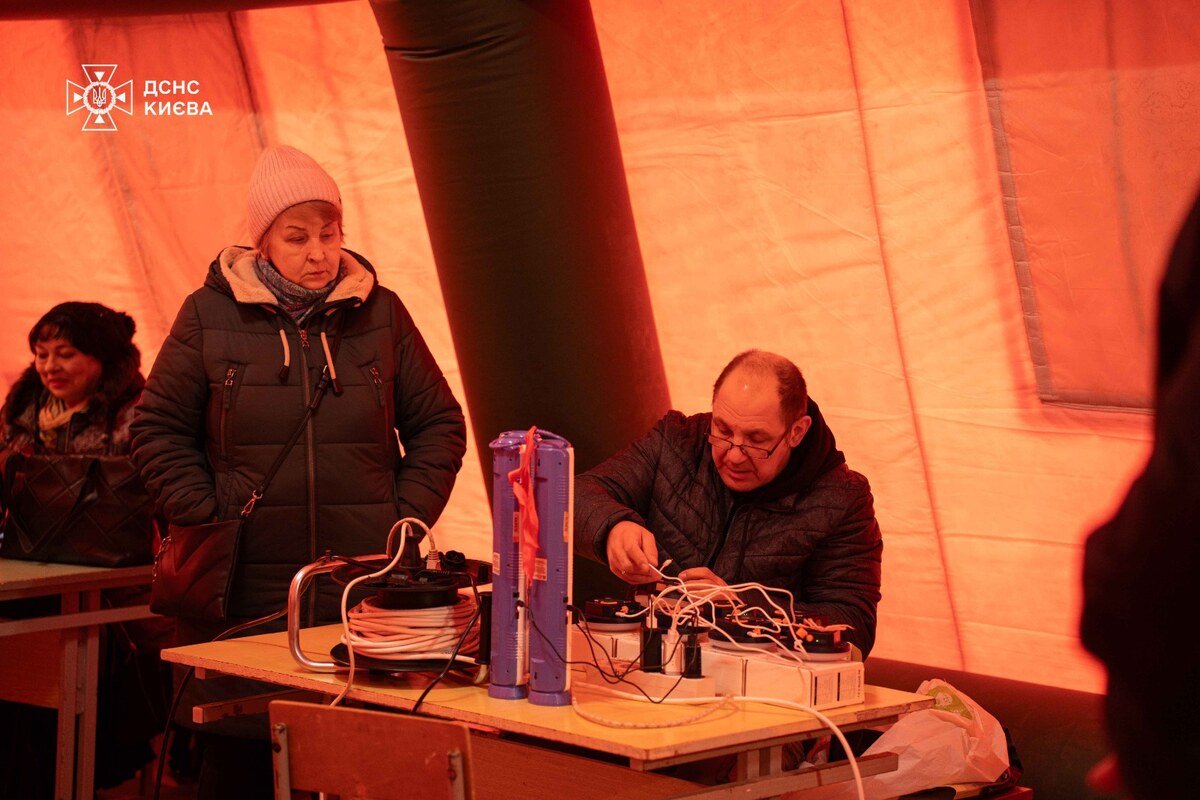
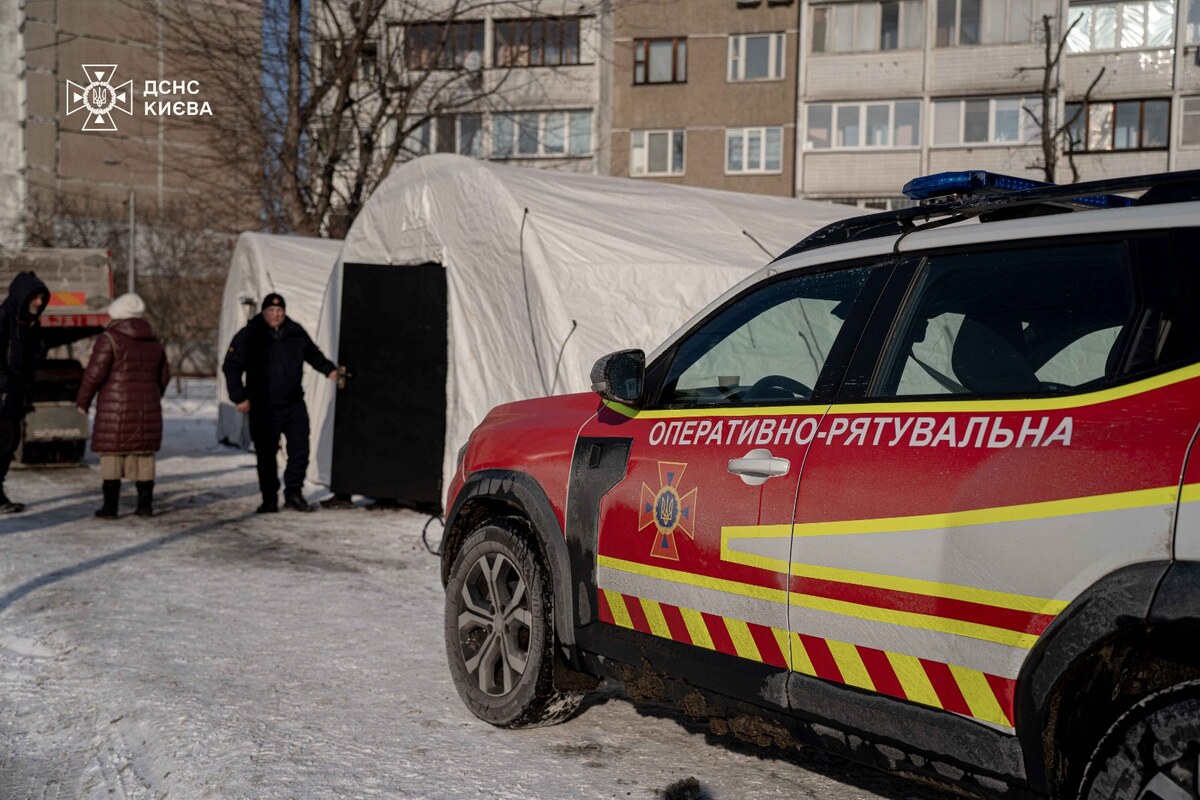
Additional points of inviolability in Kyiv, deployed by the State Emergency Service
According to him, the logic remains the same as before: funding is provided by local governments or owners of premises (businesses, condominiums) on the basis of which the inviolability points are deployed.
«They are the customers of Internet access services and pay the subscription fee within the approved budget,» adds the Deputy Minister of Digital Transformation.
He added that xPON technology is a basic and priority solution, as it is already provided by over 1,300 providers in Ukraine, and in many cases, connection is possible without significant capital expenditures.
Of course, one can agree with these words of the Deputy Minister, but still, even small funds need to be found somewhere, and not everyone is ready to simply take them out of their own pockets, especially if it concerns a significant number of objects within the boundaries of a settlement.
In turn, telecom expert Oleksandr Glushchenko emphasized in a comment to dev.ua that the government resolution is legally binding, but its practical effectiveness directly depends on funding and coordination with local governments.
«The document establishes technical requirements (xPON / Starlink, static IP address), but does not specify the sources of covering the costs of connection, equipment and subscription fee. Given that most of the points of invulnerability are on the balance sheet of communities, the state actually does not have a direct financial or administrative lever for the rapid and widespread implementation of these requirements,» states Oleksandr Glushchenko.
Thus, according to the expert, the implementation of the resolution will be uneven and will depend on the budget of a particular community and its cooperation with providers. Oleksandr Glushchenko even believes that the basic solution to the issue will depend on the ability and desire of local authorities to negotiate with providers as with socially responsible businesses, because if they get stuck in the bureaucratic procedure, the issue will take a long time to resolve and its success is not obvious.
«Considering that local communities are in dialogue with local providers, it would be logical to agree on the installation of optical communication channels to the points of invulnerability. In most cases, it is easier for the provider to lay a separate line to the point at its own expense, without playing with bureaucracy and tenders — as was done by local operators with bomb shelters in 2022, when it was a private initiative of responsible business,» Glushchenko gives an example.
Returning to the topic of Starlink as a much more expensive solution to the problem, according to Deputy Minister of Digital Transformation Snanislav Prybytek, this is considered primarily as an alternative or backup solution — primarily for locations where there are no optical networks or it is technically impossible to provide a connection to them. «That is, we are not talking about a mass mandatory transition of all points to Starlink,» he stated.
But, one way or another, based on this logic, this may apply to small settlements with poor fixed Internet coverage, and, accordingly, to much poorer rural remote communities. Under such conditions, it is also questionable whether they will be able to find funds for Starlink.
Are closed or non-functioning checkpoints the norm rather than the exception?
Based on the personal experience of our editorial staff journalists, their friends and relatives — both in Kyiv and in other regions, unfortunately, there is a systemic problem not only with the availability of the Internet using xPON or Starlink technologies in the points of invincibility, but also with their very functioning. There were cases when such points were closed, or did not work in a constant mode, or had a rather limited fuel resource for generators, no Internet provision, or other problems.
The editor-in-chief of dev.ua, who lives on the left bank of Kyiv, visited a dozen or so shelters in her area during the blackouts, and not all of them were pleased with the open doors and help. For example, in the two nearest educational institutions, the shelters marked on the «Map of Invulnerability» were either closed or worked on an incomprehensible schedule. In one case, the shelter simply could not even be found, and in another, despite the working generator and the light in the shelter, the indicated phone number of the person on duty did not answer, and the doors were locked. In contrast, in the shelter located in one of the police stations, an announcement was honestly posted that the generator could not be refueled with anything, so, in fact, basic services such as recharging gadgets or using the Internet there would also be unavailable.
We also contacted several residents of Dnipro, who generally spoke about a similar situation in their city — in some places, the charging points worked without interruptions, where you could recharge your batteries and use the Internet without any problems, while in others there was no Internet, or even the points themselves did not work.
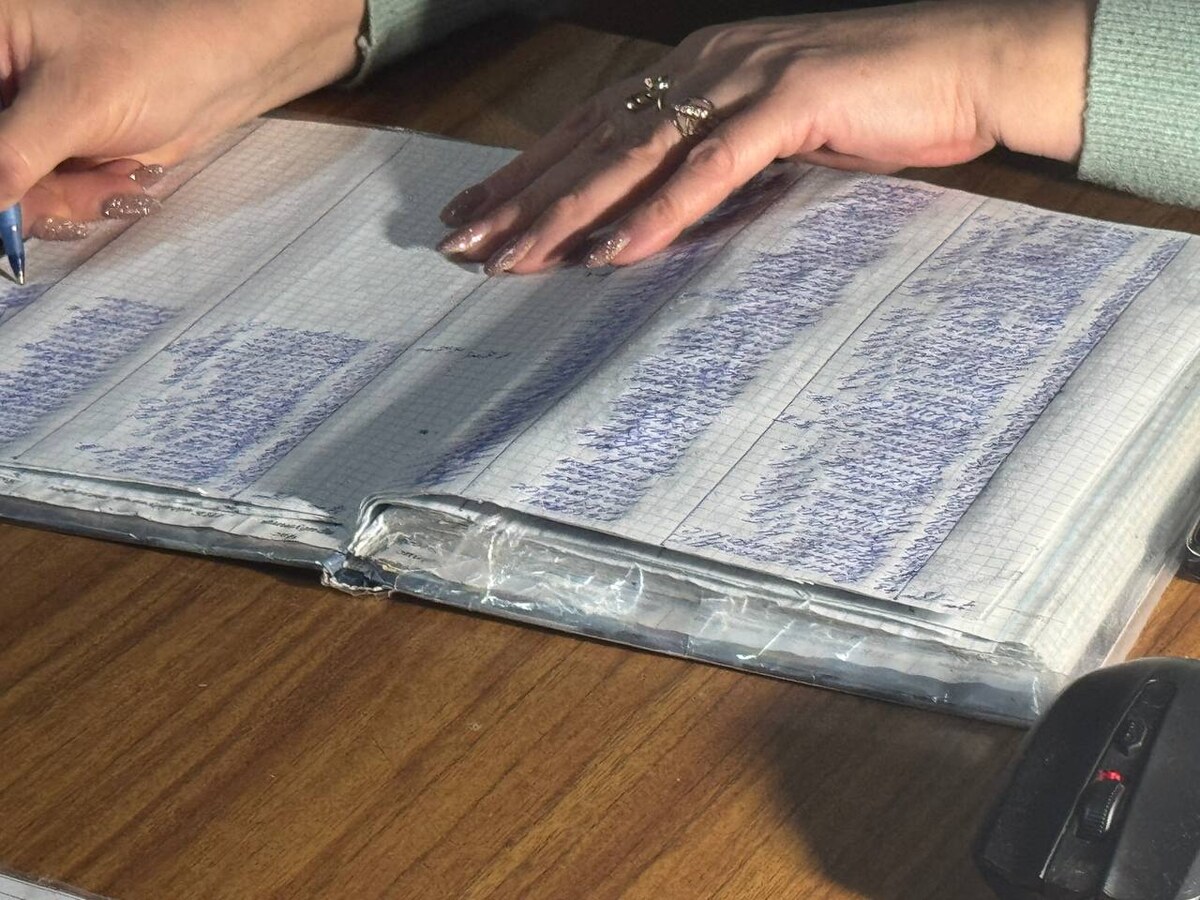
According to colleagues from the publication «Pershy Kryvyi Rih», to whom we addressed the question of the availability of uninterrupted Internet in the points of inviolability, the situation in them was also similar to all large cities — the points of inviolability work «through one» and not all of them have access to the network. In one of the points of inviolability, Wi-Fi worked intermittently, several points were closed, and in one — everything was almost perfect, except for one. In one of the local schools, it was possible to use the Internet and recharge the phone — moreover, they even gave their own charger. Instead, for some reason, they asked the visitor’s last name and first name to be written in some kind of journal, which not everyone understood.
A journal where all visitors to the invincibility point are recorded. Photo by journalists from «Pershy Kryvyi Rih»
Of course, there were also points of invincibility, to which no questions can be raised — in one of them, our familiar resident of Dnipro even managed to charge not just his phone, but an entire Ecoflow. Others were also happy to open their doors to their visitors, and access to the Internet at the time of their visit was uninterrupted. But even a rather cursory and unsystematic survey of this experience shows — there are problems, and there are indeed enough of them.
The root of the problem
As already mentioned, responsibility for the operation of inviolability points in Ukraine is divided between several levels of government, and in practice this system often faces coordination and resource problems.
Heads of regional and district military administrations, as well as city mayors and community leaders are responsible for stationary points in schools, kindergartens and administrative buildings, and the State Emergency Service for mobile tents and points based on fire departments. The National Police manages the points located directly in police stations, and the private sector (gas stations, post offices, banks, pharmacies) organize points independently, but they can also be included in the general map of invincibility in «Action».
Many invincibility points are not fully staffed — they work according to a schedule or switch to working condition only in case of a long blackout, remaining «in sleeping mode» at other times. But in fact, they simply turn out to be unprepared for this, because it is impossible to predict shelling and its consequences in each specific case. Generators require constant fuel deliveries and maintenance, and local budgets do not always have time to finance these needs in a timely manner and find «working hands» for this. Again, schools or administrative buildings usually do not have a separate staff unit for the invincibility point, so it is difficult to count on 24/7 work. Will the situation change for the better? I would like to believe that it does, but again — this requires time and much clearer coordination.
How many points of invulnerability are already equipped with xPON or Starlink: even the Ministry of Digital Affairs does not have an answer
As Stanislav Prybytko, Deputy Minister of Digital Transformation for the Development of Digital Infrastructure, comments for our publication, the Ministry of Digital Affairs currently does not have a single consolidated statistics for each point of invulnerability — how many of them work on xPON, how many on Starlink, and where the Internet is still lacking.
«This data is collected and updated by local governments, because they are responsible for the work of specific points on the ground,» he says.
At the same time, Prybytko adds, the overall picture across the country is clear: xPON has already become the main technology for fixed Internet — if in 2021 about 30% of subscribers worked on it, then in 2025 — already over 52,5%. «Therefore, in most communities, xPON is the basic solution for points of invulnerability, and Starlink is connected point-to-point — where there is no access to optics or other options are technically impossible,» notes the representative of the Ministry of Digital Affairs.
According to him, the new requirements apply simultaneously to the entire country — «without division into regions, postponements, or exceptions, because this is a matter of national security.»
In some regions, we were shared with comprehensive statistics on providing Internet access points using xPON or Starlink technologies. For example, the Poltava Regional Administrative Organization noted that the aforementioned government resolution had been brought to the attention of local governments and appropriate recommendations had been provided to them. As for statistics, 522 access points have been organized in the Poltava region, of which 442 are organized by local governments and the regional military administration, 36 by the State Emergency Service, 7 by JSC Ukrzaliznytsia, and the rest are access points of responsible businesses.
Invincibility points from the State Emergency Service in Kyiv
«442 points of invincibility, for which the local self-government bodies and OVA are responsible, are provided with uninterrupted access to the Internet during a complete power outage, in particular, 438 points of invincibility are connected using xPON technology, 2 points of invincibility use Starlink satellite communication terminals. Two more points of invincibility are connected to the Internet via a radio channel, due to the lack of a provider that provides Internet connection services using xPON technology,» the press service of the Poltava OVA explained, adding that 43 points of invincibility out of 442 have connections to both xPON and Starlink.
The Ternopil OVA also promised to provide an answer to our request later, and the CDTO of the Vinnytsia OVA, Andriy Kavunets, instead told dev.ua that «they do not have the technical ability of fixed-line operators to provide a fixed-line IP service.» He added that a separate meeting with the Ministry of Digital Affairs should be held on this issue.
«Physical retrofitting of all points cannot happen instantly»
Nevertheless, Stanislav Prybytko expressed his understanding that the physical re-equipment of all invincibility points cannot take place instantly, so the main emphasis is on preliminary communication with the regions, which has been going on for several months.
«We regularly visit the regions, and the issue of providing communication to inviolability points is one of those we are working on. Monitoring the stability and availability of communication will be carried out through the use of static IP addresses, which will help to understand the actual presence or absence of communication for visitors. And in case of absence, to promptly resolve this problem,» he summarized.
Telecommunications expert Oleksandr Glushchenko concludes that «on average across the ward» the situation is currently heterogeneous: in large cities and infrastructurally developed communities, some of the points of invulnerability already have or can quickly receive xPON connections with power backup.
«At the same time, in small communities and remote locations, optics are often absent, and Starlink remains the only technical and, most importantly, fast alternative — but expensive. Full coverage of invulnerability points with stable Internet with the possibility of centralized monitoring is currently not systematic and is at the stage of fragmented implementation,» he summarizes.
We can only state the obvious: currently, the system of inviolability points requires much clearer coordination and coordinated work. Providing them with high-quality Internet is a matter of the next level: for starters, it is desirable that all of them work in principle.
Winter for survival: 10 questions and answers about the likely consequences of blackouts this winter and life hacks from IT people on how to get through the winter comfortably
How to stay warm when the house has no heating or electricity, the water has been drained from the system, and the restoration time is unknown: 7 useful life hacks
Product Designer задонатив ЗСУ особистий Starlink. Як він це зробив
Арсеній Фещенко працює на позиції Product Designer платформи по оренді квартир у Києві та Лондоні bird. Нещодавно хлопець задонатив на потреби ЗСУ особистий Starlink. Розповідаємо, як це вдалося зробити.
Британець створив інструмент для злому Starlink з деталями на $25. Чи виведе він термінал з ладу? WIRED
Британський дослідник безпеки Леннерт Воутерс створив modchip — спеціальний інструмент злому, який можна приєднати до антени Starlink. Готові деталі для нього коштують $25.
10 серпня на конференції з безпеки Black Hat у Лас-Вегасі дослідник розкрив подробиці збоїв у терміналах Starlink та розповів про те, як серія апаратних недоліків дозволяє зловмисникам отримати доступ до системи і запустити власний код на пристроях. Про це написав WIRED.
Бойова гігієна. Чим небезпечний WiFi на передовій, та чому інколи прилітає по Starlink: пояснює айтішник
Володимир Степанець, Senior Systems Architect в EPAM Poland написав великий пост-пояснення про те, чим небезпечний інтернет на передовій та чому роздавати його не варто як з терміналів Starlink, так і зі смартфону.
Публікуємо його аргументи, правила та поради.
Have important news to share? Message our Telegram bot
Key events and useful links in our Telegram channel