Хочете будувати кар’єру в Data Science та AI? Vodafone Big Data Lab відкриває новий набір —>
Ігор Вишневський That's Life
13 November 2024, 09:00
2024-11-13
«Sorry — it's war and operators have to spend money too.» Will mobile communication and the Internet disappear during blackouts in the future, and will operators be fined for this? Government and business still cannot get along
Ukrainians are already somewhat tired of experts' forecasts regarding potential winter blackouts. The number of hours per day that will have to be spent without electricity has been called and continues to be called completely different in recent months and varies from 4 to 20 (that is, according to many analysts, a situation is possible in which there will be no light most of the time). In the autumn, the UN mission for monitoring the observance of human rights in Ukraine voiced such a risk in its report .
Ukrainians are already somewhat tired of experts' forecasts regarding potential winter blackouts. The number of hours per day that will have to be spent without electricity has been called and continues to be called completely different in recent months and varies from 4 to 20 (that is, according to many analysts, a situation is possible in which there will be no light most of the time). In the autumn, the UN mission for monitoring the observance of human rights in Ukraine voiced such a risk in its report .
Mythical half-rumors-half-insiders about potential mutual agreements between russia and Ukraine not to strike at energy facilities remain where we read them — in the columns of newspapers and on the pages of websites. They are not confirmed in any way and can only cause false hope.
The last time the country systematically and for a long time lived according to the electricity supply schedule was in July, and since then the memories of discomfort have managed to dull significantly. But in summer and winter, blackouts are perceived completely differently: if in the warm season it creates discomfort, then in winter it is already potentially dangerous for health at low temperatures and a possible lack of heating.
Against the background of how to survive the winter, thoughts about the availability of communication and the Internet are not the most basic for most people, but still bother a lot. After all, for many, it’s not about scrolling through social networks and watching movies, but about daily work and the safety of their loved ones. Of course, this is also about huge indirect losses for the economy, on which blackouts hit no less than the mood of people. For example, the Kyiv School of Economics estimates that as of July 2024, indirect losses for the digital infrastructure and the IT sector amount to $19.3 billion, and the total is estimated at $1.164 trillion since the beginning of a full-scale invasion.
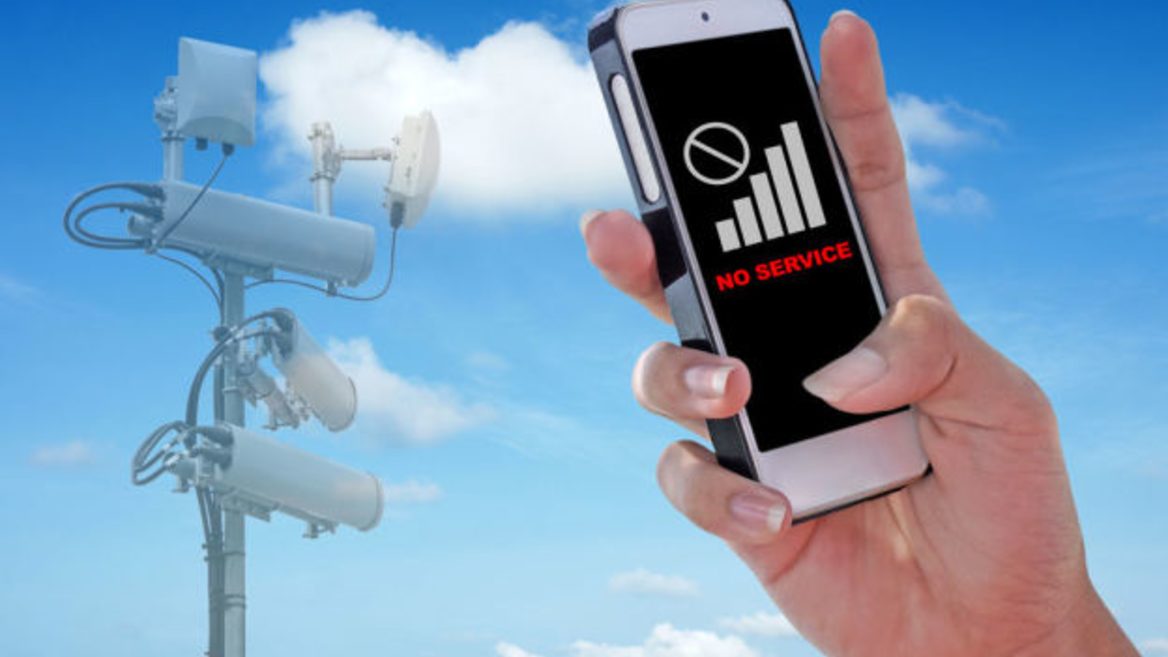
We remember that earlier in the first hours of the blackout, mobile Internet helped many when turning off the landline, but when blackouts are not a «one-time event» but a «lifestyle», the equipment of mobile operators also «didn’t work». Often so much so that it was about the impossibility not only to enjoy the benefits of such a familiar 4G, but even to make a basic call to relatives and friends.
In order to oblige mobile operators to continue providing quality services during blackouts, the state took a number of legal steps. But with some of these steps, so to speak, she stumbled. Thus, on October 30, the Verkhovna Rada failed draft law No. 11431 on the settlement of the issue of state supervision in the field of electronic communications and operational assurance of the stability of electronic communication networks, which provided for significant fines for mobile operators for non-provision or substandard provision of services during blackouts.
This news pleased the telecom industry and a number of structures, which perceived the initiative as an unreasonable pressure on business, but upset those who viewed the draft law as a lever of influence on the largest telecom players in the context of wartime challenges. Having received comments from legislators and mobile operators, we tried to understand how the situation will unfold in the near future, whether mobile operators will be able to fulfill what the state wants from them and how they have prepared for potential threats already.
A long and unsuccessful history of coercion
As early as July 2024, the issue was raised at the highest level — Volodymyr Zelensky instructed Mykhailo Fedorov to present an analysis of the situation at a meeting of the Stavka in order to understand what «is being done to guarantee communication in conditions of power outages and which operators do not follow the relevant decisions.» By «relevant decisions» should be understood, for example, the decision of the NSDC dated November 26, 2022 «On the provision of electronic communication services under martial law», which required providers of such services to ensure their provision «in compliance with established quality indicators» for at least three days for a specified list of objects.
Already on July 15, 2024, that is, less than two weeks after the President’s statement, the National Center for Operational and Technical Management of Telecommunications Networks (NCTM) determined by its order that mobile operators must ensure the availability of mobile communication during power outages for at least 10 hours. To which the mobile operators Vodafone Ukraine, Kyivstar and lifecell made a joint statement on August 1, noting that they are unable to comply with the order of the NCTM. This refusal was motivated, among other things, by the fact that in order to fulfill the regulator’s requirements, the state, in turn, needs to ensure the supply of electricity for the time required by the operators' equipment to fully charge the reserve batteries.
And so, actually, on July 22, people’s deputies from «Servant of the People» registered the above-mentioned draft law, which was supposed to be the final chord in this system of influence measures, by legislating fines for telecom market players. It is not difficult to put together this puzzle in order to assert a certain consistency and complexity of the actions of various state structures in this direction.
«The idea of the bill is to increase the number of inspections of communication service providers, to make these inspections possible unscheduled, and to increase fines for non-compliance with the requirements set by the national commission. The fact is that some operators did not take the issue seriously enough, and this creates a threat that many subscribers may be left without a connection in the winter,» — one of its co-authors, People’s Deputy Serhiy Stepa, commented on the idea of the draft law on the TV channel Rada.
The amounts of fines prescribed in the draft law vary, depending on the type of violation and the market subject (subjects of micro- and small businesses, subjects of medium-sized enterprises and subjects of large enterprises).
But the most modest in this ranking was a fine of 1,000 tax-free minimum incomes of citizens (tfmic), i.e. 17,000 hryvnias for a small business. And the most painful ones are 40,000 tfmic (or UAH 680,000) for medium-sized businesses and 0,6% of income for the last reporting year for subjects of large enterprises.
Taking into account the fact that the annual income of Ukrainian mobile operators is calculated in tens of billions of hryvnias, the amount of the fine of 0,6% actually looks more than a significant multi-million figure. But in the end, these figures of fines were not fixed by the decision of the legislators, who lacked the votes in the first reading — «for» only 199 votes out of 226 required. For repeated first reading — 208, and, finally, for sending for revision — 206 «green buttons». So, instead, the draft law went to the wastebasket.
It is worth saying that this was preceded by quite a lot of criticism from market participants, specialized associations and public organizations, after which some legislators could really get the impression of another round of attacks on business and unrealistically inflated requirements for communication operators. Thus, the European Business Association, the American Chamber of Commerce and the Union of Ukrainian Entrepreneurs expressed their strong and rather critical comments on the draft law.
«Kyivstar company approves the decision of the Verkhovna Rada to reject draft law No. 11431, which threatened the stability and uninterrupted functioning of Ukraine’s electronic communications networks during the war. Such a decision of the Parliament of Ukraine demonstrates understanding of the importance of supporting the industry in conditions of full-scale war and the inadmissibility of additional administrative and financial pressure on operators,» the company said in response to dev.ua’s request to comment on the situation with the draft law.
As for the position of Vodafone Ukraine, they also believe that additional or increased fines will not increase the operators' ability to purchase generating capacity, continue to restore and expand the network.
A step forward
By the way, already on November 1, almost immediately after the failure of the draft law, the government adopted Resolution No. 1260, which determined that the facilities of mobile operators were added to the list of those that will not be subject to power cuts. Both of these news literally within a few days somewhat inspired mobile operators and at least put on pause the plans of the authorities to «tighten the nuts» on their work during blackouts. However, Kyivstar perceives the government resolution with cautious optimism, and not as a panacea.
«This will contribute to the growth of stability of the network in conditions of potential outages. At the same time, it is important to note that the resolution does not refer to all network facilities, but to a limited number of hub sites of operators, the list of which will be additionally approved by the state body that coordinates the communications industry during martial law. In accordance with the government’s decision, the number of such sites for Kyivstar is up to 40, which is less than 1% of the entire network,» — the operator’s press service noted in response to a request from dev.ua.
«Kyivstar» also emphasized that in order to ensure uninterrupted power supply of such objects, it is necessary to build a separate cable entry. However, the technical possibility of building such an input does not exist for all network objects, which may affect the practical implementation of this initiative.
Forced improvements
The press service of Vodafone Ukraine dev.ua reported that the company has decided to double its investments in energy independence planned for this year. Thus, total investments in the energy sustainability of the network in 2022–2025 will exceed UAH 1.3 billion.
The operator also notes that he is directing funds to provide communication facilities with batteries of a new type, which are much better adapted to difficult operating conditions during frequent and long-term power outages. According to the information provided by the operator, the company already has 1.5 times more capacity than at the beginning of the year, and since 2022, 72,208 more advanced LiFePO4 (12V 100 Ah) rechargeable batteries have been installed on the network. Another 87,960 batteries of this type have already been contracted. They are planned to be installed at network facilities in 2024–2025.
During the war, the company also purchased about 500 mobile generators and the auxiliary equipment necessary for their operation and plans to do so in the future, doubling this number to at least 1,000 in the coming years (in addition, it is planned to purchase 250 stationary generators and 250 mobile generators).
At the request of dev.ua, in addition, they provided information on the reserve of diesel fuel and gasoline for generators and the diversification of fuel supply, as well as the increase in the number of wholesale suppliers with whom contracts have been concluded.
In addition, automation equipment was purchased for more than 1,000 base stations. The company is also actively testing alternative energy sources in the operation of base stations and switching platforms.
As for the restrictions that do not allow 100% fulfillment of the authorities' requirements, Vodafone complains both about the insufficient deadlines for their implementation (and too long — for the delivery of the necessary equipment) and insufficient resources. Yes, the company notes that:
battery delivery terms are 120–180 calendar days, and their installation requires 60–90 calendar days;
to charge the battery for 10 hours in a short period, it is necessary to have input power of the power supply that is several times greater than the available power;
for the installation of additional batteries on the sites, additional climatic cabinets are also required, for which special structures on the roofs are required. This is related to new lease agreements, and is often not foreseen by the structural features of the buildings;
operators have significantly limited own personnel resources, so a significant part of the work is performed by contractors. At the same time, they are no longer recognized as critical enterprises for the economy, which makes it impossible to book and, accordingly, perform work.
«Technical specialists develop a complex of solutions (what, how and at what cost can be done/purchased/delivered/mounted in order to maximize the uptime of the equipment). The company is doing its best, but not everything depends on the operators — there are energy companies, suppliers, after all, consumers who, surprisingly, can also help without creating an additional load on the network during blackouts,» — Vodafone said.
«Kyivstar» also talks about active preparation for the winter season and possible blackouts: according to the mobile operator’s information provided by dev.ua, more than UAH 1.9 billion has been invested in the energy independence of the network since 2022.
The company is also actively replacing batteries in base stations: as of October, 124,000 new lithium batteries have been installed, which provide up to 4 hours of autonomous operation. The operator also uses 2,390 generators to support network facilities.
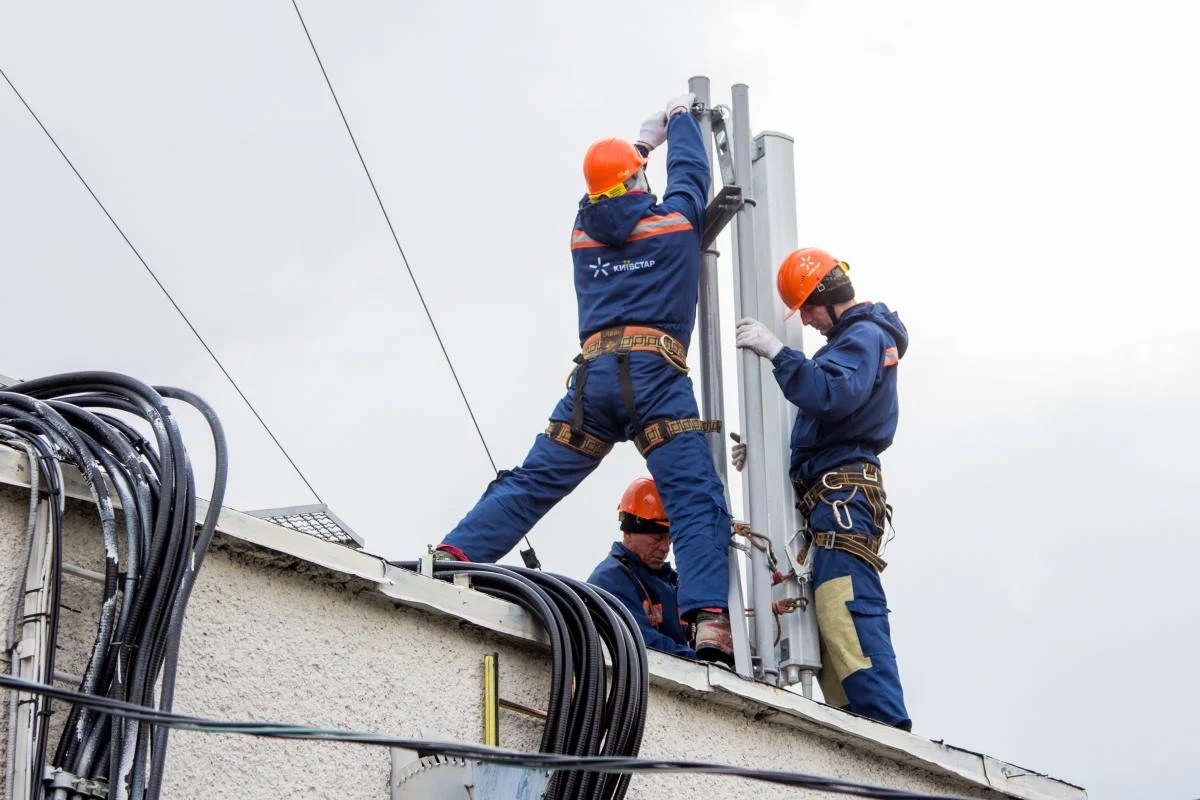
Photo — «Kyivstar»
«All technological sites of „Kyivstar“ have backup power. More than 75% of the network has four hours of backup power. We are currently working on providing an increase in the number of base stations with 6-hour backup for all key sites,» — the operator’s press service noted.
«Kyivstar» also announces that it is in the process of the second phase of investments, which involves the purchase of 113,000 new batteries for base stations and 1,427 industrial generators.
«Particular attention is paid to critically important facilities identified by the NSDC, which are provided with generating capacity to maintain communication for at least three days in case of full-scale blackouts,» — the company said.
At the same time, «Kyivstar» emphasizes that it is technically impossible to connect all objects of the telecom network to autonomous generation, despite the efforts of their team.
«Therefore, in situations where power outages are large-scale and long-lasting, the company will be forced to set priorities in providing power to base stations,» the operator states.
«Kyivstar» also calls on users to contribute to the judicious use of services during blackouts and to refrain from using heavy content via the mobile Internet. «Kyivstar» also reminded about the «national roaming» service, which allows you to use the network of another operator.
Lifecell, which this September became part of one of the largest deals on the telecom market, together with the fixed Internet provider «Datagroup-Volia» by transferring to the French billionaire Xavier Niel, has not yet responded to dev.ua’s request. But, judging by the previously announced information, this operator also invests in the stability of the network during blackouts.
As of September, Lifecell has replaced 65,000 batteries and connected more than 1,700 base stations to generators. In addition, the company states that its investments in alternative power sources and infrastructure for base stations amount to almost UAH 1 billion.
«We need to return to this issue and give the authority to the regulator»
Oleksandr Fedienko, the head of the subcommittee on security in cyberspace, government communication, cryptographic protection of information of the VRU Committee on National Security, Defense and Intelligence, criticized the position of many colleagues who did not support the bill on fines for mobile operators, considering it inconsistent. At the same time, the deputy believes that the solution to the issue can be a new draft law on this topic.
«There is a war going on in the state, and the state has the right to establish appropriate rules that will benefit the citizens of Ukraine. There was a decision of the NSDC that operators would keep their services for three days in case of possible blackouts. I don’t see anything wrong with the operators slightly rebuilding their network, purchasing the necessary equipment in advance and implementing this decision,» — Fedienko notes in a comment to dev.ua.
Photo from Oleksandr Fedienko’s Facebook
The deputy believes that the state, for its part, was doing its best to meet the interests of mobile operators, so it has the right to demand certain actions from them to solve socially important problems. In particular, Fedienko considers such a «bonus» for mobile operators to reserve their employees, in particular those involved in emergency recovery teams.
«The state has done everything for the operators at the legislative and by-law level so that they have all the conditions. And if the deputies are unable to give the regulator authority, then let them go and ask the regulator where the connection went. Because the regulator currently simply does not have the authority to influence operators,» — comments Fedienko.
According to Oleksandr Fedienko, in the parliament hall, many colleagues argued their non-support for the draft law with theses, which were voiced the day before by various business associations.
«Sorry, it’s a war, and operators have to spend money too. But organizations, chambers of commerce, business associations that are incomprehensible to me appear in orbit. I don’t understand why they have such an influence on the parliament, given that the parliament was elected by the people, not business associations,» — adds the People’s Deputy.
According to Fedienka, he expects that another draft law on the same topic will be submitted to the parliament.
«At the very least, I will certainly strive to ensure that the regulator receives these powers after all. To have a „reactive“ opportunity to influence the operators, because I don’t believe that they will invest enough money in this, although they say a lot of great slogans», — believes the chairman of the subcommittee on cyberspace security, government communication and cryptographic protection information
According to Fedienko, the operators did not actively present their proposals to the Cabinet of Ministers, the Ministry of Statistics and the relevant parliamentary committee.
«They could come and say — we lack this and that to fulfill these conditions. We are ready to fulfill them, but give us something. They didn’t do it, but instead involved those „grant offices“ and they influenced everything here,» — concludes Fedienko.
He expressed confidence that if he had worked on this topic more actively in the session hall, votes for such a bill would have been found, but he got involved in this issue somewhat late. At the same time, according to his words, after talking with him, some colleagues have already changed their minds and are ready to return to this issue once more.
As for the Ministry of Digital Transformation, which officially declared support for draft law No. 11431, after the unsuccessful vote for it, the officials of the Ministry of Digital Affairs did not publicly communicate this topic.
«Currently, together with the NCEC (The National Commission for State Regulation in the Fields of Electronic Communications, Radio Frequency Spectrum and the Provision of Postal Services) regulator, we are studying proposals and possible changes to the draft law,» — the press service of the ministry briefly stated when asked by dev.ua to comment on the situation.
Instead, the Ministry of Digital Affairs yesterday published an explainer about why mobile communication and the Internet disappear and what citizens should do under such conditions (spoiler alert — do not upload photos and videos, switch to home Internet that works using PON technology or another operator’s network). Well, actually, we already knew that, so nothing new.
So what to expect?
After the unsuccessful vote for the draft law, it is quite possible to expect a new initiative on this topic, because the authorities would like to have in their hands not only a «gingerbread» but also a «whip», i.e. a legally regulated set of sanctions against mobile operators.
Nevertheless, the new draft law may well become a field for compromise and at least partially take into account the comments expressed by business associations and mobile operators. At the moment, it seems that both the authorities and mobile operators have taken a strategic pause in order to draw conclusions from previous experience and better prepare for the next round of struggle.
At the same time, we must state that each of the operators, despite the critical attitude towards the government’s initiatives, nevertheless carried out quite a lot of work to improve the quality and duration of their services during blackouts. So, even if in some part «Draconic?» the government’s methods did not work, they still encouraged mobile operators to do what was required of them — albeit not at the same pace and in the same volume. On the other hand, even if a new bill on this topic is adopted and put into effect, it does not guarantee that the threat of fines will become the same «saving stick» in this situation. And most importantly, it is most likely that winter and blackouts will come much sooner than these legal consequences.
Why is communication lost during blackouts, how are mobile operators preparing for winter, and can users themselves extend the period of network operation? We asked Vodafone, Kyivstar and Lifecell about blackout weekdays
There was not enough time — mobile operators will not have time to fulfill the requirement of 10 hours of autonomous communication of the National Technical University. What will happen next?