Хочете будувати кар’єру в Data Science та AI? Vodafone Big Data Lab відкриває новий набір —>
Марія БровінськаAround IT
12 December 2025, 09:00
2025-12-12
“Oh, you are Litcoders? I want to visit you!”. In order not to go crazy, the developer gathered more than 1,500 IT people who exchange experiences, organize leisure activities and arrange meetings in a coffee shop. How the Litcoders community works
Anthropologists of the future will still analyze how the mass transition to remote work has changed our professional lives. Already, isolation, less live interaction, and high competition in the market are observed. In response, self-organized communities are emerging — from small groups to large-scale networks that create space for development and exchange of experience.
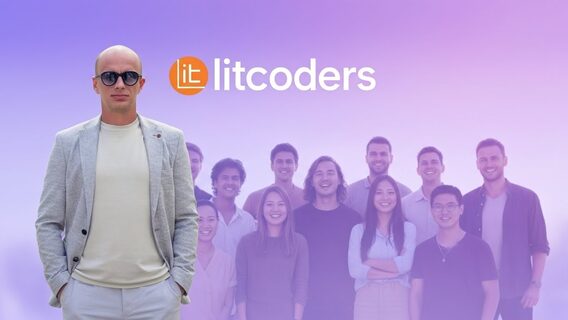
Serhiy Yevtushok, Senior Java Developer, founded the IT community Litcoders, which now has hundreds of specialists who can communicate, exchange experiences, and make friends. Serhiy tells us how the idea of creating the community came about and how the organization currently functions.
Anthropologists of the future will still analyze how the mass transition to remote work has changed our professional lives. Already, isolation, less live interaction, and high competition in the market are observed. In response, self-organized communities are emerging — from small groups to large-scale networks that create space for development and exchange of experience.
Serhiy Yevtushok, Senior Java Developer, founded the IT community Litcoders, which now has hundreds of specialists who can communicate, exchange experiences, and make friends. Serhiy tells us how the idea of creating the community came about and how the organization currently functions.
From creation to 1500+ participants
On October 29, 2023 at 5:50 AM, I created a chat for six people with the first name Leetcoders. The idea was: «Let’s follow the NeetCode roadmap like people preparing for FAANG. It’s easier to do it together than alone.»
The context was obvious: a full-scale war, remote work, the market is shaking, and there are no offices in the usual sense either.
Serhiy Yevtushok
For me, the motivation was very simple: not to go crazy on remote, constantly improve my skills, create a place where I can bring others, and not build everything from scratch every time.
At that time, I really felt the lack of «my friends» around me. People with whom you could discuss the task in the morning and laugh at memes about FAANG being Foxtrot / Allo / ATB in the evening, instead of just silently staring at the monitor.
I had just moved to Kyiv, there was almost no offline dating — and this need for community was very acute.
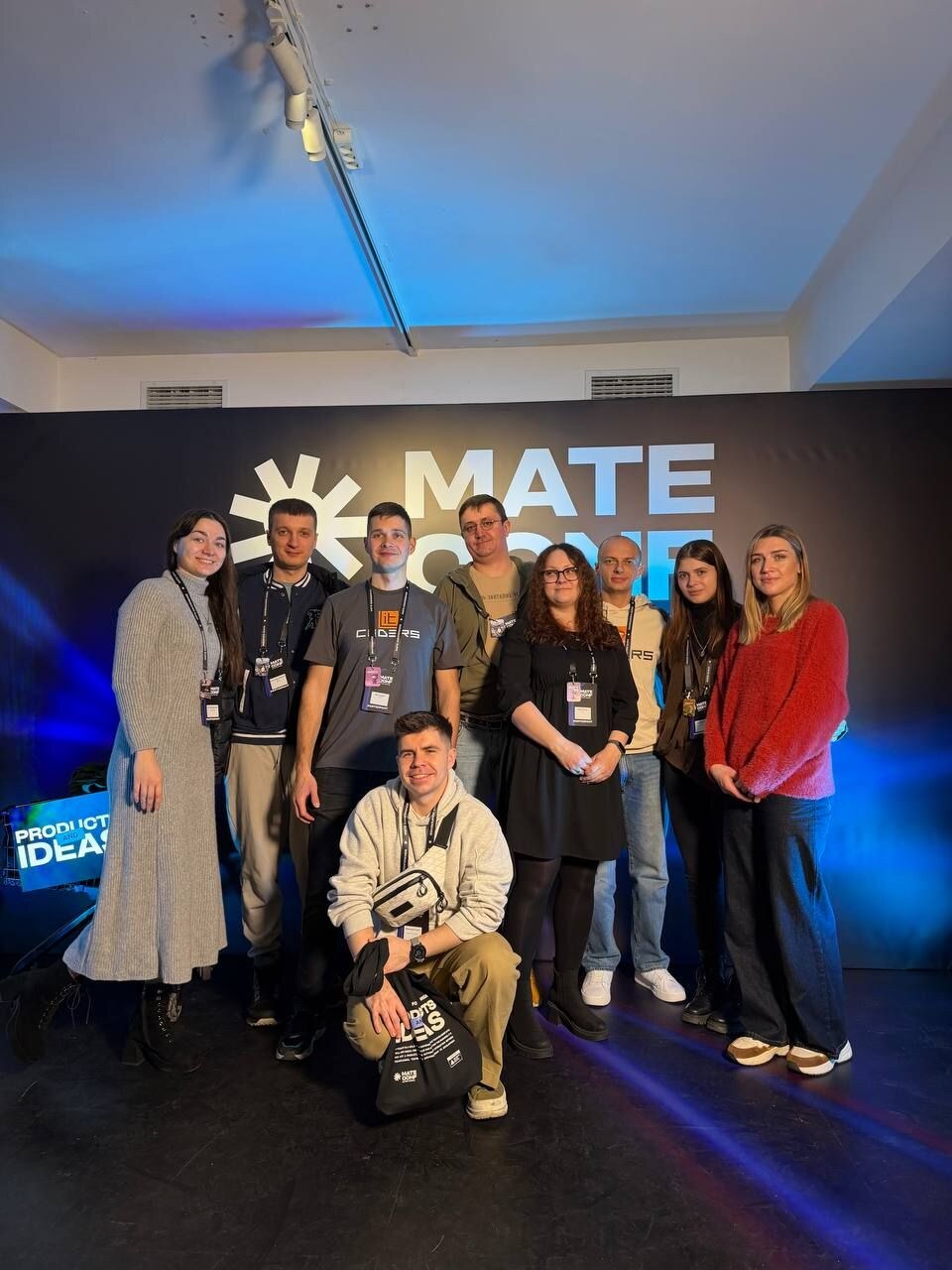
The community grew organically: acquaintances, acquaintances of acquaintances, people who heard about us and joined. We started doing online meetups, going offline, appearing at conferences with companies. The breakthrough came when at DOU Day someone approached us and said: «Oh, you’re Litcoders? I want to join you!».
And on June 17, 2025, the 1,000th participant joined the chat.
Big boost
A special boost came from working with the Mate academy community. I was finishing their Java course myself, and many of the active Litcoders members are also Mate graduates or teachers. These are people who are already used to the intense pace, teamwork, and accountability to each other. It was this culture — learning together and supporting each other — that really helped the community scale and not fall apart along the way.
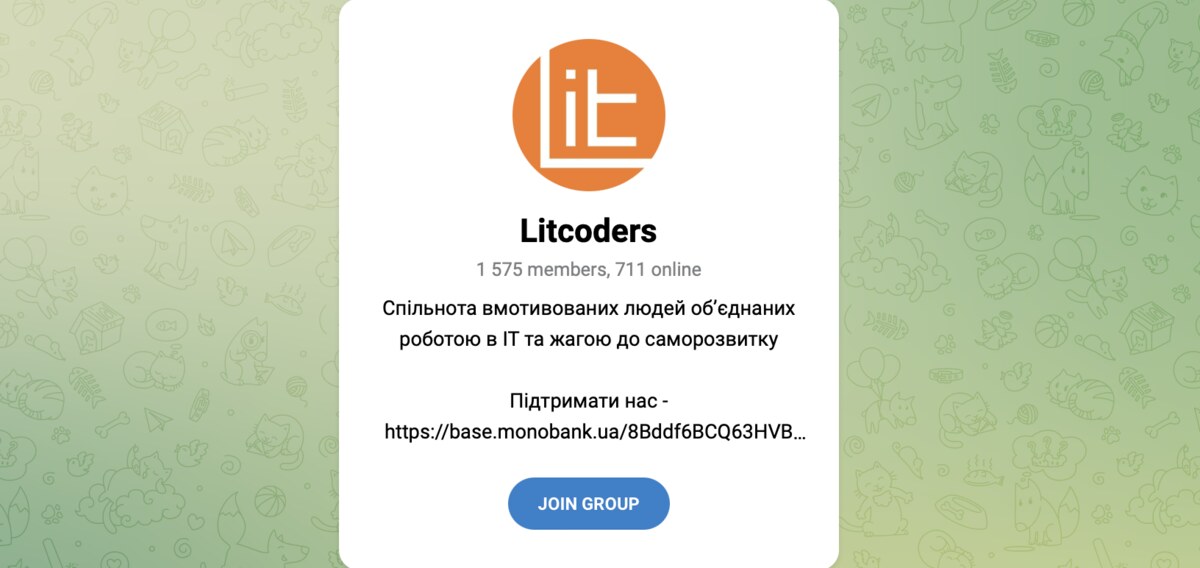
Now there are 1500+ of us, and it’s not just Java developers. The community has been joined by specialists in Angular, Scala, DevOps, PM, recruiting, QA, and other areas.
We’ve outgrown the small problem-solving group format and focused on real networking. The participants put it very precisely: «This community is about developing the ability to communicate normally with people, not just with a computer.»
And it seems that in 2025 this skill is no less important than another framework on a resume.
Career impact
Our activities can be conditionally divided into four blocks: knowledge, practice, career, and people.
Knowledge and practice
This is what started it all — and what still keeps the community going.
Daily algorithmic problems on leetcode.
Advent of Code shared playthrough.
Courses on algorithms, FAANG groups for 3-5 months.
Book clubs: from «Effective Java» to «Netflix and the Culture of Innovation» and «I Remain Ukrainian.»
Webinars on Kubernetes, multithreading, sprint planning, going from hiring to owning your own business, etc.
Mentoring
For example, I mentor Java developers: my mentee and I raise issues every day, prepare for interviews, and discuss development plans. For me, this is a way to keep myself in shape, develop Ukrainian IT, and give back what I have learned through my studies at Bobocode and Mate academy.
Career stories
One of the participants shared his experience of a technical interview, after which he received an offer from WIX (and also from Nortal). After that, activity in the Mentoring topic increased dramatically. Another developer moved to Monobank, started forming a team — and Java Lead and Senior Java vacancies appeared in the chat. 14 people applied thanks to the community.
Participants regularly found Intern / Junior Java, QA, Frontend positions through internal recommendations. During Q2–Q3, we constantly received vacancies from DataArt, SoftHouseGroup, Fintech Farm, Roku, PWRTeams, Netflix and others — they were brought to us by participants who already work at these companies.
This is not the story where you join a community and immediately get an offer. It’s about something else — about people who are ready to honestly analyze your resume and LinkedIn, share their experience of passing technical interviews, recommend you to a company where they already work, and support you when the market is falling and another rejection knocks you off track.
Life outside the code
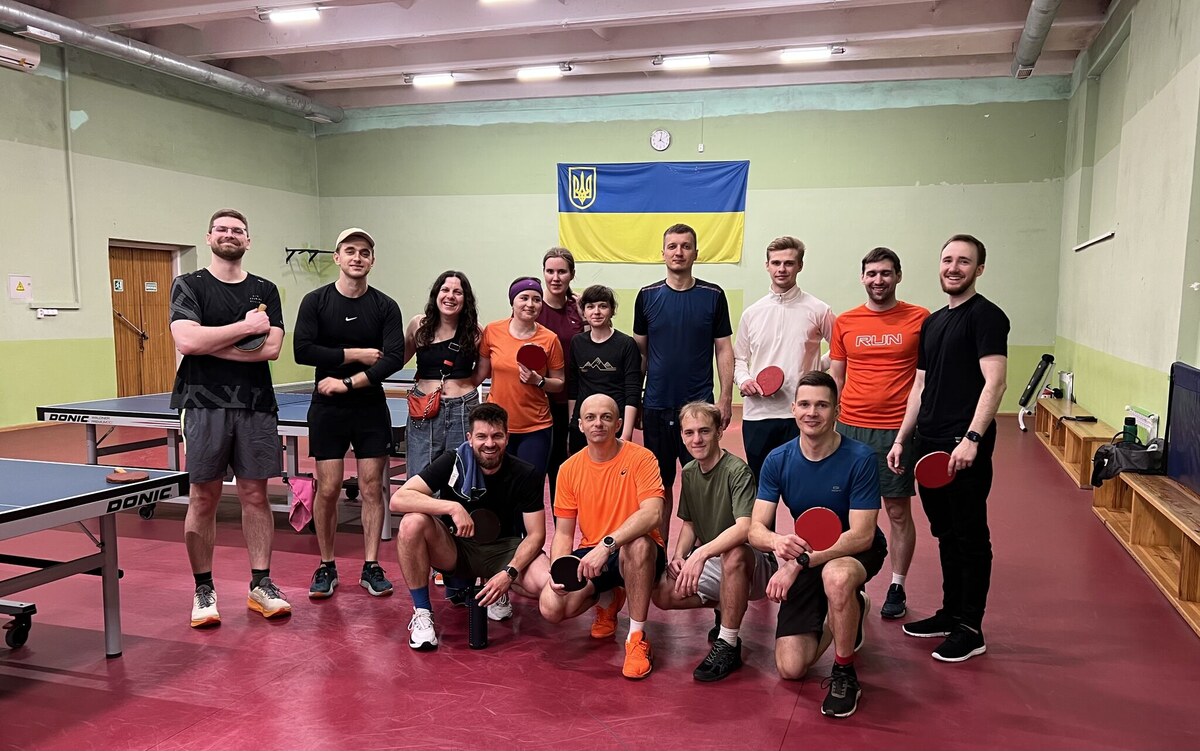
In their reviews, people write that Litcoders is a place where they found friends; a company for tennis, jogging, and table games; moral support during burnout and even in the hospital after an accident.
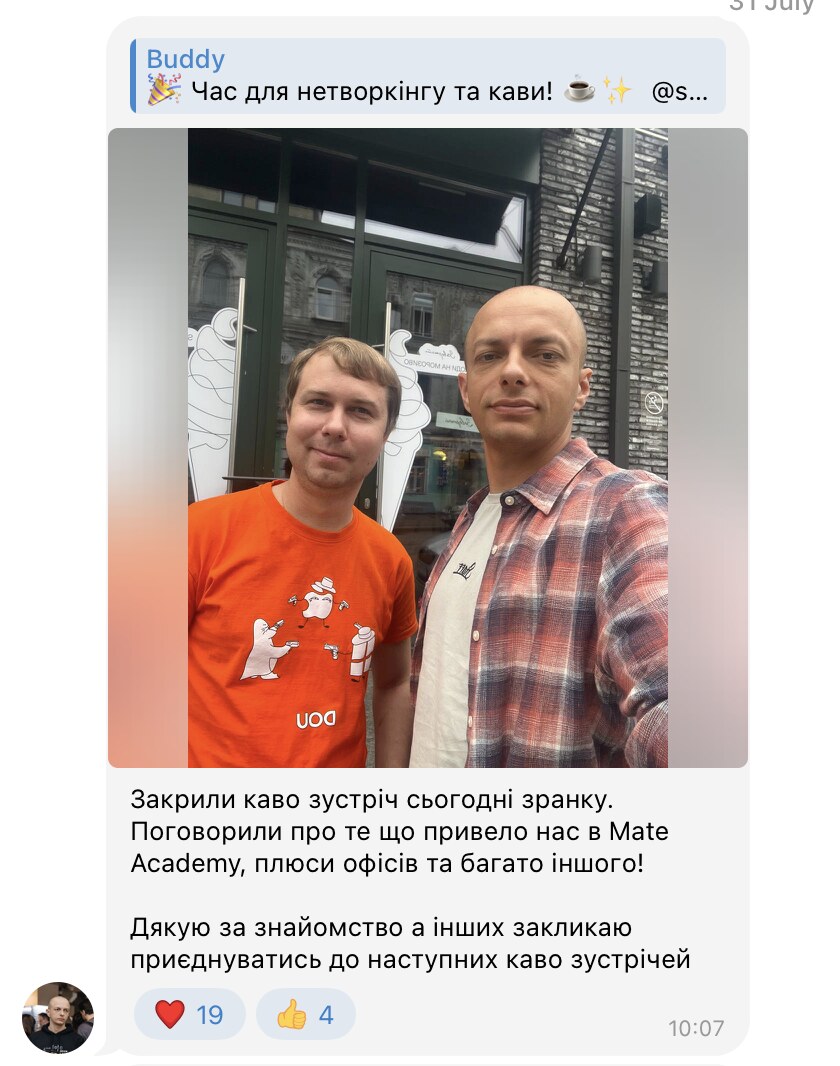
Another effective format that has taken root well in the community is the coffee bot. Once a week, the bot asks who wants to «go for coffee.» Participants press a button, and in the evening, the bot randomly pairs them up.
Then everything is simple: you agree with your «coffee partner» about the time and format — online or offline. The main condition is one: talk not about tasks, but like people.
If at the start there were 5–10 participants, then by 2025 coffee meetings will consistently gather 35–54 people every week. And this is not surprising — the format works as an antidote to professional isolation. It introduces you to people you would never write to yourself; adds live conversation to your work schedule; builds social capital — after coffee it is easier to ask for a co-delivery, a recommendation, or just advice.
Over time, the initiative has grown into a separate service with its own history of activities, integrations, and even became part of the Mate academy community. And despite the ease of the online format, participants are increasingly choosing offline meetings — which clearly shows how great the demand for «live» networking is.
Offline as a chip
In the context of remote work, this is of particular value. You can work from any city — but you know for sure: if there is an event tomorrow in Kyiv, Lviv, or somewhere else, there will almost certainly be someone from Litcoders there. And you are no longer «just another stranger in the room,» but part of a community that has also come to chat and support each other.
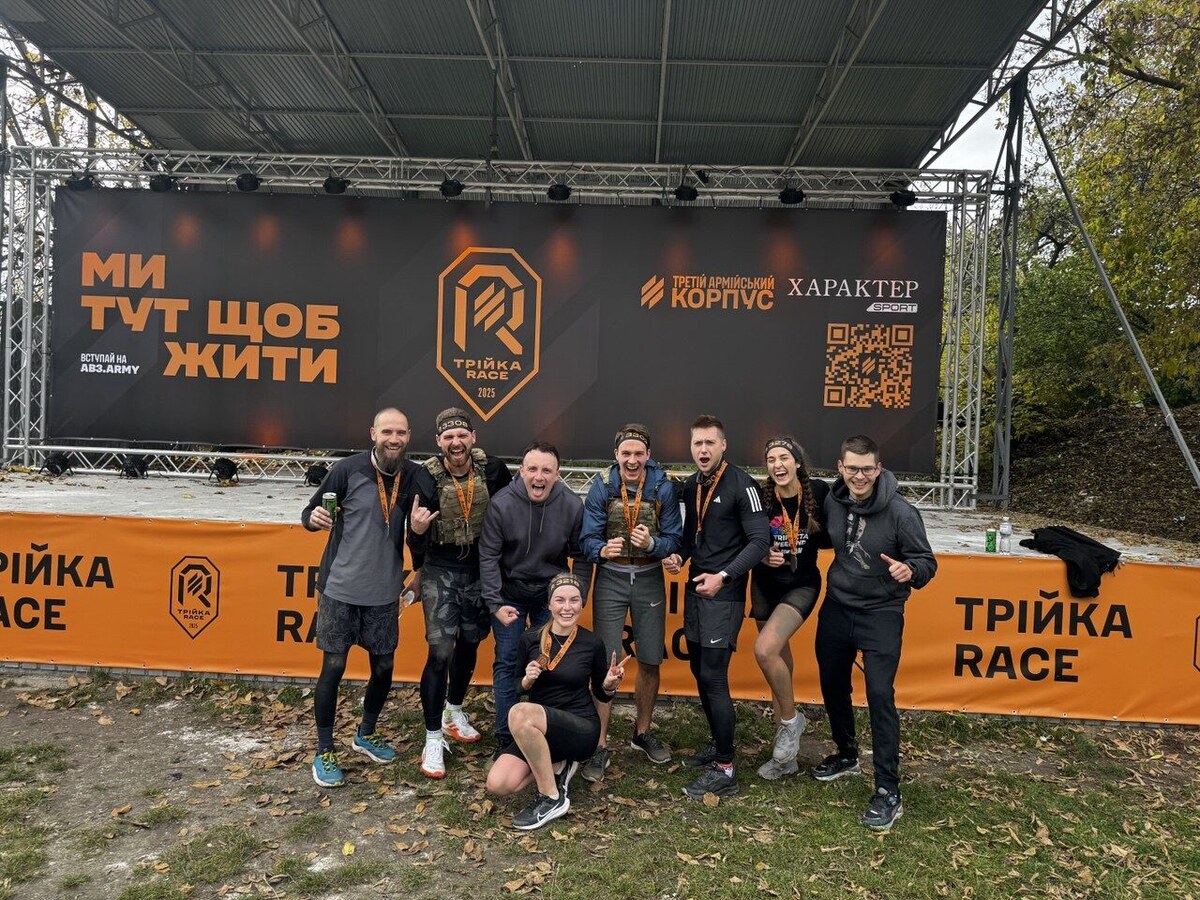
In fact, there is hardly an IT event that the community would miss. And this is not limited to professional meetings. Tabletops, sports, cinema, exhibitions, picnics — offline activities have become an integral part of Litcoders' lives. It started in the summer, and now someone is gathering somewhere almost every week.
Why do self-organized communities arise?
The success and growth of a community is a direct response to remote work, professional isolation, and market volatility. Communities fill these gaps, and Litcoders in particular, for me, is about three key things.
Humanity
So that you have not only VS Code or IntelliJ, but also real people nearby: those with whom you play tennis, read books, argue with algorithms, or just drink beer from time to time.
Practical benefit
Mentoring, regular online and offline meetings, resume analysis, recommendations, experience of real interviews, successful cases in Ukrainian and international companies — all this creates tangible support at a time when the market is unstable.
Industry maturity indicator
When stable self-organized communities emerge that exist longer than one course, one vacancy, or one high-profile meetup, it means that a real ecosystem is forming: with support, horizontal connections, and a culture of knowledge exchange.
I can’t influence global market trends, but I can make sure a few hundred more people don’t feel alone. That’s what Litcoders is all about for me.
«Why are there so few vacancies in IT where only Ukrainian is required?» the recruiter asked the community. The people of Aitovo responded: some have not used English at work in several years.











Great job, Serhii!