Хочете будувати кар’єру в Data Science та AI? Vodafone Big Data Lab відкриває новий набір —>
Ігор Вишневський Weapon
2 January 2026, 09:00
2026-01-02
10 iconic deep strikes of 2025. What Ukrainian weapons allow you to make "cotton" deep behind enemy lines
The year 2025 was, to some extent, a turning point in the war: Ukraine finally moved from relying on Western assistance to the systematic use of a powerful arsenal of long-range weapons of its own production. Thanks to the development of the missile program and long-range drones, «cotton» became a common occurrence in the deep rear of Russia even 1,000–2,000 km from the Ukrainian border.
The year 2025 was, to some extent, a turning point in the war: Ukraine finally moved from relying on Western assistance to the systematic use of a powerful arsenal of long-range weapons of its own production. Thanks to the development of the missile program and long-range drones, «cotton» became a common occurrence in the deep rear of Russia even 1,000–2,000 km from the Ukrainian border.
In this material, we have selected the 10 most significant, effective, or simply bold deep strikes of Ukraine on the territory of the Russian Federation and the occupied territories in 2025, carried out exclusively with domestic weapons. Of course, information about some of them may be quite limited, and the formation of a clear rating of deep strikes by distance is complicated by the fact that the launch point of Ukrainian weapons is always different and almost never known. Therefore, the selection primarily simply demonstrates the power and diversity of the Ukrainian defense industry, and does not intend to form a clear rating in conditions when a number of indicators for such a rating remain «behind seven seals.»
Sub Sea Baby «made sure» that the submarine «Varshavyanka» was constantly underwater
Who said that we should only talk about air attacks? Let’s start with a very recent case — on December 15, 2025 , the SBU reported that the Russian submarine Varshavyanka (NATO reporting name Kilo) was hit by Sub Sea Baby underwater drones. According to the Ukrainian special services, as a result of the strike, the submarine suffered critical damage and was put out of action. This operation was relevant not only from the point of view of reducing the enemy’s military potential, but also for protecting Ukrainian settlements from potential missile attacks, since Varshavyanka was carrying four Kalibr cruise missile launchers.
The cost of the sunken enemy boat is approximately $400 million, and the port of Novorossiysk ceased to be considered a «safe harbor» after the redeployment of the Black Sea Fleet from Crimea.
Little is known about the Sub Sea Baby underwater drones at the moment, but this story proves that Ukraine has a powerful design potential not only from the «commercial» defense industry, but also from its own developments by the special services, in this case the SBU. According to the American analytical portal Defense Info, the technical details of the Sub Sea Baby, including range, payload, guidance systems, communication architecture and degree of autonomy, remain unknown, and it is not yet fully clear whether this development was adapted to a specific purpose and capability, or whether it is ready, as they say, to «go mainstream» and systematically attack facilities in Russian ports.
First Contact’s Osa drones destroyed dozens of Russian bombers during Operation Spiderweb
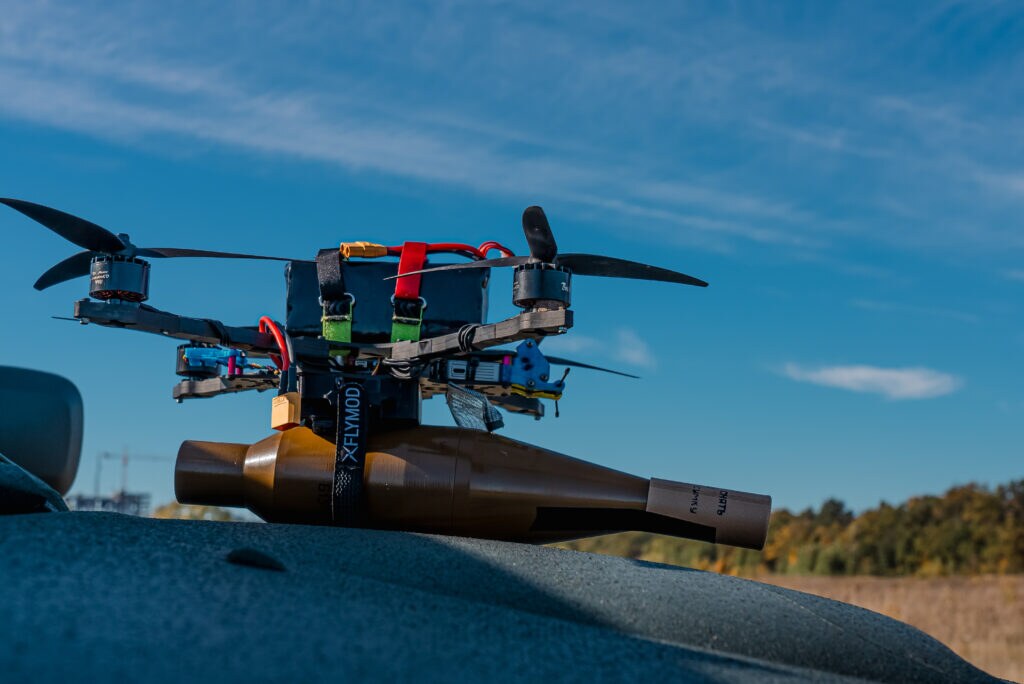
Operation «Web», which took place on June 1, 2025, thundered around the world without exaggeration, appearing in the columns of all leading media outlets and causing admiration for both the depth of the idea and the accuracy of its implementation. Can it be considered a deep strike, given that the Russian planes were destroyed not by long-range weapons, but by simple FPV drones? Perhaps this is a debatable issue for military analysts, but we will not delve into it, putting the fact first — Ukrainian weapons destroyed enemy targets deep behind enemy lines. In general, the Osa drones, with their rather modest performance — up to 25 km of maximum combat radius and 15 minutes of time in the air — could not claim to do anything similar if they were launched from points more remote from the Russian aviation bases.
Osa drones. Photo from the official website of First Contact
Actually, there was no official confirmation of the participation of the «Wasp» drones from First Contact in the operation, but, firstly, this type of drone was recognized by the specialized publication Defence Express in the published photos and videos of the operation, and, secondly, the First Contact company itself, during a presentation at the IT Arena in Lviv, «without hinting at anything,» showed a video about the «Web» operation.
The main thing, as they say, is the result on the scoreboard: Ukrainian FPV drones destroyed or damaged more than 40 units of Russian military aviation equipment, hitting, in particular, A-50, Tu-95, Tu-22, Tu-160, An-12 and Il-78 aircraft at four airfields — Olenya, Ivanovo, Diaghilev and Belaya. At the same time, the truckers who delivered the cargo directly to the strategic aviation bases had a misconception about the cargo and were not informed about the details of the operation. According to media reports, one of the trucks with the drones burned down on the way — otherwise it would have also reached the Ukrainka airfield in the Amur region.
«Neptune» checked how things are going at the «Electrodetal» plant in Karachev, Bryansk region
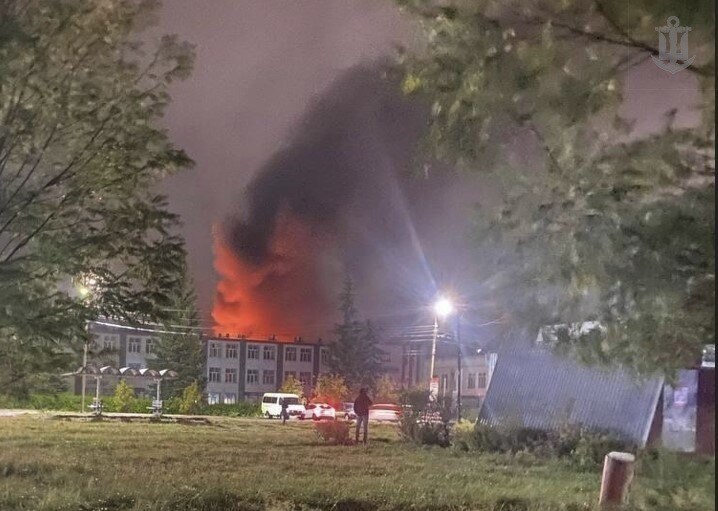
On September 29, 2025, Ukrainian Neptune missiles arrived at the Karachevsk Plant Elektrodetal, located in the city of Karachev, Bryansk Oblast, Russia. According to Army Inform, the products of this plant are used in the aerospace, electronic, instrument-making and other industries: for example, connectors for printed circuit boards, military equipment, aircraft, antennas, base stations and other systems, as well as components for various measuring instruments. Elektrodetal is a manufacturer of components for more than 1,500 enterprises of the Russian military-industrial complex and is part of the Radioelectronic Technologies concern of the Rostec corporation. In addition to manufacturing more than 25,000 types of electrical connectors, the plant, according to media reports, is involved in the production of FPV drones.
The consequences of the strike on the Elektrodetal plant. Photo from the page of the Commander of the Navy of the Armed Forces of Ukraine
Of course, in terms of distance, this was not the most significant deep strike in Ukraine, because the Bryansk region borders our country and the Neptunes had to cover only a couple of hundred kilometers, but the consequences are truly impressive. In addition, the use of the Neptune missiles was officially confirmed by the Naval Forces of the Armed Forces of Ukraine, which also does not always happen, and the media has to only make assumptions about this or that type of weapon.
«Hell» in the occupied Luhansk region (and in many other locations)
In June 2025, the media first recorded a strike by a Peklo missile drone on targets near occupied Luhansk. «The identification of this particular long-range vehicle was carried out by one of the Ukrainian profile Telegram channels, noting that the video captured a fragment with a small jet engine and a V-shaped tail fin,» writes Defense Express.
Then, among other things, the «Hell» was involved in the destruction of the Aydar River crossing north of Luhansk and the pumping station. It is known that the «Hell» had already been used since the year before last and was first officially shown in early December 2024, but there were no confirmed cases of its use before that. So in this case, what is important is not so much the specific targets — against the background of other victories, they look rather mediocre and banal — as the confirmation of the use of this long-range weapon. According to the well-founded assumptions of the «osinters» and military analysts, in many other cases of Ukrainian deep strikes in 2025, the «Hell» drone missile was also used. In addition, an important factor in this Ukrainian development of the Ukrainian defense industry is its low price: according to «Ekonomichna Pravda», it costs even less than the Ukrainian kamikaze drone «Feb», and the price of the latter reached $200,000.
As is known, according to its basic characteristics, the Peklo drone missile has a range of up to 700 km and can reach speeds of up to 700 km/h.
Flamingos arrived at the FSB base near occupied Armyansk
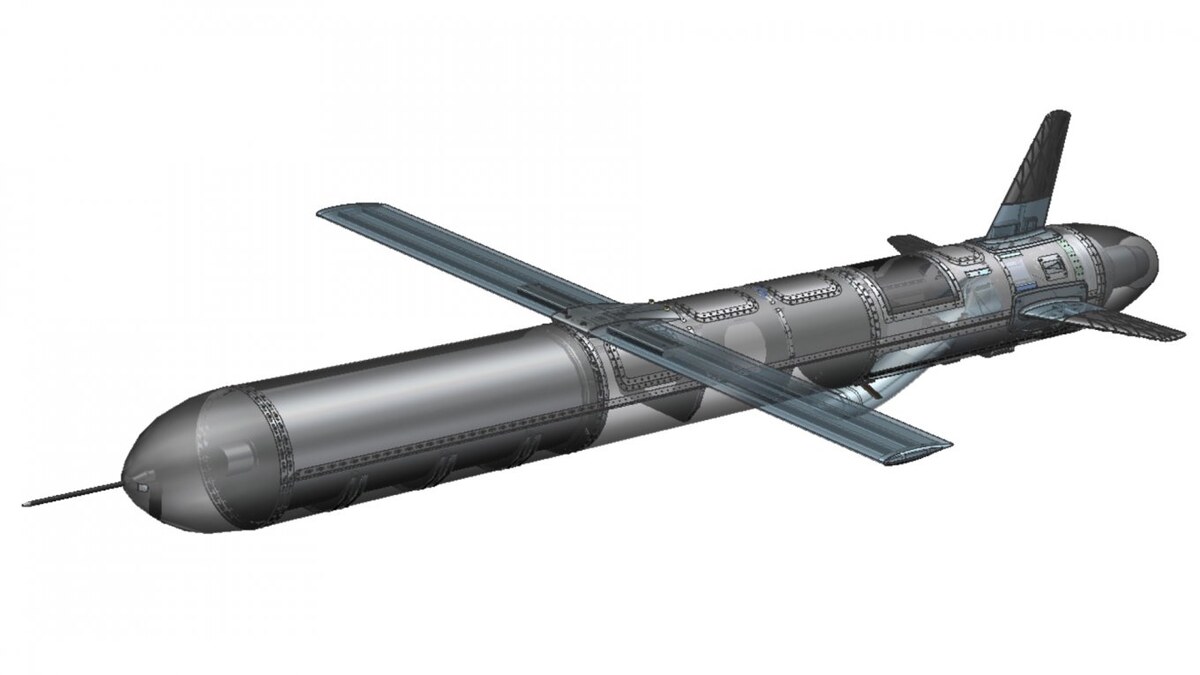
Fire Point, which manufactures a range of strike drones and added Flamingo missiles to its arsenal last year, has arguably become one of the main newsmakers in the Ukrainian defense industry, both due to its success in weapons production and rapid growth, and due to the stream of usually negative news about its shareholders and investors. However, it seems that even this stream may not prevent a major deal under the Christmas tree: in the last days of 2025, BBC News Ukraine reported on the possible purchase of a 30% stake in Fire Point by the EDGE defense group, a state-owned defense and technology conglomerate of the UAE.
As in the case of the aforementioned «Hell» drone missiles, enemy targets hit by «Flamingo» missiles are not always, or rather almost never, officially disclosed. However, according to the publication «Military», it was the «Flamingo birds» that flew to the FSB base near occupied Armyansk in Crimea on August 30, 2025.
Later, the German newspaper Die Welt also reported that Ukraine had tested the FP-5 Flamingo long-range cruise missile in combat conditions by striking an FSB base in Crimea. The attack on the FSB base in August came not much later than the world had even learned about the existence of the Flamingo, as Associated Press photojournalist Yefrem Lukatsky first published a photo of the missile on August 17.
Drones FP-1 and FP-2 are also not far behind: Taman and beyond
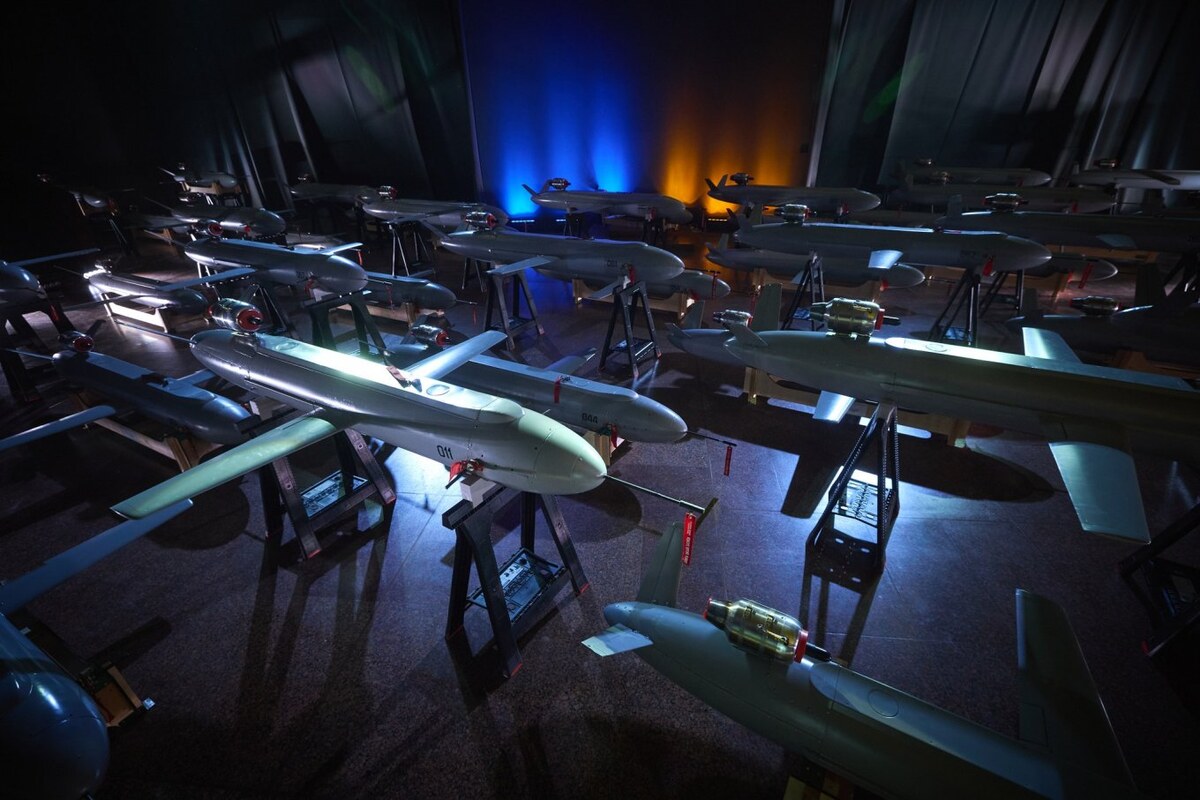
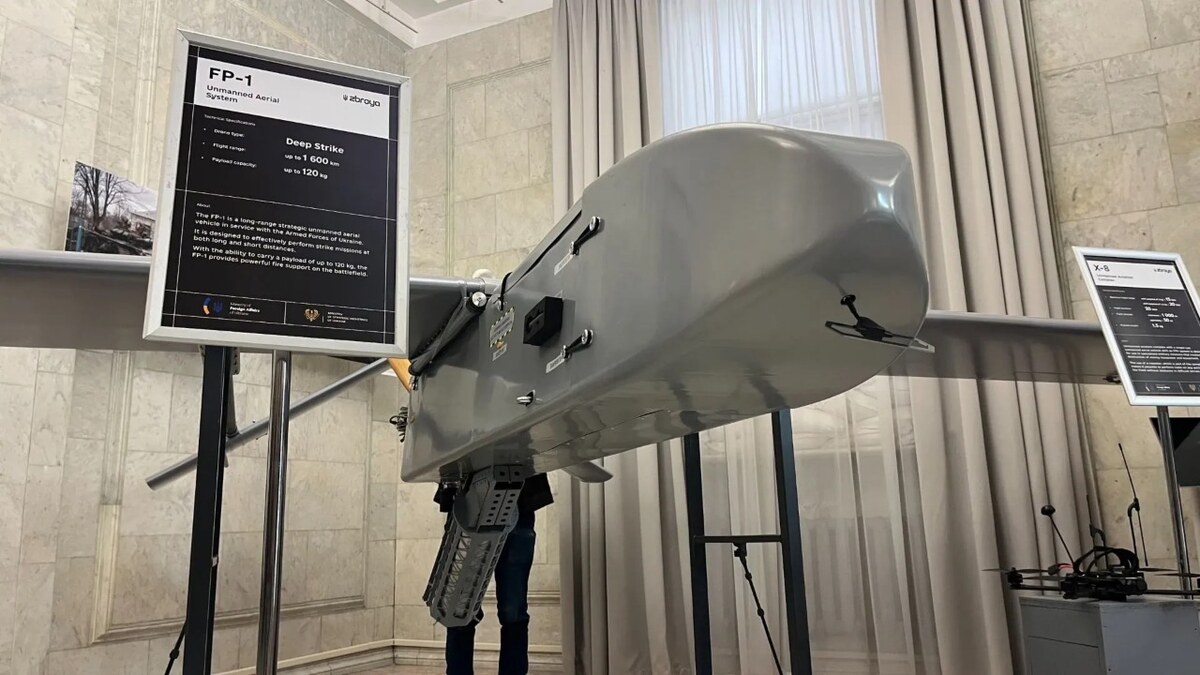
Other products of the Fire Point company — long-range drones FP-1 and FP-2 — also systematically strike targets both in the occupied territories of Ukraine and in the rear of the Russian Federation. Most recently, the media reported on the destruction of the Main Directorate of Intelligence of the oil and gas terminal, port buildings and equipment in the seaport «Taman» in the Krasnodar Territory of the Russian Federation by drones. According to sources, FP-1 drones, capable of carrying up to 120 kg of explosives, were used as the strike force.
«Furious» is raging in the deep rear of the Russian Federation
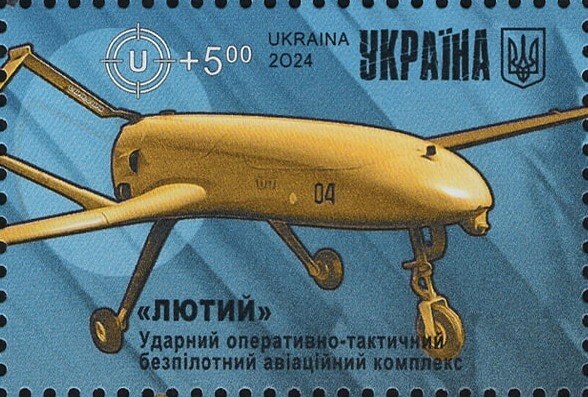
Back in 2024, the media began to widely report numerous attacks on enemy targets deep in the rear by Lyuty drones. In 2025, this remarkable trend continued. For example, on July 1, 2025, Lyuty drones attacked the Izhevsk Electromechanical Plant Kupol in the Udmurt Republic, 1,300 km from the border with Ukraine. This is one of the main manufacturers of Tor and Osa air defense systems and Harpy strike UAVs for the enemy army.
Ukrposhta released a postage stamp with a drone «February»
That day, dev.ua devoted a detailed analysis to the «Lyuty» drone. Last year, the Ukrainian long-range kamikaze drone «Lyuty» continued to be one of the main «workhorses» for strikes on strategic targets in the deep rear of the Russian Federation. Thanks to the combination of range (over 1,000 km) and accuracy, it is actively used both independently and in combined attacks. There were many other deep strikes, which, according to sources in the defense forces, analysts and «osinters», were carried out precisely by the «Lyuty» drones.
For example, in March 2025, Ukrainian long-range drones attacked a strategic aviation airfield near the Russian city of Engels (Saratov Region). According to media reports, judging by the published videos of eyewitnesses, Ukraine then used domestic long-range UAVs «Feb».
«Beaver» sharpens its teeth: hit objects in occupied Crimea
This summer, the Ukrainian Air Defense Forces conducted a traditionally bold and effective operation to destroy enemy facilities and equipment in the temporarily occupied Crimea. Another «workhorse» of a full-scale war, which regularly «gives the enemy nightmares» — UJ-26 «Bober» drones — were involved in the implementation of the plan. At the airfield in Saki, Ukrainian «Bobers» destroyed or damaged Russian air defense systems, radar stations, and a Su-30 fighter.
«The video shows the successful destruction of the Pantsir-S1 air defense missile system along with its crew, the Niobiy-SV radar, the Pechora-3 coastal radar, the Protivnik-GE radar, and the Russian Su-30 fighter at the Saki airfield,» the GUR report says.
The Ruta missile drone and an unnamed offshore tower
2025 was also remembered for the news of the first hit by a Ruta drone missile on an enemy target. President Volodymyr Zelenskyy announced in October last year that the Ruta had successfully attacked a naval tower at a distance of over 250 km. Of course, from the point of view of range, this does not look like some kind of super achievement, but in the context of the first confirmed strike with a new weapon, this incident is definitely worth mentioning.
What is even more interesting is that the «Ruta», positioned as a Ukrainian weapon, is actually manufactured by the company Destinus, founded by Mikhail Kokorich, a businessman who renounced Russian citizenship.
Official image of «Ruta» from the company Destinus, photo from the Defense Express website
At the same time, a model of the «Ruta» missile was demonstrated at the Ukrainian stand at one of the exhibitions in the summer of 2024. «Ruta», as we recall, develops a cruising speed of Mach 0.8 and has a maximum flight range of up to 500 km.
The third strike on the Crimean Bridge. Was it the Toloka underwater drone?
In the summer of 2025, another epochal event occurred — Ukraine successfully attacked the Crimean bridge for the third time. However, the weapons used to do this were not officially named.
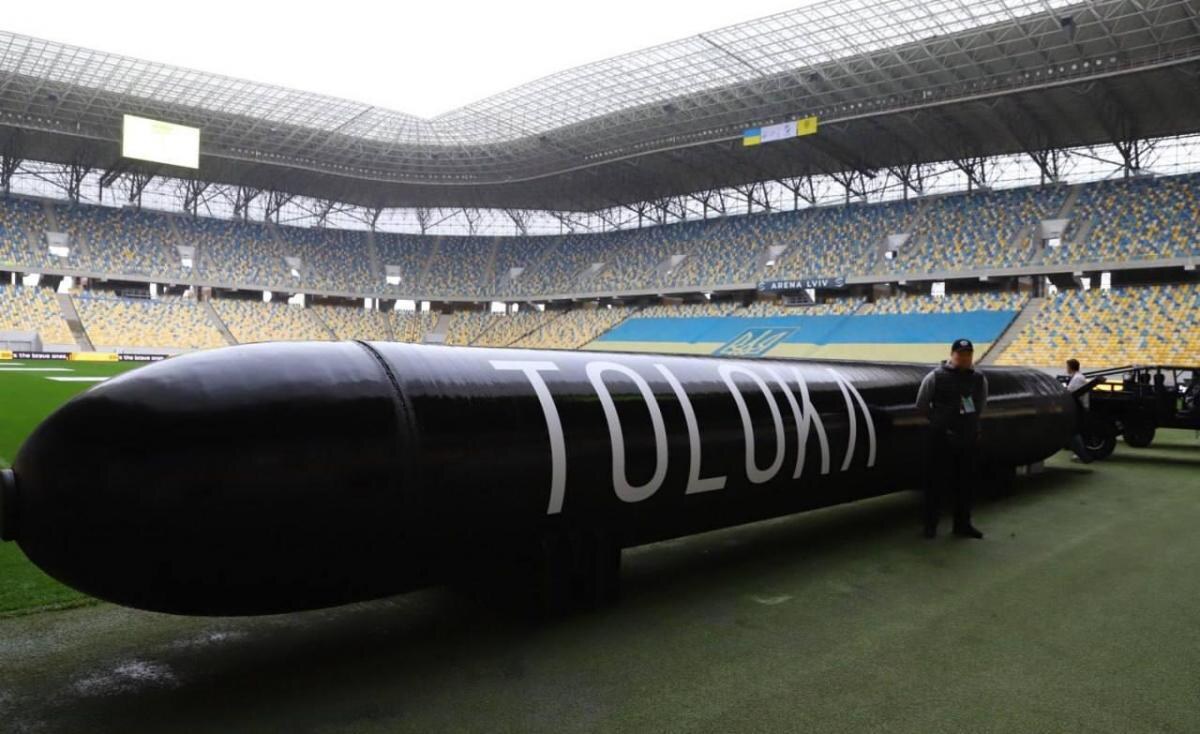
Defense Express reminds that the Toloka and Marichka naval drones look like a possible means of attacking the Crimean bridge. As for the Toloka drones, according to the media, they could be the TLK 400 models with a length of 4-6 meters, a range of 1200 km and a warhead weight of up to 500 kg, or the TLK 1000 with a length of 4-12 meters, a range of 2000 km and a payload of 5000 kg.
Drone «Toloka», photo ClashReport
By the way, the Toloka 1000 was presented at the Defense Tech Valley 2025 exhibition in Lviv as the largest Ukrainian underwater drone. At that time, numerous media outlets published headlines about the potential destruction of the Crimean Bridge by Toloka drones. But whether this is so is currently unknown.
So, 2025 has finally gone down in history as another step for the great technological leap of the Ukrainian defense industry. From isolated experimental launches, Ukraine has moved on to the systematic, massive, and high-tech destruction of the Russian military machine at a depth of thousands of kilometers. Watching how Ukrainian «cotton» confidently strides through the most remote corners of the enemy rear, one can only hope that 2026 will bring even greater production scales, and the geography and intensity of our deep strikes will grow exponentially.
Kateryna Myhalko, TSU: «Ukraine has a surplus of drone capabilities. We call it a surplus not because the army doesn’t need it, but because our state doesn’t contract it.» A great interview about arms exports and the pitfalls of miltech