Хочете будувати кар’єру в Data Science та AI? Vodafone Big Data Lab відкриває новий набір —>
Олег ОнопрієнкоІсторії
24 September 2025, 09:00
2025-09-24
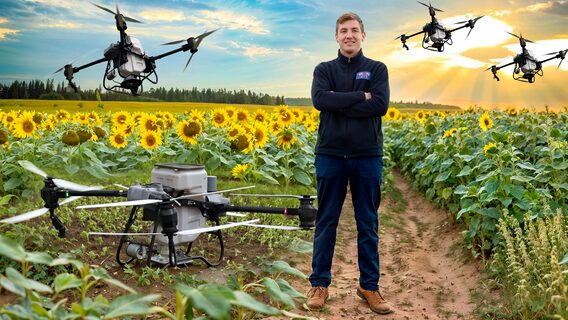
“It’s like processing 120,000 football fields in 25 days.” Why are UAVs increasingly used in agribusiness instead of tractors despite the constant work of electronic warfare? Rodion Soroka from Drone Agroflot spoke about the intricacies of the work of agricultural drones in Ukraine
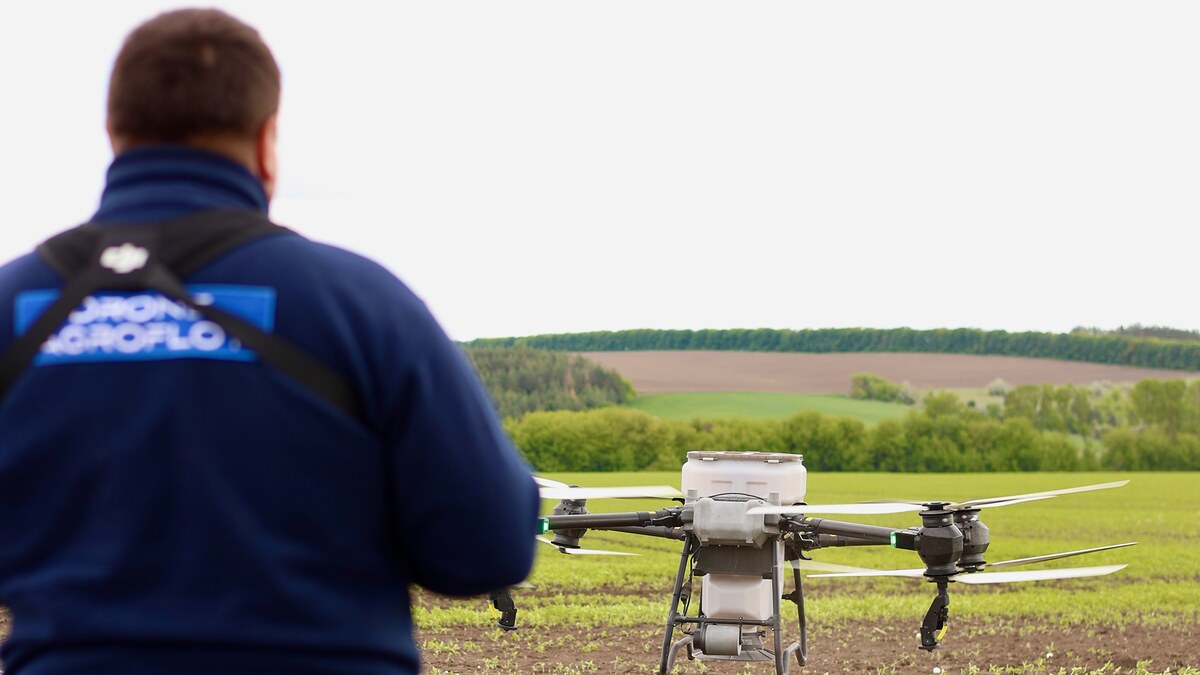
In a full-scale war, where the sound of a drone makes the heart beat faster and is the No. 1 target for the MVG, Drone Agroflot is betting on drones in the agribusiness sector. The company not only survived a Russian missile attack on its office and the constant loss of drones due to electronic warfare, but also managed to increase the volume of work and develop the direction of pilot training.
Rodion Soroka, a key person shaping the strategic development of the commercial direction of Drone Agroflot, told dev.ua about the peculiarities of working with agricultural drones and the survival strategy in conditions of constant competition and military risks.
In a full-scale war, where the sound of a drone makes the heart beat faster and is the No. 1 target for the MVG, Drone Agroflot is betting on drones in the agribusiness sector. The company not only survived a Russian missile attack on its office and the constant loss of drones due to electronic warfare, but also managed to increase the volume of work and develop the direction of pilot training.
Rodion Soroka, a key person shaping the strategic development of the commercial direction of Drone Agroflot, told dev.ua about the peculiarities of working with agricultural drones and the survival strategy in conditions of constant competition and military risks.
About Drone Agroflot
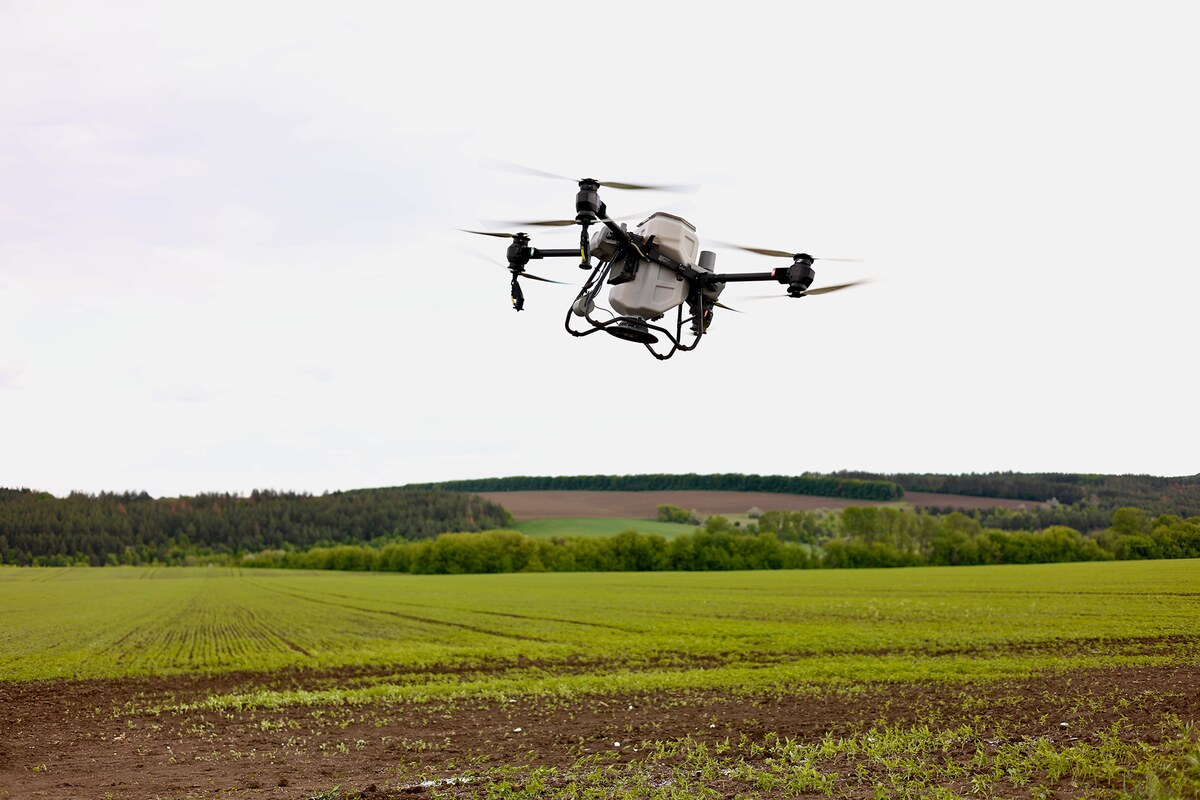
Drone Agroflot is a Ukrainian company specializing in a full range of services in the field of agricultural drones, its mission is to provide farmers with timely crop protection. The company provides services for processing fields with drones, sells them, has its own service center for repair and maintenance, as well as its own school for training pilots. The head office of Drone Agroflot is located in Kyiv.
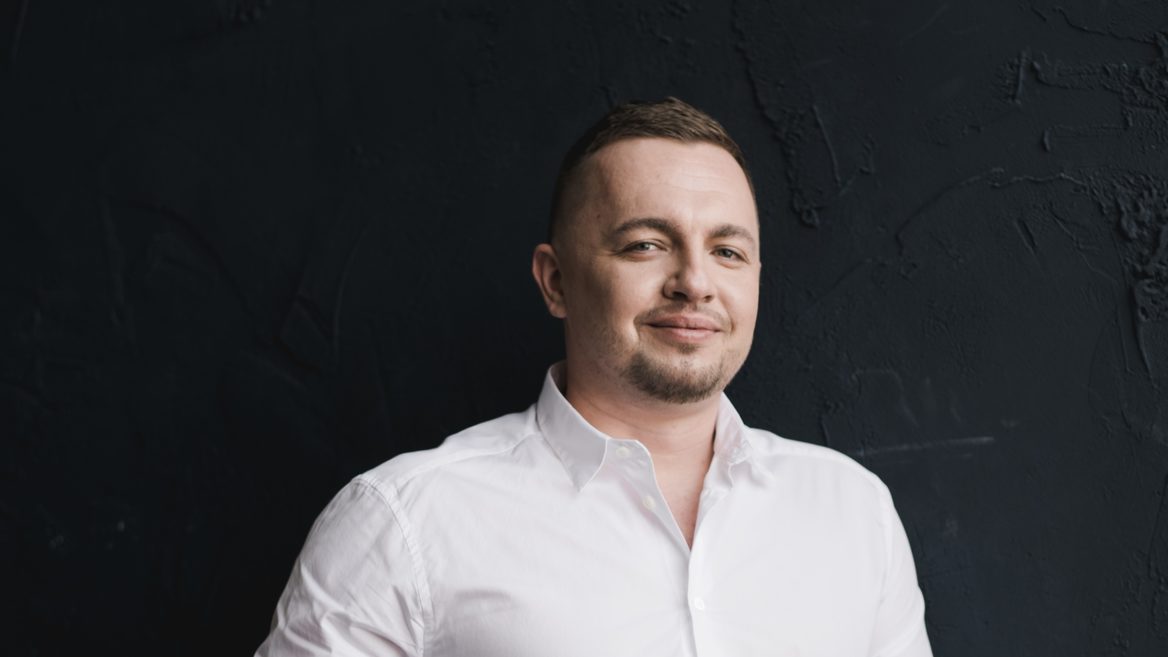
The founder and CEO is Vasyl Sukhoveev. Strategic decisions are shaped by key managers: Rodion Soroka is responsible for the commercial direction, work with agricultural holdings and marketing. Andriy Shkilnyak coordinates the work of all crews and pilots, and also manages the services of the company and its partners. Oleksandr Povkh heads the service center and ensures prompt recovery and maintenance of all drones.
The company started its operations with a team of six people, and now its staff consists of over 32 specialists. The management considers the agrodrone pilots to be key employees, as they are the face of the company on the ground. Due to the novelty of the industry and the lack of qualified specialists, “Dron Agroflot” independently educates its specialists, training them in its own school.
— What are the key roles in the team now? Are you looking for new specialists? If so, who exactly?
We can talk a lot about the key roles of management positions, and how important it is to be able to make the right decisions, operate with people in real time, etc. But we consider the key people to be agrodrone pilots, because only thanks to them we have a good reputation with our clients, orders are completed on time, and these are the people who are the face of our company on the farms.
There is probably no field where motivated and qualified specialists would be in abundance. Of course, we, like everyone else, are sorely lacking them. Plus, we have the disadvantage that there are very few such specialists, due to the fact that the field has been operating relatively recently, so we have to educate such specialists ourselves.
Services, equipment and technologies
— What are the main services you currently provide: applying pesticides, selling drones, training?
The company's main activity began with services: application of pesticides, desiccation, and spraying of gardens, spreading fertilizers. Then we started doing Trichogramma removal and, accordingly, winter work is spreading bactericide, which allows us to extend the season almost until the new year.
Our work is very seasonal, so the company has to support itself in the off-season, so during this period we are actively engaged in selling equipment, modernizing existing equipment, and training pilots for ourselves, partners, and our clients who purchase equipment.
— You started as a service company, and now you also train and sell equipment. What was the trigger for expansion?
When you come to work on a farm and do a quality job, companies definitely pay attention to the equipment you work with, are interested, and then, accordingly, some talk about wanting to buy it. Since we understand perfectly how to operate it, train pilots, prepare additional equipment, repair it, why shouldn't we sell it? Moreover, this gives us the opportunity to receive additional funds for our development.
— What software do you use to build maps and control drones?
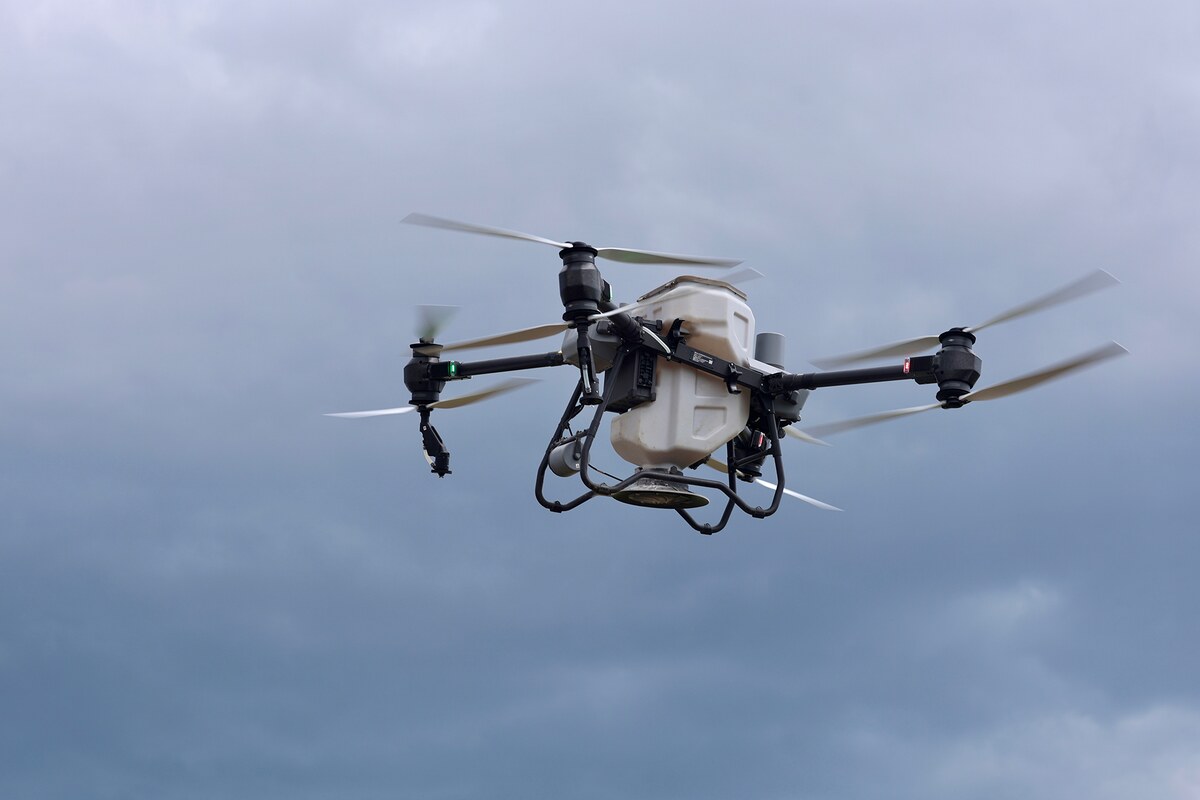
We use software from DJI, it is the most convenient and most optimized for these tasks, in fact, the drone will not work with other software, but there is no better one on the market now. Each drone manufacturer independently creates software for its drones.
— What is your largest agricultural project? How many hectares were cultivated, how long did it take, what were the difficulties?
The largest order that our company completed was 48,000 hectares of spraying and, in parallel, 47,000 hectares of Trichogramma settlement, this was in 2024.
In terms of scale, this is an area about the size of 120,000 football fields. 37 drones worked on spraying, and 24 drones worked on the Trichogramma settlement.
90% of all work was done in 20-25 days in July, and the rest of the work was completed in 15 days in September. No one has done this in Ukraine before, but we hope that this is just the beginning.
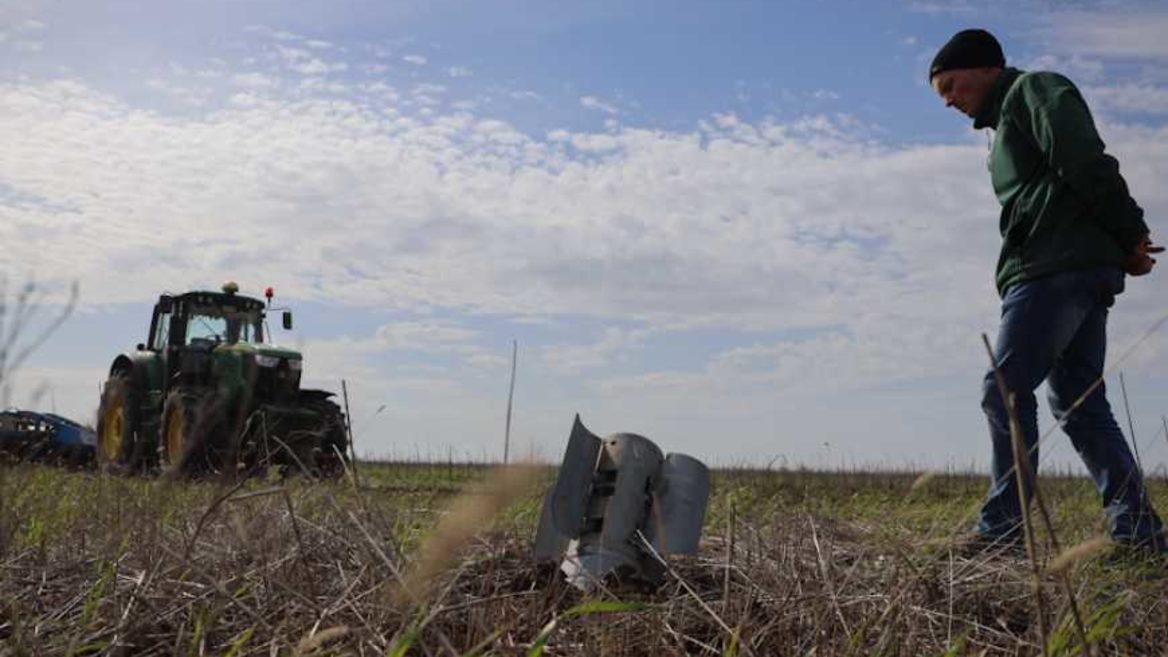
The biggest difficulties we had were due to the weather conditions, as the temperature during the day was very high and only dropped after 9:00 PM, which in turn put us in certain limits. But the main problem is that our neighbor is a terrorist who constantly shells our country, and accordingly, during air raids, we do not work and have a lot of downtime at night.
Technical aspects and advantages
— What are the advantages of agricultural drones over traditional equipment (tractors, sprayers)?
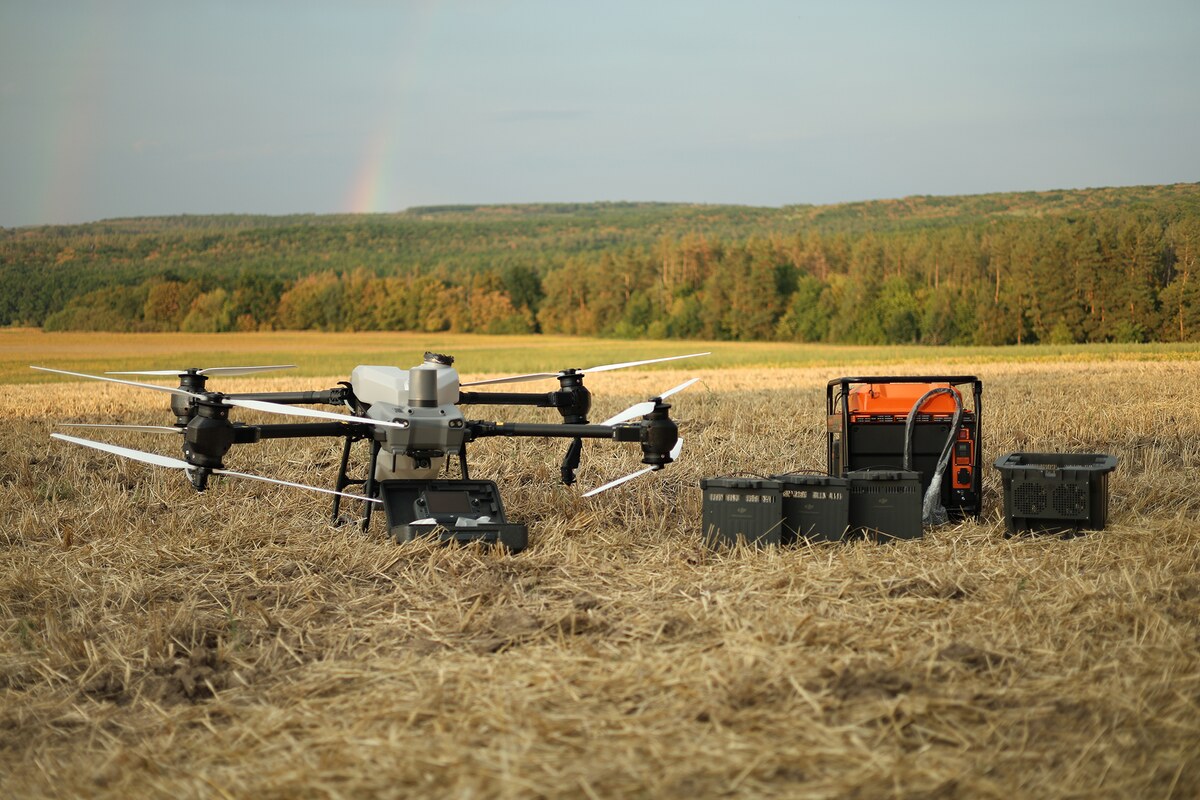
The clear advantage is the cost. Next year, there will be drones that will not be inferior in performance to self-propelled sprayers, but will significantly win in cost, since a drone kit plus all the necessary equipment will cost from $20,000 to $45,000, while the cost of a self-propelled one is from $300,000 to $500,000, respectively, and maintenance is cheaper.
Other main advantages are staff optimization at least twice, 10 times less fuel costs, 90% water savings, which we don't have much of anyway, and the ability to work after rain and on tall crops. There are many advantages and we can talk about them for a long time. Of course, there are disadvantages, but that's for another time.
— Your videos show that you processed 27 hectares in an hour. How long would that take for tractors?
This would depend on the specific model, whether it is a trailed or self-propelled sprayer. If we talk about a self-propelled sprayer, it would be more productive over long distances and on large fields. A trailed sprayer would most likely lose in productivity.
— One drone kit costs 1–1.2 million UAH. How long does it take for the investment to pay off and what is the life cycle of one drone kit?
If we talk about payback, it depends purely on the number of hectares produced, it can be half a season, or a season or two.
On average, a farm of 1,000+ hectares, with active use of an agricultural drone, pays for itself in less than a season.
The life cycle is quite long, the only question is its relevance, in most cases 5-7 years pass from the release date to the loss of relevance, and this time can vary because the market is rapidly moving upwards.
— How many drones, on average, are lost per season due to wear and tear, weather, and other factors?
We can lose drones only because of the electronic warfare system that turns on during an air alarm, but we install autonomous trackers that have their own battery and show their geolocation, and accordingly we then find them, in cases where the operator did not follow them, fortunately there are almost no such stories and this is rather an exception.
— Can drones completely replace other agricultural equipment, or is it more of a supplement?
On some farms in Ukraine, drones have completely replaced trailed or self-propelled sprayers. If we talk about self-propelled sprayers, then in the coming years they will probably lose a lot to agricultural drones, and sellers of this equipment are already feeling it, and trailed sprayers will probably work for a long time, since certain types of applications they handle better than agricultural drones in terms of the quality of work.
Wartime challenges
— How did your activities adapt to a full-scale war, given the ban on drone flights?
We can say that the agricultural sector is a fairly competitive and complex area and there is no chance of not adapting, that is, you either accept the challenges and confidently cope with them, or you drop out of the game (if you can say that about business), yes, there is a ban, but there is also a solution to this issue.
— Did you receive any special permits? Did you have to negotiate with local military administrations?
Of course, we have to go through a certain procedure for flying agricultural drones. We are grateful to the state leadership for not interfering in this issue and for allowing us to decide everything locally in most cases.
If we work on large agricultural holdings and the work is carried out simultaneously throughout the entire territory of the region, or even in several at once, then of course the Regional Military Administration is the first to be informed and then it is transferred to the district ones, the police, military units, village elders, etc. are contacted, so that everyone is aware.
When it comes to small orders, the matter is more local, and in most cases we are told to notify the local RVA and the Police, and the air defense brigades, and we are very grateful to all these structures that always come to the rescue and help the business work.
— You mention electronic warfare interference in your work, tell us more about this problem.
This happens every day, and during every air raid, of course no one will come to meet us here, and the reasons for that are clear, safety is always above all else.
Of course, this adds complexity to the work, because of this we have a greater number of crashes. But this is the reality and we will not do anything about it here. We can definitely tell everyone with confidence that electronic warfare in Ukraine is very strong.
— Did you work in fields that were previously occupied?
Yes, of course, this is in most of the Chernihiv, Sumy, and Mykolaiv regions, and not only.
— In June, your company was hit by Russian missile fire. How did this affect your operations?
The most important thing is that there were no people in our business center and no one from our colleagues or neighboring companies was injured. What was in the office, of course, suffered significant damage, but what was in the warehouse was in a shelter (that's why we chose such a warehouse), so everything remained intact.
Of course, this added to operational problems, since it happened during the busy season, but we quickly found another space, prepared it for ourselves, and moved in completely within a few weeks.
Partnerships, customers and competition
— Which countries are currently setting the tone for the use of drones in the agricultural sector? Who are you targeting?
We focus only on ourselves, but of course we spy on the Americans and Brazilians, sometimes they really have something to borrow. We plan not just to spy, but also to cooperate, and certain processes in these directions have already begun.
— Who are your key clients today? Do you work with large agricultural holdings?
Since our company is quite large, we work with both small enterprises and the largest agricultural holdings in Ukraine. We work both in the direction of equipment sales, its service, and in the direction of services, the range of clients is very wide.
— What does a typical farm you work with look like? Does it make sense to use drones in small and medium-sized farms?
It can be said unequivocally that this is a farm that is not afraid of new technologies, it is technological, the leaders are decisive and they are the ones who drive progress and our country into a successful future. Of course, drones make sense to use in small and medium-sized farms. For small and medium-sized ones, it is more expedient to buy your own equipment and work on it.
— How competitive is the agricultural drone market in Ukraine?
It can be said that it is very competitive, as a large number of companies appear all the time, both small and large. But this in turn increases the level of services and quality of drone maintenance.
— Do you feel competition from volunteer organizations and charitable foundations that massively purchase drones and their components for the Defense Forces?
No, we work in different directions and our equipment is not connected. We can only help them if needed.
— Are you in contact with other companies in the industry that are involved in drone spraying?
Yes, constantly, this is normal practice. We sell equipment and service it to many people, as well as place orders. We are in good contact with most companies, both large and small, and this is definitely pleasing and helps us all become better at our jobs.
Money and drone supply
— Currently, your drone fleet consists of over 60 units. How long did it take you to reach this number of copters and do they meet your current needs?
It took us about two or three years to reach such a quantity of equipment. No, they do not cover the existing needs for services, but the need is always different, this is the agricultural sector)
— How much money was invested in the drone fleet and how long did it take to recoup this investment?
A large amount of investment was made in equipment and not only in equipment, the first drones that were purchased have already paid for themselves. We are in a constant process of updating our equipment, selling older equipment and buying new ones, which is why we are constantly investing.
— Do you buy drones yourself or through a distributor?
We independently purchase drones from the European drone importer DJI
— Why did Drone Agroflot choose DJI drones, considering that the company officially left the Ukrainian market?
We have worked with different brands and understand the advantages and disadvantages of each of them perfectly. DJI is the clear leader among commercial drones, and 99 out of 100 people will tell you this, and in the agricultural sector it is the same. Why buy worse equipment for the same money.
— How has DJI's decision to stop deliveries affected your business? How do you now get equipment?
We work through a DJI drone distributor in Europe, at first it was difficult, unusual, but we got used to it, adjusted the process, understood how Europeans work, and now we don't experience any problems with it. Maybe we are lucky with the people we work with.
— Why did you abandon the TTA technique?
We continue to support TTA drones, as we are their exclusive representatives here, and no one without us will be able to bring them to Ukraine, but we do not plan to import new models.
The first drones from TTA were quite reliable and technologically advanced and were not inferior to DJI drones, but in a few years DJI became the clear leader among drones. And while other manufacturers were simply moving forward, DJI was flying on a rocket compared to them. That is why we decided to keep our focus on DJI drones.
We are open to other brands and will consider them for ourselves as soon as they become interesting in terms of price-quality.
Own pilot training school
— How did the idea of creating a course for agricultural drone pilots come about?
We had no choice, we had to do it, because we needed to train specialists, since there simply weren't any in Ukraine. And many years ago, when the Chinese came and trained us, we realized that we were no worse than the Chinese and why not do it ourselves, plus we were already adapted to our realities and had a lot of experience behind us.
It is quite realistic to teach a person how to operate an agricultural drone in four to five days.
— How many pilots have you trained already? Are there any military personnel among them?
I can't say the exact number, but it's definitely not about dozens of people, but about hundreds. We have trained, are training, and will continue to train a lot of military personnel; they are interested in it, it comes easily to them, and they are attracted to this direction.
We had a large project with the Ministry of Veterans, MHP, and other charitable organizations to adapt veterans to civilian life, and in this project we trained more than 50 Heroes or their family members.
Strategy and vision for the future
— What are your short-term goals for the upcoming season (until the end of 2025)?
There is not much time left, but there are a lot of goals, of course we want to increase the volume of work performed by our drone fleet and improve the quality of application. Work with equipment sales and winter work to retain most of the team.
— Where do you see the company in three to five years?
We plan to stick to our mission: to be there so that every farmer can protect his crop in time. That is, the main thing is to expand the company's representative offices within our country, service departments, pilot schools, and service departments. This is what we will develop first of all. We also have other areas, such as security and demining, but we will probably talk about this another time.
— Are you planning to expand beyond Ukraine?
We have a partner company in Poland, and together we are moving the markets of both countries. There are plans for other countries, and in 2026 there will already be a process of their implementation.
— What about launching your own drone production?
We don't plan to at the moment, it's hard to compete with a company that owns 78% of all commercial drones in the world, and there's no point in doing so right now.
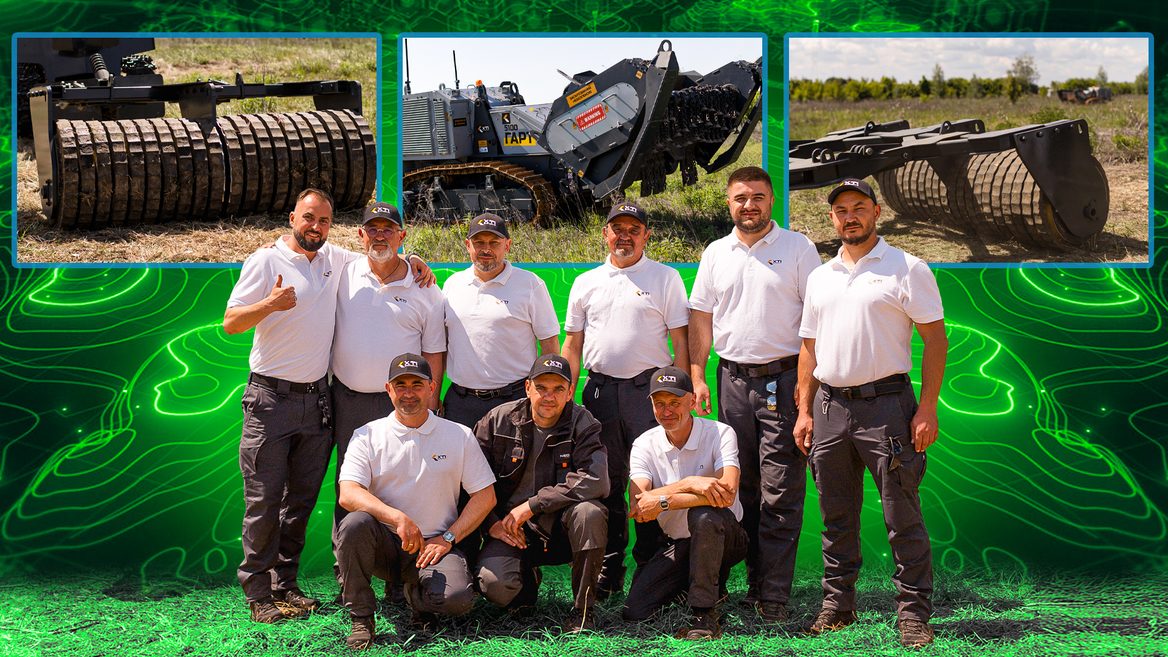
"Now our equipment does not harvest crops, but saves lives in minefields." Interview with the leaders of XTI Engineering, which has transformed from an agricultural player into a developer of machines for humanitarian demining
Co-founder of IT holding Techiia Oleg Krot will resume production of agricultural machinery at an old tractor factory in Poland. The buyer company's activities include the production of UAVs