Хочете будувати кар’єру в Data Science та AI? Vodafone Big Data Lab відкриває новий набір —>
Наталя ХандусенкоWar
1 October 2025, 15:16
2025-10-01
Enemy drones-zduns: what is known about the new ground trap for the military and civilians, and what Ukrainian developers are preparing in response
For several months, the Russian army has been actively using drones-waiters both on the front line, especially on the logistical routes of the Armed Forces of Ukraine, and in front-line areas against civilians. These drones can "sit" in ambush all day long, waiting for a target. So far, no effective way to counter such devices has been found, but Ukrainian developments have already begun to appear that can extend the "waiter" standby mode even for more than a week.
For several months, the Russian army has been actively using drones-waiters both on the front line, especially on the logistical routes of the Armed Forces of Ukraine, and in front-line areas against civilians. These drones can "sit" in ambush all day long, waiting for a target. So far, no effective way to counter such devices has been found, but Ukrainian developments have already begun to appear that can extend the "waiter" standby mode even for more than a week.
The enemy learns from the tactics of the Ukrainian military
The Ukrainian military began using conventional drones with radio communication in standby mode about the summer before last. Roman, a serviceman of the 14th separate mechanized brigade, told Suspilny.
"During the FPV flights, we tried to "land" the drone on a dirt road, where the connection allowed us to keep control and the video signal. We watched from the Mavic to see if there was any movement of the equipment. When we detected movement, we decided whether it was effective to raise the "flying drone" or whether we should wait for the next target. We have such a practice. This technique is very effective, but if you do it on an FPV drone with a regular radio signal at certain frequencies," the defender shared.
According to the military, the enemy "does not get stuck, draws its own conclusions and learns from our tactics that we apply."
A drone-waiter sits inconspicuously in ambush and waits for a target to appear.
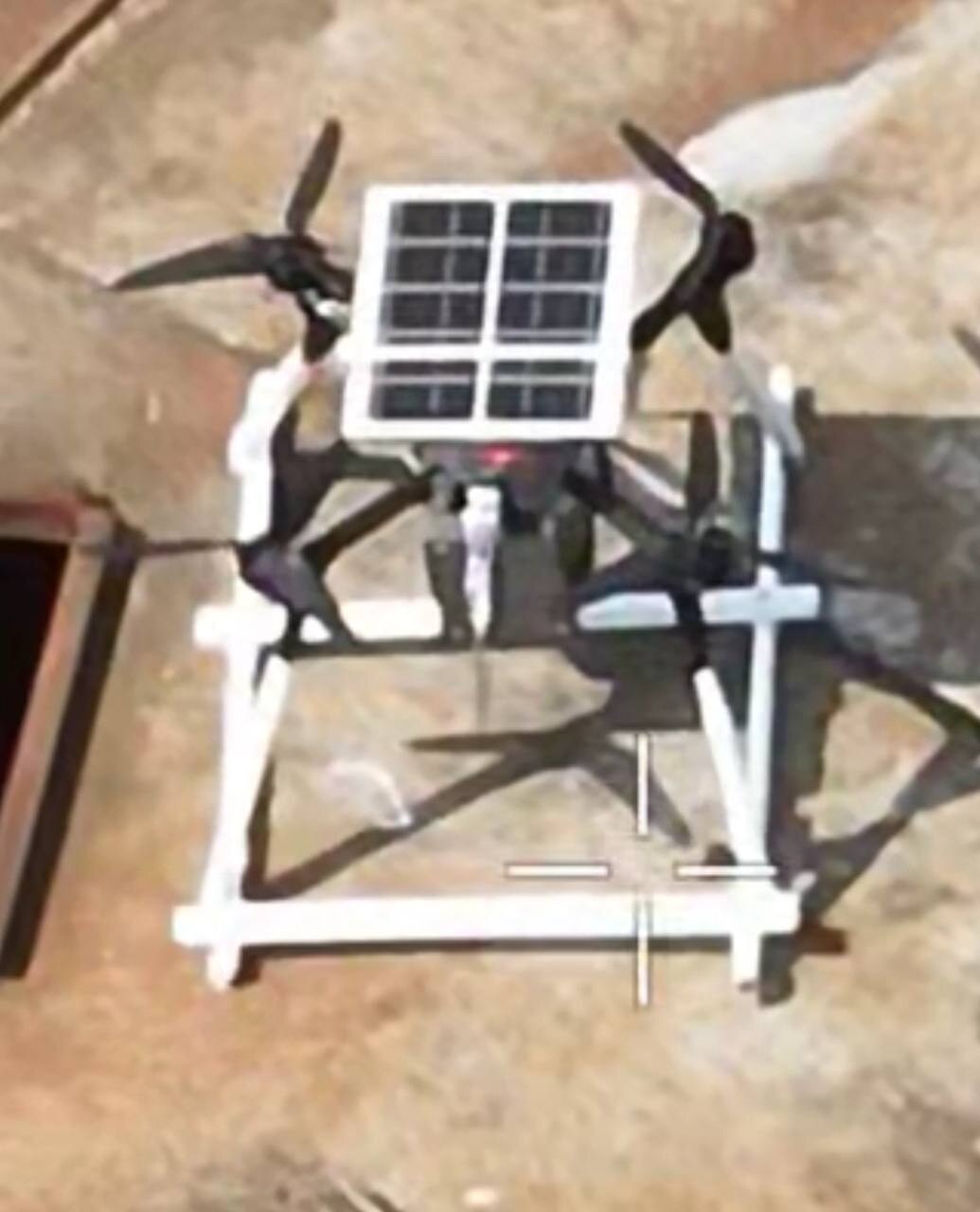
The Russian army has been using drones for several months, mostly on fiber optics, but there are also those with solar panels.
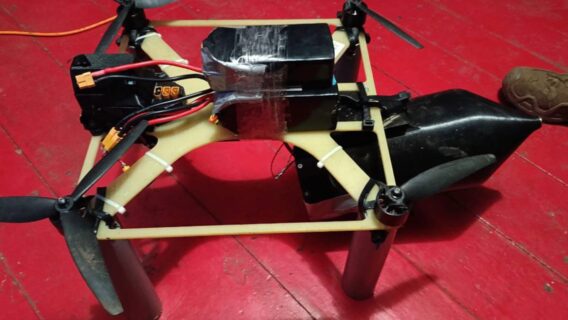
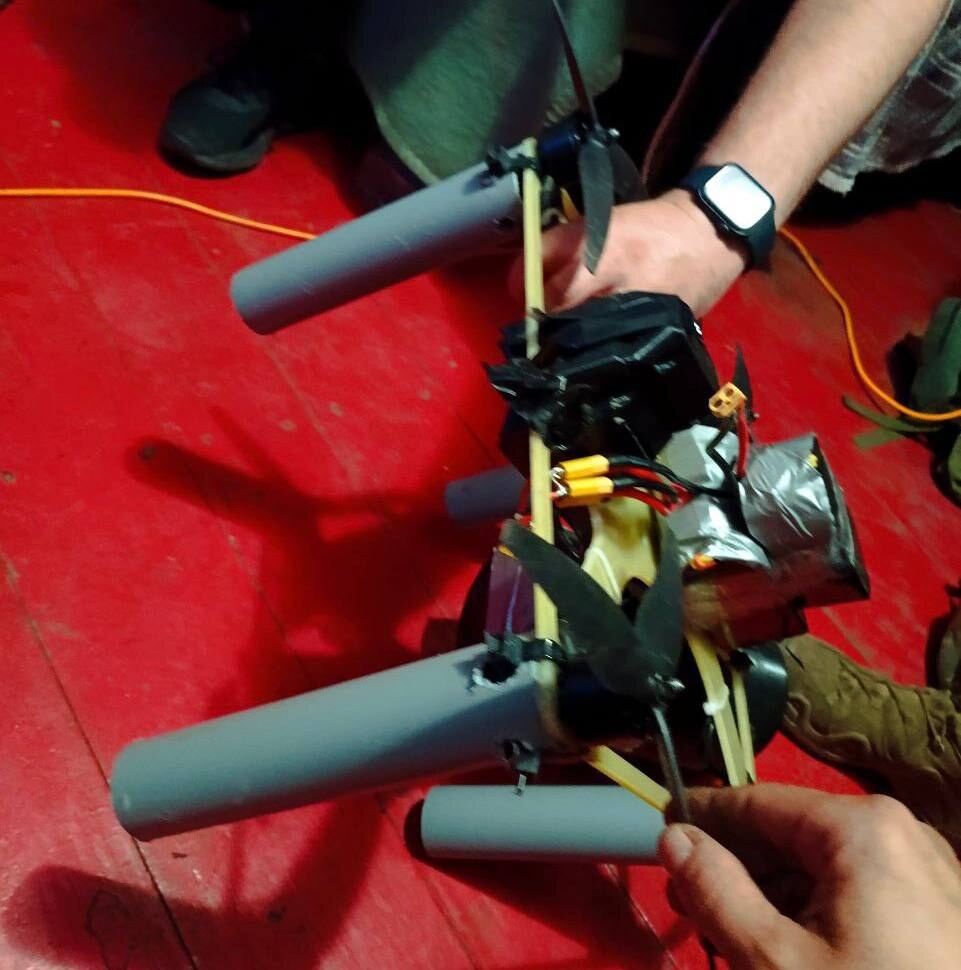
Such "waiters" are capable of remaining in a standby position for a long time (sometimes even for a whole day), are not affected by electronic warfare means and are difficult to detect from the air. Their main feature is the legs on which the drone stands when waiting for a target.
The enemy actively uses "Zhdun" not only on the front line, but also in front-line territories.
Source: radio technology specialist Serhiy Beskrestnov (Flash)
“The drone lands somewhere on the route — often where a military vehicle or civilian cars are moving. It sits and waits. This can be not only on the ground, but also on a building — where there is some kind of overview. It sits and waits,” explained the principle of operation of such drones, military expert and founder of the Reactive Mail organization Pavlo Narozhnyi on Channel 24.
In standby mode, the battery is almost not consumed, so enemy drones arrive in the morning and can wait a long time for our logistics to leave.
"As soon as the drone sees our car in the camera, it takes off and attacks it. Therefore, before each logistics operation, it is necessary to fly around this route in search of these "waiters". This requires great effort, time and equipment to deal with this evil and clear our logistical routes," Danylo Borysenko, the head of intelligence of the missile and artillery division of the Rubizh brigade, told Channel 24.
Source: radio technology specialist Serhiy Beskrestnov (Flash)
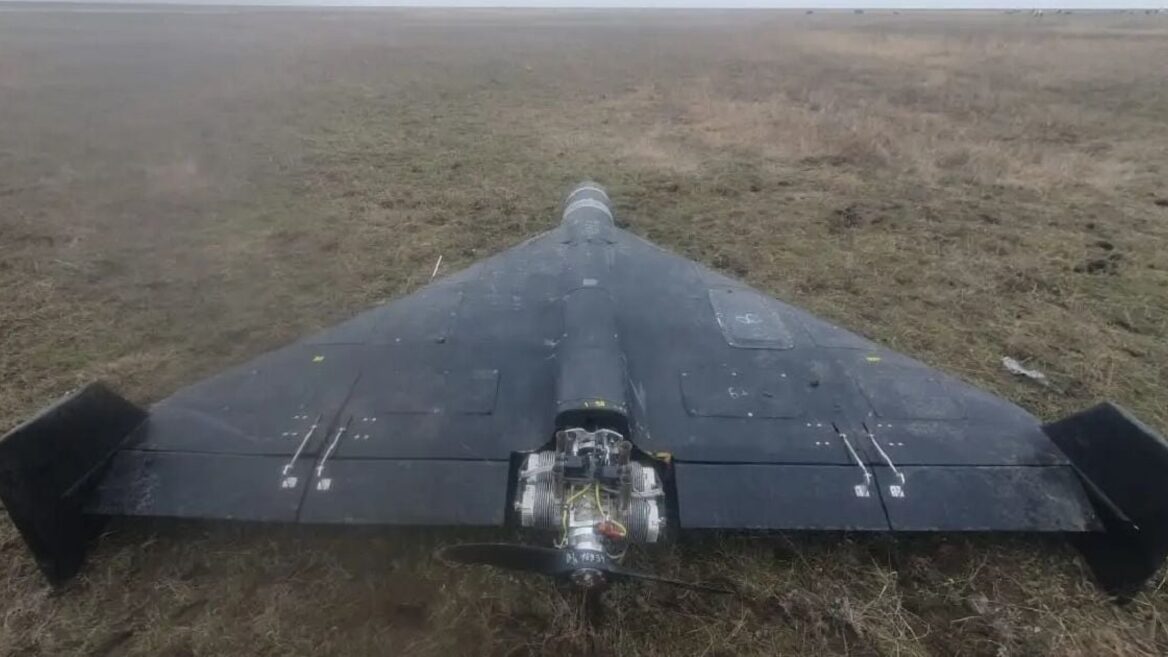
In addition to fiber-optic ones, "waiters" with a solar battery have begun to appear. One such case was reported by radio technology specialist Serhiy Beskrestnov (Flash).
For example, the one in the photo above was spotted by Ukrainian soldiers at the top of a water tower.
"Such drones serve various purposes. They can bring a video camera to a high point, bring a beacon or repeater, or simply wait for a victim to attack. The solar panel is too small to power a complex system, but it can keep the drone in standby mode for a long time," said Flash.
Ways to combat "waiters"
According to Narozny, there is practically no effective countermeasure against such drones. As a rule, “zduns” are fiber-optic devices that do not transmit a radio signal and electronic warfare means do not work here. Therefore, one of the countermeasure options is to identify the operator of these drones and strike him. You can also destroy the drone itself by dropping a grenade on it or cutting the fiber-optic cable.
An example of the destruction of an FPV "Zhdun" can be seen in the video of the 225th separate assault regiment.
"Russians are increasingly using kamikaze drones as land mines. Such a "zhadun" lies unnoticed and waits for a target to appear - equipment or infantry," the military noted in their description of the video.
New Ukrainian development
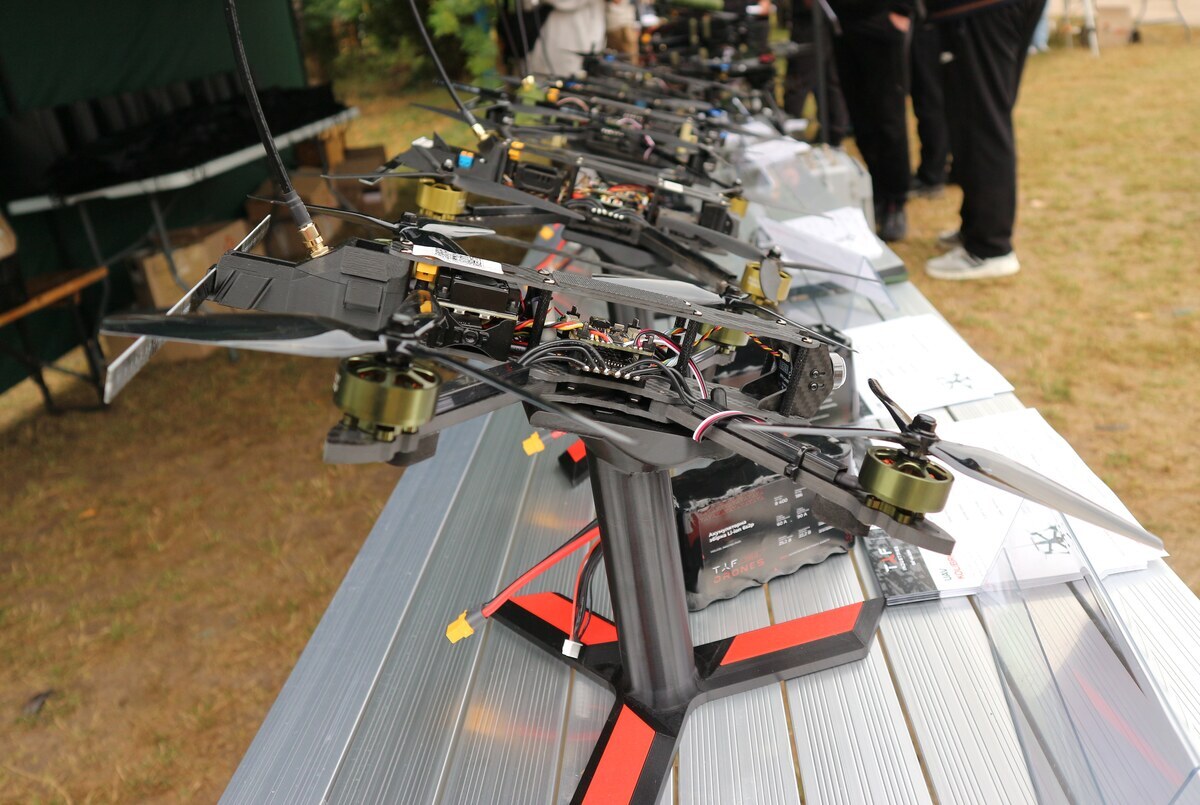
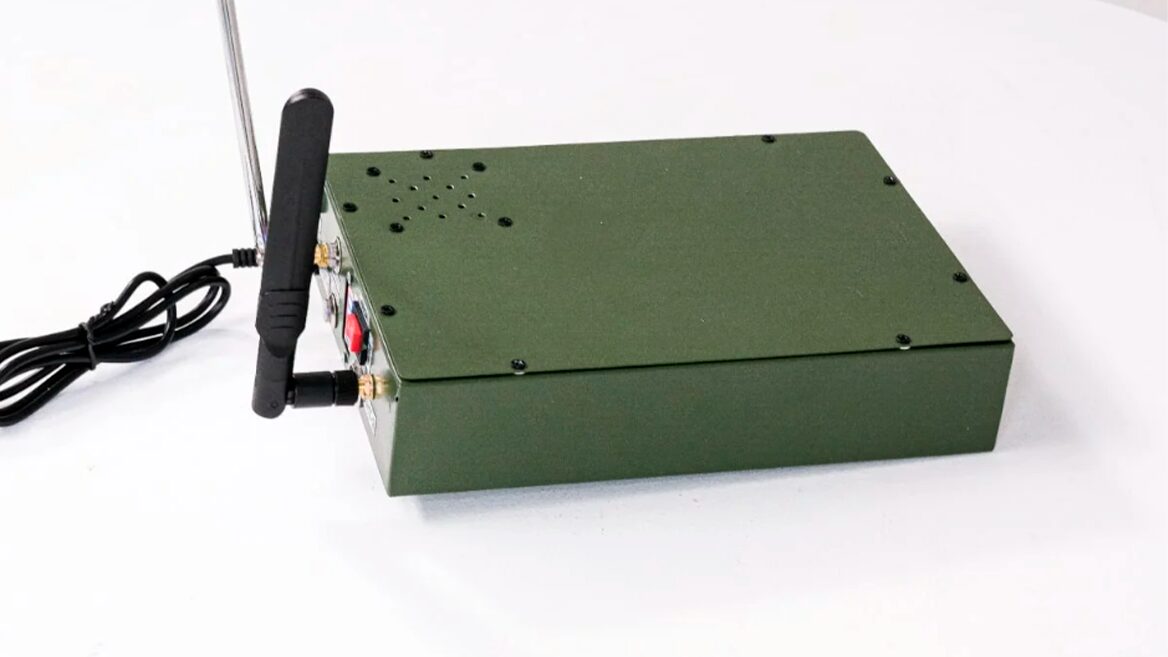
Ukrainian military-tech company TAF Industries (formerly TAF Drones) has developed a delayed launch system called Power Key that will extend the operating time of drones. The system will allow them to remain in ambush not just for days, but, under certain circumstances, even for weeks.
A representative of TAF Industries assured that no one has yet offered such a system on the Ukrainian market, although some others are working on similar ideas.
“The board allows you to turn off the power from the remote control — everything except the ELRS is turned off. The drone can be in an ambush, recommended, for up to 72 hours. But in some cases, our drones were standing for up to two weeks with a 15,000 mA “battery”. According to our calculations, those drones that were standing with an 8,000 mA “battery” for three days used 30% of its charge. And the same applies to drones that were standing for two weeks — 5,000 mA was used from 15,000 mA during this time, which is also approximately 30% of the charge,” a representative of TAF Industries told dev.ua.