An electronic tattoo sticker for real-time mental fatigue tracking. How does the device work?
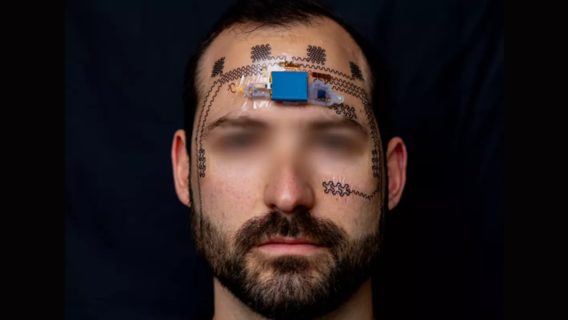
Scientists at the University of Texas have developed a device in the form of an electronic tattoo that will notify users of mental overload.


Scientists at the University of Texas have developed a device in the form of an electronic tattoo that will notify users of mental overload.
Scientists at the University of Texas have developed a device in the form of an electronic tattoo that will notify users of mental overload.
Traditional electroencephalography (EEG) and electrooculography (EOG) devices are available to monitor physiological mental workload. But they are wired, bulky, and inconvenient. They are also affected by head movements, which means they are not entirely practical for real-world use.
So American scientists have developed a thin and comfortable wireless EEG and EOG sensor that is worn on the skin of the forehead like a temporary tattoo. The device can also be personalized for different head sizes.
The tattoo is disposable and connected to a reusable flexible circuit board using conductive tape, and the battery is attached to the device. The entire setup is expected to cost less than $200, TechSpot reports .
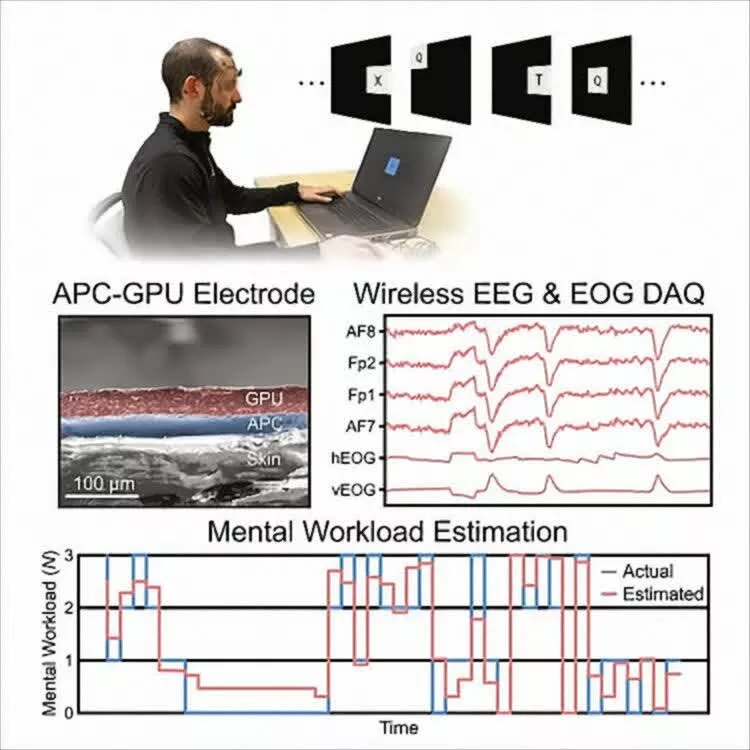
Scientists tested the device on six volunteers who performed certain tasks.
As the difficulty of the tests increased, theta and delta brain wave activity increased, indicating increased cognitive demands, while alpha and beta activity increased in line with their fatigue.
After feeding all the test data into a machine learning algorithm, the researchers found that the system predicted mental load better than EEG and EOG data alone.
The next step for the researchers is to find a method for the device's microprocessor to decode the signals, which can then alert the app if the user's mental load becomes too high.
According to scientists, this device will be especially useful for professions that require a high level of concentration for long periods of time, such as air traffic controllers, vehicle drivers, pilots and robot operators.