Редакція dev.uaMoney
16 November 2026, 10:00
2026-11-16
Not an apartment and not a deposit. How a private investor can make money in the energy sector — explains the co-owner of Codex Energy
Imagine an investor who decides to invest in energy infrastructure. He doesn’t buy solar panels for his own home or finance the power plant himself. Instead, he joins in creating a power park with other participants and gets the right to a share of future profits. But what exactly is he buying, where does the money for the payments come from, and who is responsible for ensuring that the power plant doesn’t just generate electricity but also makes money?
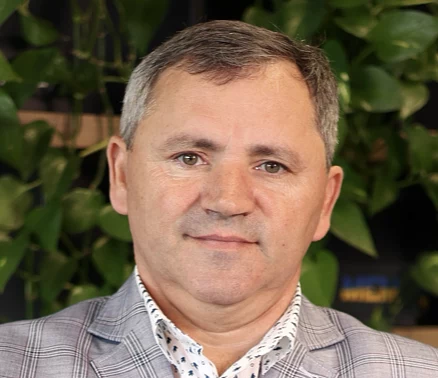
dev.ua investigated the issue of investments in energy using the Codex Energy company model as an example, talking to its co-owner, Oleksandr Ganchev.
An investor puts in money. What happens next?
Usually, a person with free capital considers investing in energy. He sees that Ukraine needs new generating capacities and electricity storage systems. But building your own power plant is a separate, big business with technical, legal, and operational tasks.
There is another option: to pool funds with other investors and join in the creation of a joint energy asset. This is the model used by Codex Energy. The investor receives an equity participation in the project — a corresponding share and the right to a proportional distribution of profits.
Legally, this is formalized through the energy cooperative model. The investor acquires the status of an associated member of the cooperative, signs the relevant agreement and transfers funds to his account. After that, the money is directed to the implementation of the energy project — construction and launch of the facility. The rights and conditions of the investor’s participation are determined by the agreement and documents of the cooperative.
Before depositing money, he should familiarize himself with a specific power park: its technical characteristics, budget, financial model, and projected profitability.
The minimum threshold for entry into Codex Energy projects is €20,000. The amount of participation depends on the amount of the contribution: the larger the stake, the greater the investor’s share in the distribution of profits.
The funds raised are used to create energy infrastructure: construction of a solar power plant, installation of electricity storage systems, inverter equipment and connection to the grid. After launch, the power park enters the market and begins selling electricity. Profits are distributed among participants according to their shares. Codex Energy provides for quarterly payments after the start of commercial operations of the facility, but their size depends on the actual operating profit of the project.
Oleksandr Ganchev, co-owner of Codex Energy
"The investor does not simply provide funds for construction, but becomes a participant in the project with a corresponding share and the right to a proportional distribution of profits."
There are two scenarios for participating in such a business. The first is to join the creation of a new energy asset at the construction stage. In this case, the investor finances a project that still needs to be implemented, and can receive income after the start of its commercial operation. The second is to become a participant in an already built energy park that has infrastructure and generates operating income. Codex Energy is primarily developing the first direction — the creation of hybrid energy parks. The opportunity to join a ready-made asset depends on the availability of an appropriate investment offer.
At the same time, the company cannot yet provide an example of an investor who has already received payments from implemented power parks. The first facility in Bolgrad is planned to be launched at the end of December 2026, and the first payments are expected at the end of the first quarter of 2027. That is, there is no practical experience of payments under this model yet.
Codex Energy also notes that the company’s co-owners invest their own funds in each asset sold. Thus, they act not only as co-owners of the business, but also as direct investors in energy projects under the same terms of the joint investment model.
It is important that this is not a short-term financial instrument. The power park is a long-term infrastructure asset. According to Ganchev, the investor’s share remains unchanged during the operation of the power park, and payments depend on the actual operating profit. An exception may be force majeure circumstances.
What if the investor wants to exit the project early?
Codex Energy has provided for the possibility of transferring or reselling the share to another person through the secondary market mechanism. Initially, the company expects the share to be bought out by the current members of the cooperative — for this, according to it, there is a list of current investors. Also, the co-owners of Codex Energy declare their readiness to buy out the share at any time.
If a new participant needs to be sought separately, the procedure involves agreeing on the transfer of the share in accordance with the cooperative’s charter and the terms of the agreement, drawing up documents and renewing membership. After completing the procedure, the new investor acquires the relevant rights and obligations. The company notes that such a mechanism has already been used in practice. At the same time, the terms of the transfer of the share are determined by the documents of a specific cooperative. Therefore, before investing, it is worth finding out whether the agreement provides for specific terms, procedure and conditions for such redemption.
Why a power park is not just solar panels
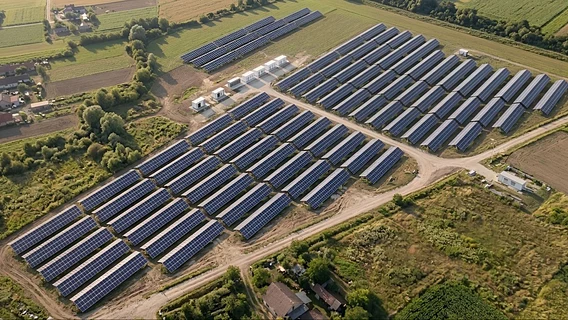
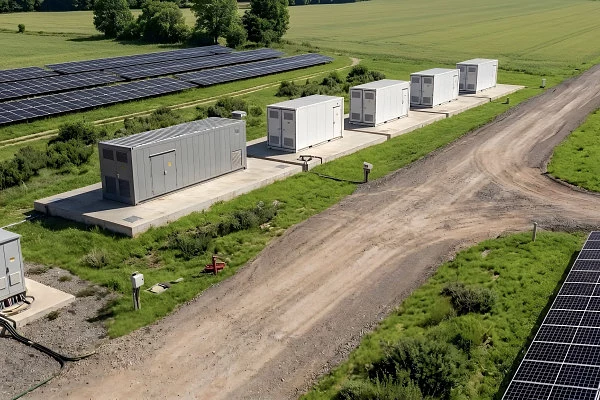
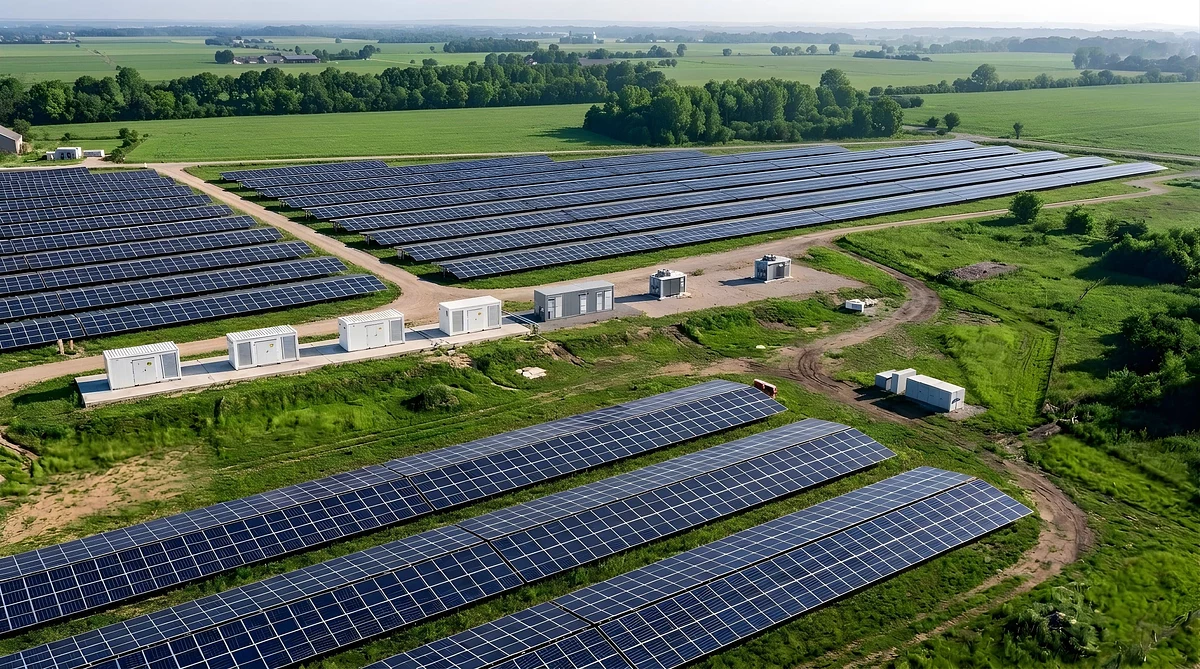
To understand what an investor earns, you need to understand what exactly the company is building. Codex Energy is betting on hybrid power parks that combine a solar power plant and an electricity storage system.
In such a complex, solar panels produce electricity, and storage allows you to store it and use it at other times. This is important because the price of electricity changes throughout the day. During hours of high solar generation, the supply on the market may increase and the price may decrease. In the evening, when demand increases, the cost of electricity may be higher.
Therefore, part of the electricity generated during the day can be stored and then sold during a period of higher prices. This model is called price arbitrage. It allows you to receive income not only from generation, but also from managing the time of sale of the resource.
Oleksandr Ganchev, co-owner of Codex Energy
"We not only produce electricity using solar power plants, but also accumulate it and sell it during periods when the market price is higher."
However, the mere presence of a storage device does not guarantee additional profit. The economic result depends on the difference in prices in different periods, operating costs and how effectively the company manages sales.
How much does it cost to build such an asset?
The budget of a power park depends on its scale, technical configuration, type of equipment, capacity, and complexity of connection to the power grid.
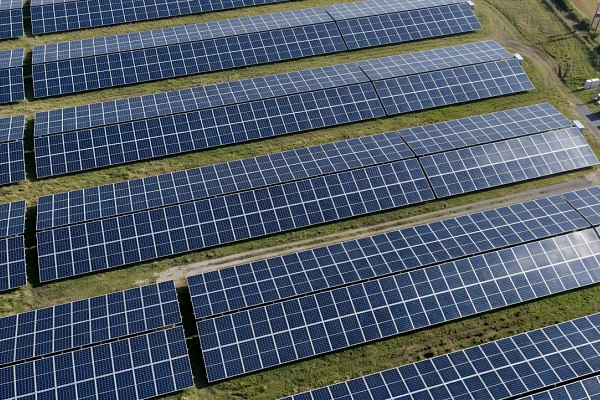
There are several main cost items in a hybrid complex. The first is solar generation: panels, inverters, metal structures and installation work. The second is storage systems: batteries, power conversion systems (PCS), control and cooling equipment.
Infrastructure needs to be financed separately — transformer substations, cable networks, construction work and connection to the power system. The budget also includes design, engineering calculations, technical conditions, permitting documentation, testing and commissioning work.
For example, the budget of the Codex Energy power park in Bolgrad is about €6.3 million, and the project in Chernivtsi is about €7.3 million. These are complexes with different technical characteristics, so comparing their cost only by the capacity of solar generation is incorrect. It is also important to take into account the capacity of the storage systems, the power of the inverter equipment, and the configuration of the entire facility.
Codex Energy uses a model of attracting private investors through energy cooperation. The capital of several participants is combined to create one large-scale energy asset. Each person finances the project according to their share, and after launch receives the right to a share of the profit.
According to Ganchev, such a model makes it possible to pool the funds of private investors to create an infrastructure facility that would be more difficult for one participant to finance independently.
Who buys electricity and how is the price formed?
After launch, electricity is supplied to the unified energy system of Ukraine through the connection of the facility to the electrical grid. But the producer does not simply transfer the resource to the grid and automatically receive money for it. It is necessary to organize commercial sales.
Buyers can be electricity suppliers, who then supply electricity to enterprises, businesses and the population; energy traders, who buy and sell the resource and form trading portfolios; as well as large industrial consumers. The specific model depends on the chosen trading mechanism.
There are several segments of the electricity market in Ukraine. In the bilateral contract market, the producer and the buyer agree in advance on the price, volumes and terms of supply. Such an agreement can make cash flows more predictable for the agreed period.
In the day-ahead market, electricity is sold for the next day based on the results of trading. The price is formed separately for each hour depending on supply and demand. The intraday market allows you to buy and sell the resource closer to the actual time of production or consumption. This is important, in particular, for solar generation, as the actual weather may differ from the forecast.
The balancing market is needed to settle deviations between planned and actual electricity production and consumption.
For a hybrid power park, it is not necessary to choose only one segment. Some of the electricity can be sold under bilateral contracts, the rest — on the day-ahead market or the intraday market. The strategy depends on the market situation.
It is important to distinguish between the roles of energy market participants. Market Operator LLC organizes trading on the day-ahead and intraday markets. Ukrenergo NPC is the transmission system operator responsible for the main electricity grid and balancing of the integrated energy system. Energy trader is a commercial participant who helps the producer sell electricity, analyzes prices, forecasts supply and demand, and forms a trading strategy.
It is important for the producer not only to produce electricity, but also to plan its sale correctly. For example, if a solar power plant planned to produce a certain amount, but due to changes in the weather actually produced less, there is a difference between the plan and the fact — an imbalance. It can lead to additional financial costs for the participant responsible for the balance.
Therefore, commercial management involves generation forecasting, sales planning, and working with different market segments. According to Ganchev, when choosing a sales model, Codex Energy analyzes hourly prices, generation forecasts, expected demand, storage capacity, and operating costs.
What does the money go towards after launch?
Construction is just the beginning of an energy asset. Once put into operation, it requires ongoing technical and commercial management.
The main operating costs are equipment maintenance, trader services, balancing, land lease, insurance and administrative expenses. In addition, Codex Energy’s financial model includes a renovation fund — a reserve of funds for future repairs, upgrades or replacement of equipment.
Oleksandr Ganchev, co-owner of Codex Energy
"The need for such expenses is taken into account in advance, and the investor does not need to independently seek additional funds for these needs."
To assess the economics of a power park, the company creates a financial model. It takes into account the cost of construction, projected generation volumes, market prices, operating expenses, and future cash flows. Key metrics include EBITDA, IRR, net cash flow, and payback period. They help assess the efficiency of the asset itself and the potential return for the investor.
Revenue is influenced by two main factors: the amount of electricity produced and the price at which it can be sold. These, in turn, are influenced by seasonality, weather conditions, demand, and the situation in the power system.
Codex Energy uses three scenarios to assess the sustainability of the project. The optimistic scenario assumes favorable market prices, high generation volumes, and efficient use of storage. The baseline scenario assumes expected production rates, average market prices, and planned operating costs. The conservative scenario takes into account lower electricity prices, lower generation volumes, or increased costs.
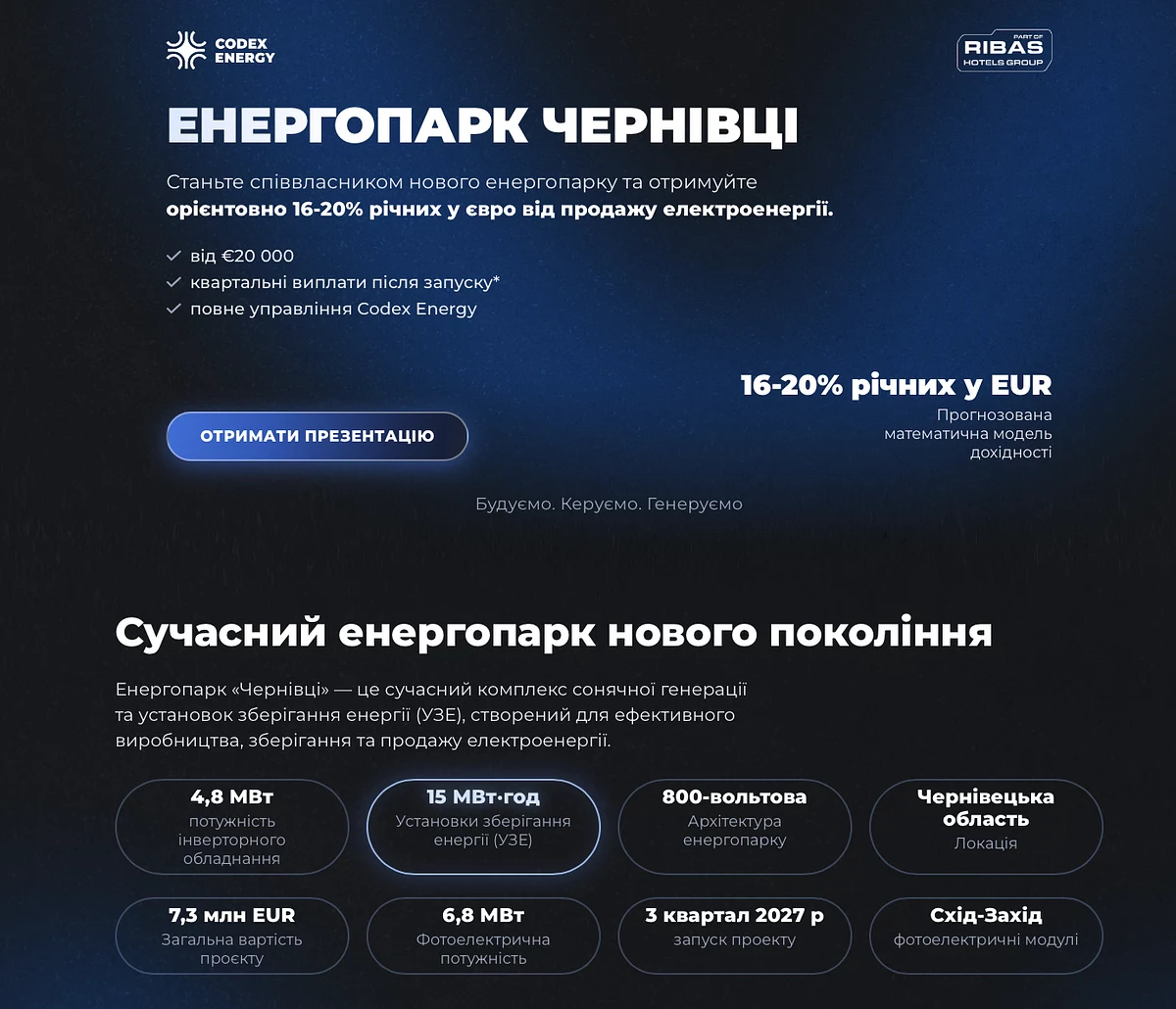
For the Chernivtsi Energy Park, the projected return for investors is 16–20% per annum in euros. Codex Energy clarifies that this is the projected net income after taxes and expenses provided for in the financial model. This is not a guaranteed rate: the actual result can only be determined after the facility is launched and its commercial operations begin.
The company also notes that the results of other energy market participants demonstrate the potential for higher profitability. At the same time, to evaluate this particular project, the investor should rely on his own financial model. Codex Energy is ready to provide additional calculations for the Chernivtsi Energy Park .
Who is responsible for ensuring that the power park makes money?
The investor participates in financing, but does not have to independently search for equipment suppliers, organize construction, monitor generation, or sell electricity. These processes belong to the work of the developer and operator of the energy asset.
Codex Energy supports the project throughout its entire life cycle: from location search, concept development and financial modeling to design, construction, launch and subsequent operation.
After the power park is launched, ongoing operational management begins. It includes monitoring generation, monitoring the technical condition of the equipment, organizing maintenance, interacting with traders, managing electricity sales, and controlling financial indicators. It is also necessary to monitor the efficiency of storage systems in order to use price arbitrage opportunities.
Even a technically sound facility can lose potential revenue due to equipment downtime, inaccurate generation forecasting, imbalances, or an ineffective sales strategy. Therefore, the operator monitors generation volumes, equipment availability, downtime, maintenance costs, imbalance losses, revenue, and operating profit.
“Our task is to ensure not just the operation of the power park, but the most efficient use of its technical and commercial capabilities throughout the entire period of operation,” says Ganchev.
What could go wrong?
Energy investments have several risk groups. Codex Energy identifies four main ones: military, market, technical, and regulatory.
Military risks are related to possible damage to infrastructure, market risks are related to changes in electricity prices, technical risks are related to equipment wear and tear or malfunction, and regulatory risks are related to changes in legislation and rules governing the operation of the energy market.
In Ukraine, this is compounded by difficulties with financing and insurance. On the one hand, the country needs new generating capacities and storage systems. On the other hand, the war affects the cost of capital, lending conditions and investment valuation. Some equipment is purchased for foreign currency, while operating costs and settlements on the Ukrainian market can be made in hryvnia. Therefore, the financial model must take into account currency fluctuations, inflation and the cost of maintenance.
Asset protection involves choosing the right location, technical protection of equipment, professional maintenance and insurance. However, military risks require special attention: not every insurance policy covers them. The renovation fund, built into the financial model, should provide a reserve for repairs, upgrades and replacement of equipment.
Oleksandr Ganchev, co-owner of Codex Energy
"No technical configuration completely eliminates military, market, or operational risks. Our task is to identify them in advance, build appropriate scenarios into the financial model, and manage them at all stages of project implementation."
The responsibilities between the participants are determined by the legal structure of the project and the contracts. The investor finances the asset according to his share and is entitled to a share of the profits. Codex Energy is responsible for the development, construction organization and implementation management. Operational and technical functions are performed by specialized companies and partners.
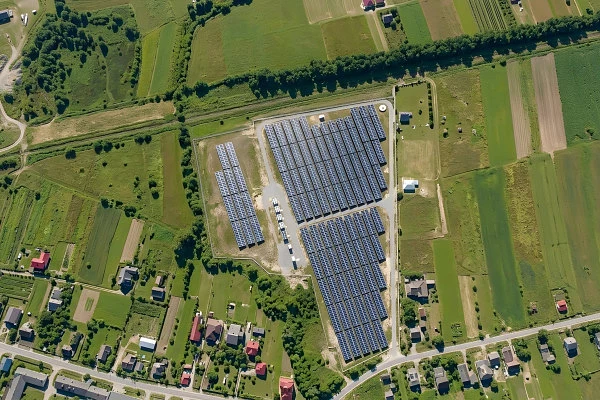
One example cited by Codex Energy is a hybrid energy complex in Chernivtsi. Its budget is around €7.3 million. The project involves the construction of a 6.8 MW solar power plant and the installation of a 15 MWh storage system.
The model assumes two main sources of income: the sale of electricity generated by the solar power plant and price arbitrage using the storage system. The budget includes the costs of building a solar power plant, purchasing and installing storage systems and inverter equipment, connecting to the grid, and creating the necessary infrastructure.
According to the company, the project has already moved from preparation to practical implementation. Codex Energy has received all the necessary technical conditions, paid the land lease and signed a 49-year lease agreement. The company has also advanced equipment and begun zero-cycle work. That is, construction is gradually entering the active phase.
After launch, maintenance, trading, balancing, insurance, and other operational needs will be added to the costs. The financial model also includes a renovation fund.
The projected return for investors in this project, according to Codex Energy calculations, is 16–20% per annum in euros after taking into account taxes and costs foreseen by the financial model. The projected payback period of the energy asset itself is approximately five years. This calculation is based on the projected generation indicators, the operation of the storage system and the electricity sales model on the market.
At the same time, the payback period of an asset and the return on investment of a particular participant are not identical indicators. The financial result for the investor depends on the terms of his participation, the size of the share, and the actual profit of the project.
In the next 3–5 years, Codex Energy sees potential in electricity storage systems, distributed generation, and hybrid energy complexes. Ukraine needs not only to restore damaged capacities, but also a new, more flexible infrastructure that can store electricity and balance the system.
How to check an energy investment: a short checklist
If a person is considering participating in an energy project, they should take several steps before signing the contract.
Determine what exactly it is investing in. Is it a new facility under construction or an already operating energy asset? What are its technical specifications, capacity, and configuration?
Check the budget. What does the project cost include? Does it include equipment, network connection, design, installation, and commissioning?
Understand the legal model. What status does an investor receive in a cooperative? What documents confirm his share, how is profit distributed, and under what conditions can a share be transferred or alienated?
Examine the financial model. Where will the revenue come from, what operating expenses are included, how are EBITDA, IRR, and payback periods calculated? Are there baseline, optimistic, and conservative scenarios? Is the projected return net or gross?
Assess risks. What will happen if equipment is damaged, electricity prices fall, generation decreases, or market rules change? Which risks are covered by insurance and which remain with the project participants?
Find out who will manage the asset. Who will be responsible for construction, maintenance, electricity sales, balancing, and reporting to investors?
Check the terms of payments and exit. When and on what principle is profit distributed? How can an investor transfer his share to another participant, who has the priority right of redemption and what are the conditions for such a transfer? Does the cooperative have a history of actual payments?
Investing in a power park is a participation in a long-term infrastructure business. Its result depends not only on the amount of electricity produced, but also on the market price, the efficiency of the storage devices, operating costs and the quality of management. Therefore, such a project should be evaluated not only by the projected profitability, but also by how it is built, who manages it and what is provided for in the event of an unfavorable scenario.
Have important news to share? Message our Telegram bot
Key events and useful links in our Telegram channel