Хочете будувати кар’єру в Data Science та AI? Vodafone Big Data Lab відкриває новий набір —>
Олександр КузьменкоWar
22 October 2026, 18:04
2026-10-22
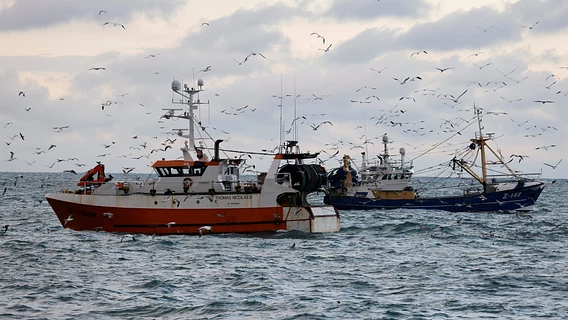
“No fish have ever been seen on the decks of some of these vessels”. Russian fishing boats near Britain are more interested in undersea fiber optic cables than fishing
The occupying country is using civilian fishing vessels to track and map vital fiber-optic cables in the waters around the UK. These communications lines support billions of dollars in daily economic traffic between Europe and the US, and their damage in the event of a potential conflict with NATO threatens to paralyze the banking system, mobile communications and transport.
The occupying country is using civilian fishing vessels to track and map vital fiber-optic cables in the waters around the UK. These communications lines support billions of dollars in daily economic traffic between Europe and the US, and their damage in the event of a potential conflict with NATO threatens to paralyze the banking system, mobile communications and transport.
This is reported by The Telegraph based on its own analysis of data from the Global Fishing Watch satellite platform over four and a half years.
Journalists compared the routes of Russian trawlers with nautical charts of cable locations and identified more than 500 cases of suspicious maneuvers. In particular, 17 Russian vessels moved at low speed for a long time directly over communication lines in the North Atlantic or along their routes. Among the objects of increased attention were the Atlantic Crossing 1 system between the USA and Germany, as well as the SHEFA-2 line.
“We are fully aware of what Russian civilian fishing vessels are doing and where exactly… We have never seen a single fish on the decks of some of these vessels,” a NATO source confirmed the journalists’ suspicions.
The use of the civilian fleet for intelligence purposes is enshrined in official Russian documents. In July 2022, Vladimir Putin approved a maritime doctrine that provides for the involvement of fishing vessels in the performance of “special tasks” of the FSB and the Russian Ministry of Defense in peacetime with appropriate monetary compensation to companies.
The Royal Navy and the British Ministry of Defense say Moscow is preparing for potential attacks on communications infrastructure from the first days of a possible clash. In response, the British government will unveil plans to introduce long prison sentences and unlimited fines for saboteurs of undersea cables.
Over 95% of the world's internet traffic passes through international fiber-optic highways, on which the stability of digital services and the financial sector depends. Previously, European countries have repeatedly recorded sabotage and suspicious activity by Russian submarines and special vessels near critical communication hubs in the Baltic and North Seas.
Experts say that attacks on submarine cables are a potential way to isolate individual states and regions, from which even satellite communications like Starlink cannot fully save in the event of large-scale damage. In addition, the rapid development of digital technologies forces companies to actively build and modernize Internet cables , because they provide the necessary bandwidth for the global network.
Iran demands payment for undersea internet cables under the Strait of Hormuz and threatens to cut them. Google, Microsoft, Meta and Amazon under threat