Хочете будувати кар’єру в Data Science та AI? Vodafone Big Data Lab відкриває новий набір —>
Валентин ШнайдерAround IT
16 December 2025, 15:02
2025-12-16
Ford to convert electric vehicle battery plant in Kentucky to produce energy storage for data centers
Ford is entering the market for industrial energy storage systems and plans to use its battery manufacturing capacity in the US to make large-scale energy storage for data centers and power grid needs.
Ford is entering the market for industrial energy storage systems and plans to use its battery manufacturing capacity in the US to make large-scale energy storage for data centers and power grid needs.
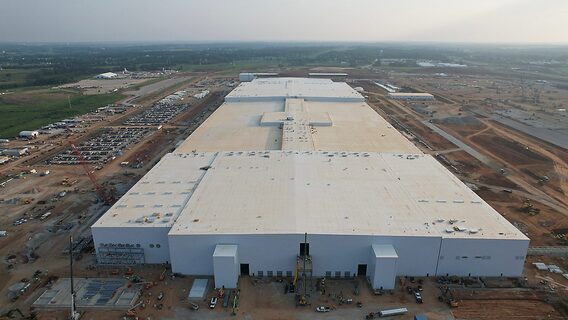
According to Interesting Engineering, the company is reorienting its Glendale, Kentucky, facility to instead assemble battery energy storage systems (BESS), which are containers that store electricity and release it during peak demand or grid outages. Ford plans to begin shipping the first units in 2027. The target capacity for the facility is 20 GWh per year.
Ford is investing about $2 billion to scale the business over two years. The company describes its product line as systems of more than 5 MWh in a containerized format: LFP prismatic cells, BESS modules and 20-foot DC containers. Such solutions are typically purchased by data center operators, utilities and industrial companies that need power redundancy and a «buffer» for load.
Ford also says it wants to launch initial production within 18 months, drawing on its LFP technology license and its own mass production experience. Separately, the company explained the change in asset structure after the agreement with partners: in Kentucky, the battery plants will be independently controlled by a Ford unit, while the Tennessee plant will be fully managed by SK On.
In parallel, Ford plans to use BlueOval Battery Park Michigan to produce smaller cells for home energy storage and a future mid-size electric pickup truck, which is expected to launch in 2026. The Michigan project has been revised several times: after announcing an investment of $3.5 billion in February 2023, construction was suspended in the fall of 2023, and later the company reduced the declared capacity to 20 GWh, which is about 43% less than the original plan.
Previously, dev.ua wrote about how China launched the Future Network Test Facility (FNTF). This is a distributed network of computing centers that stretches for more than 2,000 km and works almost as efficiently as one giant data center. The system is focused on training large AI models, telemedicine, and the industrial Internet.