Хочете будувати кар’єру в Data Science та AI? Vodafone Big Data Lab відкриває новий набір —>
Олег ОнопрієнкоWeapon
27 November 2025, 09:00
2025-11-27
From six prototypes to mass production in a year and a half. We visited the production of the VARKHAN NRC from Air3F and tell you how it stands out among its competitors
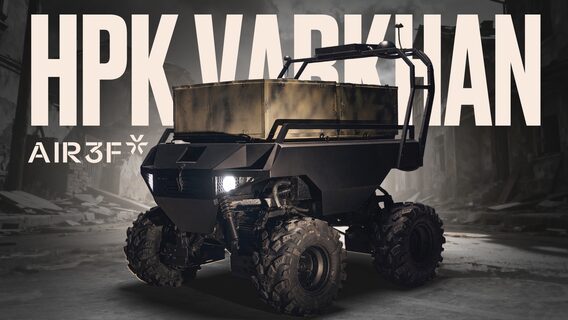
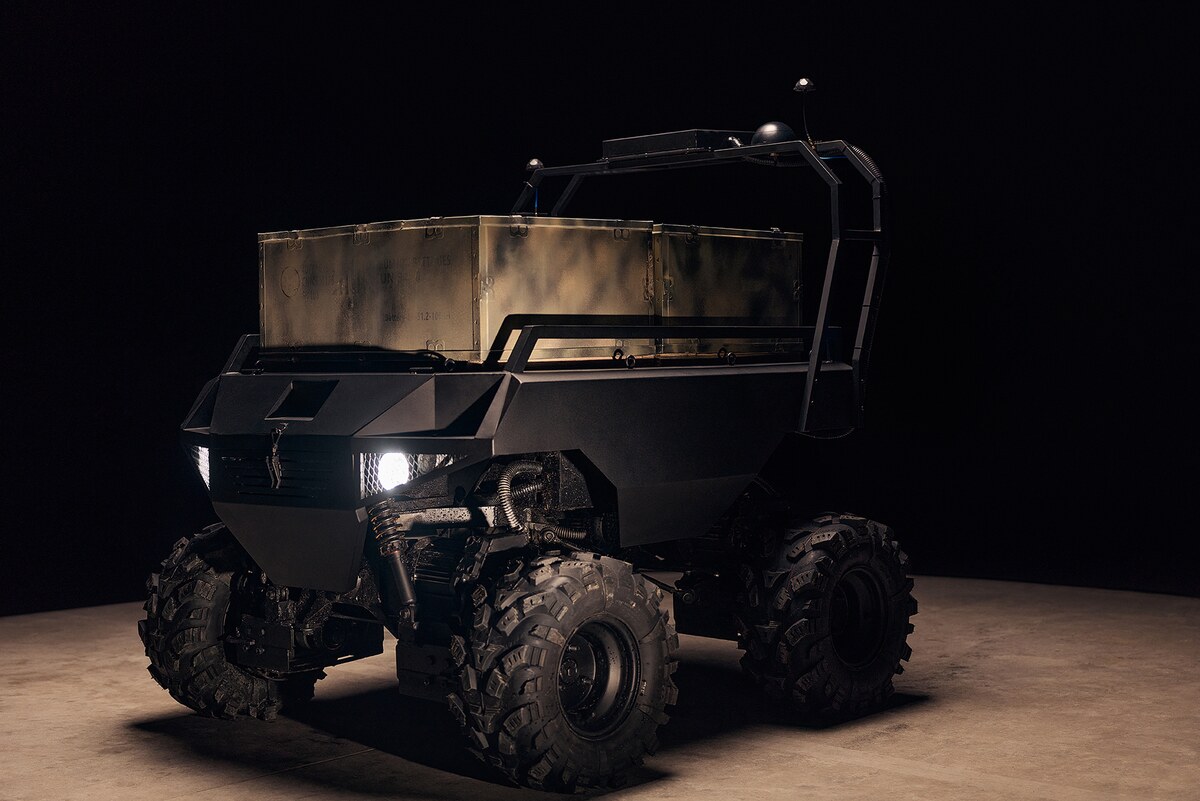
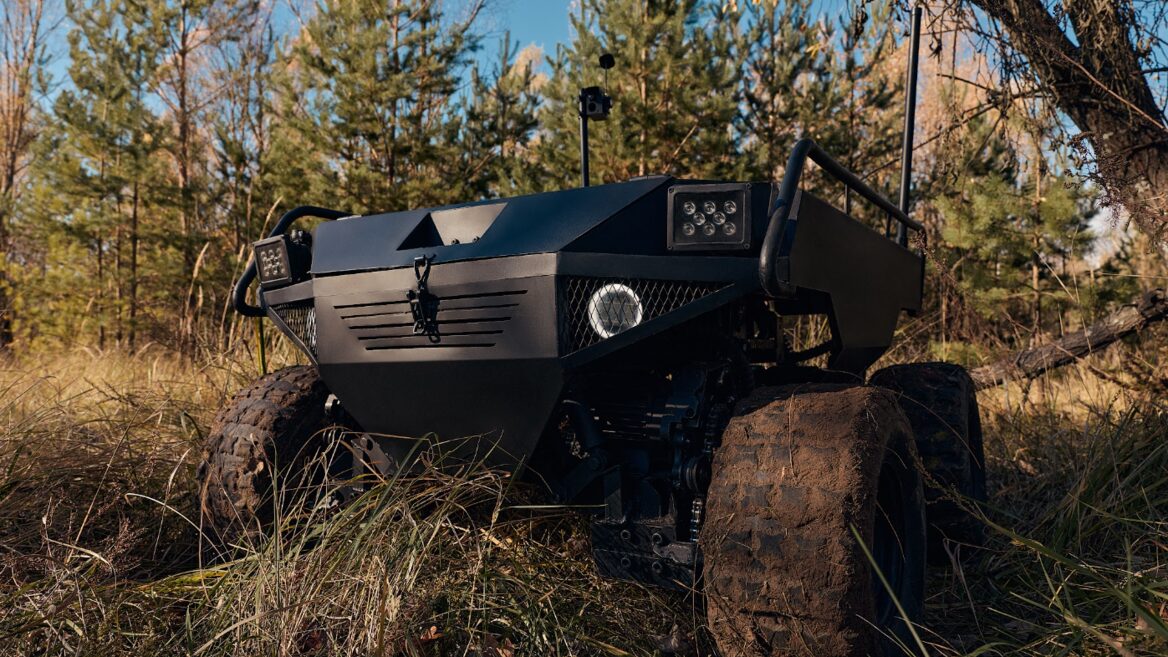
Ukrainian company Air3F, which specializes in developing comprehensive solutions for controlling unmanned systems, has announced the start of mass production of the VARKHAN ground robotic complex. It is to take on the most dangerous logistical missions: ammunition delivery and evacuation, minimizing losses among the military.
A dev.ua journalist visited the NRK production site and spoke with development engineers to understand exactly how this "banger for your buck" is born.
Ukrainian company Air3F, which specializes in developing comprehensive solutions for controlling unmanned systems, has announced the start of mass production of the VARKHAN ground robotic complex. It is to take on the most dangerous logistical missions: ammunition delivery and evacuation, minimizing losses among the military.
A dev.ua journalist visited the NRK production site and spoke with development engineers to understand exactly how this "banger for your buck" is born.
VARKHAN is positioned as a modern logistics platform capable of operating in the most difficult conditions. Its main purpose is to ensure the transportation of goods, support military and civilian operations, as well as increase the autonomy of units in the field. VARKHAN is already being used in combat conditions, in particular in the Dnipropetrovsk and Zaporizhia regions, and no critical corrections have been received from the fighters yet.
Design and Engineering
Igor Beregovenko, production manager, told how the future robot is transformed from an idea to a finished product.
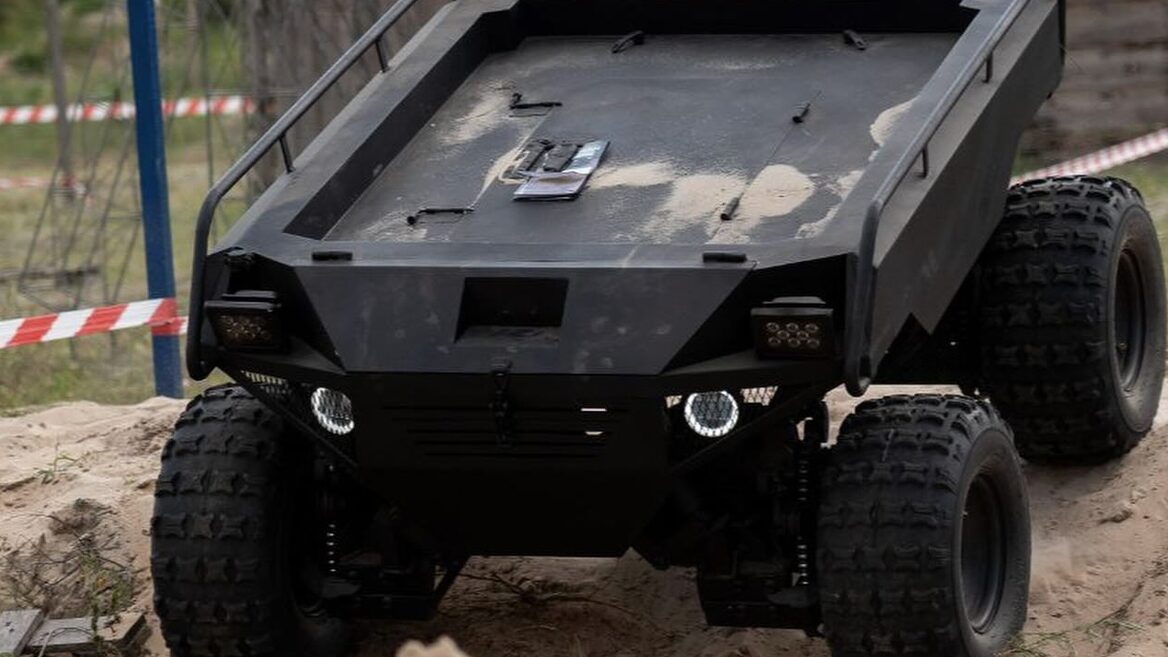
“It all starts with sheet metal. Most of the structure is regular 5mm steel, and the most powerful joints are made of 8mm metal,” explains Igor.
The metal is cut according to the design, and then the real engineering puzzle begins. Welders assemble the frame, guided by technical drawings.
"All the parts are numbered, each with its own code, and the welder understands from the technical sheet what goes into what. It's easy to assemble this puzzle without instructions, even a LEGO professional won't be able to assemble them," notes Igor Beregovenko.
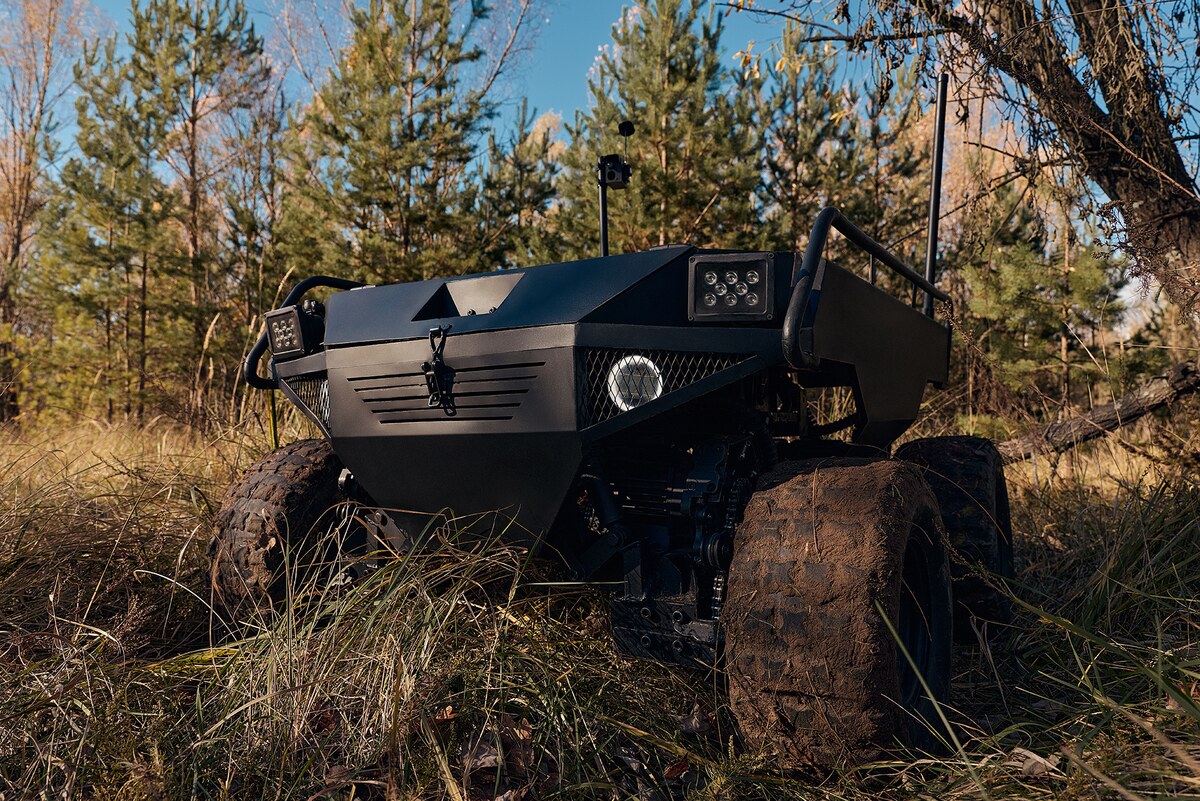
VARKHAN, with its shock-absorbing 4×4 suspension and 180 mm ground clearance, was built for the toughest field conditions. It has to overcome swamps, snow, and dirt roads.
The company's engineers explained that they had already sent the sixth prototype of the NRK into mass production. The prototyping process lasted about a year and a half and included at least five iterations, starting with the first prototype, which was cheap (about $1,800) and assembled from simple components, including wheels from a hoverboard, but had critically low cross-country ability and got stuck on the ground. These steps significantly increased the cross-country ability, reliability, and load-bearing capacity of the NRK, transforming it from a poorly suited vehicle for field conditions into a functional complex.
"If the technology can't withstand dirt, cold, and sledgehammer repairs in the field, it's unlikely to help our soldiers at the front. We developed VARKHAN with such conditions in mind," the engineer emphasized.
The NRK is equipped with four 1000 W electric motors, which gives a total power of 4 kW and torque of up to 1000 N m at the wheels. This allows it to quietly (thanks to electric traction) deliver up to 370 kg of cargo over a distance of up to 40 km and operate autonomously for up to 5 hours.
VARKHAN is powered by batteries (Li-NMC 151Ah, 56V) that support quick replacement.
“This is a useful feature, because while one battery takes several hours to charge, a new one is installed and we continue working,” comments Beregovenko.
While talking about the chassis, we raise the eternal question of ground robots: wheels or tracks? Air3F Chief Engineer Svyatoslav Kulbatsky explains that wheel repair is a quick process. In addition, tracks have a critical drawback in winter, when the snow melts and then freezes. The track can simply freeze, which will disable the engine or transmission due to additional overload.
"The probability that the caterpillar will come off "within the first 10 m" is high. This will not happen with wheels," Kulbatsky explained.
"It's much faster on wheels. Here, each wheel has a separate motor. In our ruthless tests, we even reached our destination on three wheels. We just unscrewed three nuts, put on a new wheel, and drove on," shares Beregovenko.
Modularity and cost
VARKHAN is designed as a modular platform that can adapt to different missions. It can be transportation, evacuation of wounded, or reconnaissance.
However, Igor Beregovenko notes that there is a dependence on foreign electronics.
"We may have a problem with Chinese electronics. Even if we make our own controller or board, it will still come to us from China, no matter what."
This issue also concerns economics. Alternative, China-independent European microprocessors, according to Air3F engineers, cost five times more. And since the end user is the military, with limited budgets, the developers are balancing between technological independence and affordability.
"We need to work and give a good price so that the NRC can travel and fulfill its mission," Air3 added.
The approximate cost of VARKHAN depends on the configuration:
Basic analog version: from 350,000 hryvnias.
Premium version (with Starlink and LTE): up to 550,000 hryvnias.
The development team emphasizes its openness to collaboration. If the military expresses interest in their NRC with the integration of third-party equipment, for example, a turret from a specific manufacturer, the team is ready to immediately arrange a meeting, install, test and conduct a firing of the required module. Such collaboration is critical, as it requires careful development of the suspension to absorb recoil, ensure the proper operation of the turret, as well as its communication with the drone’s existing communications (including LTE and Starlink).
Future plans
Engineers are already working on the next, seventh iteration of VARKHAN. Air3F Chief Engineer Sviatoslav Kulbatskyi revealed the details of the future machine. The team focused on improving the suspension and overall design: numerous modifications were made, which ultimately led to the replacement of homemade hubs and half-axles with elements from a regular car from disassembly (hubs, half-axles, reduction).
“The next iteration will have a fully shock-absorbed suspension, such as 4Links. The board itself will be able to take a much larger mass, theoretically about half a ton,” said the chief engineer of Air3F.
As engineers note, the speed of the new robot will increase from 20 km/h to 50-60 km/h. Speed and maneuverability, as engineers emphasize, become a priority over heavy armor. The main feature of the NRC will be autonomous payload discharge, which will help Ukrainian defenders not to expose themselves to enemy fire.
“I drove up to the position, dropped the load and ran away,” Mr. Svyatoslav explained the main advantage of the next iteration of the NRC.
The company is currently in the process of undergoing codification, but is already open to government orders to provide the Ukrainian military with reliable "workhorses" for the front line.
The team hopes to be able to use its developments not only on the front lines, but also in the rear.
"We hope that we will be able to use them not only on the front line, but also in the rear. We understand that the first task there after combat is demining. This will have to be done not by people, but by robots. Well, and then, when everything is fine, maybe they will deliver pizza or clear snow," Igor Beregovenko concluded.
Robots on the front lines are taking prisoners, capturing weapons, and saving lives. How ground-based robotic systems, which have become an integral technological element of war, work