Хочете будувати кар’єру в Data Science та AI? Vodafone Big Data Lab відкриває новий набір —>
Наталя ХандусенкоHot News
16 October 2026, 15:00
2026-10-16
Breakthrough at Google Quantum AI: How a New Method Brings the Era of Quantum Computing Closer and What It Means for the Crypto Market
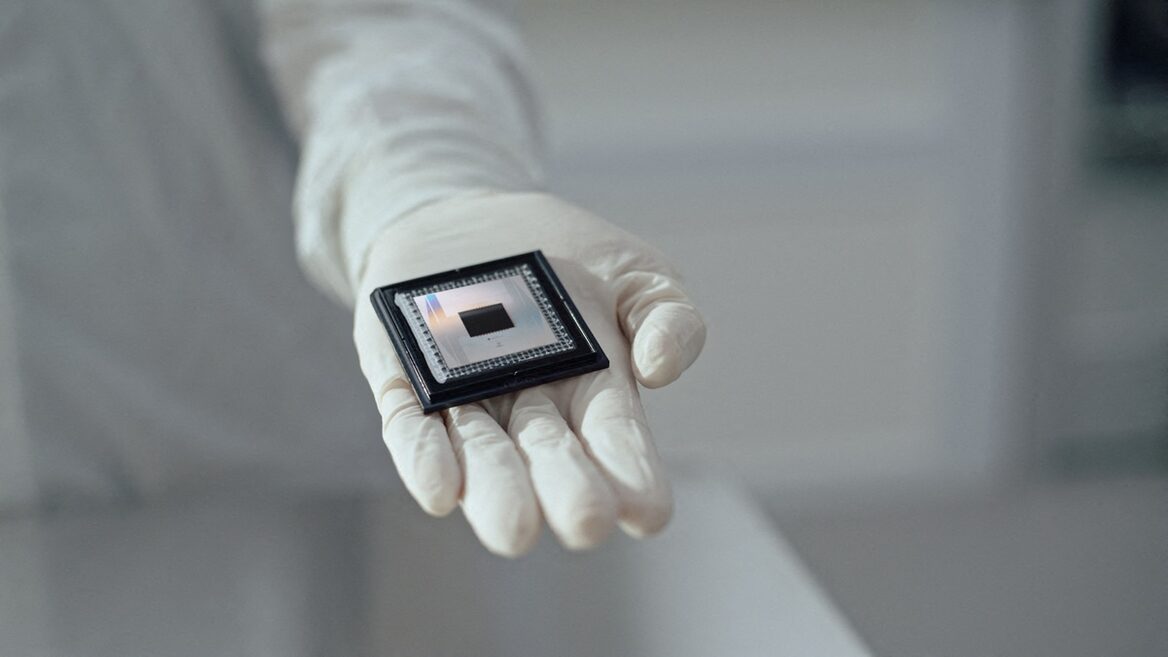
Google’s Quantum AI team has demonstrated the "cultivation of magic states" technology on its new Willow processor, a solution that overcomes one of the biggest technical limitations in quantum computing.
Google’s Quantum AI team has demonstrated the "cultivation of magic states" technology on its new Willow processor, a solution that overcomes one of the biggest technical limitations in quantum computing.
What is the problem and what did Google do?
To create a full-fledged quantum computer, so-called "magic states" are required — these are special quantum states without which it is impossible to perform complex calculations.
The problem was that these states constantly appeared with errors. Previously, scientists estimated that up to 95% of the entire resource of a quantum computer would be spent just on correcting errors and creating these states clean.
In 2024, Google researchers developed a method that works as a special quantum “filter”:
a state with noise (errors) is introduced into a small area of the chip;
a series of ultra-precise measurements detects and filters out any malfunctions;
As a result, it is possible to "grow" an exceptionally clean state with a low error rate.
During tests on the Willow chip, this method reduced the number of errors by 40 times and achieved a record accuracy (fidelity) of 99,99%, the company reported on its blog.
Why this has caused concern in the crypto industry
A fully-fledged quantum computer is theoretically capable of breaking modern encryption algorithms that protect the internet, banking systems, and blockchains (including Bitcoin and Ethereum digital signatures). The moment when this becomes possible is known worldwide as "Q-day," writes The Block.
Some experts suggest that Q-day could come as early as 2028–2029. Because of this, the crypto exchange Coinbase recently urged the Bitcoin community to prepare now for the transition to post-quantum protection, as this adaptation will take years.
What experts say about the approaching Q-day
Analysts are divided on whether Google’s discovery brings the quantum threat closer.
Nick Carter (co-founder of Castle Island Ventures) believes that developments in the field of AI are accelerating quantum progress: "This is further evidence that AI helps in correcting errors. There is no direct threat at the moment, but it is a reminder that the clock is ticking."
Alex Pruden (CEO of Project Eleven) is convinced that Google’s discovery does not move the date of Q-day forward, since scientists have already taken this technology into account in their theoretical calculations. However, the successful experiment has proven that these theoretical calculations are realistic, and therefore the threat of Q-day becomes more predictable.
For now, Google developers note that there is still a lot of engineering work ahead to scale this technology to larger processors.
HSBC, BMW, Airbus and GSK are already testing Ukrainian operating system for quantum computers. Startup Haiqu is looking for specialists even without a quantum physicist education