Олег ОнопрієнкоHot News
3 December 2025, 09:00
2025-12-03
RAM prices are rising faster than gold and have already caught up with PlayStation 5. This is just the beginning: we talk about the new chip crisis and who it will affect
The global RAM market is experiencing an unprecedented crisis caused by the explosive demand for chips for artificial intelligence. DRAM prices have increased by 171,8% over the year, exceeding even the growth rate of the value of gold. A 64 GB DDR5 memory kit already costs over $500 — more expensive than the PlayStation 5 game console. We figured out what the DRAM shortage threatens for ordinary users, who is to blame for this and how long the crisis will last.
The global RAM market is experiencing an unprecedented crisis caused by the explosive demand for chips for artificial intelligence. DRAM prices have increased by 171,8% over the year, exceeding even the growth rate of the value of gold. A 64 GB DDR5 memory kit already costs over $500 — more expensive than the PlayStation 5 game console. We figured out what the DRAM shortage threatens for ordinary users, who is to blame for this and how long the crisis will last.
Current market situation
The three largest memory manufacturers Samsung, SK hynix and Micron control about 70% of the global DRAM market. After an oversupply of RAM in early 2023, manufacturers deliberately reduced production and by the end of 2024 the excess inventory was absorbed by the market. The manufacturers themselves reoriented production capacity to produce more profitable HBM and DDR5 memory. In addition, they simultaneously reduced production of the old DDR4, which led to a shortage of DDR4, despite the fact that many customers still use it.
This has led to manufacturers raising prices for DRAM. Samsung raised prices for individual memory chips by up to 60% in November 2025 compared to September. The contract price of a 32GB DDR5 module increased from $149 in September to $239 in November. Prices for 16GB and 128GB DDR5 modules jumped by about 50% to $135 and $1,194, respectively.
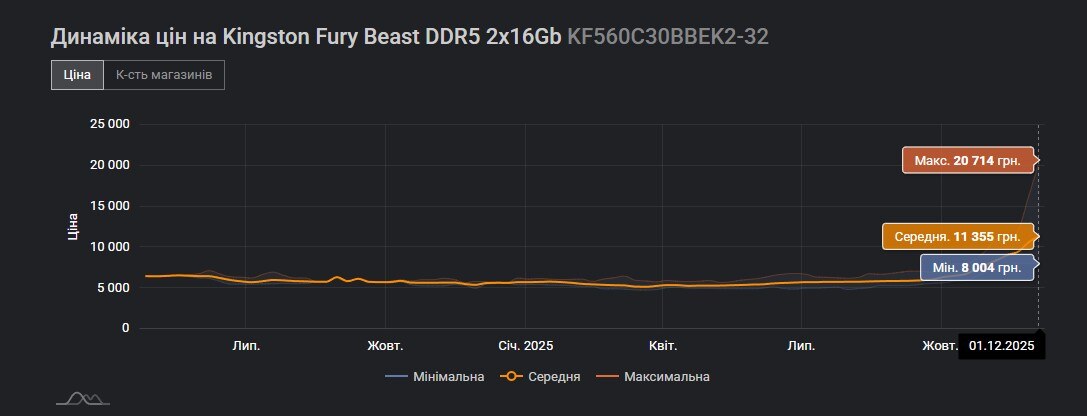
In the Ukrainian segment of RAM sales, the situation is somewhat worse. For example, let’s take the popular budget version of two 16 GB DDR5 sticks, which cost an average of UAH 5,900 at the beginning of autumn, and is now sold with a price tag of UAH 11,000. The price has increased by UAH 5,100, which is approximately 86,44% compared to the price at the beginning of autumn. In the premium segment, the situation is even more complicated, in some cases, prices have increased by more than two times.
Dynamics of price growth for budget RAM per year
Artificial intelligence as the main culprit
The main reason for the shortage is the unprecedented race among tech giants to build out AI infrastructure. AI data centers are consuming huge amounts of memory and crowding out the consumer market.
Nvidia’s financial report clearly demonstrates this trend — almost 90% of the company’s earnings came from the data center segment that uses Nvidia chips.
«Over the past six months, the demand for computing power has increased dramatically. Artificial intelligence has reached a point where everyone wants to use it. We are seeing two exponential trends at the same time,» said Nvidia CEO Jensen Huang.
Spending on artificial intelligence is expected to reach about $2 trillion by 2026. And Huang predicts that investment in AI infrastructure will reach $3–4 trillion by the end of the decade.
Many new AI GPU clusters are using specialized high-bandwidth memory (HBM) stacks, which in turn reduces the available manufacturing capacity for standard DRAM. In fact, memory manufacturers have reallocated more than three times the wafer capacity for HBM chips compared to conventional DRAM, thereby reducing the supply of conventional memory. The result is a decline in the number of DDR4/DDR5 chips on the market, just as hyperscalers are rushing to buy more memory for both AI and traditional servers.
The hype has spread beyond DDR4/DDR5 modules. Currently, along with DRAM, NAND flash memory (storage) and even hard drives are also in short supply.
Experts note that for the first time in a decade, all three major memory/storage categories — DRAM, NAND, and HDD — are experiencing shortages simultaneously.
Memory maker Adata said in late 2025 that DRAM, NAND, and HDD supplies are now in short supply for the first time in 30 years. This «perfect storm» means that PC makers and consumers are seeing higher prices across a range of industries. It’s also fueling DRAM inflation, as buyers can’t easily switch to other technologies — everything is getting more expensive at the same time.
How will this affect ordinary users?
As with cryptocurrency mining, which used powerful graphics cards, causing their shortage, gamers will be the first to suffer. Nvidia graphics card prices have been gradually approaching the recommended price in recent months, but it seems that we should expect a new increase and shortage.
For Nvidia itself, the current state of affairs is quite acceptable: their revenues are growing rapidly year after year (62% better than in 2024), deliveries of new chips are contracted for years in advance, and the company’s market capitalization has reached an incredible $4.5 trillion. However, to achieve this success, sacrifices had to be made, particularly in terms of B2C sales.
Rumor has it that the updated Super version of Nvidia’s 5000 series of graphics cards is at least being delayed, and according to some forecasts, canceled altogether due to a shortage of GDDR7 memory. Nvidia simply doesn’t have enough capacity to meet the market’s demand, so they prioritized the supply of powerful graphics cards based on GDDR7 memory specifically to data centers, which could lead to a shortage of gaming graphics cards.
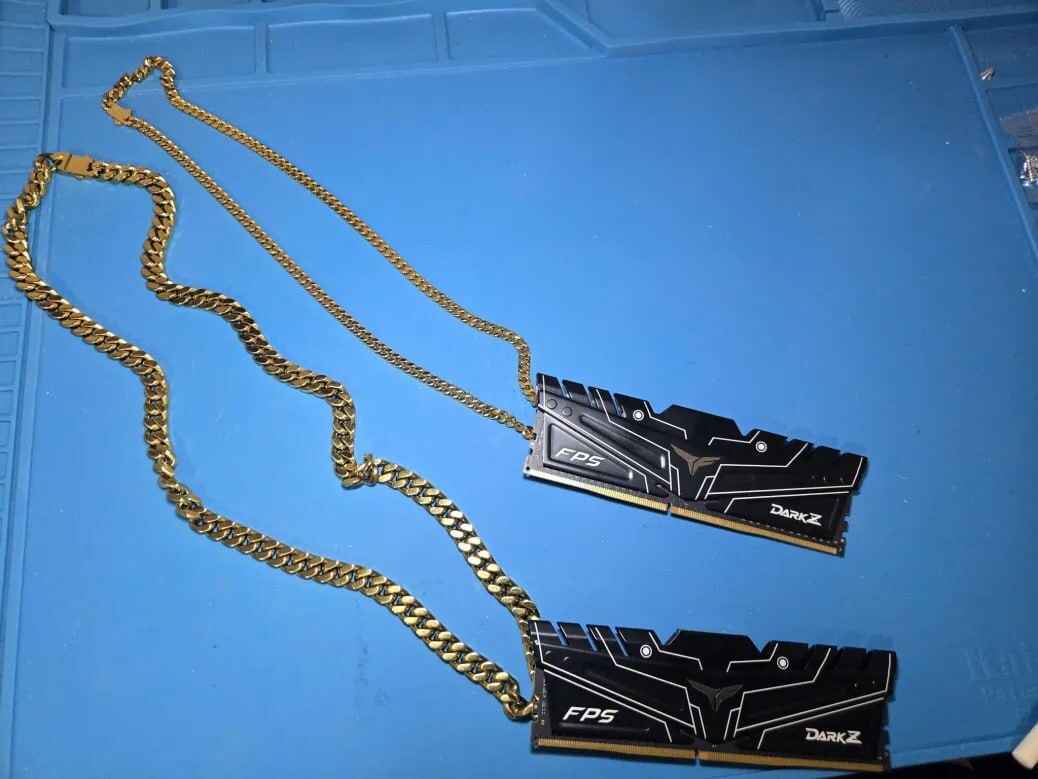
As the times go, so do the decorations.
The main competitor AMD has a similar situation. At the beginning of the year, when AMD announced its RX 9700 XT graphics card, it was positioned as a much more affordable competitor to Nvidia’s RTX 5070ti. Despite the difficulties with optimizing FSR technology, which adds a boost in games by analogy with DLLS, the attractive price of the 9700 found its favor among gamers and since the summer, demand for it has grown rapidly. But the nuance of the price is that AMD covers 10% of the cost of the graphics card, which it gives to retailers in order to compete with Nvidia. Now the company has announced that starting in the new year, prices for AMD graphics cards are expected to increase due to the lack of necessary DRAM memory. AMD partners, such as Powercolor, advise buying graphics cards now while the discount season is still ongoing, as prices will increase after that.
After raising the prices of its Xbox gaming consoles in May, Microsoft may pull this trick again, as they were not prepared for another jump in component prices. Sony has reportedly built up some stock and is not planning to increase the price of the PlayStation just yet.
Epic Games CEO Tim Sweeney warned that rising RAM prices will be a real problem for gaming for several years.
«Factories are redirecting advanced DRAM capacity to meet AI needs, where data centers are offering significantly higher prices than consumer device manufacturers,» Sweeney wrote, commenting on a post by a user who purchased 64GB of RAM for $240, and four weeks later the same kit cost $498.
RAM price increases will be a real problem for high-end gaming for several years. Factories are diverting leading edge DRAM capacity to meet AI needs where data centers are bidding far higher than consumer device makers. https://t.co/VgO2OG4oOr
The memory shortage could also affect the price of other upcoming devices, such as the Steam Machine. While Valve’s new console has generally made a positive impression on journalists, Gabe Newell’s company declined to comment on the price of the mini PC.
It’s not just gamers who will be affected. DRAM is used everywhere from smartphones to laptops, so prices for most «smart» gadgets will also increase.
Xiaomi has already raised prices on its flagship Redmi K90 series smartphones, which has caused consumer dissatisfaction because they lack «RAM». Manufacturers are forced to revise product specifications, and some projects have been postponed due to rising component costs.
When to expect relief?
ADATA chairman predicts memory shortages will last at least two years. Phison CEO warns that NAND production quotas for 2026 have already been snapped up, and prices have doubled in the past six months.
Analysts expect the price trends to persist for at least four years, which is how long supply contracts Samsung and SK hynix have with major buyers. Consumers and businesses planning technology upgrades should brace for a challenging period ahead.
This could change only if the AI bubble bursts or more efficient AI models with lower memory requirements emerge. However, neither of these prospects seems likely in the near future.
So if you’ve been planning to upgrade your phone, PC, or console, it might be worth putting aside your worries and taking the plunge before the price hits a psychological high.