Хочете будувати кар’єру в Data Science та AI? Vodafone Big Data Lab відкриває новий набір —>
Олександр КузьменкоGadgets
7 December 2025, 11:36
2025-12-07
Former Intel CEO wants to make Moore's Law relevant again
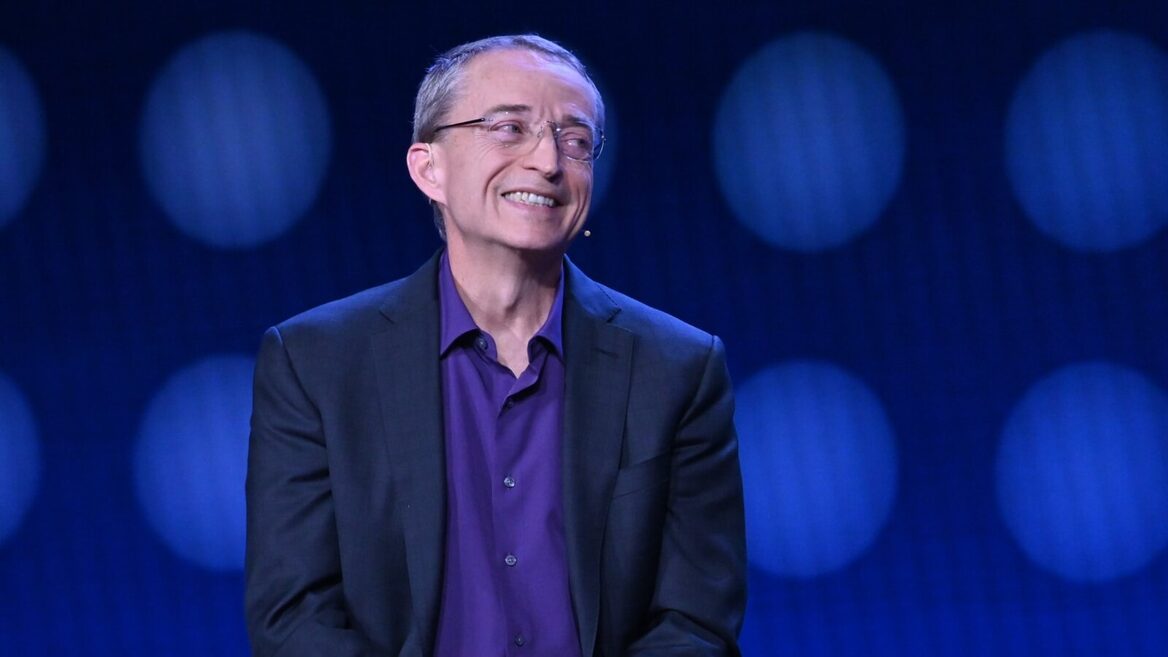
Pat Gelsinger, who left Intel a year ago, believes that the startup xLight can restore the relevance of Moore’s Law, which states that the number of transistors on a chip doubles every two years.
Pat Gelsinger, who left Intel a year ago, believes that the startup xLight can restore the relevance of Moore’s Law, which states that the number of transistors on a chip doubles every two years.
Gelsinger is currently a general partner at venture capital firm Playground Global and is working with 10 startups, TechCrunch reports. One of them is xLight, a semiconductor startup that recently announced a preliminary deal worth up to $150 million with the U.S. Department of Commerce, under which the government will become a significant shareholder.
Pat Gelsinger believes xLight could solve what he sees as the semiconductor industry’s biggest bottleneck: lithography, the process of etching microscopic patterns onto silicon wafers. The startup is developing huge «free electron lasers» powered by particle accelerators that could revolutionize chip manufacturing. But it’s unclear whether the technology will work on an industrial scale.
«You know, I have a long-term mission to continue to see Moore’s Law in the semiconductor industry. We believe this is the technology that will awaken Moore’s Law,» Gelsinger said.
Moore’s Law is an empirical observation made in 1965 by Gordon Moore, one of the founders of Intel. He hypothesized that the number of transistors on a chip would double every 24 months. Thus, the power of computers would increase exponentially in a relatively short period of time.
Moore’s Law is used in the semiconductor industry for long-term planning and for setting research and development (R&D) goals. Advances in electronics, such as the price reduction of microprocessors while taking into account quality, the increase in memory capacity (RAM and flash memory), the improvement of sensors, and even the number and size of pixels in digital cameras, are closely related to Moore’s Law.
In 2007, Gordon Moore stated that his law would likely soon cease to apply due to the atomic nature of matter and the limitation of the speed of light.
Industry experts disagree on when Moore’s Law will end. Microprocessor architects report that since 2010, semiconductor development in the industry has generally slowed down and is somewhat behind the pace predicted by Moore’s Law.
In September 2022, Nvidia CEO Jensen Huang said he believed Moore’s Law was dead, but Pat Gelsinger, then head of Intel, had a different opinion. He said, «We’re not in the golden age of Moore’s Law anymore, it’s much more complicated now, so we’re probably doubling effectively closer to three years, so we’re definitely seeing a slowdown».
Pat Gelsinger, who worked on the creation of Wi-Fi and USB technologies, was supposed to pull Intel out of a deep crisis, but he failed and resigned as CEO. How the company ended up in this situation