Хочете будувати кар’єру в Data Science та AI? Vodafone Big Data Lab відкриває новий набір —>
Олег ОнопрієнкоHot News
13 October 2025, 09:00
2025-10-13
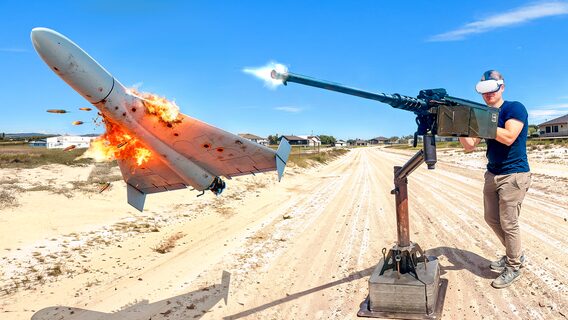
Hunting for "Shaheeds": How a dev.ua journalist trained to shoot down kamikaze drones in VR and what he got out of it. Report from the military-tech showroom of L7 company
Shooting down a "shaheed", even in VR, turned out to be difficult. At first, your hands tremble, then you lose your aim, and then suddenly you catch the moment and press the shutter. A dev.ua journalist visited the showroom of the L7 company, which creates VR simulators for the military, and tried herself as a shooter of a mobile group to counter kamikaze drones.
Shooting down a "shaheed", even in VR, turned out to be difficult. At first, your hands tremble, then you lose your aim, and then suddenly you catch the moment and press the shutter. A dev.ua journalist visited the showroom of the L7 company, which creates VR simulators for the military, and tried herself as a shooter of a mobile group to counter kamikaze drones.
From IT outsourcing to defense MilTech
L7 began its journey as an IT company that developed mobile applications and games until 2018. The company's founder, Igor Belov, has extensive engineering experience; earlier, in 2012, he developed a business related to LED lighting.
The transition to the defense sector was gradual. In 2018, the company developed software for its first simulators, including a tank simulator and simulators for fire training (machine gun, pistol).
After the start of a full-scale war in 2022, the owners decided to focus on simulation training, as there was an urgent need to close the gaps in combat training. The management understood that money was no longer the main motivator, and the ideological component came to the fore. The company provides military personnel with the opportunity to train on its simulators for free so that they can better prepare for combat operations.
One of the main challenges was training security, as travel to training areas became dangerous due to enemy attacks. In response, L7 created mobile training complexes (based on laser and virtual technology) that allow instructor teams to travel directly to units, quickly deploy equipment, conduct training, and move on.
Today, L7 creates tools for combat training instructors and boasts a lineup that includes over 50 types of weapons in simulation mode.
dev.ua is hunting for "Shahedas"
A dev.ua journalist visited the closed showroom of the L7 company to try out the role of a mobile fire team fighter. Spoiler: it's more complicated than it seems at first glance.
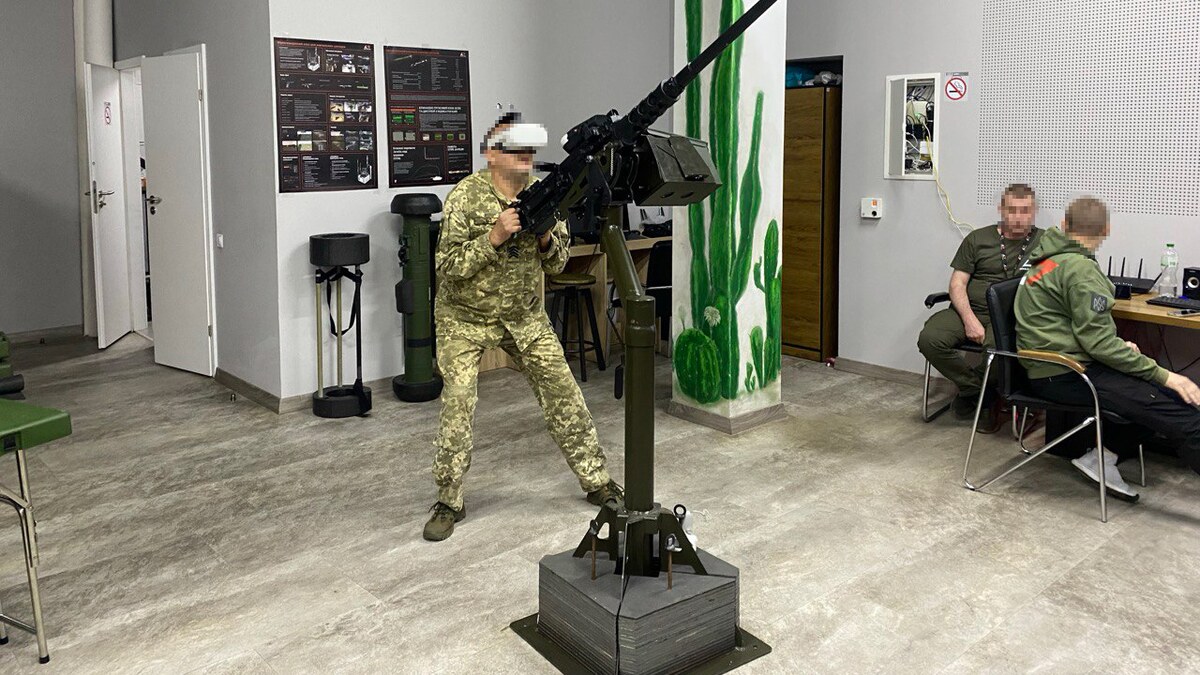
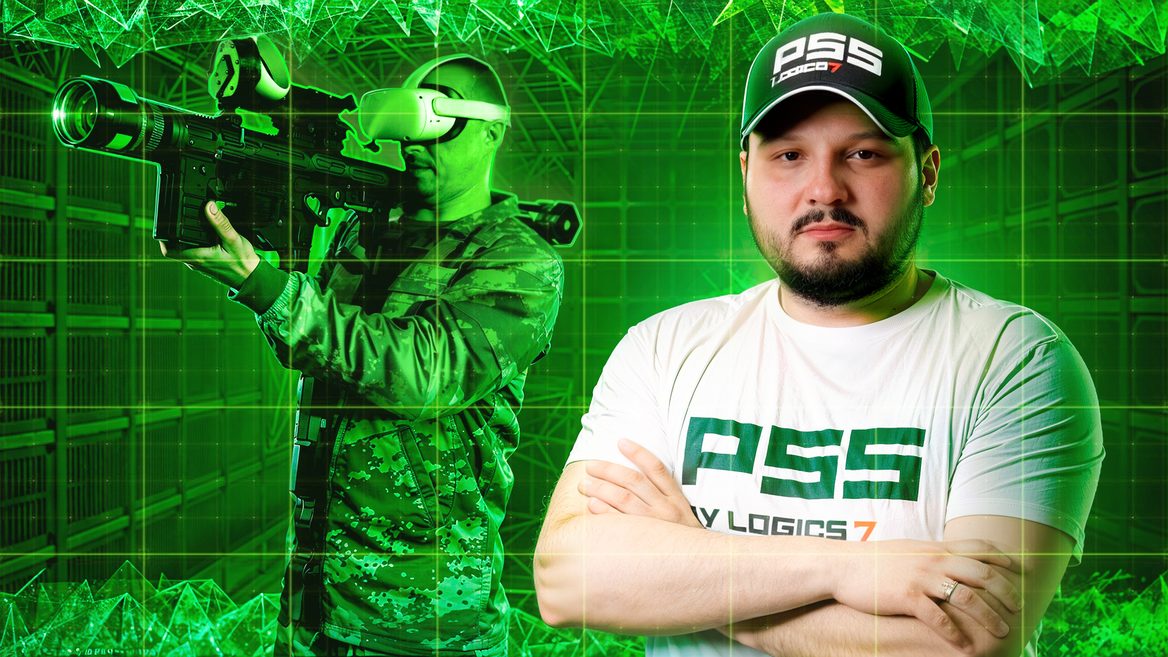
When we reached the place, the military was already training here. Therefore, we were lucky enough to see and hear how communication takes place within the MVG unit. The gunner is standing behind the platform on which the Browning M2 machine gun is located (this is what is mainly used to operate drones of the Shahed type) in virtual reality glasses. For him, the space in which he is now does not look like a room at all - it is a simulation of a combat position. His commander at this moment is watching the gunner's work through a large plasma, onto which the projection from the VR glasses is displayed. As soon as the first targets appear on the screen, the commander gives a command: "Azimuth 90", the gunner turns the machine gun and begins to operate on the UAV in the specified sector.
From the side, it does not look like static work, the machine gun operator is constantly moving. According to the simulation settings, drones can enter from any direction and in any quantity, so the machine gun fixed on the platform must constantly be moved around its axis. As instructor Artem noted: “When the MVG works on “pick-ups” you have restrictions on movement, that is, you cannot turn 360 degrees, so the gunner is given a sector in which he can work, so that the simulation scenario corresponds to real conditions as much as possible.”
A dev.ua journalist is trying to bring down virtual "shaheeds"
It's dev.ua's turn to feel what it's like to be a shaheed hunter. First, we go through a short briefing on the controls. This is a real "degraded Browning", that is, it can only fire "virtual" bullets, but otherwise it is no different from the combat model. In essence, we only need to know where the firing lever is and hold on tightly to the handle to change the position of the machine gun. There is no need to reload the weapon either, since we are beginners, the L7 instructors turned on an unlimited supply of bullets for us, for the military, reloading is made in the form of a 30-second countdown timer, as we were explained, this is the optimal time to change the box. We put on VR glasses and find ourselves in a field with an electric transmission line. First, you turn your head to understand what environment you are in and where drones can fly from. In addition to power lines, this location has a forest and a couple of one-story buildings, in short, a typical location for shooting down drones in the conditional Buchansky district near the capital.
“Ready?” asks the instructor. “Ready,” replies the journalist. And immediately you hear the characteristic sound of the “shaheed”, which disturbs the sleep of a Ukrainian almost every night. Only now you can’t see it, you start spinning around and then it becomes clear how heavy the machine gun is, even though it is on a platform. We deploy the weapon, the system automatically highlights the target, and also gives an indication of where it is best to “pour” bullets to shoot down the “shaheed”.
"Since the target is moving," the instructor explains, "you need to shoot ahead so that the bullets have time to reach the drone."
We try to fire the first five shots according to the simulation's prompts. Every fifth machine gun round is a tracer, meaning it glows and it's easier to see in which direction to fire. There's no hit, we fire ten more, very close, but still miss. And on the third attempt, the winged rocket explodes in the air.
One could say that it was a good result, but the “Shahed” was shot down over a power line, and in reality it is forbidden to shoot down such objects. But while we were hunting for this drone, several others had already flown past the sector. However, over time, you understand how best to aim and at whom, so several hits were recorded.
After a few minutes of training, we were ready to make the task more difficult, so we asked the instructors to turn off the target illumination, the interception point and set a night location among buildings. In short, the scenario is as close to reality as possible. We also limited the work on the azimuth compass to simulate work on a "pickup truck". What is impressive is that the environment changes instantly, there was no waiting for the PC operator to launch a new map, everything changes on the fly.
I would like to say that most of the targets were shot down, but on this attempt they were “lost in terms of location”. In such darkness it is difficult to see the “shahed”, the best indicator is the approach of a characteristic sound, but then there is little time to make decisions, and shooting a 50 caliber over houses is a bad idea. When all the prompts are turned off and the conditions are as close to reality as possible, you understand that the time to make decisions is very limited, and you need to take into account many factors: the distance to the target, whether there are any objects nearby that are prohibited from being shot down, how many cartridges are left in the box, calculate the movement of the “shahed” in order to correctly choose the interception point.
Instructor Artem showed us a video of a shooter with the call sign "Tikhy" shooting down a cruise missile with a Browning, unfortunately, we cannot publish the video for security reasons, but the information about this case appeared in the media. Artem explained that before that "Tikhy" trained on the same L7 simulator.
Military training on the L7 simulator
About technology and training
Eduard Brazas, the manager of the production of L7 training systems, said that the Browning is not the only L7 simulator, in total the company has more than 50 units of various weapons for various combat missions. Currently, the “Drone Killer” simulator based on a pump-action shotgun against FPV drones is in demand. It took 2.5–4 months to create a prototype of the simulator, and it has been supplied to the troops since May.
Small arms are mostly made from converted airsoft models - they are brought to the weight and dimensions of real weapons and adjusted for operation. Grenade launchers are sometimes made completely with the original controls.
Software (SW) is the most resource-intensive stage of development. Correct ballistics, which take into account weather, altitude, atmospheric pressure and wind force, cannot be taken from books; it has to be obtained in practice and through feedback from the military. Since weapons of the same nomenclature can differ greatly (in terms of storage conditions, cartridges), the software allows the instructor to configure virtual types of weapons: adjust the dispersion of bullets, rate of fire, barrel overheating, etc.
Eduard Brazas, L7 Training Systems Implementation Manager,
The more controls, the better to use laser simulators. A person must see and hold the weapon, press all the buttons so that the hands work in a stressful situation. Training to automatism is key.
The MVG chose virtual reality for the simulator, as it is the only way to recreate a 360-degree combat simulation. Brazas told dev.ua that, according to their calculations, two to three weeks of training on the simulator is enough to feel confident in real combat conditions.
Almost all of the showroom employees who interact with the military are former military personnel, some with combat experience. They gather feedback during military training.
The base case, which is a command center, allows up to nine people to participate in one simulation. This makes it possible to practice tactical situations where the commander issues combat orders and the soldiers can communicate with each other, even when they are in different rooms.
"All of our simulators now allow for teamwork, meaning we don't just make simulators for individual training, but group training," Brazas emphasized.
The company did not disclose the exact characteristics of the simulation control station, but emphasized that against its background, a powerful gaming computer looks like a child's toy.
"This is such a very powerful workstation. Maybe not at the level of a server, but it's close to it. We have very demanding software that simulates the territory of the Donetsk region, conditionally 100 square kilometers," said Eduard.
Create a war simulator
Igor Belov, founder of the L7 military-tech group of companies, said that according to the company's estimates, about 100,000 people, and a total of 300,000–400,000 fighters, have trained using L7 simulators since the start of the full-scale war.
L7's ultimate goal is to create a "War Simulator" in virtual space based on the company's products. This environment will allow practicing any situations and interaction between all levels: gunner, drone operator, operator of ground robotic complexes (GRC), as well as training the command staff.
Igor Belov, founder of the L7 group of military-tech companies
A war simulator can provide the ability to create any point on the map, add a certain number of all branches and types of troops so that the human factor overlaps each other. And it is this war simulation that should be as immersive as possible to the one that takes place on the battlefield/
Although the export of L7 products is currently prohibited, as the company's products fall under dual-use items, Igor Belov believes that it is necessary to open the export regime for certain high-tech military technologies. This will allow attracting investment to the country.
In his opinion, the future of Ukraine is the supply of military technologies at the world level with a quality mark based on the experience of this war.
"Today we understand that this war is a war of drones, robotic systems, ground robotic complexes, with the addition of electronic warfare systems, etc. That is, there are a lot of elements that are difficult to reproduce in real life at the training ground, but are much easier to reproduce in simulation mode," added the founder of L7.
“We can simulate war in its entirety.” The founder of Logics7, which has developed over 50 types of simulators for various weapons, on how to stay afloat and even grow during war
In addition to the "War Simulator", L7 is working on the revival of the tank simulator project and the release of simulators for cars on a dynamic platform. The tank simulator was the first development of the company, even before the start of the great war, five simulators were used by the Armed Forces of Ukraine since 2019 for crew training. Unfortunately, it was lost during the occupation of part of Ukraine at the beginning of the full-scale invasion.
The company is constantly integrating new elements, such as artificial intelligence, to process and select the best combat methodologies.
L7 is working on a methodology for professional training of soldiers of various branches of the armed forces, built on the experience of full-scale war. Currently, the system allows for network training of squad against squad and company against company, but the software needs to be improved to scale to the “global” level of combat operations. The goal is to integrate the simulator into the system of professional (and, if necessary, basic) training at the battalion/brigade level and to make the platform open for connecting external simulators (from weapons and defense system manufacturers).
"The game gave an understanding of what you will have to work with in reality." Interview with an artilleryman of the Armed Forces of Ukraine about gamification in the Defense Forces
Logics7, a developer of Ukrainian virtual fire training simulators, has transferred the rights to release its solutions and software to a new company. They will now be released under the L7 brand.