Валентин ШнайдерAround IT
6 October 2025, 17:46
2025-10-06
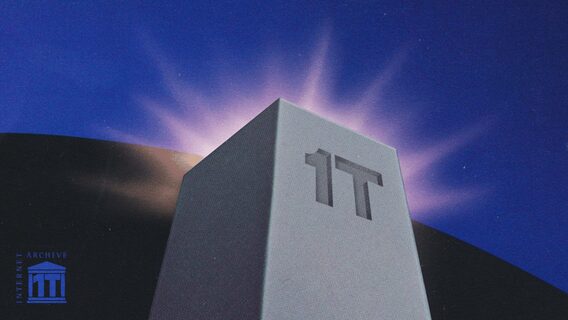
Internet Archive reaches 1 trillion saved web pages
The Internet Archive announced that the Wayback Machine has preserved 1 trillion web pages, the largest public web archive in history. The milestone summarizes nearly 30 years of capturing online content, from 1990s sites to today’s social media.
The Internet Archive announced that the Wayback Machine has preserved 1 trillion web pages, the largest public web archive in history. The milestone summarizes nearly 30 years of capturing online content, from 1990s sites to today’s social media.
Mezha.media writes about the achievement with a link to the organization’s blog. The message emphasizes that the Wayback Machine captures both large media and social networks, as well as little-known sites and personal pages — everything that could disappear from the network forever without archiving. According to the Internet Archive, the service adds hundreds of millions of new copies of pages every day, and the total volume of funds exceeds hundreds of petabytes and covers not only the web, but also books, audio, video, software and documents.
The anniversary will be accompanied by a series of public events throughout October, from lectures and public interviews to discussions on «digital memory» and the role of archives in countering disinformation. A separate part of the program will be dedicated to the future of web preservation and new tools for finding historical versions of websites, which should facilitate access for researchers, journalists and educators.
The Wayback Machine has long been a tool for fact-checkers and human rights activists in their daily work: the archive helps restore deleted publications and verify what was on the page before. The organization emphasizes that the number of visits to the archive is growing every year. Users are increasingly using the Wayback to check information, links, and sources.
What this means for users
First, the «longevity» of links: even if the original site is disabled or changed, a copy usually remains in the Wayback. Second, the transparency of changes: the history of snapshots allows you to see how the material was edited over time. Third, accessibility: the archive is open and free, so it can be used by both large editorial offices and individual researchers.
The Internet Archive was founded in 1996 by Brewster Keil as a non-profit «library of the Internet,» working with partners and libraries around the world. The project’s mission is to preserve humanity’s digital heritage and make it accessible to future generations. The one trillionth anniversary of the web is not just a simple statistic, but also confirmation that the web, despite its volatility and disappearance, can be systematically documented and verified.