Google has unveiled a new chip to accelerate the work of AI applications Ironwood. What is its feature?
Google has unveiled a new seventh-generation chip called Ironwood, designed to accelerate artificial intelligence-based applications.


Google has unveiled a new seventh-generation chip called Ironwood, designed to accelerate artificial intelligence-based applications.
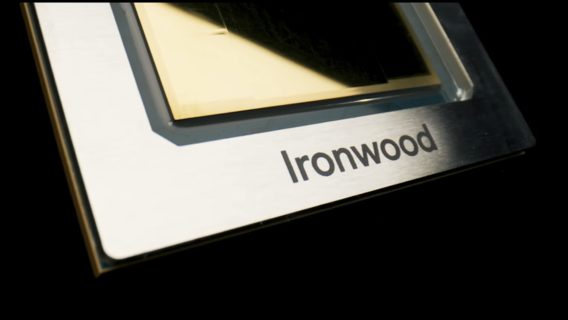
Google has unveiled a new seventh-generation chip called Ironwood, designed to accelerate artificial intelligence-based applications.
The Ironwood processor is aimed at processing the data needed to process user queries to applications like OpenAI’s ChatGPT. The chips perform fast calculations to provide answers in a chatbot or generate other types of responses.
The search giant’s multibillion-dollar effort, spanning nearly a decade, represents one of the few viable alternative chips to Nvidia (NVDA.O), opening a new tab for powerful artificial intelligence processors.
Google’s Tensor Processor Units (TPUs), which can only be used by the company’s engineers or through a cloud service, have given the company an edge in developing artificial intelligence over some competitors.
Google has split its TPU family of chips into a version geared toward building large AI models from scratch. The company’s engineers have created a second line of chips that strips away some of the model-building features in favor of a chip that reduces the cost of running AI applications.
According to Amin Vahdat, Google’s vice president, the Ironwood chip is the company’s seventh-generation TPU (Tensor Processing Unit) and the first optimized for inferential AI models. The chip will be available to Google Cloud customers this year in two configurations: a 256-chip cluster and a 9,216-chip cluster.
Ironwood delivers up to 4614 TFLOPs of performance, has 192 GB of dedicated RAM with a bandwidth of up to 7.4 Tbps. It also includes an advanced SparseCore core, which is designed to handle specific data. The chip’s architecture is designed to minimize data movement and latency on the chip, which helps reduce power consumption.
Ironwood will be a key part of Google’s strategy to integrate AI into its services. The chip will be integrated with the AI Hypercomputer, a modular cluster of computing resources in Google Cloud, which will allow it to process large amounts of data for AI even more efficiently.
The new chip combines functions from previous disparate designs and increases the amount of available memory, making it more suitable for serving AI applications.
«It’s just that the relative importance of inference is increasing significantly,» Vahdat said.
According to Vahdat, the Ironwood chips boast twice the performance while consuming less power compared to Google’s Trillium chip, which the company announced last year. The company builds and deploys its Gemini AI models on its own chips.
Google emphasizes that Ironwood is the most powerful and energy-efficient TPU to date, and its architecture allows for efficient running of inferential AI models.
The company does not disclose which chip manufacturer produces Google’s design.