Хочете будувати кар’єру в Data Science та AI? Vodafone Big Data Lab відкриває новий набір —>
Олег ОнопрієнкоWeapon
19 October 2026, 09:15
2026-10-19
"There are only a few candidates with hardware experience." ZMIYAR founder Viktor Shapovalov on the creation of the HYDRA system, the staffing shortage, and why software testers are not suitable Defense Tech
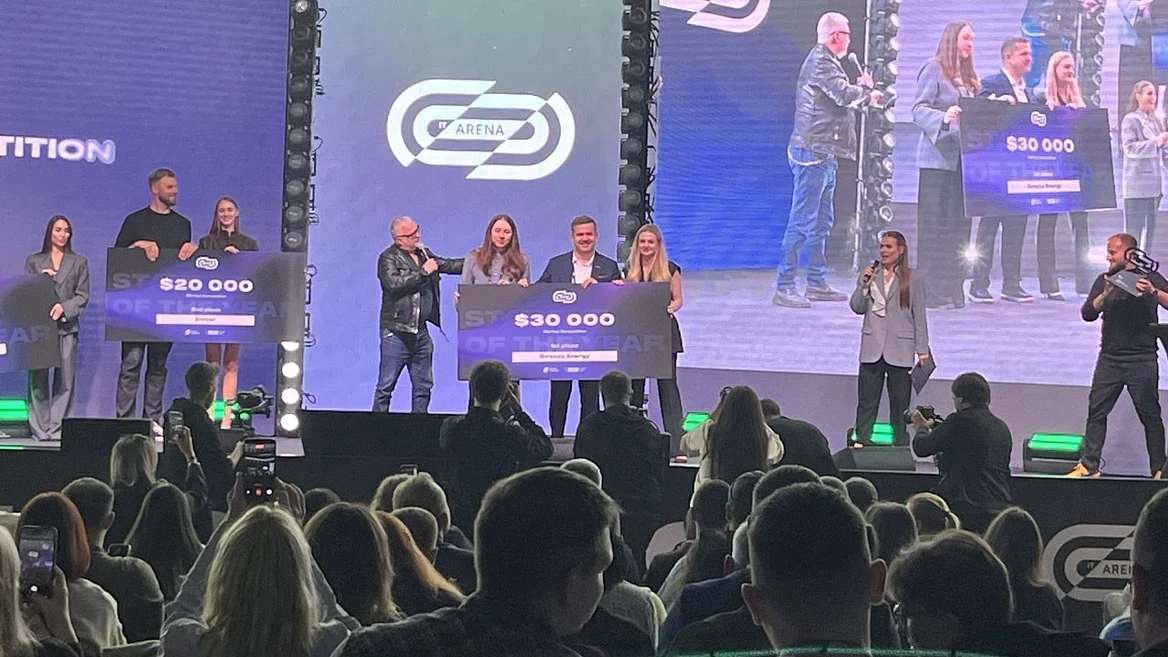
Viktor Shapovalov left his job at Ajax Systems to create reliable electronics for the military. At that time, there was a shortage of ammunition on the front, and instead of a technological revolution, pilots used homemade clothespins to blow up drones. Today, his company ZMIYAR develops comprehensive solutions, which took the prize at this year's IT Arena, for managing minefields and connecting hundreds of devices into a single secure network.
In the interview, we discussed the key challenges for defense-tech startups in 2026: changing booking criteria, a catastrophic shortage of hardware engineers, and unexpected logistical obstacles within the country.
Content
About the shortage of personnel in Defense Tech
— Victor, you worked in IT, and at the end of 2023 you moved to Defense Tech. Tell us in more detail how that happened?
During the full-scale invasion, I worked at Ajax Systems. It is a wonderful hardware school with very talented people. It taught me how to work with hardware correctly and gave me an understanding of complex processes. Ajax is an example of how devices should be developed in a “healthy” company: from corporate culture to internal work organization. At that time, the best engineering power of Ukraine was concentrated there. Now, due to the development of Defense Tech, this concentration has slightly blurred, but at that time they were truly top specialists.
My transition to Defense Tech began during the shell famine. At that time, FPV drones had just appeared, and working with them was dangerous. For initiation (detonation), home-made methods were invented: clothespins, tubes with balls were used. It worked extremely dubiously. The military came with a specific request: a reliable solution was needed to, firstly, protect the drone operator, and secondly, guarantee detonation at the right moment, and not by chance. So we created initiation boards.
At first, I and most of the team developed them part-time on a volunteer basis, in parallel with our main jobs. But when we saw that the product worked and there was a huge need for hardware solutions, we joined forces and moved to Defense Tech full-time.
There is another interesting observation. When we started in late 2023, it seemed to me that some lasers or almost a Death Star should already be working on the front. But in practice, there were not even basic things. The need for them was very acute. I will say more - it has not disappeared anywhere. Now most of the simple solutions have indeed been developed, but the demand for more complex technical systems is only becoming more acute.
— Now many people complain about the shortage of hardware specialists. They have to be sought out, and sometimes lured from other companies. To what extent has this become a challenge for ZMIYAR?
As for developers, there were almost no problems - word of mouth worked well. Engineers I knew who wanted to move from civilian IT to Defense asked about vacancies themselves. We saw that they were great specialists and took them on to the team.
But we have a vacancy for a Hardware Test Engineer, which we have not been able to close for half a year. We have noticed a trend: all QA engineers in hardware who know how to think and work with their hands want to become Embedded developers. As soon as you find a smart person, he or she already applies for Embedded, and we need a hardware tester. The need for such people is very acute, and finding them is extremely difficult.
— How many resumes did you receive from candidates for this position?
There are a lot of resumes coming in, but most of them are from software testing candidates. There is a fundamental difference between hardware and software testing. To work with hardware, you need to understand the basics of electronics, be able to use oscilloscopes, logic analyzers, spectrum analyzers, and production test benches.
Software QA has a completely different understanding of the process and a different work stack, so they are irrelevant to us. As a result, there are a lot of reviews, but candidates with real experience working with hardware are few, literally on the fingers of one hand for the entire time.
— Is it possible to retrain software QA engineers to work with hardware? How difficult is it?
Experience plays a key role here. It's impossible to switch to hardware and learn everything in a few months.
However, there are candidates who, in addition to software testing, have a relevant hobby or pet project. For example, they assembled an outdoor thermometer on Arduino or ESP32. This already involves working with simple hardware. Such people have a basic understanding of how microcontrollers work, how to program them, how to look for bugs at the board level. You can work with them further. But if a person has tested exclusively websites or web applications, they will not be suitable for our roles.
In general, we are very open to expanding the team. We currently have two key open positions: the first is the Hardware Test Engineer we have been looking for for so long, and the second is a Sales Manager .
— Many Defense Tech startups complain that due to the change in reservation rules they cannot protect their employees. How is ZMIYAR doing with reservations and have you encountered this problem?
This is a huge pain for us. We have direct government contracts, and we also work as subcontractors — supplying components to drone manufacturers. However, we cannot obtain the status of a critical enterprise from the Ministry of Defense.
It works like this: the ministry asks to provide our contracts with drone manufacturers. We show them without any problems. Then they tell us: “Okay, now give us the contracts of these manufacturers with the military units.” We go to the partners, but they refuse. First, they have to coordinate this with the military, and the military units logically ask: “Who are these component manufacturers and why should we transfer our contracts to them?”
A vicious circle arises. This applies not only to us, many familiar manufacturing companies did not pass the new booking criteria, which came into effect on September 1. Many simply lost their bookings, and it turned out to be extremely difficult to confirm compliance with the new requirements. Therefore, the biggest problem now is not so much finding specialists, which, in my opinion, can still be solved, but how to cope with these state mechanisms.
About ZMIYAR products
— Your initiation boards are now used not only in FPV, but also in ground robotic complexes (GRCs) and even anti-aircraft drones. How difficult is it to reconfigure production from one medium to another? For example, from a GRC that travels at a speed of up to 30 km/h to an anti-aircraft drone that flies over 300 km/h?
There is a need for reliable protection and safe operation absolutely everywhere, which is why we have adapted our boards to different types of equipment.
Of course, there are technological features. Due to the high speed of anti-aircraft drones, customers came to us with a strict request: the reaction time from command to initiation should be less than 1 millisecond. During measurements, we managed to achieve an indicator of 200 microseconds. These are the main differences.
From a software perspective, we have to adapt to specific types of platforms, but technically this is not a problem. Each direction simply requires additional attention from developers: the concept remains general, only the details differ.
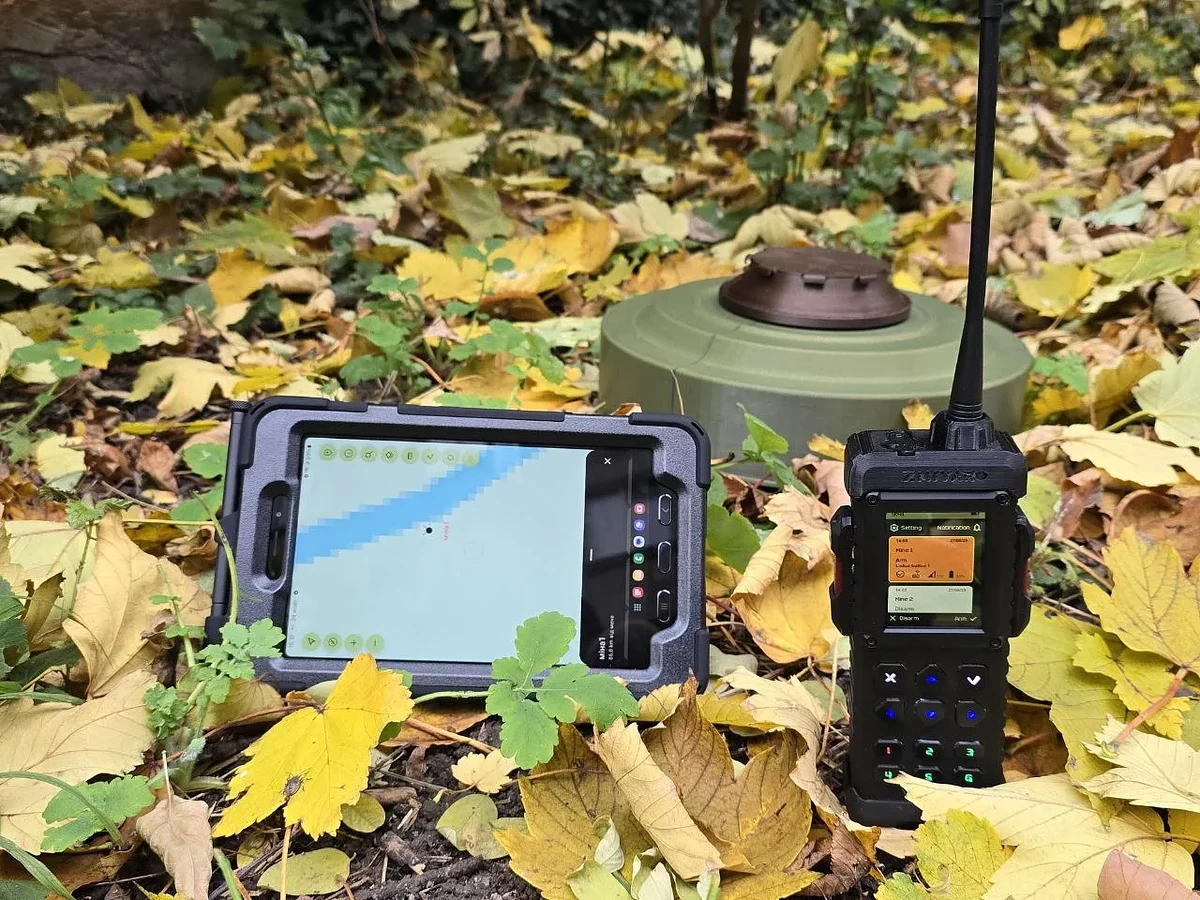
— Are the HYDRA system and “smart mines” conceptually one product or two different ones?
From a product point of view, these are two different products. But from a technical implementation point of view, they are essentially the same.
I'll tell you an interesting fact. Last year at IT Arena, I presented "smart mines". For the final performance, I brought an anti-tank mine with a bright simulated flash to clearly show how the system works. During the pitch, I pressed a button, the mine flashed brightly - the front rows gasped. The jury also didn't really appreciate such a performance, because this is purely military technology, which is well understood by the military, not civilians.
So this year we made a small pivot. Hardware-wise, it didn't require any modifications from us. We produce electronics. If you integrate it into the explosive part, you get a "smart mine."
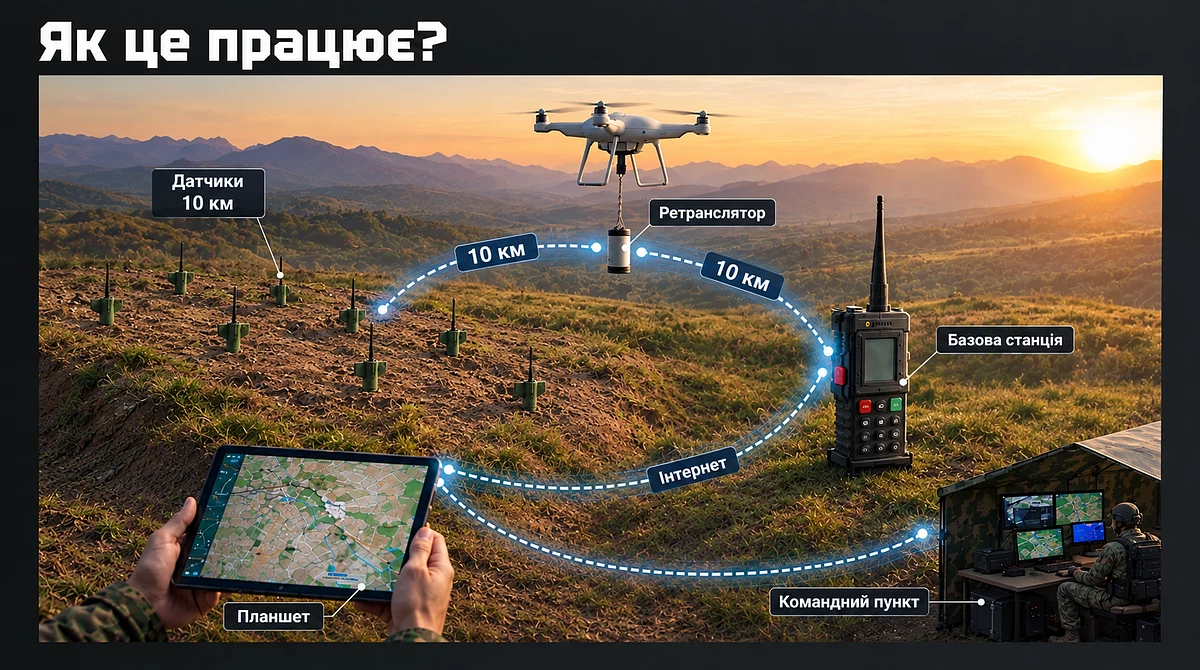
But if you use the same electronics without explosives as a sensor network, you get a completely different product - for situational awareness. A typical case: there is a landing 20 km from our positions, which cannot be monitored by drones 24/7, but there is information that the enemy is there. The military simply drops our sensors there from drones, and the command post starts receiving information about any movement thanks to the fixation of ground vibrations.
That is, they are sold as different products for different tasks, but they have the same basic hardware.
— Speaking of smart mine and HYDRA systems, you previously mentioned that one of the key problems on the front is enemy electronic warfare. How exactly did you implement electronic warfare protection in your products?
Our devices are on the ground, and the ground absorbs radio waves very strongly. Therefore, the impact of EW on our devices is less.
We thought about countermeasures in advance and built additional amplification into the devices themselves at the hardware level. As of now, we use directional antennas and additional repeaters to point the radio signal. Due to this, we effectively compensate for the strength of enemy electronic warfare.
There are plans to implement PPRCH (pseudo-random retuning of the operating frequency), but now there are more priority tasks. That is, electronic warfare for us is definitely a challenge, but definitely not a blocker. We are working on it, but it is not our only focus at the moment.
— What is your main focus now?
Scaling the number of devices in the network. This is a real challenge for us. First, we tested a network of three devices - it worked. Then we successfully connected 20. Now we are working on having more than a hundred devices working simultaneously on one network.
This requires a significant improvement in our radio communication algorithms. We need to manage the airtime in such a way that when 100 devices are sending signals at the same time, the base station can hear and process them all.
— If a hundred devices operate simultaneously, will the enemy be able to locate them? And will they interfere with other Defense Forces communication systems?
The devices themselves are constantly in radio silence. When nothing is happening, they are just listening and not emitting anything, so it is impossible to locate them.
The challenge arises when an event occurs — for example, an enemy car is driving by. At this moment, all the sensors immediately "wake up" and start sending a huge amount of data to the network. And our main task now is to effectively regulate this flow of information so that the base station receives the signal from each device without loss.
— What if a herd of wild boars runs by instead of a car or tank? How does the system react to that?
That's fine. We spent a lot of time on the algorithms and found certain patterns in the signal. That's why the system can clearly distinguish animals from military equipment and infantry.
To put it simply, we analyze the signal, and its signature is very different. The movement of the equipment gives a smoothly increasing and smoothly decaying signal for several seconds. And human steps are such single “needles” on the oscillation graph that arise exactly at the moment when the foot steps on the ground.
We had more problems with other factors. For example, machine gun bursts, which, by their nature of signal, especially if they are single shots, are quite similar to human footsteps. The same applies to close bursts from artillery, because they have a very similar signature. So we had to catch all these "edge cases" and configure software filtering so that the system could learn to distinguish and cut them off.
"2025 has become the year of the NRC, but to meet the need on the front line, 40,000 robots are needed." Interview with the co-founder of Tencore, the largest manufacturer of ground robotic systems in Ukraine
Current challenges and plans
— Regarding dependence on components. How critical is the link to countries of origin, in particular China, for you?
From the very beginning, we fundamentally decided not to use Chinese components. It was clear that sooner or later access to them could cease. Therefore, we simply do not have a problem with Chinese parts.
Instead, Ukrainian customs has become a much bigger challenge for us. Due to the huge volume of cargo, the components we need can wait a very long time. If a parcel needs customs clearance and the customs officers see that it is an electronic component that requires additional attention, the process can easily drag on for a month or a half. That is, the main problem is not the country of origin of the components, but the speed of their receipt within our country.
— What are the company's plans for the coming year?
The main priority is to launch the HYDRA system into mass production. Many startups create cool solutions, but they are used artificially, in single copies. We strive to be systemic.
The second point is codification. It will take place in parallel with the launch of the series, as it is not a quick process.
We are also looking at foreign markets, but right now the focus is exclusively on the Ukrainian military. Export is a prospect closer to mid-2027.
Regarding the product line: we do not plan to develop new devices at the moment. We are constantly receiving feedback from the front, so we will focus on improving existing systems. At the same time, we will expand the team.
We are also preparing integrations with Ukrainian military software manufacturers. These will be collaborations where we combine their software with our hardware to create a single, effective infrastructure.