Хочете будувати кар’єру в Data Science та AI? Vodafone Big Data Lab відкриває новий набір —>
Ігор Вишневський Hot News
28 September 2026, 09:00
2026-09-28
"Owning the code is losing commercial interest." Alexander Yefremov on the discovery of the Liquio code, the development of DSOM and expansion into Africa. A great interview with the CEO of Kitsoft
Alexander Yefremov is the founder and CEO of Kitsoft, a company that needs no introduction in the govtech market. Suffice it to say that the Kitsoft team is directly involved in the development of the country’s main state digital product — the web portal "Diya", and the low-code platform Liquio, created by the company, has formed the basis of a large number of government services that cannot be counted on the fingers.
Alexander Yefremov is the founder and CEO of Kitsoft, a company that needs no introduction in the govtech market. Suffice it to say that the Kitsoft team is directly involved in the development of the country’s main state digital product — the web portal "Diya", and the low-code platform Liquio, created by the company, has formed the basis of a large number of government services that cannot be counted on the fingers.
Currently, Kitsoft is developing another large system, for which it recently won a multi-million tender — the State Online Gambling Monitoring System. At the same time, the company is actively expanding its expertise abroad — both to European countries and to more exotic African markets for Ukraine.
In a long interview with dev.ua, Oleksandr Yefremov explained why Kitsoft made Liquio an open source product and how it changed the business model; answered whether political games affect the work of his company and shared what Liquio can surprise developers with in terms of the AI tools integrated into the platform. We also talked about the peculiarities of the govtech labor market and how it differs from classic IT, and Oleksandr Yefremov recalled where it all began in 2007. About this and more — in the text of the interview.
Content
Kitsoft: where it all began and where it is now
— Let’s start with a little retrospection. Your company has been on the market for a very long time, and it can probably be called a peer of Ukrainian govtech. What were your first products for the state, and how did you start earning your first money in this area?
— I co-founded Kitsoft in 2007, right after graduating from university. But at the very beginning, we were essentially a regular IT outsourcer that worked with both businesses and government agencies.
There was no immediate vision that we were building a govtech company, and cooperation with government agencies was episodic. I think a fundamental change in our development and positioning occurred in 2015. And one of the first directions was the digitalization of the city of Kyiv.
Do you remember the 15-51 service, which is still operating today? When we created it, it caused a real sensation. It launched e-democracy, and Kyiv residents were able to directly complain about any problems through this service — for example, take a photo of a pothole on the road and send information about it. This was our first experience in govtech. After that, we started creating more than one service for the capital, including the Kyiv city portal.
Those were interesting times, it’s nice to remember them. Then we first encountered a typical contradiction in govtech — we wanted to make a cool UX so that the service would be as comfortable as possible for users, but the lawyers said — no, according to such and such a regulatory act, we can’t do that.
From the market point of view, the turning point was the emergence of Prozorro in 2016. Prozorro created new rules — we began to apply for tenders, won and lost, but our expertise developed.
In 2019, we started working on the technological basis of the “Diya” portal. It has been seven years since then. Somewhere back then, we finally understood that we needed to focus on one thing. Since then, govtech has become our main specialization.
— So, your path was determined by the presence of customers in this area?
— Not only that. On the one hand, big projects appeared in govtech. But after the Revolution of Dignity, we were inspired to change something in the state, and we started with the transformation of government websites.
We realized that we like doing this. Secondly, there is a demand for it, although the market is complex. And, thirdly, this is where we provide the most added value. In govtech at that time, the difference between the state when there is nothing and then you create it was so striking that it motivated us to work in this area.
— You say that the market is complex, but it seems to me that every businessman says that about his market. Actually, what are the difficulties of the govtech market, in your opinion? If we are talking about competition, then it is small, because in Ukraine, probably, there are no more than 5-10 players?
— A very high threshold of responsibility. You are immediately frightened by responsibility, and it really is. You understand that it is not enough to just be able to write code well, because you need to understand the processes, regulatory provisions and the consequences of what you are doing if something goes wrong. And these include, in particular, increased requirements for cybersecurity and personal data protection. That is, you work with systems where an error can affect not just one client, but hundreds of thousands or millions of people.
The second aspect is public procurement. These are complex procedures, because customers set criteria, look at previous experience, you have to prove something. You have to follow formal procedures, because you may have a great idea and product, but if you don’t submit it on time or forget to attach an important document, you will simply be eliminated from the tender.
The sales cycle is long. The decision-making process is long. So you can start communicating with a potential customer, and only in a year will the purchase be announced. It will take several more months to conclude contracts. Not everyone is ready for this. And if you only have one or two customers in this market, then you have big problems, because you do not have systematic permanent financing.
It also happens that the state really needs a system, but there is simply no money in the budget.
In classic business, as a rule, everything is a little different. This is why a relatively small circle of companies has formed on the market. I think this circle needs to be expanded so that the state has a wider choice of technologies.
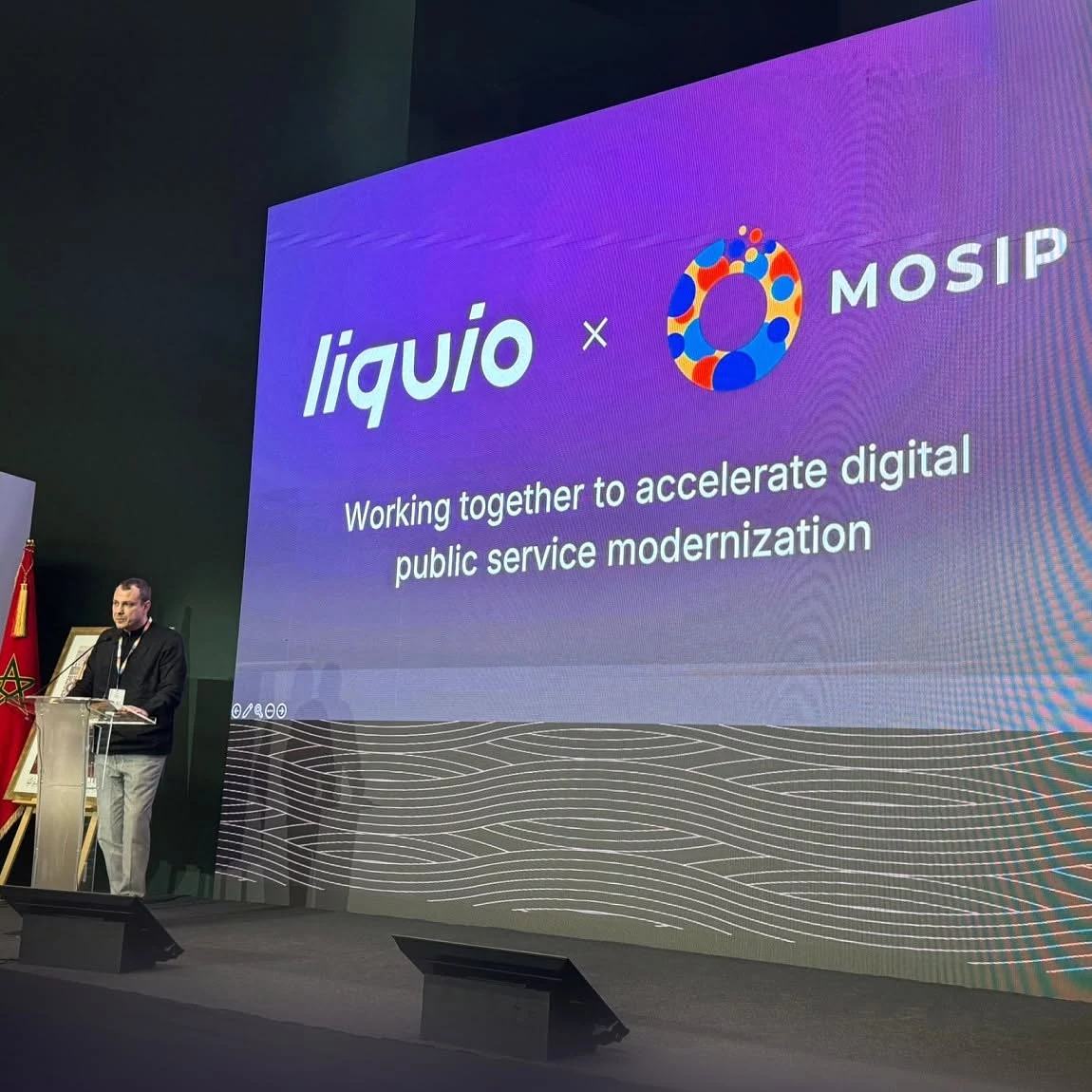
It is for this purpose that we have made the Liquio platform open source. Other IT teams can use our experience, and we train and certify them.
I think we are doing a lot to ensure that the govtech ecosystem develops, that open source technologies and common standards are used in the market, and that no one “reinvents the wheel.” Because there is enough work for everyone, not only in Ukraine, but also abroad.
— You mentioned the specifics of state funding. How do you solve the problem when a certain product needs to be made by a certain deadline, and the money for it has not yet been allocated? Are you working for the state on debt?
— The law prohibits working for the state on credit. Things could be even worse.
They can sign a contract with you, but most government contracts have a clause stating that in the absence of budget funding, they may simply not pay you or reduce the amount under the contract.
In my experience, this happens rarely, but the possibility exists. Most often, we simply encounter payment delays when you have already created the product. Or, if the product has been created for several years and it is a complex system, then you have implemented the first stage, and then you are waiting for the tender for the second to be announced. Accordingly, these are pauses in the team’s work and in financing. We need to be prepared for this. How do we get out of this? We reserve funds to cover problems in future periods.
What has changed in Ukrainian govtech in 20 years?
— You mentioned the company was founded in 2007, almost 20 years have passed since then. Can you compare the state of the govtech market 20 years ago and now?
— At that time, the govtech market essentially did not exist. As I said, it became much more structured with the advent of Prozorro and open procurement, as well as international donors. This process began around 2015.
One of the main differences I would call the scale of the projects. If at first it was about a specific document management system or website, or the automation of one process, now it is about the transformation of entire spheres. This scale has changed significantly after the creation of the Ministry of Digital Affairs, when digitalization became one of the state priorities.
Another difference was that previously government systems were built from scratch, and all of this was expensive and difficult to maintain. Of course, this also led to vendor lock-in — very exotic technologies were used for this.
Now govtech is moving towards common standards and component reuse. Less code is being written, and more investment and effort is being put into design and proper UX.
We also faced this choice — whether to continue to create each government service separately, develop it from scratch, or invest in our own platform. From how govtech is moving in other countries (and we studied the experience of Estonia, Britain, Denmark), we realized that a platform approach would make it possible to create government services faster. Then we started building our own platform Liquio to “assemble” government services, contributing ready-made components to each new project.
The goal was not to complicate the system, but rather to simplify it so that integrations could be reused or a template could be used. As a result, if a development cycle from scratch could take, for example, 6-12 months, then based on the Liquio platform, a service could be launched in a month or a half.
That is, govtech has gone from automating individual services to building digital infrastructure.
— In your answer, there was a phrase about the vendor lock-in problem. Has it disappeared? As far as I understand, it still exists at least in several large state structures. By the way, the fact that you opened Liquio to other teams is also a kind of preventive move so that Kitsoft is not accused of vendor lock-in?
— I’ll start with the second part of the question. In general, this was our development strategy. That is, now almost all countries — and Ukraine is one of the first — are betting on Digital Sovereignty, that is, building their digital sovereignty.
We have been transferring the program code, along with deployment scripts and documentation, to state structures for quite some time. That is, they already had it, so they could, in principle, rely on other companies. We never had the tool to tie everything up ourselves.
But to expand and strengthen our ecosystem, we open-sourced Liquio so that other companies or experts interested in this topic can study our product, form their own impression, and use it in their own developments.
For us, this step is a channel for attracting more partners and expanding the community.
It was a difficult decision, but we realized that in this market there was no other way.
There are examples of similar companies abroad that work on a similar model. And they all chose OpenSource. As an example, I can mention the Matrix secure sovereign chat system and Element, the company that developed this protocol.
The first part of the question was about vendor lock-in, does it still exist? Yes, I think it does. There are certain areas that have not been reformed for a long time, and I really hope that the state will have enough energy to move there to a more transparent approach based on Open Source and the open market.
We are interested in this. I know that many companies are also interested in this. And the state is interested in this, although there are large and complex systems that have been built for years, so it will not be possible to quickly switch from them. Plus, it requires funding, and now, in the conditions of a full-scale war, it is difficult to talk about this. Therefore, a balanced approach is needed here.
DSOM as an electronic system and an object of political battles
— Whether we like it or not, govtech is also connected to politics. Final decisions are made by politicians; projects are also often approved by politicians, and someone uses digital products for political PR. How much do severe political perturbations — such as those recently in the government — affect the work of your company?
— We have been working with different governments, because we have been working with the public sector for many years. During this time, teams have changed. There were situations when new leaders came who did not want to continue the reforms of their predecessors. Sometimes this meant stopping projects, but this is a fairly rare scenario.
So I always assume that for us as a technology company, the goal is to have strong expertise. If we can create real value and solve complex problems, and we can do that, then our expertise will be needed regardless of the political cycle. Yes, there may be pauses, stops, changes in course. They may have an impact, but they do not directly prevent us from working.
— And to what extent do you feel political pressure when developing some products? In particular, for example, regarding the State Online Monitoring System for PlayCity? After all, real political battles developed around this body.
— When you create a regulatory system, there are players who are interested in the market becoming more structured, transparent, and clean, and there are those who are not interested.
I am not ready to talk about specific personalities, because this discussion will not lead to anything. But there is definitely a public demand to reform this sphere. And the consequence of this is the development of the DSOM — where the development deadlines are short, and the demand to make it qualitatively is very large.
We cannot afford to fail, because that would ruin our reputation.
We won an open tender: it was the development of the first stage of the system last year. In 2.5 months, we gathered the most powerful team, focused it on this, created and launched a high-load platform based on Liquio, designed for 100,000 operations per second.
That is, the project is technologically complex, and it can be evaluated according to specific indicators.
We have undergone penetration tests and security audits several times — the system can withstand the necessary load.
Almost all platforms on the market have already been connected to the system in test mode.
So I can say that, strangely enough, the political discussions around this have not really affected our technological work. But we understood, working on this project, that any problems or bugs, if we allow them, will be presented to society through a critical “lens” that will magnify and amplify them.
Now, by the way, we have won an open tender for the development of the second phase. It will expand the system from monitoring financial transactions to a more comprehensive picture.
— Can you explain to readers in an accessible language how the state online monitoring system actually works? What functionality do you implement in your product?
— Previously, the state did not have a tool that would give a complete picture of what was happening in the market. That is, this is data on bets, on winnings, on refunds, and in general the volume of transactions. This data was collected fragmentarily — perhaps in the form of miscalculations or Excel reports. That is, these are manual processes.
DSOM changes this approach, meaning that data about any operation reaches the state at the moment of its implementation. This is real-time monitoring, and you can imagine the number of such operations from all platforms.
Therefore, a good architectural solution is needed here to withstand this load. Currently, the first stage is already operating in experimental operation mode — the system collects data on bets, payouts of winnings, refunds, all these operations.
As of August, 28 out of 31 licensed gambling operators had been integrated into the DSOM.
We want taxes to be paid on all of this. The state is interested in this, society is interested in this. But the correctness of tax calculation is checked on the basis of primary transactions. Why is the second stage needed? It expands the system from monitoring financial transactions to the entire game cycle: for example, depositing funds, bets even before receiving the result. DSOM will also be able to record transactions with gaming substitutes for hryvnia, when there are any tokens inside, data on the operation of gaming equipment, because it is not always purely online, it can be slot machines, etc.
The second step is also expanding the analytical capabilities of the system: reports, analytics are added, special algorithms can be connected that will find anomalies. Integration with government agencies is also planned. An important issue is data protection.
A fundamental decision made by the state is that DSOM does not collect personal data of players.
Information about transactions is transmitted to the system in an anonymized format, meaning the state receives the data necessary for monitoring without revealing the identity. After the launch of the second stage, the state will already have a holistic picture of the market.
Open source as a scaling model
— Another question about the decision to open source Liquio. You explained the motivation. But how much did it affect your business model? To put it bluntly, did you start earning less because of it?
— With the dominance of AI, knowing the code is losing commercial interest altogether. After all, it has become much easier to repeat certain algorithms and code, even having access to platform interfaces.
Along with opening the code, we also began to actively train and certify specialists on Liquio. In other words, this is already a full-fledged partnership model.
And if a partner has domain expertise in a certain market and joins the project, they can involve us as technology experts.
That is, thanks to this, we are already forming an additional revenue channel, forming a system of partners, and opening doors to new markets. We are now actively approaching international projects, entering new countries.
Therefore, when you come in with open technology and immediately position that your task is to train local teams and develop digital systems together with them, the Open Source model gives you much more opportunities for growth than local financial losses. The larger the ecosystem around Liquio, the more opportunities for us.
From Belgium to Ivory Coast: About Kitsoft’s International Expansion
— Tell us about your entry into international markets. Where have you already entered and in what status?
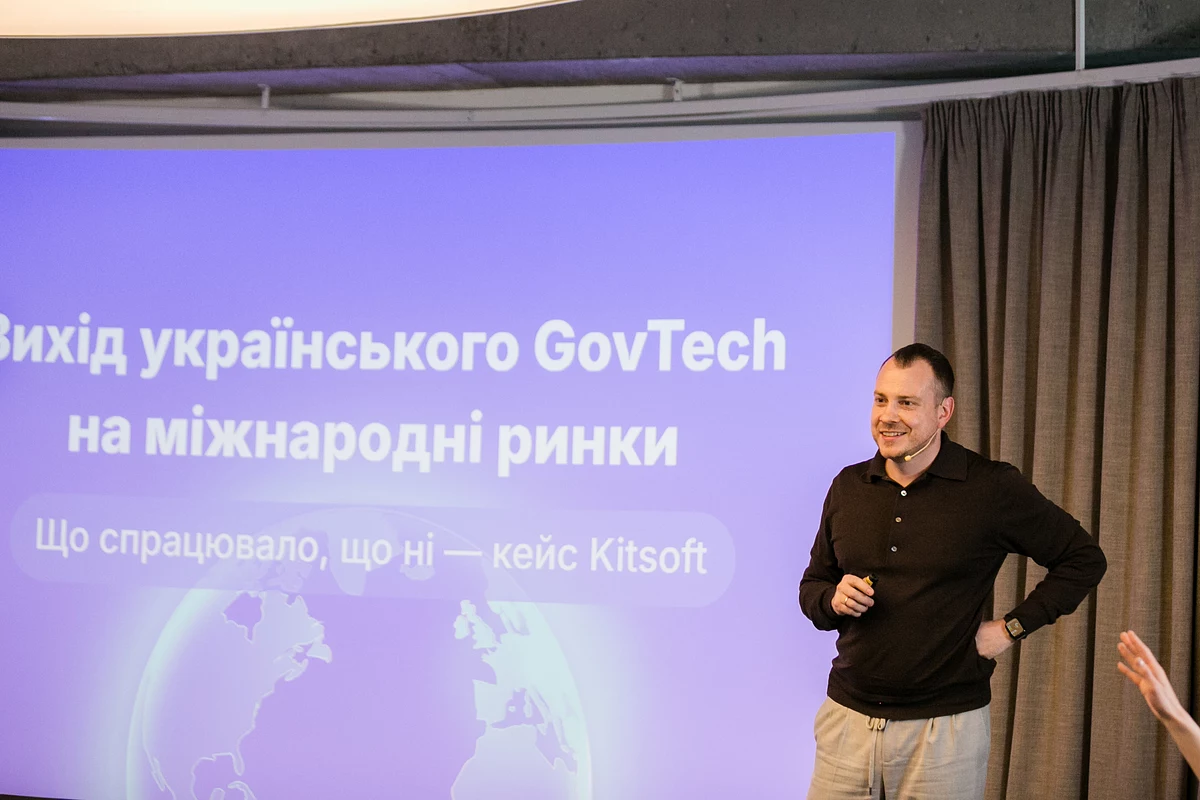
— For about a year, we explored how the international market works in general, found patterns, then built a structure of representatives, experimented with marketing mechanisms. Now our offices are open in Brussels and Berlin.
We also actively work with African countries and have created a separate French-speaking team to work with French-speaking countries.
Among the launched projects is a project on Liquio in Belgium, called BelDoc. It allows you to open a business online — something we are already used to in Ukraine, but which did not exist on the Belgian market. There, the regulation is a little more complicated, but we found ways to launch this solution.
We are currently doing several pilot projects with German cities.
In Africa, our biggest success is in Côte d’Ivoire, where we are working with a local state-owned corporation. They set a goal to adopt Liquio technologies and understand how our platform works and how to build services on it. So we are actively involved in deploying the platform, training the team, and creating the first package of services.
There are several more pilot projects at the international level with organizations such as ITU and the World Bank, as well as several African countries, including Mauritania, Senegal, and Nigeria, with which we are starting cooperation and conducting pilot projects.
In total, we currently have about 15 countries on our radar.
They are all at different levels of development, but they are looking in the same direction — digitalization of processes, simplification of life for citizens and businesses, increasing the efficiency of the state, strengthening the economy. Everywhere there are the same challenges and problems as in Ukraine once — dispersion of systems, fragmentation, vendor lock-in. None of this is unique to us: both more developed countries and less developed ones face the same problems.
— How difficult is it for your team to understand the realities of other countries? You have been on the market in Ukraine for 20 years, you know everyone and everything. How do you conduct any research before entering other countries? Especially in quite exotic ones, which we know little about.
— We have a market research methodology where we focus on understanding the main points. First of all, how their digital infrastructure works. After all, when you come, you don’t understand how they identify, how state registers are organized, how to connect to them.
Often politicians and countries claim that they have something already launched, but you start working with it and realize that it is a completely non-working story. But now you have another opportunity — to offer an alternative. That is, you have to be a bit of a hustler, look at the possibilities.
We are building our own methodology for researching such markets and, in essence, building a map of each country’s digital infrastructure. We are painting over the "dark zones", gradually revealing them to ourselves and accumulating this knowledge and experience.
"Obriy" as an illustration of the development of Ukrainian govtech
— I wanted to ask about your participation in one of the largest Ukrainian digital projects today, “Obriy”, which is also built on Liquio. To what extent is your company involved in this project?
— “Obriy” is a good example to illustrate the development of Ukrainian govtech. Kitsoft created a technological basis as an implementer of Liquio for the labor market ecosystem, and other teams will be able to create and develop new services based on this. That is, we helped form the architecture of the solution, deployed a productive and test environment at the facilities of the State Employment Center. We configured the infrastructure and transferred full control over it to the customer.
In addition, we trained teams that will continue to work with “Obriy”. These are 10 specialists who have completed a 120-hour course on working with Liquio. There are several other companies that also work with “Obriy” and have also been trained by us. Accordingly, this is just a test of a fundamentally different approach, when the state team receives not only a ready-made system, but also technology, its own expertise and can further develop this system independently.
— You said that the team working on “Obriy” underwent a 120-hour training course with you. How is the training going? Do you have a separate unit in your company that is engaged in training other teams?
— That’s right. In total, 12 teams are already working with Liquio today, including nine private companies. For this, we have a training system: a kind of combination of online courses, video lessons, and personal mentoring.
But this is not one, but a whole series of courses. For example, Liquio Basic, which introduces the general architecture and principle of operation. For low-code developers working on Liquio, there are two levels: low-code basic and low-code advanced. And for business analysts, there is a separate course, Liquio Business Analyst.
There is also training for DevOps specifically on deploying Liquio. That is, the training is structured according to the role of the specialist. A separate Kitsoft division is engaged in training, and a separate division is engaged in further support of partners.
Our training is generally as practical as possible, meaning participants work with specific scenarios, learn to create services independently, and receive personal certificates after the course.
One of the most resonant examples this year was our support for the GovStack Women in GovTech Challenge. This is an international competition where over 200 participants from 85 countries worked in international teams for six weeks, and they worked specifically on Liquio. It was a course on creating end-to-end government services.
In addition, internationally, we conduct three-four-day offline workshops, where different teams work together with our mentors at Liquio and create practical services. For example, in Montenegro we created two such services: property tax payment and business registration services. We also went to Mauritania, and there we also created online business registration services. Now, as I said, we are doing training in Côte d’Ivoire. So, this is part of our scaling model.
In addition, we have created the Liquio Community around our platform — it is international and includes specialists who work with our technology and partners.
AI at Liquio and cybersecurity: what’s up
— I also wanted to ask about the AI toolkit in Liquio. About a year ago, there was news on your website that you had launched a built-in AI toolkit. How has it developed over time?
— In general, we have created not just a set of separate AI tools, AI is part of the technology for creating services. At Liquio, we have a tool like Builder, which allows us to transform a technical task into the primary structure of a future service and generate forms based on the formalized technical task.
There is Copilot, which allows you to configure and change processes together with a low-code developer, it suggests various examples, provides templates. There is also Assistant, which you can ask questions about the documentation and a specific knowledge base on Liquio in real time.
We also participated in the “Diya AI” project, which is an AI assistant on the “Diya” portal. It is already in production, and recently received an upgrade in voice mode functionality.
We are also currently developing MCP integration. This includes automation of low-code creation processes, preparation and verification of technical documentation for projects, routine operations, and test case generation.
That is, AI has already ceased to be an assistant in a specific task; it provides end-to-end assistance in the entire process of creating public services.
Overall, we estimate that we have increased the speed of work by an average of 40% when using AI by our low-code developers. And we are not going to stop there.
After all, what once seemed like a breakthrough is now a basic level. Here you have to run just to keep up.
— We can’t help but ask about a topic that triggers many in the context of government electronic services — cybersecurity. Especially now, during a full-scale war, when threats have changed a lot. What are you doing to protect systems as much as possible?
— Our services and clients are under constant cyberattacks. Moreover, the services we develop are Customer Facing, so they become the first obvious front of attack for cybercriminals and hackers from the aggressor country. Whether we like it or not, we have to adapt to this.
We have integrated security into the development process. Even at this level, we use code checks, static and dynamic analyzers, scan the infrastructure, and monitor abnormal behavior. In general, at the architecture level, we apply the zero trust principle so that components have minimal privileges when communicating with each other, and systems are segmented.
Liquio even supports modes where multiple Liquio instances are launched that are not connected to each other, and different levels of protected data are stored in different segments. We have implemented this for several customers. This is done to physically separate the data and reduce risks even further, so as not to give access to the protected circuit to external users at all. And the less protected circuit does not accumulate information in order to reduce the risks of its compromise.
Last year, we received ISO 27001 certification, and our product Liquio received a certificate from the State Special Communications Service with a G2 guarantee level, which confirms the platform’s compliance with state requirements.
In addition, we have also created our own Security Operation Center (SOC) internally to constantly monitor threats and respond to cyber incidents. Well, in general, cybersecurity is an ongoing process.
Especially in the age of AI, when artificial intelligence can find vulnerabilities much faster, and, accordingly, the defending party must also use AI tools to quickly analyze the code and search for possible vulnerabilities.
Even systems like Ubuntu, which have been on the market for decades without much change, are finding childish vulnerabilities thanks to AI. We try to move a little faster than the rest of the market to respond to these challenges.
Labor market. Do govtech companies suffer from the same problems as classic IT?
— A few questions about the labor market. How relevant are the standard problems of IT outsourcing for govtech? For example, regarding the very high entry threshold for young specialists. Do you hire juniors yourself?
— Even before the AI boom, we started building a system for staff growth within the company. And I must say that many of our leads once came to Kitsoft in starting positions. To do this, we created a grading system and individual development plans.
They provide a clear path — a specialist undergoes training, receives a junior or middle level, these specialists have mentors, that is, we accompany them. Some of them have already become seniors, and some have even become leaders of the company.
Regarding attracting young specialists: when we started, we faced the fact that there were practically no specialists with the low-code expertise we needed on the market. Therefore, we decided to start training them within the company. We built the aforementioned system for developing low-code developers. Now we use a similar approach for other areas — in particular, for QA engineers. We also give our people the opportunity to move to other leadership positions in the process of growth, so they become team leaders, classic developers, or AI engineers, or business analysts.
So, prior experience for govtech is not a prerequisite, but it is very important that the organization you start with, and I think there are few of them, has a development system built in. Then you can enter govtech.
— And how much has your company been affected by the classic labor market problems that affect large Ukrainian outsourcing during the full-scale period: departure of specialists, relocation, mobilization and booking, etc.
— We were also quite affected by these issues. For example, some of our employees work from abroad — both on foreign projects and on Ukrainian ones. They left, but we keep them on staff. Many relocated, some we hired after the war began. For example, we now see that many Ukrainians abroad are kind of ambassadors for “Diya”, and we often hire people who have already adapted to local communities, have good communication skills in the local language, but at the same time are Ukrainians.
Our employees are also in the ranks of the Armed Forces, and we reserve their place and pay. Within the framework of current regulations, we reserve a share of employees, according to the company’s available quota.
We are understanding about mobilization issues and openly interact with state bodies. These are the realities we live in. You cannot wish for victory in the war and not support mobilization at the same time.
— What percentage of your bookings are booked now?
— 50% of the number of those liable for military service.
Are elections possible in "Diya" and how to overcome distrust in state digital products
— Your company is known for its great digital products, which are used by all of Ukraine. And what do you think about the adherents of a non-digital lifestyle, who are very active on social networks and say that “Diya”, conditionally, is a great evil, and its users at least risk their personal data. Behind such people there is also a large army of fans.
— It sounds quite controversial — supporters of a non-digital lifestyle who write on social networks. I think that real supporters of a non-digital world live somewhere on an island or enjoy life deep in nature. And I understand and respect their choice.
But people who specifically want to hype criticism of digital projects not only bring a lot of negativity, but also harm the state’s economy.
They discourage others from using digital services, which leads to people using paper-based mechanisms. As a result, this burdens government structures and leads to higher expenses.
It’s easy to build hype around criticism of something, and "conspiracy theories" about digital products exist in all countries, not just ours.
But I would not assess trust in the digital state by such public discussions of bloggers, but by how people actually use the services. And there is a fairly indicative dynamics here. For example, there was a study by KIIS, which showed that the share of Ukrainians who use electronic services increased from 55% to 59%.
“Diya” remains the most popular service. In 2025, it was used by 48% of those who applied for government services, compared to 42% a year earlier. 85% of users of these services assess their experience positively. And the share of those who do not use electronic government services, citing distrust in them, decreased from 26% to 15%.
It’s one thing if people don’t use it because they don’t have the internet or the ability or digital skills — and the state needs to work on that. And it’s another thing if it’s because of such "conspiracy theories." As we can see from the statistics, there aren’t that many such people in Ukraine.
— I would also like to touch on the aspect of the elections in “Diya”. I fully realize that you are not involved in making this decision, and it is political. But how difficult will it be to implement it from a technological point of view?
— I wouldn’t say it will be easy, but there are examples. For example, Estonia has been using online voting since 2005 — in various types of elections. At the same time, online voting exists in parallel with traditional voting. At the same time, for Ukraine, it is much more difficult due to a number of factors.
There is also the issue of trust, which we have already mentioned. On the other hand, there are millions of Ukrainians who are currently abroad. And millions more have changed their place of residence within the country. So any election, whether with the use of digital tools or without them, or perhaps with partial use, is a big challenge.
After all, it is necessary not only to ensure the opportunity for people to vote, regardless of where they are, but also to ensure trust in this tool in the face of security risks and constant cyberattacks and interference from Russia.
If such a project were to be implemented, it would be quite complex and would have to have very high requirements for safety and reliability. But it seems to me that it is technically possible.
— If you could rewind your career to the beginning, when you were still engaged in IT outsourcing, would you go through this path again? Without nationwide complaints about your products, public pressure, loud statements, and universal risks?
— I asked myself this question at a certain point in my life. When we were creating Liquio, and something wasn’t working out, and someone didn’t believe in it, I had to motivate both the team and myself, and convince customers that we were on the right track. It wasn’t easy.
But when it started to bear fruit, I realized that there are a huge number of people who trust these products and who use these tools, so we are doing the right thing. This is more inspiring than some classic business case. Because you begin to understand that what you do with your hands and head leads to fundamental transformations in the state.
Now I am very satisfied with this path. We see a strategy for the future. We understand where all this will develop. We ourselves are creating the agenda of the future already at the international level. Therefore, I definitely do not regret that I went this way.
“We talk about hackers, cybersecurity, Russian groups, but our state IT systems depend on the mood of one person.” Why vendor lock-in not only kills competition in govtech, but is also a serious threat