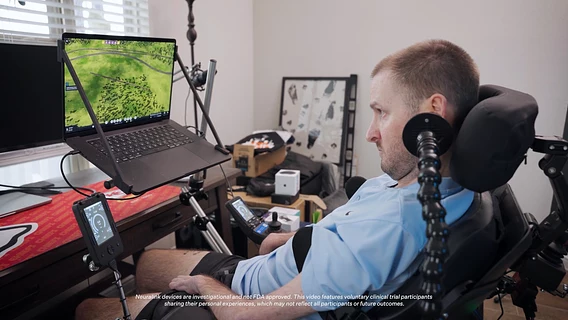
Neuralink receives approval to conduct key clinical trials of brain implant in the US
Neuralink has received approval from the U.S. Food and Drug Administration to begin the LINK Pivotal Study, the first pivotal clinical trial of an implantable brain-computer interface (BCI) in the United States, which is required for the chip to reach the market.
Neuralink has received approval from the U.S. Food and Drug Administration to begin the LINK Pivotal Study, the first pivotal clinical trial of an implantable brain-computer interface (BCI) in the United States, which is required for the chip to reach the market.
Neuralink explains that the study will aim to assess the safety and effectiveness of the system for patients with severe paralysis caused by amyotrophic lateral sclerosis (ALS). During the trial, scientists will assess the ability of participants to control digital devices with the power of their thoughts. The main focus will be on functional outcomes that help people regain independence in daily life, as well as on the long-term reliability of the system in different clinical centers.
Neuralink noted that patient enrollment for the LINK Pivotal Study has already begun. Successful completion of this phase is a prerequisite for further commercialization of the neuroimplant.
The new trial builds on previous technical feasibility tests the company has conducted in the U.S., Canada, and the U.K. According to Neuralink, the chips have already been implanted in more than 30 participants, who have collectively logged thousands of hours of real-world use of the interface — including for academics, creativity, video games, and socializing.
Ukrainians were preparing to play GTA VI even without light - against the background of the game's release in Rozetka, demand for PS5 and charging stations jumped