Єлизавета ГолобородькоSpaceTech
3 April 2025, 13:47
2025-04-03
Space solar startup Aetherflux raises $50 million to launch first space demonstration in 2026, turning science fiction concept into reality
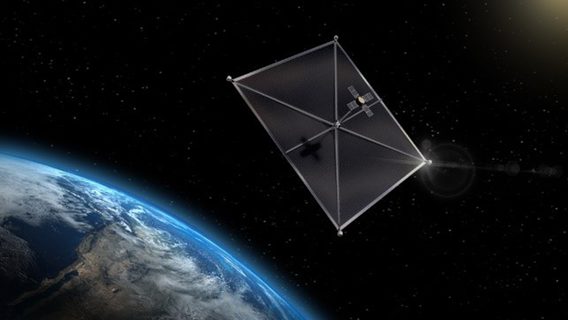
Space solar startup Aetherflux, founded by Baiju Bhatt, the billionaire co-founder of Robinhood, has raised $50 million in a Series A round to launch its first demonstration in low Earth orbit in 2026.
Space solar startup Aetherflux, founded by Baiju Bhatt, the billionaire co-founder of Robinhood, has raised $50 million in a Series A round to launch its first demonstration in low Earth orbit in 2026.
The San Carlos, California-based startup, which came out of secrecy last October, aims to eventually launch a constellation of low-orbit satellites that will be able to collect and transmit solar energy directly to ground stations on Earth, TechCrunch writes.
This idea was first proposed in Isaac Asimov's 1941 short story "Reason." Baiju Bhatt is focused on turning the science fiction concept into reality. “Aetherflux will initially put a satellite into orbit to test the technology, to demonstrate that we have made this transformative progress — from people not having energy from space to the first time that energy from space is available to people,” Bhatt, the startup’s founder and CEO, told TechCrunch.
That’s the goal of next year’s launch, which will be backed by new capital raised by Aetherflux. The round brings Aetherflux’s total funding to $60 million after Bhatt put $10 million of his own money into the company. The Series A round was led by Index Ventures and Interlagos, with participation from Bill Gates’ Breakthrough Energy Ventures, Andreessen Horowitz, and NEA, along with some other interesting names like Jared Leto, who closed the round.
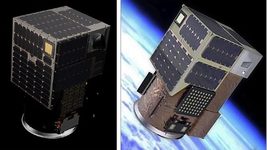
Aetherflux is using Apex Space’s Aries satellite bus. The satellite bus is the main structure and system of a satellite that provides basic functions such as power, propulsion and communications. Most buses generate power using solar panels, and Bhatt says the power — up to a kilowatt of energy — will be beamed back to Earth using lasers.
On the receiving end will be Aetherflux ground stations, consisting of photovoltaic arrays that convert sunlight into energy that is stored in batteries for later use. A team of engineers and researchers from NASA, SpaceX, Lockheed Martin, Anduril, and the U.S. Navy is also working to build the first Aetherflux ground station. The startup hasn’t yet decided on a location for the station, but is evaluating military installations where there is more controlled airspace. In the future, Bhatt said, the goal is to create small, portable ground stations, 5 to 10 meters in diameter, to provide electricity to even the most remote locations.
Few have succeeded in transmitting solar energy from space to Earth. One of the only successful missions came in 2023, when researchers at the California Institute of Technology demonstrated wireless power transfer from low Earth orbit using microwave radiation. This proved the concept, but fell short of Aetherflux’s requirements for a scalable commercial system.
The increase in Aetherflux funding came after it received a grant from the U.S. Department of Defense's Operational Energy Capabilities Improvement Fund to develop space-based solar power for the U.S. military.
Очі, якими ми дивимося у Всесвіт. Навіщо людству такі телескопи, як «Джеймс Вебб» і «Габбл»
Космічний телескоп «Джеймс Вебб» показав свої перші зображення, до яких цей проєкт ішов із початку 1990-х. До цього основним нашим «оком» у Всесвіт був «Габбл».
NASA запустило космічний апарат Capstone на орбіту Місяця. Він дозволить розрахувати орбіту для майбутньої американської навколомісячної станції Gateway.
Якщо Україна повернеться в зону стабільності, нові реалії дозволять їй отримати надсучасні космічні технології
Ще до початку війни космічна спільнота України почала об’єднуватися у регіональні кластери*, тобто об'єднання виробників, які тісно співпрацюють між собою, діляться технологічними здобутками і спільно виконують регіональні замовлення, заробляючи кошти на подальший розвиток.