Стас ЮрасовThat's Life
10 December 2024, 14:43
2024-12-10
Is Kyivstar preparing the network for blackouts? Here's what we found out
Spoiler ahead. This is how it is prepared — very intensively and expensively. However, will it solve the problem of communication during blackouts completely and what are the obstacles on the way to the desired energy independence of the network?
Spoiler ahead. This is how it is prepared — very intensively and expensively. However, will it solve the problem of communication during blackouts completely and what are the obstacles on the way to the desired energy independence of the network?
dev.ua found out how Kyivstar solves the problem of logistics, increased requirements from the state, why it is not possible to put a generator on the roof of the building and update all the equipment. And we also learned what was still managed to be done and what subscribers can count on this winter.
First, the numbers are important
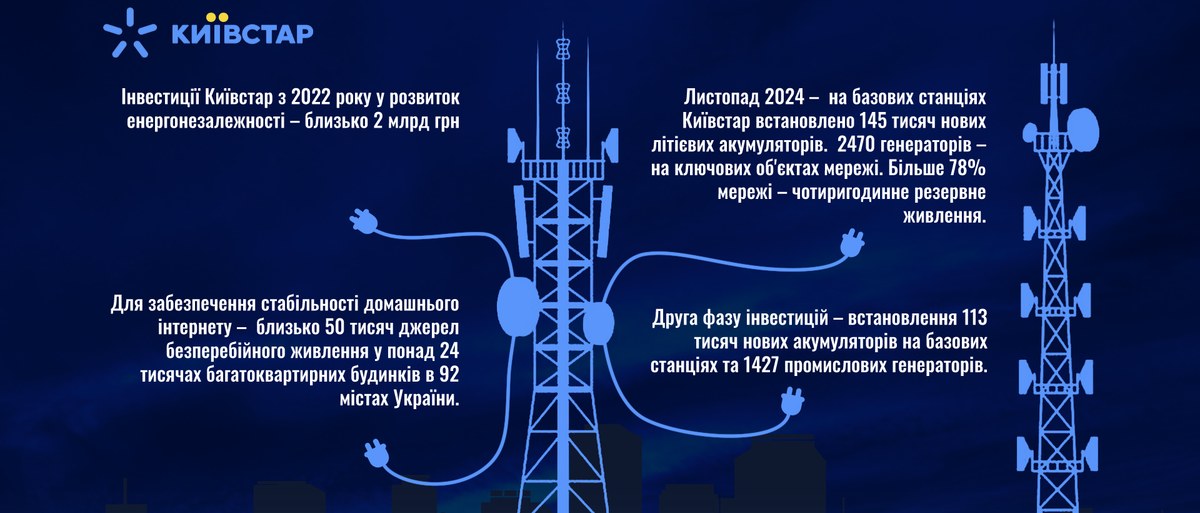
Since 2022, Kyivstar has invested about UAH 2 billion in the development of energy independence, in particular to support uninterrupted operation of the network in conditions of widespread power outages and blackouts. Since the beginning of the war, the company has taken a number of measures to strengthen energy stability by modernizing equipment and introducing new sources of backup power.
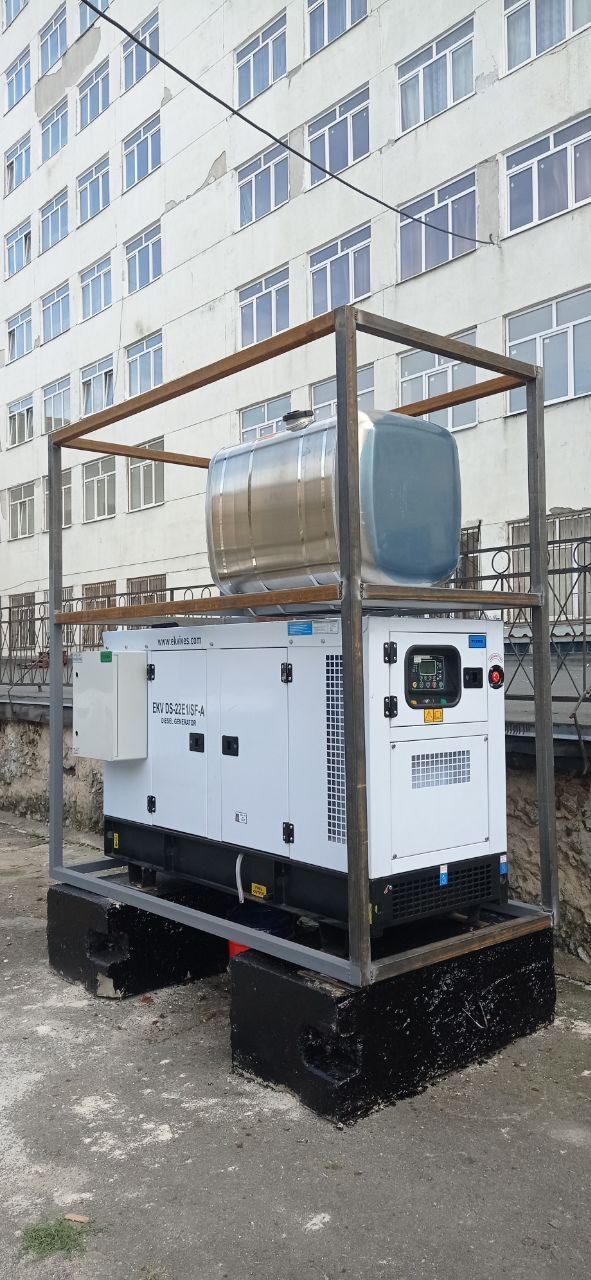
As of November 2024, 127,000 new lithium batteries have already been installed at Kyivstar base stations, and 2,390 generators support the operation of key network facilities. Already more than 75% of the network has four-hour backup power, which is an important step to ensure stable operation of the network even during long blackouts.
In addition, to ensure the stability of the home Internet in conditions of power outages, the company installed about 50,000 sources of uninterrupted power supply in more than 24,000 apartment buildings in 92 cities of Ukraine.
Further steps
Currently, the company is implementing the second phase of investments, which involves the installation of another 113,000 new batteries at base stations and 1,427 industrial generators. These measures will allow 25% of the network to operate from generators and achieve six hours of backup power for all key network facilities. Particular attention is paid to critically important facilities identified by the National Security Council, which are provided with the ability to maintain communication for at least three days in the event of long-term blackouts.
«We also call for the cooperation of enterprises that have industrial generators at their disposal. This will make it possible to significantly strengthen energy security and ensure the stability of communication throughout the country,» says Volodymyr Lutchenko of Kyivstar STO.
When talking about the purchase of additional power equipment, you should always remember logistical issues, because unpleasant surprises may arise, which, unfortunately, will affect the estimated delivery times. For example, the last batch of industrial generators ordered by Kyivstar is delayed on the way due to security problems in the Red Sea. And such cases are not isolated. These are risks that cannot always be predicted and calculated, even with careful planning.
Does the state set realistic goals
Taking into account the high requirements for energy efficiency of the network, according to the technical director, Kyivstar tries to provide long-term backup power. «What is required of us — 10 hours on batteries — is an extremely difficult task,» Lutchenko notes.
We will remind, in July 2024, the issue of energy independence of telecom networks was raised at the highest level. Volodymyr Zelensky instructed Mykhailo Fedorov to present an analysis of the situation at the meeting of the Stavka in order to understand what «is being done to guarantee communication in conditions of power outages and which operators do not follow the relevant decisions.» By «relevant decisions» is meant the decision of the NSDC dated November 26, 2022 «On the provision of electronic communication services under martial law», which required providers of such services to ensure their provision «in compliance with established quality indicators» for at least three days for a specified list objects.
Already on July 15, 2024, that is, less than two weeks after the president’s statement, the National Center for Operational and Technical Management of Telecommunications Networks determined by its order that mobile operators must ensure the availability of mobile communication during power outages for at least 10 hours. To which the mobile operators Vodafone Ukraine, Kyivstar and lifecell made a joint statement on August 1, noting that it is extremely difficult to comply with the order of the NSC. In particular, this is explained by the fact that in order for the operators to fulfill the requirements of the regulator from the state, it is necessary to ensure the supply of electricity for the time that the operators' equipment needs to fully charge the reserve batteries.
The fact is that even new lithium-ferric-phosphate batteries need more time to charge than the two-hour pause between blackouts, which are often observed during the most critical outages.
The Ministry of Digital Transformation, for its part, confirms active work with mobile operators to ensure the stability of telecommunication networks and admits that there are some requirements that are difficult to fulfill on time for objective reasons. The Ministry states that the mentioned July order of the National Security Agency is already the third iteration of the requirements that operators must fulfill to ensure the stability of communication. At the same time, the operators fulfilled the previous two orders by 100% and confirm that the mobile operators are doing everything possible to fulfill the requirements of the NCU.
«We receive information about the state of preparation practically online, reporting has been introduced, working meetings are held several times a week on operational issues that arise in the process of preparing networks for blackouts. An assessment of problematic issues is being conducted, various options for solving them are being considered, and tasks for state bodies are being formed,» the Ministry of Statistics explains.
Replacement of power sources
Kyivstar Technical Director Volodymyr Lutchenko emphasizes that the company started preparing for large-scale blackouts as early as the summer of 2022, when the first power outages became a reality. «We started work back in July 2022, and it was then that a decision was made that allowed us to be much better prepared now for possible interruptions in the supply of energy. If we didn’t start preparing then, the situation would be much worse now,» he emphasizes.
But two years ago, the most available batteries were old generation batteries — the so-called AGM batteries, which have less durability and service life compared to modern lithium-ferric-phosphate analogues.
Two years have passed. AGM batteries have exhausted their resource. And now the company is actively replacing old batteries with new, more efficient lithium batteries. «We have already replaced 127,000 AGM batteries with new lithium batteries. This is critically important, the new batteries provide much greater efficiency and duration of operation,» adds Lutchenko.
Mobile communication in densely populated areas: the problem of congestion
A particularly important issue for Kyivstar is the stability of the network in densely populated areas of large cities. Lutchenko emphasizes that the increase in load in blackout conditions significantly affects the network.
«When the lights go out in places like Obolon or Poznyaki, a large number of people who are used to wired Internet switch to the mobile network. This leads to overloading, and therefore to a decrease in the quality of communication,» he explains.
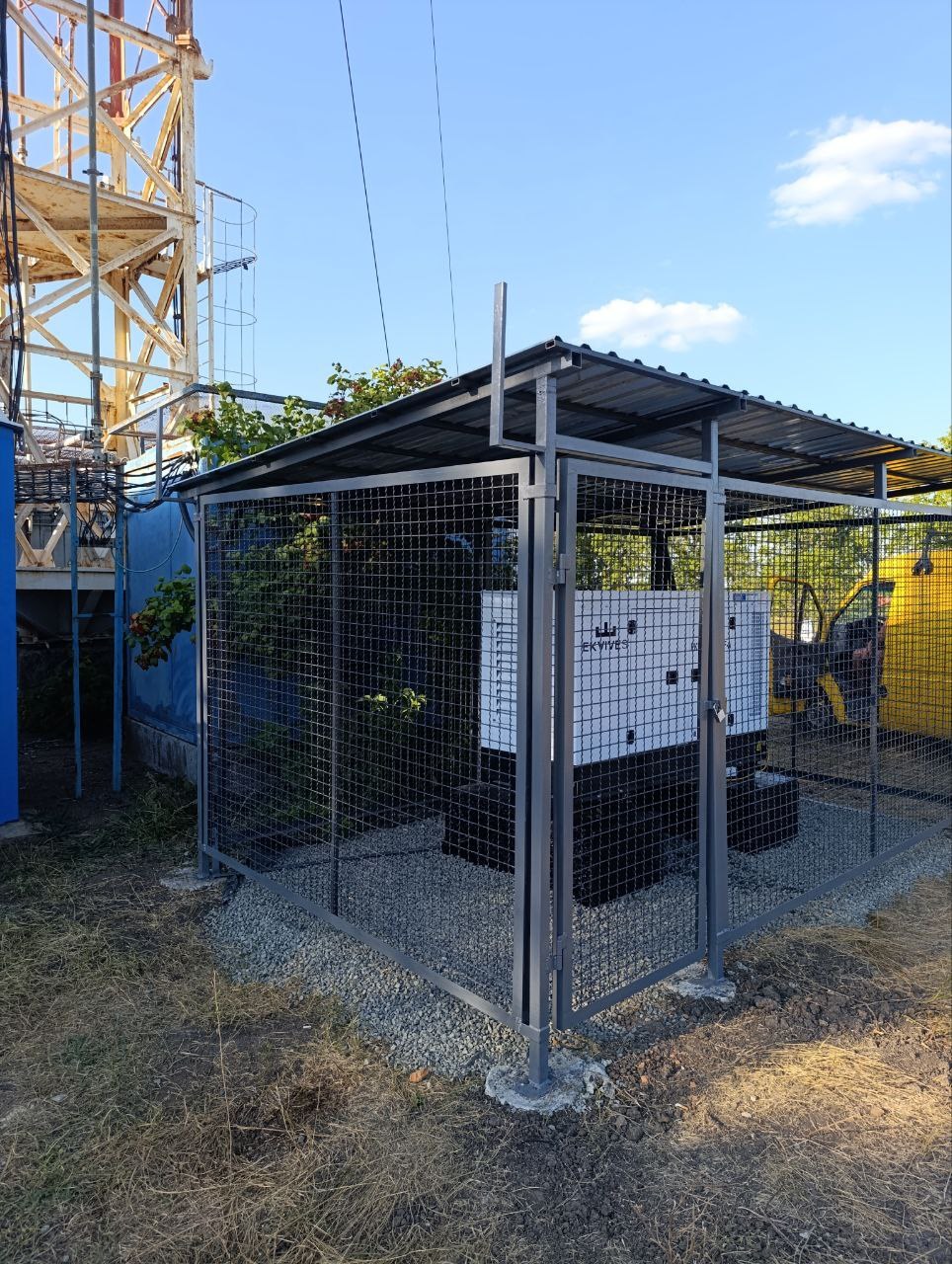
Thanks to a large number of technical updates and investments, Kyivstar is actively working on improving the stability of its networks. However, even the most advanced technologies cannot completely solve the problem of congestion. Urban development creates another obstacle: most base stations are so-called roof tops. That is, they are installed on the roofs of buildings, on a very limited area. And if it is still possible to place the batteries nearby, then it is impossible to place the generator on the roof.
Important: in order for telecom networks to experience blackouts in high-rise areas more predictably, Internet and mobile phone subscribers during outages should also remember some simple rules that can improve the life of the entire local community as a whole.
For example, you can refrain from long (or unimportant) calls, and instead use messengers or SMS. Therefore, it is important that each subscriber is aware of the consumption of cellular services during blackouts and does not overload the network.
Switch to GPON
Problems with electricity in the country affected the further development of data transmission technologies on the Kyivstar broadband network. Thus, in 2024, it is planned to expand this initiative and further deploy the GPON broadband network, which will provide a faster connection to the Internet.
Why is this important?
The fact is that GPON is built on the principle of passive optics, when there is no intermediate equipment that consumes electricity between the Internet node and the subscriber. It is these intermediate switches, which are located mainly in basements and attics of high-rise buildings, that are the most vulnerable points. There is no electricity supply in the areas — the Internet is quickly disappearing. GPON network topology avoids this problem. After all, it removes these vulnerable points.
«We have already launched the GPON project. As for the connection, it will be a mix of new subscribers and those already connected to the old (FTTB — Ed.) network. We plan to scale it over the next few years, when PON will become available in most of the territory,» said Volodymyr Lutchenko, technical director of Kyivstar, in a conversation with dev.ua.
Testing of new solutions to ensure stable communication
Despite the challenges, Kyivstar continues to test alternative energy sources for base stations, including solar panels and wind generators.
«Solar panels can theoretically provide part of the power consumption of base stations, but to provide constant power, they need to be combined with batteries and generators. We also test wind turbines at several sites, but this is not a panacea, because wind turbines have many technical limitations,» explains the technical director.
One of the main problems is the limited space for installing panels, especially in urban environments. «In cities, it is very difficult to place enough solar panels to fully support a base station. Not every roof can withstand such a large amount of equipment, so solving this issue completely with the help of the sun is not an easy task,» says Lutchenko.
Another thing is outside the city. Technological objects of the network, which are located outside dense buildings, in open spaces, have the potential to install small solar stations next to them, which would be able to power the equipment.
Conclusions
Blackouts during the war are a kind of strength test of Ukrainian telecoms. They immediately exposed the weaknesses of the infrastructure and encouraged companies to upgrade it. Ultimately, this is good news for consumers. After all, they receive a more reliable and modern service that will remain with them even after the war.