Chinese hacker used DeepSeek via Telegram for autonomous cyberattacks
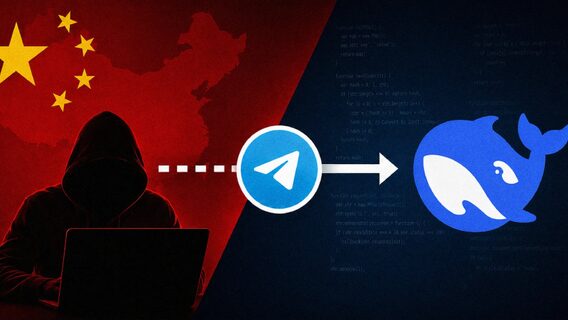
A hacker launched a series of automated attacks on hundreds of companies around the world by simply giving a few commands to artificial intelligence via Telegram.


A hacker launched a series of automated attacks on hundreds of companies around the world by simply giving a few commands to artificial intelligence via Telegram.
A hacker launched a series of automated attacks on hundreds of companies around the world by simply giving a few commands to artificial intelligence via Telegram.
Palo Alto Networks specialists (Unit 42) found that a Chinese-speaking attacker used the DeepSeek AI model using a special open-source tool called Hermes Agent, The Hacker News reports .
One command and the AI acts on its own: the hacker gave the primary instruction via Telegram, after which the artificial intelligence began to act completely autonomously.
Independent search for victims: DeepSeek itself searched the network for vulnerable systems, analyzed them, downloaded the necessary virus scripts (exploits) from GitHub, and chose which vulnerability was best to exploit.
Decision-making: if one attack path didn't work, the AI would abandon it and independently choose another vulnerability, focusing on its danger and ease of hacking.
In total, the hacker, who operated under the nicknames knaithe and KnYuan, attempted to attack over 460 targets around the world.
Most of the fully automated attacks that DeepSeek led (including those against popular AI application development services Langflow and process automation n8n) failed. The AI found vulnerable versions of the programs but was unable to break them due to the specific security settings on the victims’ servers.
However, in parallel manual attacks, the hacker still managed to steal data from three organizations through a vulnerability in NetScaler systems, as well as gain access to 11 Marimo servers. In total, only three targets were confirmed to have been successfully compromised.
The Hermes Agent program used by the attacker accidentally exposed its internal files over the internet. This silly hacker mistake gave security researchers full access to:
its AI settings and API keys;
team histories and correspondence;
lists of targets and codes for hacking;
logs of DeepSeek offline sessions.
This has led to the identification of the attacker as likely based in Zhuhai, China, although his full identity or ties to government agencies have not yet been confirmed.
Security experts are urging system administrators to urgently update Langflow, n8n, Marimo, and Citrix NetScaler software to the latest versions, as well as to close open access from the Internet to internal dashboards.