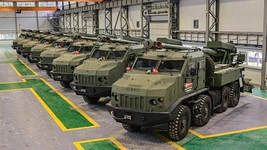
The Lava Regiment's NRC traveled over 90% of the route under AI control. This is the first such experiment in combat conditions
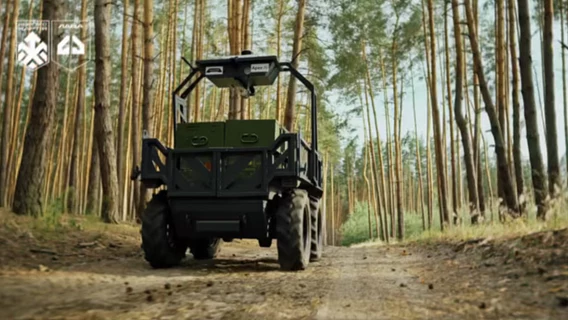
The Lava Unmanned Systems Regiment of the 2nd Corps of the Charter National Guard tested a ground robotic complex that independently covered more than 90% of the route thanks to artificial intelligence. The experiment was conducted during a logistics mission at real positions.
The Lava Unmanned Systems Regiment of the 2nd Corps of the Charter National Guard tested a ground robotic complex that independently covered more than 90% of the route thanks to artificial intelligence. The experiment was conducted during a logistics mission at real positions.
According to the commander of the NRK battalion, Andriy Kopach, known by the call sign "Mathematician", he is not aware of other cases of using a similar system in combat conditions. Kopach spoke about the results of the experiment in an interview with the Donbass Realities project of Radio Liberty. According to him, the team expected the robot to travel about half of the route on its own. In fact, it covered more than 90% of the way on autopilot.
The mission was not the easiest, but not the most difficult either: the route passed through different types of terrain and had obstacles. At some point, the operator took control — in front of the robot was an area with very dense vegetation. The military decided not to risk the equipment.
How the NRK navigated the terrain
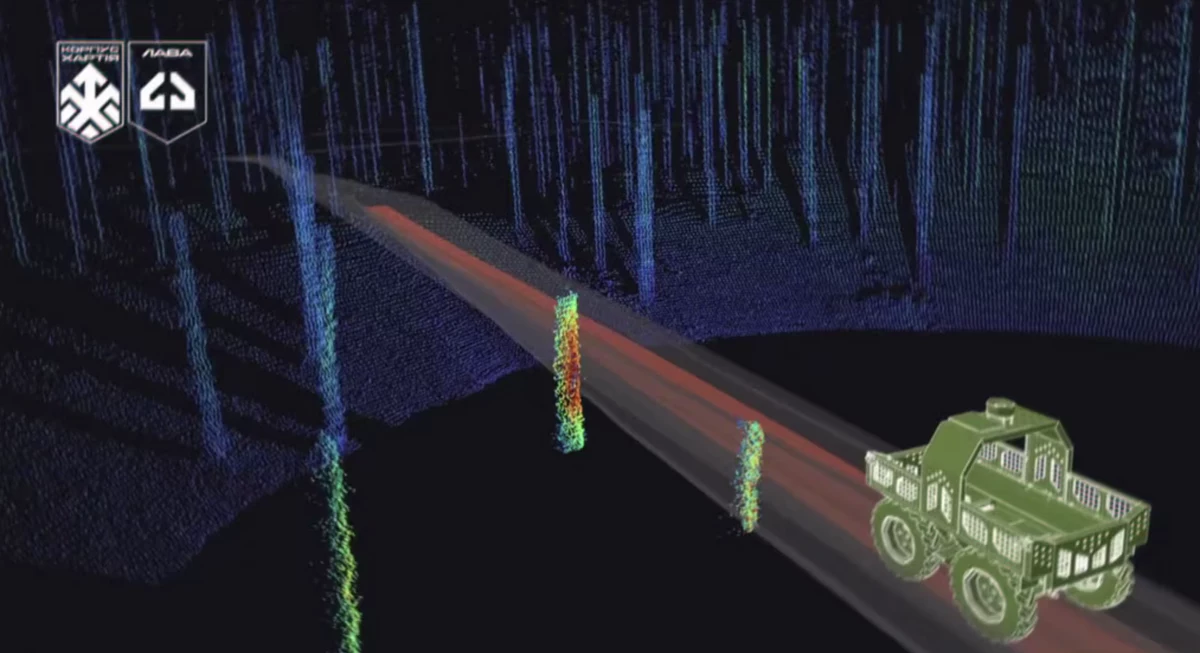
For the experiment, the military created a 3D map of the route — a kind of digital twin of the terrain. In particular, they used lidar for scanning: it sends laser pulses, captures surrounding objects and helps build a three-dimensional model.
Based on this information, the artificial intelligence was supposed to navigate the route, determine how to move, and react to obstacles. This allowed the NRC to travel without constant operator control.
The purpose of the test is to prepare ground robotic complexes for operation in conditions of unstable or absent communication. If the robot can independently cover part of the route, the operator does not need to constantly monitor its every movement. He can focus on external threats: FPV drones, mining, possible ambushes and enemy actions.
At the same time, Kopacz emphasizes that the technology is still far from being fully autonomous. According to the military, AI can currently independently cover approximately 20–30% of the routes used by their NRCs. This indicator needs to be increased, and for this it is necessary to collect much more data.
Among the complex tasks are the recognition of vegetation, armored vehicle tracks, pits, mines, and engineering obstacles. The AI needs not only to see the obstacle, but also to understand whether a particular platform can overcome it.
In the future, one operator will be able to manage several NRCs
Lava is working on a way for one or more operators to control a group of robotic complexes and intervene in the control only when necessary. This applies not only to logistical, but also to combat missions.
To do this, according to Kopacz, it is important to develop autonomy and take into account the characteristics of different platforms: wheeled, tracked, six-wheeled, with different speeds and suspension. This is especially true for fast robots, which are difficult to control remotely at speeds of 30–70 km/h.
Two companies participated in the test: the German Apex.AI, with which this mission was implemented, and the Ukrainian-Estonian Farsight Vision. Lava does not plan to limit itself to one technological solution. In the near future, the unit is preparing another similar mission together with a Ukrainian company.
Kopacz also explained that the current experiment should not be taken as proof of the readiness of the NRC to work completely without a human. For the evacuation of the wounded, for example, he believes it is important to use autonomous capabilities, but leave the operator in the control loop. The commander does not currently consider fully automated evacuation a priority.
According to him, on active front lines, one ground robotic complex performs on average only 3–4 missions, on less active ones — 12–15. Therefore, for the military, not only autonomy is important, but also speed, reliability, and the ability of the equipment to survive on the route.
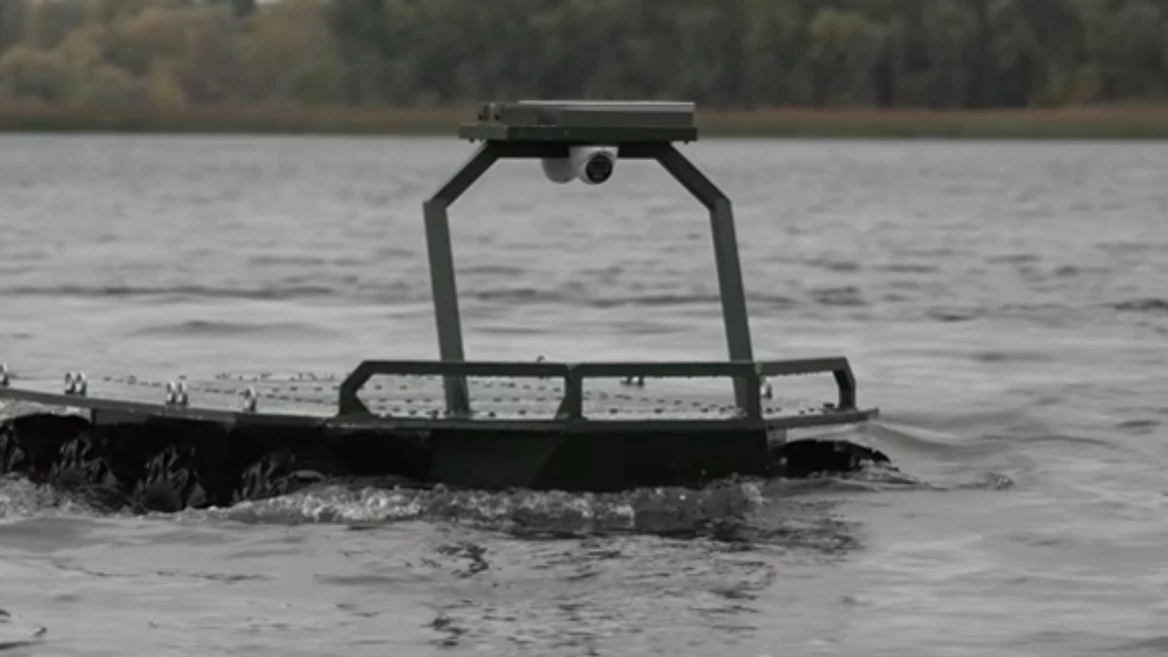
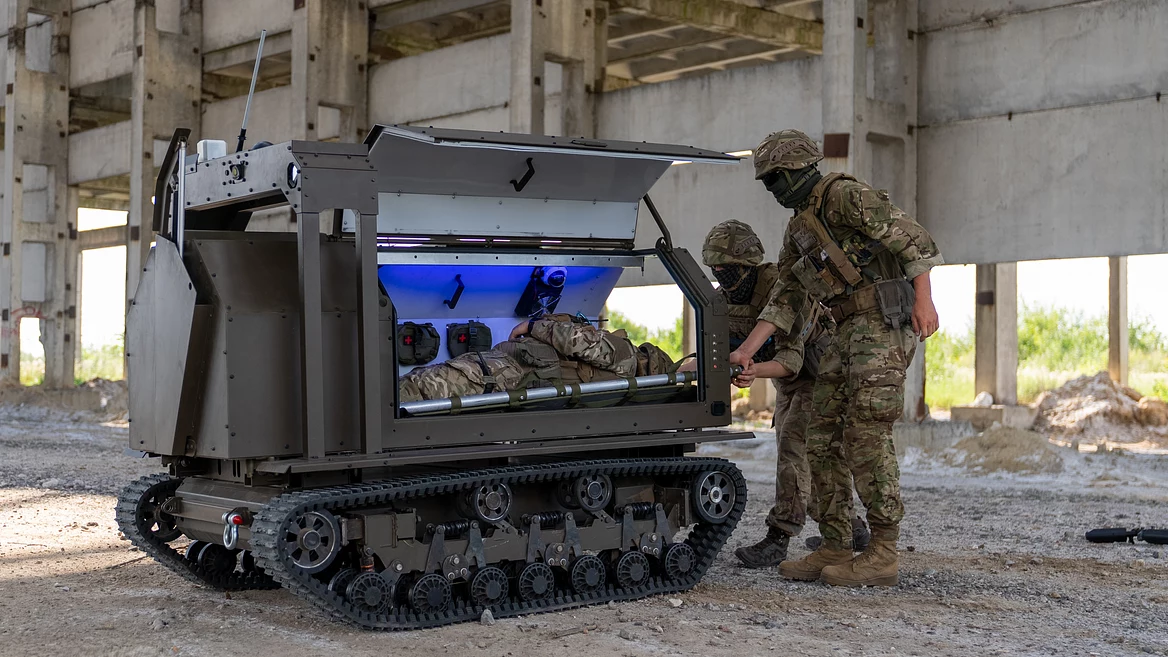
The Triton amphibious assault vehicle has been adapted for the evacuation of the wounded. It can now be fitted with stretchers with shock absorbers and protection against drone drops.
«Чи є у мене талант, якщо комп’ютер може імітувати мене?». Штучний інтелект пише книги авторам Amazon Kindle. The Verge поспілкувався з авторами та виявив багато цікавого
Письменники-романісти використовують штучний інтелект для створення своїх творів. Видання про технології The Verge поспілкувалося з письменницею Дженніфер Лепп, яка випускає нову книгу кожні дев’ять тижнів, й дізналося про те, як працює штучний інтелект для написання романів. Наводимо адаптований переклад статті.
"Only a lazy IT company hasn't started doing something in Defense or Military Tech." The Ministry of Digital Affairs explained how the war is changing the Ukrainian market