Промо на dev.uaAI Eng
27 November 2025, 12:57
2025-11-27
AUK Software Engineering Masters – Those Who Will Conquer AI
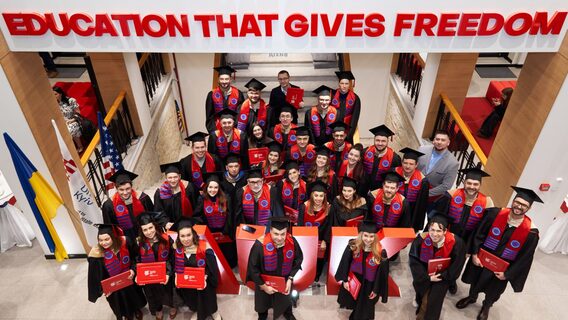
We live in the epicenter of a technological revolution, where Software Engineering sets the pace of change and determines what our tomorrow will be. At American University Kyiv, this field is studied comprehensively and holistically, in a «3D dimension», where technologies are inseparable from processes, and processes naturally transition into the business logic of real products.
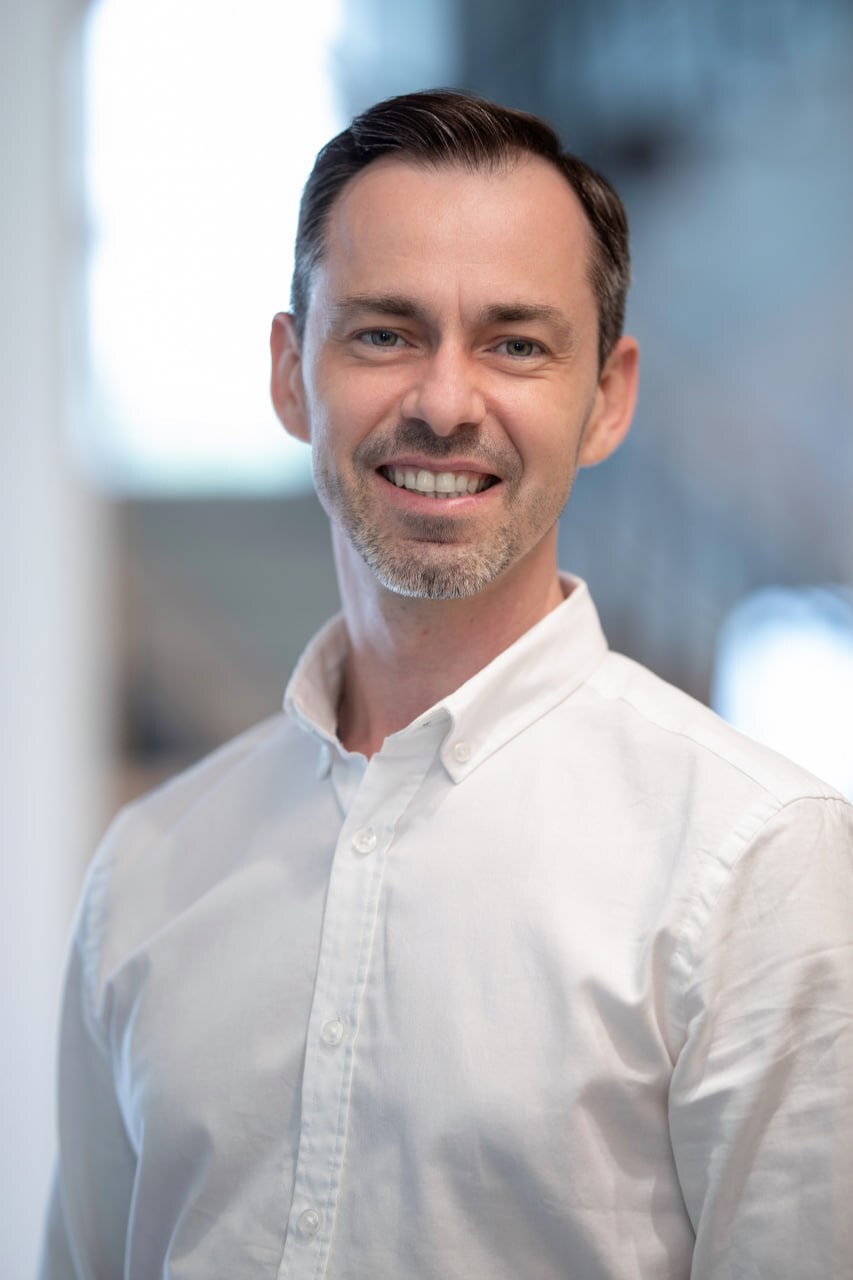
An environment is being formed here in which the high academic standards of AUK’s strategic partner, Arizona State University, are combined with the practical experience of engineers, work on real research, and access to modern AI solutions. It is this synergy that Serhiy Tytenko, Deputy Dean of EPAM School of Digital Technologies, American University Kyiv, talks about.
We live in the epicenter of a technological revolution, where Software Engineering sets the pace of change and determines what our tomorrow will be. At American University Kyiv, this field is studied comprehensively and holistically, in a «3D dimension», where technologies are inseparable from processes, and processes naturally transition into the business logic of real products.
An environment is being formed here in which the high academic standards of AUK’s strategic partner, Arizona State University, are combined with the practical experience of engineers, work on real research, and access to modern AI solutions. It is this synergy that Serhiy Tytenko, Deputy Dean of EPAM School of Digital Technologies, American University Kyiv, talks about.
— What makes the Software Engineering master’s program at AUK unique?
Our approach differs from typical theory-oriented Computer Science programs — we train engineers who can design, build, and scale production-level software systems. The master’s program focuses on practice, standards, and modern engineering methodologies that determine the quality of development in the global industry. We integrate the University of Arizona’s approach, which is based on the Software Engineering Body of Knowledge (SWEBOK Guide, which is an international ISO/IEC standard).
We have a strong block on systems and software architecture, a topic we cover twice: in the core course and in the second-year in-depth elective. It’s about the expertise that leads an engineer to the roles of Solution Architect or Technical Leader.
Additionally, the Software Engineering program includes a course in technological entrepreneurship, so that future engineers understand the business context and can create their own products. This is an important difference from classic technical master’s degrees.
The first and strongest signal we get from master’s students is their genuine surprise at the difference between their previous university experience and what they get at AUK. Everyone, without exception, speaks of a different level of quality: from the structure of the courses to the depth of teaching and the constant involvement of the teachers.
— AUK has a strategic partnership with Arizona State University. How deeply is it integrated into the program?
ASU is among the top 10 universities in the US for innovation, and our masters students are studying there for the second year, earning a second degree — this time from Arizona State University. This is not an exchange or a «semester abroad», but a full-fledged educational experience. Students work with world-class teachers and gain access to the academic disciplines of Software Engineering. This is a completely different scale of requirements and responsibilities, including academic integrity.
ASU embraces a culture in which academic integrity is not a formality, but the foundation of learning. In the US, it is an inviolable part of educational standards. And AUK, as an ASU partner, works according to the same principles. In a transitional environment where cheating is considered petty fraud, these standards become a counterculture — in the best sense of the word. Students feel this difference very clearly: responsibility, independence, high demands, and at the same time — enormous respect for their intellectual work.
Deputy Dean EPAM School of Digital Technologies American University Kyiv Serhiy Tytenko
— And speaking of practice? How close is the program to real engineering?
I would say this: we don’t bridge academia and industry — we live at the intersection of these worlds.
All courses are taught by practitioners: architects, delivery managers, VP-level specialists, QA directors, engineers with international experience. Each teacher enters the classroom as a professional who brings with him a piece of real engineering. For example, QA processes are taught by EPAM directors; architecture by practicing architects and me personally; technological entrepreneurship by Sam Cook, an American expert with extensive business and military experience. And all this is taught purely in English, because a modern engineer must think globally.
We build the program so that our graduate can immediately work in complex roles in any company, local or global.
We are also currently planning to develop an AI & Software Architecture course together with Dmytro Ovcharenko, AI CTO of the Ministry of Digital Transformation of Ukraine. The upcoming course will be based on modern AI approaches that are already transforming engineering and architectural design.
And our students, or rather female students for the time being, have access to real internships in the US as part of the Global Internship Program. For example, our master’s student Ksenia Piskun has already completed internships in the US twice, received a diploma from ASU, and now teaches here. This, you must agree, is a very strong sign of how our system works.
One of our biggest advantages is the opportunity for master’s students to join research projects. Master’s students can work at the AI Research Center on real R&D projects. For example, our student Vladyslav Sanyuk. He has advanced in his DevOps career and is working with me on R&D tasks in parallel.
Or another success — KnowledgeMaps AI. This is a system that we created together with masters Serhiy Artymovich and Vladyslav Sanyuk, as well as a team of bachelors, within the AI Research Center AUK. Our product reached the finals of the Cintana Alliance AI Challenge 2025, entering the 15 finalists among 82 projects. And this is not laboratory work — it is a real tool that is already being implemented in universities in different countries.
In addition, we attract the coolest guests from the world of tech for our students. For example, Stanford professor John Ousterhout, author of the legendary The Philosophy of Software Design, held a session for our students. Or Viktor Tursky, Ex-Senior Software Engineer at Google, who discussed architectural kata and real-life engineering challenges with students.
These are the meetings that shape thinking no less than courses.
— How do you see the future of the profession? And who exactly is AUK training?
We live in a time of radical change. AI is transforming engineering from the inside out. In a few years, a significant portion of routine tasks will be performed by agents—and that’s inevitable. But the role of the engineer won’t disappear. It will change.
The greatest demand will be for T-shaped engineers—those who have depth in a specific industry but also keep an eye on the business, architecture, processes, risks, and outcomes. People who can manage AI agents, think systems, formulate high-level requirements, and make engineering decisions that shape the future of the product.
These are the kinds of specialists that the Software Engineering master’s program at AUK trains. Not engineers «for today,» but engineers for tomorrow and even the day after tomorrow.
«Чи є у мене талант, якщо комп’ютер може імітувати мене?». Штучний інтелект пише книги авторам Amazon Kindle. The Verge поспілкувався з авторами та виявив багато цікавого
Письменники-романісти використовують штучний інтелект для створення своїх творів. Видання про технології The Verge поспілкувалося з письменницею Дженніфер Лепп, яка випускає нову книгу кожні дев’ять тижнів, й дізналося про те, як працює штучний інтелект для написання романів. Наводимо адаптований переклад статті.
Have important news to share? Message our Telegram bot
Key events and useful links in our Telegram channel