Хочете будувати кар’єру в Data Science та AI? Vodafone Big Data Lab відкриває новий набір —>
Стас ЮрасовHot News
21 October 2025, 15:37
2025-10-21
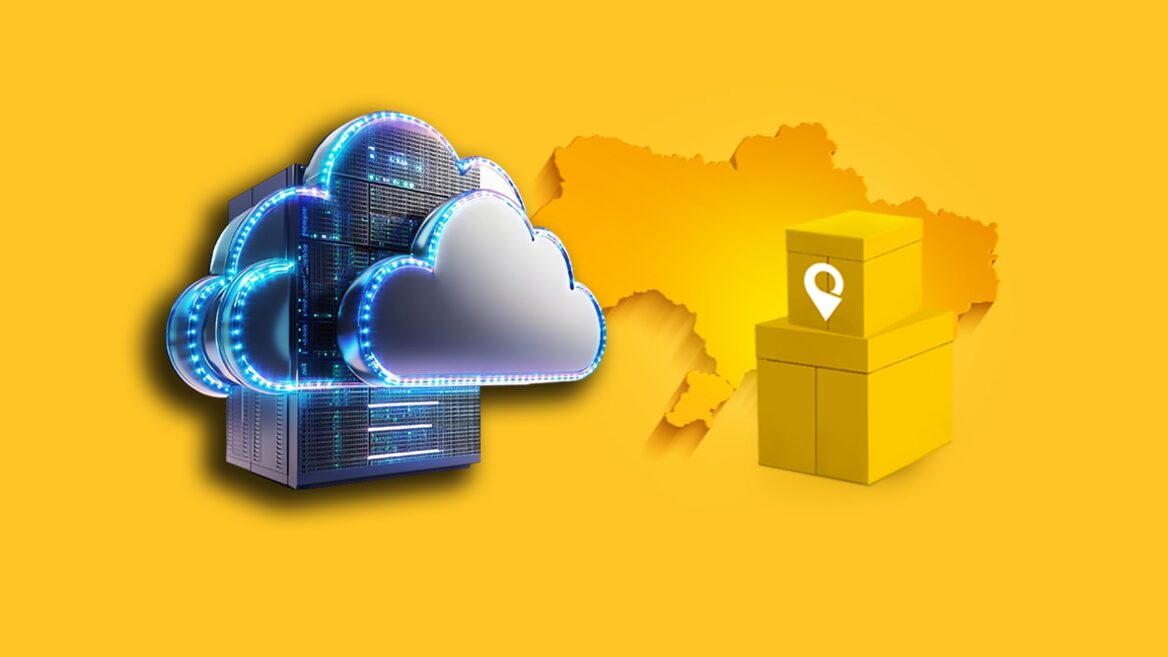
The Ministry of Digital Transformation wants to start regulating cloud services instead of the State Service for Special Communications. What innovations does it propose to make?
The Ministry of Digital Transformation has prepared a draft amendment to the laws on the provision of cloud and data center services. This document, as well as an analysis of its impact on the industry, was published on the ministry's website late last month. It is currently undergoing discussion and approval.
The Ministry of Digital Transformation has prepared a draft amendment to the laws on the provision of cloud and data center services. This document, as well as an analysis of its impact on the industry, was published on the ministry's website late last month. It is currently undergoing discussion and approval.
The draft law provides for the transfer of regulatory powers in the field of cloud services from the Administration of the State Service for Special Communications and Information Protection to the Ministry of Digital Affairs.
"It is the Ministry of Digital Affairs that is the central executive body that ensures the formation and implementation of state policy in the field of cloud services. Such a division of powers between two central executive bodies complicates the procedural aspects of providing cloud services and data center services," the justification for the draft law states.
The draft law proposes to clearly define the rights of Ukrainian cloud and data center service providers and the rights of foreign companies.
As stated in the draft, a cloud service provider (or data center services) is a legal entity or an individual entrepreneur registered in accordance with the legislation of Ukraine or the legislation of a foreign state. Such a player may provide services independently or jointly with other cloud service providers.
According to Ucloud's Chief Operating Officer, Serhiy Kolesnichenko, this will change the balance between different service providers, which will give an advantage to foreign cloud providers when entering the market.
"The most powerful players in the foreign cloud market already make money on services because they receive license fees from Ukrainian players. They don't need additional simplification of conditions," Kolesnichenko emphasizes.
Currently, according to Kolesnychenko, it is still possible to store data abroad when concluding a contract with a Ukrainian service provider. “Conventionally, we keep resources in Poland, but we sign a contract on behalf of a Ukrainian legal entity, and this legal entity is responsible for Ukrainian legislation,” he emphasizes.
The draft law also introduces the concept of a representative of a provider of cloud services and/or data center services. This is a legal entity or individual entrepreneur registered in accordance with the legislation of Ukraine or the legislation of a foreign state and authorized to represent its interests in accordance with the procedure established by law. That is, a foreign cloud provider can operate in our market not even independently, but through a representative.
Serhiy Kolesnichenko believes that this will remove the liability of American companies. “That is, joint and several liability of the representative and the company is introduced, but the co-provider of services is an American company that operates under its own laws (not in Ukraine), so it may not comply with the laws of our country,” he explains.
In his opinion, this interpretation of the law further increases the risk from the American CLOUD Act: any American company discloses data in the cloud to American services and follows their instructions even if it operates abroad, even if the subject of the actions is a non-American client.
"Foreign companies are not obliged to build and locate anything in Ukraine. They can even work according to the scheme that they do not have a legal entity here, but only have a mythical representative," emphasizes Serhiy Kolesnichenko.
The regulatory impact analysis also states that if the draft law is adopted, the regulatory impact on market participants will decrease from UAH 243.8 million per year to UAH 28.3 million per year. This is explained by the fact that market participants will not need additional certification by cloud service providers. It is also interesting to note the number of cloud service providers used as a basis. There are 72 of them. Among them, 10 are large players, and the rest are medium-sized.
Here we emphasize that in Ukraine there are such well-known players in the market of cloud services and data centers as Parkovy, De Novo, Ucloud, Gigacloud, Kyivstar, DVL, Vodafone, Ukrtelecom, BeMobile, Newtelco, Cosmonova, Colocall.
And among the global players present on the Ukrainian market, well-known companies include AWS, Google Cloud, Microsoft Azure, and TET.
The number of central executive bodies using cloud/data center services is expected to increase from 25 in 2025 to 47 in 2028.
We sent requests to market participants to comment on this draft law.
At first, I thought Basket Random would be just another casual basketball game. After a few matches, I realized the randomness is what makes it special. Every point can completely change the flow of the game. The result is a fast-paced experience that never feels repetitive. https://basketrandom.io
Suitable for casual gamers and dedicated word enthusiasts alike, Wordle Unlimited creates an enjoyable balance between entertainment and personal development. Every completed puzzle motivates players to tackle another exciting linguistic challenge immediately afterward. https://wordleunlimited.io











At first, I thought Basket Random would be just another casual basketball game. After a few matches, I realized the randomness is what makes it special. Every point can completely change the flow of the game. The result is a fast-paced experience that never feels repetitive. https://basketrandom.io
Suitable for casual gamers and dedicated word enthusiasts alike, Wordle Unlimited creates an enjoyable balance between entertainment and personal development. Every completed puzzle motivates players to tackle another exciting linguistic challenge immediately afterward. https://wordleunlimited.io