Хочете будувати кар’єру в Data Science та AI? Vodafone Big Data Lab відкриває новий набір —>
Ігор Вишневський War
1 July 2026, 09:00
2026-07-01
Why Ukrainian middlestrikes have become a pain for the Russians and will the enemy find an antidote? Interview with the commander of the Lava BPS regiment, who destroyed $11.5 million worth of enemy property in six months
Ukrainian middlestrikes are perhaps the enemy’s main «headache» in 2026, if we start the summary of this interview with a light pun. It is thanks to the establishment of systematic work to knock out enemy logistics in the rear that the situation on the front as of early July looks turning point or even optimistic for Ukraine. The Ministry of Defense recently called Ukrainian middlestrikes a game changer at the current stage of the war, noting that as of the end of May, five times more middlestrike vehicles had been contracted than last year.
Ukrainian middlestrikes are perhaps the enemy’s main «headache» in 2026, if we start the summary of this interview with a light pun. It is thanks to the establishment of systematic work to knock out enemy logistics in the rear that the situation on the front as of early July looks turning point or even optimistic for Ukraine. The Ministry of Defense recently called Ukrainian middlestrikes a game changer at the current stage of the war, noting that as of the end of May, five times more middlestrike vehicles had been contracted than last year.
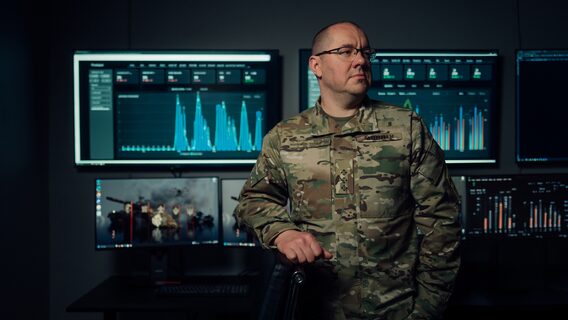
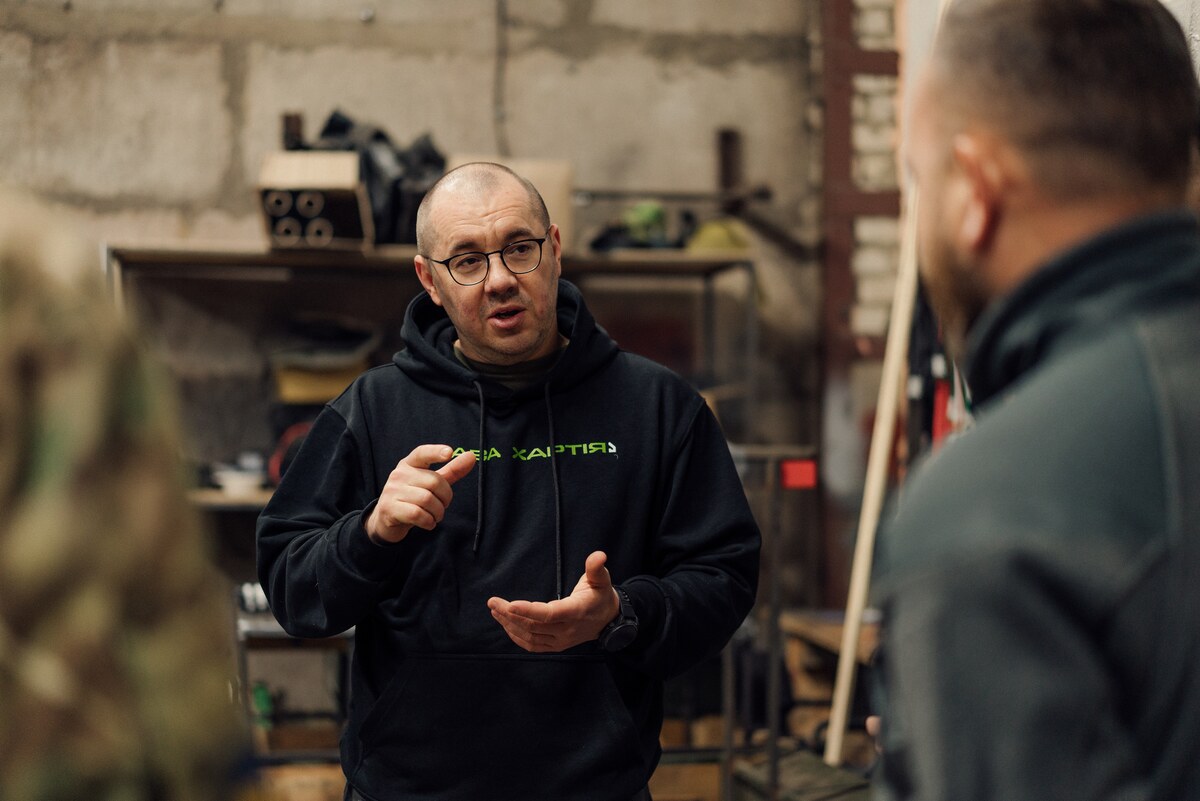
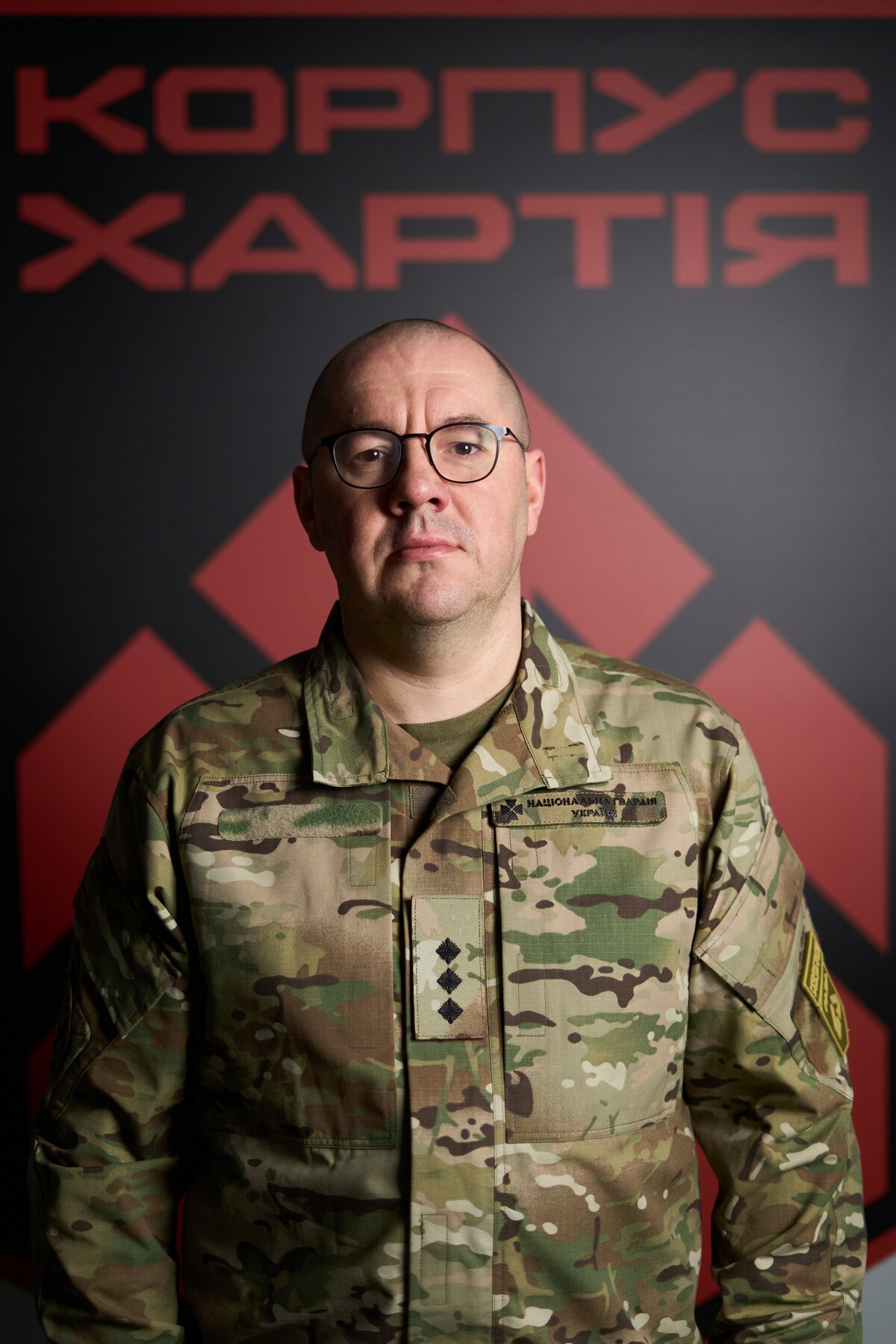
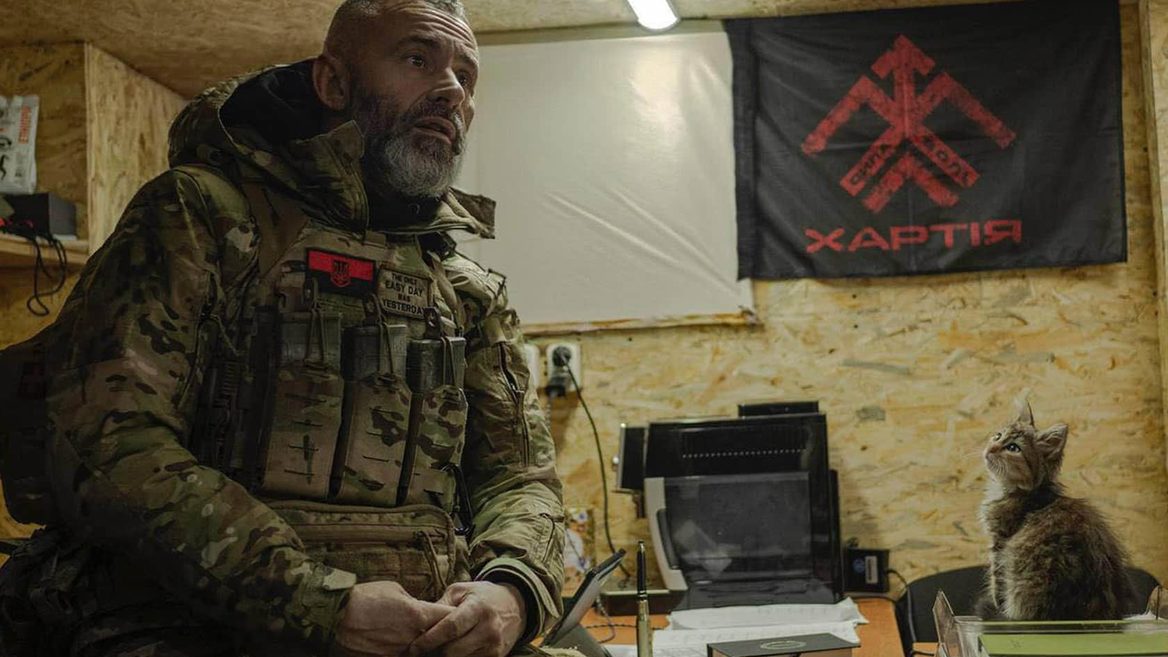
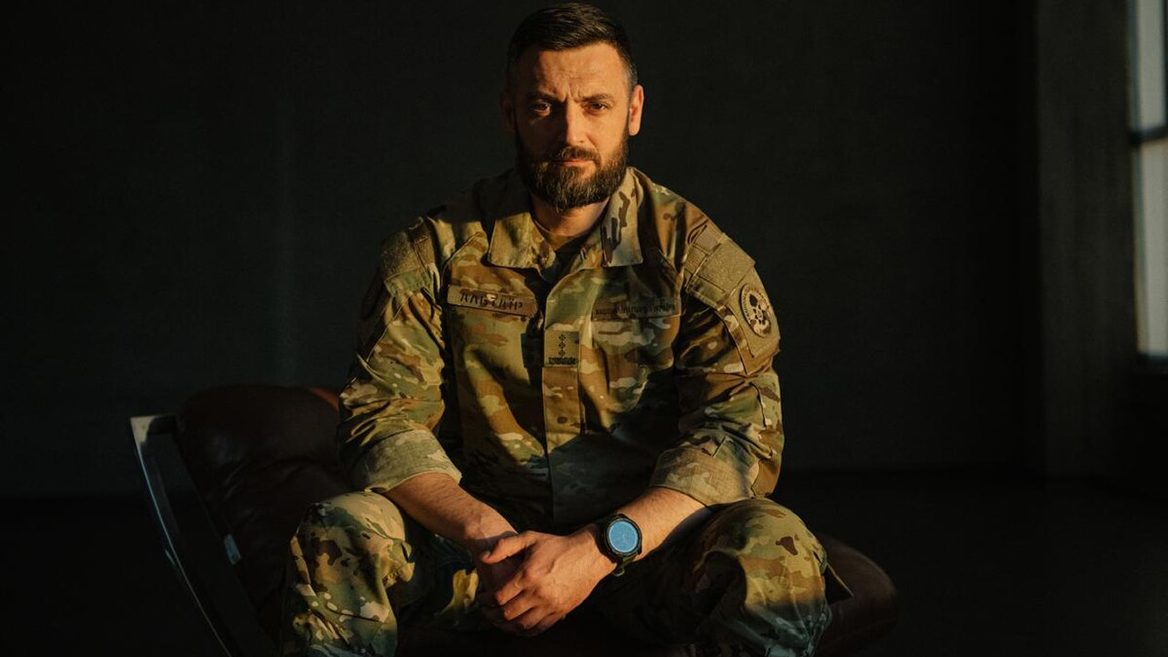
On the topic of middle strikes, we spoke with Volodymyr Mirchuk, commander of the Lava Airborne Regiment in the 2nd Corps of the Charter National Guard. Volodymyr’s unit is performing tasks in the Kharkiv region. A few months ago, one of his operations made headlines when the Lava Regiment conducted a fully robotic operation to destroy the enemy in Kupyansk.
In an interview with dev.ua, Volodymyr Mirchuk told how his unit managed to increase the number and quality of medium-range strikes; which Ukrainian middle strike weapons he considers the most effective and what allows them to fly through enemy electronic warfare; whether the enemy finds any counterarguments against Ukrainian middle strikes and how much «Lava» destroyed enemy equipment and property in monetary terms.
«You could say that there was some foresight. We bought some of the Ukrainian middle strikes last year.»
— How much have your unit’s middle strike capabilities increased over the last year?
— Our unit is a regiment of unmanned systems, the main task of which is to work at a depth of, conditionally, 30 to 120-150 km. This is exactly the middle strike zone.
We are now experiencing the «bloom» of middle strikes and a general increase in the number of casualties in the Defense Forces. This is something we have sorely lacked in previous years.
Previously, we focused on Front Strike, but, for example, with the advent of the Darts UAVs, the story of middle strike began to develop. And now it has reached its apogee.
We now have a large number of middle strike drones available with different ranges, different video quality, and different warheads. I think the number and variety of such drones has already increased 2-3 times and continues to grow. At the same time, we have an increasing number of crews specializing in middle strike.
— What is your middle strike capability compared to, for example, the SBS?
— Each unit has its own tasks, its own priorities, and its own depth. The SBS is doing a great job, it is very inspiring, and against the background of their successes, we also want to acquire greater and greater capabilities. Therefore, honor and praise to them!
I think their work will affect not only the front, where the enemy is facing a shortage of fuel and lubricants, but also the entire economy of the enemy and its moral and psychological state as a whole. But I think it is inappropriate to compare our capabilities here: of course, ours are smaller.
— And what are the factors behind this «bloom» of middle strike that you are talking about? Any special request and attention from the command or did you just finally receive a sufficient amount of decent equipment from our manufacturers?
— The foundations of this success were laid last year, when the purchases were made and the relevant contracts were signed. You could say that there was some foresight. We bought some of the Ukrainian middle strikes last year, but they came to us this year. Another part appeared this year.
I think this success is a parallel acquisition of capabilities by manufacturers and units that perform these tasks.
If before it was one crew, then another one was added to it. Then another. Plus, it was a deep analysis of tactics and correction of previous mistakes. So it was a whole series of actions that led to this.
It is also important to mention a certain upgrade of those middle strike drones that we are doing ourselves to fly to a greater depth, which is already over 120 km. This includes the Starlink mount, an increase in battery capacity, and flights with a repeater, where we have, for example, two middle strikes, and one of them can be a repeater for the other.
That is, these are some patterns, the development of which coincided in a certain time dimension in our Defense Forces. I think that now every unit like ours has acquired the capabilities to quite effectively hit targets at middle strike depth.
— I would like to clarify how exactly and what part of the received drones you «finish» with the unit’s forces for middle strike?
— Usually we take some fuselage for middle strike and refine it according to our own plan. This includes setting up an additional type of communication, replacing the existing battery with a larger one, or replacing individual elements of this battery with a different «chemistry». This applies to the warhead as well.
After balancing and even a slight change in aerodynamic shape or center of gravity, the airplane is no longer capable of flying 50-60 km, but much further.
Or another situation — our operators want to stay in the air a little longer. You can patrol a certain sector for 45 minutes, or you can already patrol an hour and a half if you change the battery and make certain manipulations with the warhead. For example, reduce it by increasing the battery.
We don’t modernize or upgrade all the boards, but we do a significant portion.
Certain tasks are already being built for these «upgraded» middle strikes, because we monitor their performance, change some characteristics, and if we see that something is not working, we periodically change the tactics of use.
— And what middle strike tools have proven themselves best specifically in your unit?
— Let me put it this way — 60% of these are Ukrainian-made assets. Of the well-known ones, this is the Bulava. I would highlight three more Ukrainian-made assets that we receive as logistical assistance. I don’t want to name them, but they have performed quite well. I can’t help but mention the well-known Hornet.
If we talk about the work of our regiment in the Kharkiv and Kupyansk directions, then one of them has one type of communication, the other has another. Therefore, in fact, the choice of middle strike drones is dictated at least by this factor, depending on their technical characteristics.
— What percentage of drones for middle strike are purchased specifically for your unit? Do you mainly just have to use what they give you?
— I would say that the absolute lion’s share of Middle Strike drones, about 90%, is what we order ourselves, and only in 10% of cases are we dealing with something that is simply handed over to the brigade from above.
In addition, we use patronage, but we receive very little Middle Strike from the state. The state covers a significant part of the needs for NRCs, reconnaissance UAVs, but the situation with Middle Strike is different. At least for us.
But Middle Strike is a fairly popular topic in the media, and as a result, it is popular among patrons, sponsors, and partners who are happy to help. We are also trying to show maximum effect in this matter, to prove that the drones provided by the patrons did their job and showed results.
«There are still many unused trump cards — both ours and theirs»
— What are the main goals for Middle Strike, if we are talking about your unit?
— More than half, or maybe 60-70% of the hits are related to the enemy’s logistics, because this is one of the main tasks of Middle Strike. Thus, the enemy loses the opportunity to deliver ammunition, BC, food, water, and personnel to their forward positions.
With our middle strikes, we create a kind of bottleneck for the enemy.
While the front line is more or less stable, the systematic destruction of enemy logistics is having a very strong impact on the front line. Now we are building a plan on how to make sure that our mission is always present in the air.
There is a special methodology by which we classify our targets. And if logistics is at the top, then of course it also includes storage areas, command posts, fuel and lubricant depots, parking lots, equipment depots, and so on.
— What do the Russians offer in response to our increased capability in medium-range strikes?
— They are developing interceptors, and they are doing quite well. They manage to intercept a significant portion of our middle strikes.
We need to understand that most of our Middle Strike drones with a small warhead fly quite low. Therefore, they are subject to detection and some, of course, get shot down.
I think that the enemy will build up this story and this conditional «window of opportunity» will gradually close for us.
Although, again, we have our own countermeasures — we will increase speed, perform certain maneuvers, and fly in a group.
That is, there are still many unused trump cards — both ours and theirs. Now each side is thinking about how to counteract the other.
— If we are talking about a range of 30-40 km, and not 100 km or more, then is Middle Strike interchangeable with artillery somewhere? Does this mean that somewhere the need for artillery has become less with the popularization of Middle Strike? Or are these completely different stories?
— Artillery works more on the front line. Where it is becoming more and more difficult to work with artillery, we can partially replace its functions somewhere. But I would first of all call Middle Strike a conditional replacement for military and tactical aviation.
The Russians are dropping CABs from planes at this Middle Strike depth. Not being able to use CABs, we are replacing it with a large number of UAVs. They essentially do the same thing, although they carry less warhead weight.
— Speaking specifically about your unit, how big a problem is enemy electronic warfare for Middle Strike in your implementation?
— Firstly, electronic warfare can be detected, because it emits strong radiation. As a result, it can be hit, which, in principle, is often done. Thus, you «punch» a certain hole in this echelon.
Secondly, electronic warfare operates in a directed manner, that is, it has a certain sector of action. Alternatively, you can pass this sector on a conditional autopilot — there are a number of technical solutions for this. You pass the electronic warfare zone and then you can receive commands again, and the drone will reach the target.
Thirdly, if all drones of the corresponding type already work with guidance — conditionally, the target is captured, the target is recognized — and if it is some kind of dome-mounted electronic warfare system, then in 99% of cases it will not interfere. The drone already lives on its own and does not need additional commands from the operator or pilot.
So it’s impossible to cover everything with electronic warfare — it’s simply unrealistic.
If we were to rank the threats to UAVs, the first place would be a shoot-down. And, perhaps, the second or even third place would be electronic warfare.
— And by what means does the enemy destroy our enemies?
— We often see interceptors flying through the cell, so some of them get lost in them. The enemy has also worked out this topic with interceptors.
For example, they have a pretty good device called «Elka.» We often see it flying by. This interceptor is very simple — so simple that any fool can aim at the target, you can even release it and it will aim itself.
If the pilot must have sufficient skill to use an interceptor, then the track with the «Elka» eliminates this, and it is very, very good for the enemy.
Another part of our Middle Strike is being hit by rocket and artillery equipment — this is visible from the way the picture disappears very abruptly.
— How do you monitor the safety of the crews that carry out our middle strikes? As far as I understand, the enemy identifies them as a very high-priority target.
— Such crews have less chance of encountering a retaliatory strike than a conventional Mavic pilot operating in a more dangerous area. But one of the tracks of our work is countering enemy UAV pilots — both reconnaissance and strike.
When such a crew has already been identified by the enemy as a target, it is truly dangerous. Such a target has the highest priority for the enemy and he will spare no means to destroy it — even a UAV. UAV is what the enemy lacks, but today the pilots — their skill, training and support decide everything. Therefore, neither we nor they have any regrets in suppressing this enemy fire effect with UAV means.
— How much does the work of our middlestrike operators differ during the day and at night?
— I’m honestly a little disappointed with the enemy’s activity at night. They’re not super active and not very impressive in that regard.
So, at the moment, the specifics of day and night operations are not that different. The only thing is that when we talk about really large middle strikes, which carry a warhead from 50 to 150 kg, both the enemy and we operate with such means mainly at night. Such UAVs can penetrate to a depth of up to 150 km.
But anything less, 80% or even 90% of drones are used during the day. We use them to suppress artillery, airfields, transport, logistics, communications, etc.
«For every hryvnia or dollar we spend, we beat the enemy 23 times more»
— Does your unit keep statistics on the destruction of enemy assets compared to our expenses in monetary terms?
— We, like in business, call it ROI, that is, Return on Investment. We automatically calculate the goal and immediately calculate its approximate cost.
We actively use artificial intelligence to generate such reports and analysis.
According to our latest statistics, it’s 1 to 23, meaning for every hryvnia or dollar we spend, we get 23 times more from our opponent.
The dynamics of combat work specifically on middle strike has increased fourfold since December of last year. If we evaluate it in monetary terms, from December to April we inflicted $11.5 million in damage on the enemy. And this is only based on confirmed defeats.
— In your personal opinion, does working with Middle Strike equipment require more professionalism and skill compared to FPV, or vice versa?
— I can’t say for sure, because I consider both technically difficult and very important. Probably, it’s harder for guys who work with FPV. Middle Strike technologies are quite refined now and they require little intervention. FPV requires working with a repeater, with other means, and it seems to me that if a person works well with FPV, and also understands their technical and theoretical basis, then this is the pinnacle of skill for operators.
— What is your forecast for middle strike, conditionally, for the next six months? Will the enemy find means to neutralize our influence?
— It is impossible to eliminate it completely. You can reduce the efficiency a little, but we will also try to increase this efficiency in parallel. For example, improve communication and use different tactics, make it more difficult.
It won’t be possible to intercept everything with certainty, so this will have a permanent impact on enemy logistics. The enemy will have to live with this, this is just the beginning.
— Volodymyr, and the last question is about your call sign. During the conversation on Google Meet, you are signed as «Professor.» Are you a scientist?
— Professor is my previous call sign, now another one — Marine. I was called Professor at the beginning of the war quite by accident. Then we, the volunteers, gathered in one auditorium, where there was a real mess and disorder. I took on the paperwork — I started filling out lists, forming reports and applications, collecting documents. I was wearing glasses, it was in the auditorium, so my comrades called me Professor, but I have nothing to do with academic science. I am an entrepreneur and joined the army as a soldier in 2022. In civilian life, I had a private manufacturing business in woodworking.
Founder of the Charter Brigade: «If a serious IT guy comes and he doesn’t „resist“ too much that he wants to be a machine gun commander, then we will try to attract him to the IT sector»
«It costs up to $5,000 to kill one Russian infantryman, but we need the death of a Russian to cost us $100.» Charter and Achilles explained how they are reducing this figure and how much they are spending