Хочете будувати кар’єру в Data Science та AI? Vodafone Big Data Lab відкриває новий набір —>
Марія БровінськаУвійти в ІТ
28 April 2025, 09:20
2025-04-28
"I earned $20, jumped, laughed and was happy with my first money. By the way, I went and ate a lot at McDonalds with it." The story of a 16-year-old IT guy who, despite his young age, already has a bunch of customers and plans to become a cyber specialist
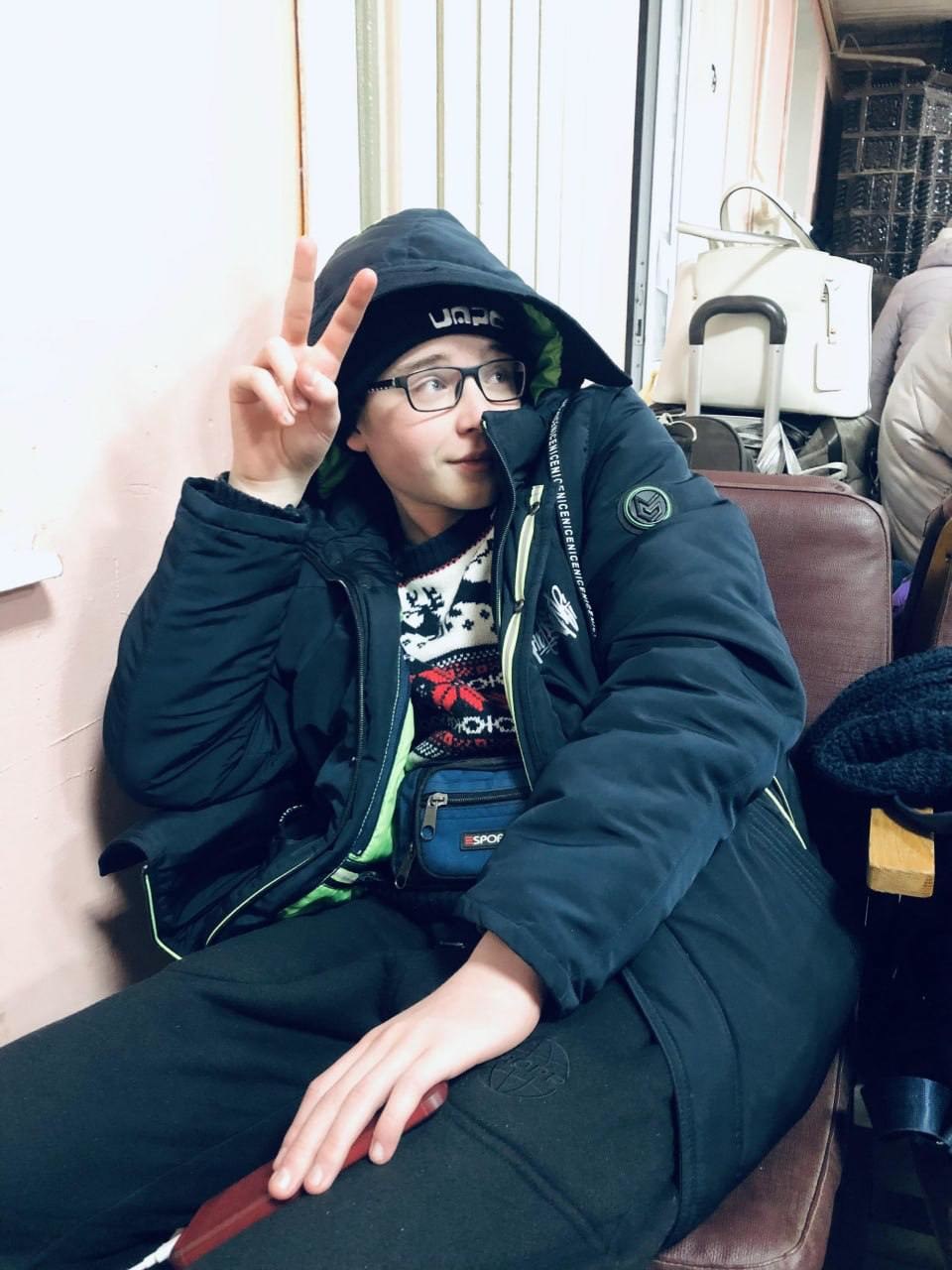
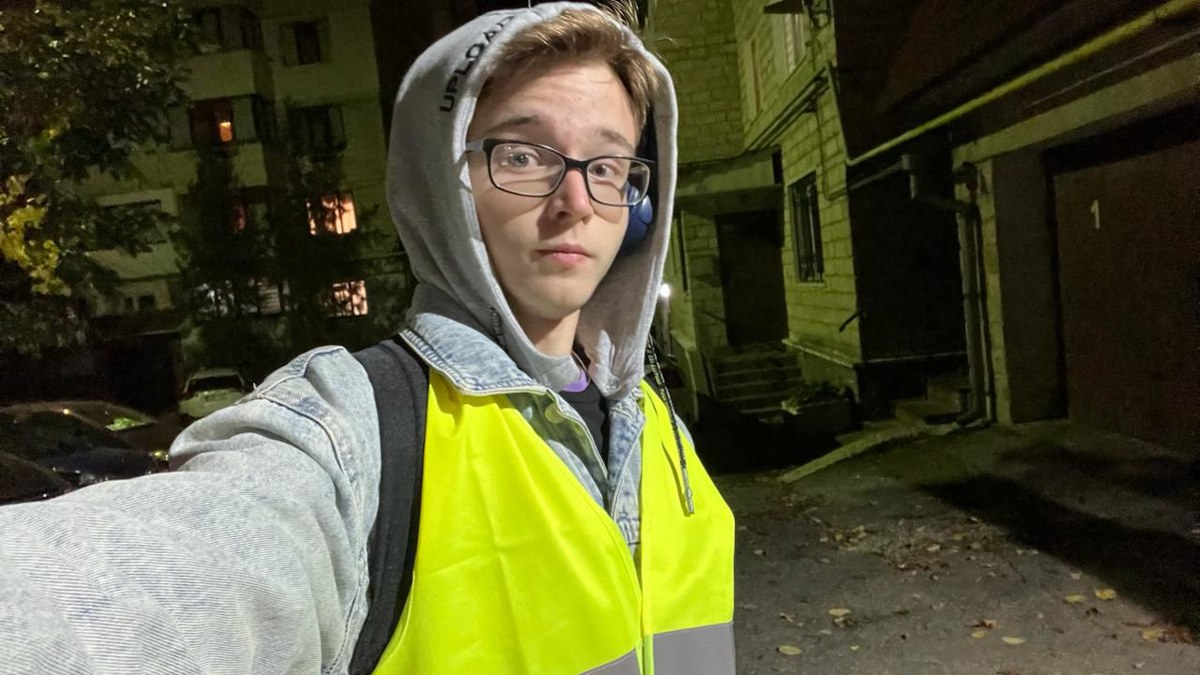
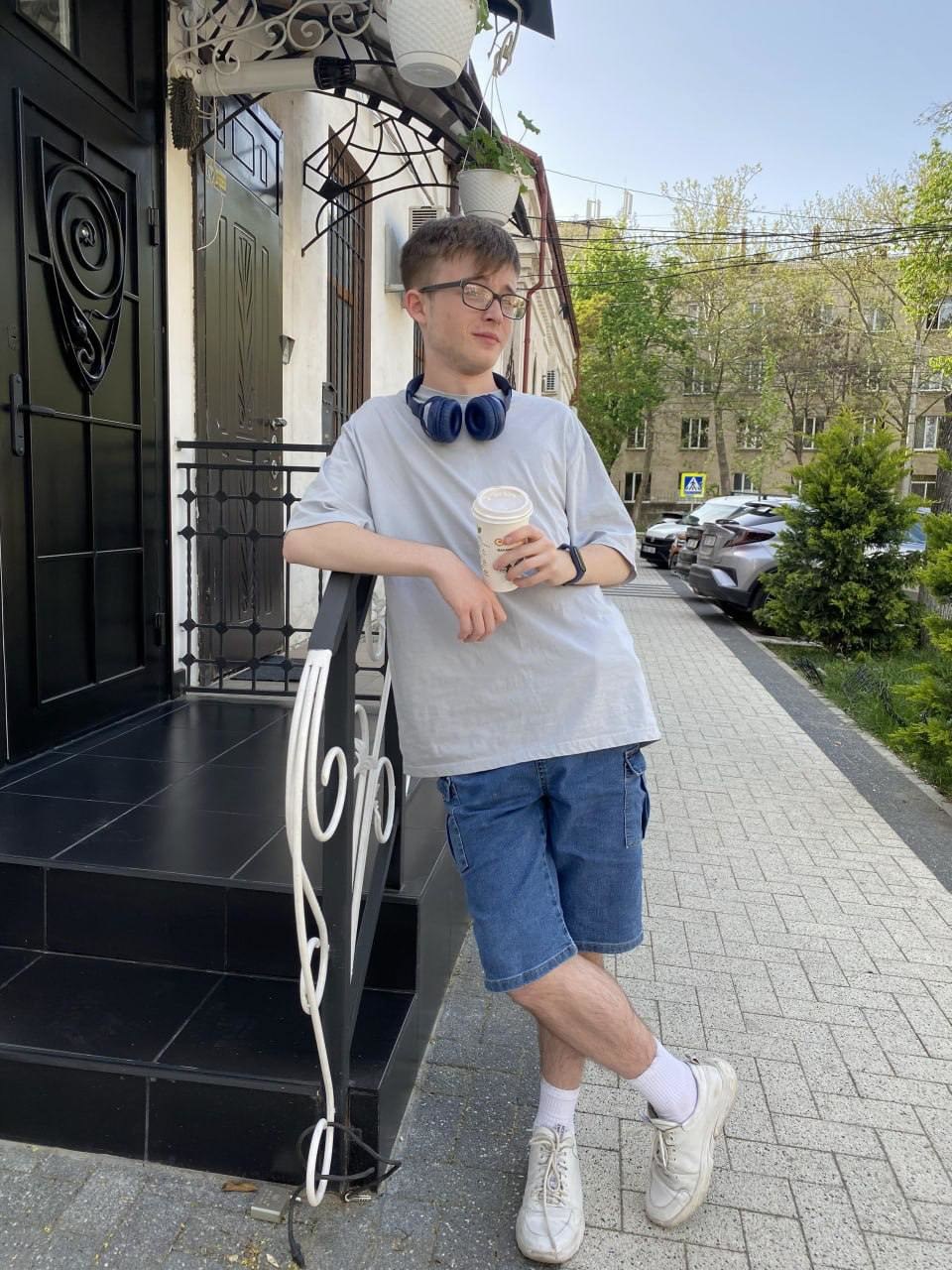
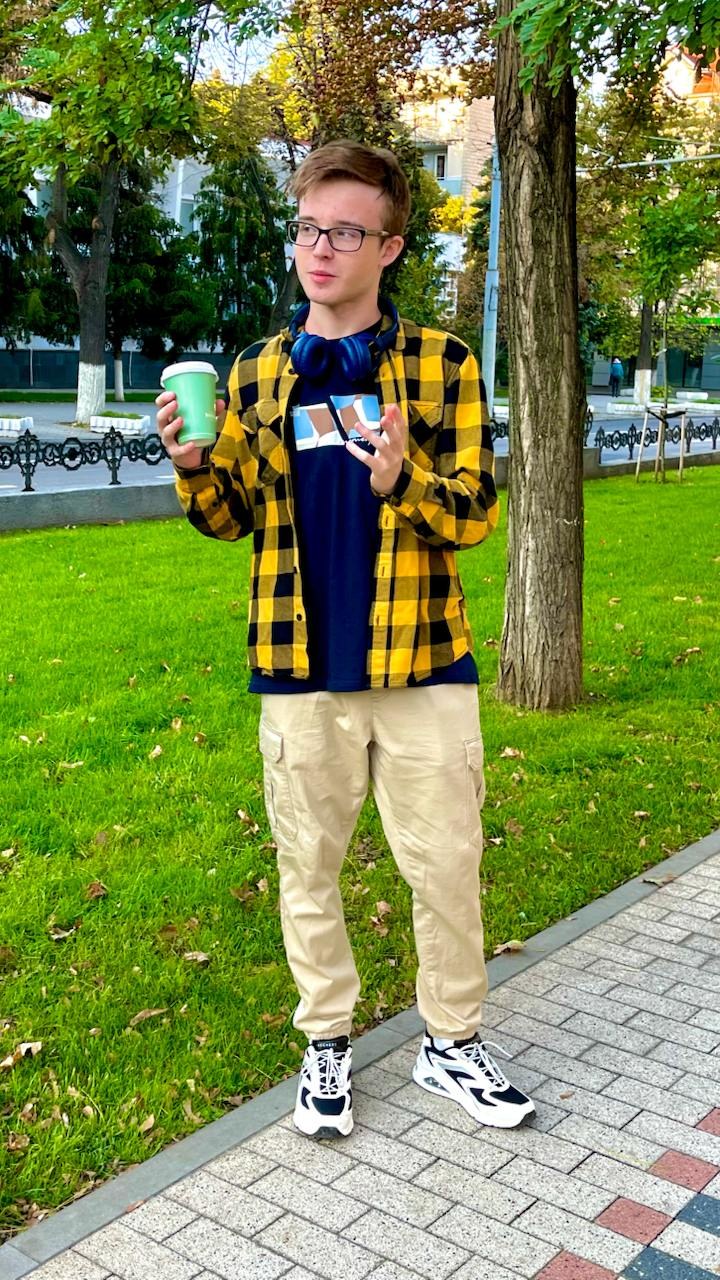
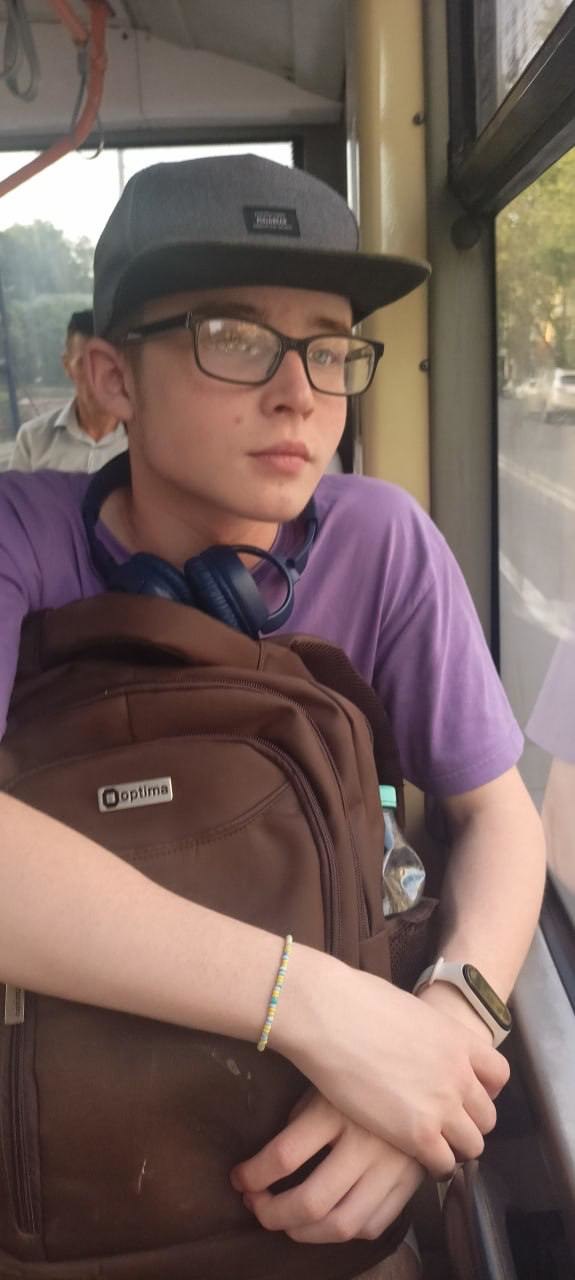
16-year-old Misha Boltovsky, a native of Kyiv, has been living in Chisinau for over three years. The boy’s family was forced to move after the full-scale invasion. He is currently continuing his studies remotely at a Ukrainian school, Specialized School No. 52 in the capital, and dreams of the war ending and returning home.
Mykhailo’s story is interesting because the guy, who got carried away by IT at the age of 11, started earning money in the most dynamic sector of the economy in a few years, creating websites. He even managed to get a job as a QA, despite his young age. dev.ua asked the guy about his path in IT and his plans for further development as an IT professional. What follows is firsthand.
16-year-old Misha Boltovsky, a native of Kyiv, has been living in Chisinau for over three years. The boy’s family was forced to move after the full-scale invasion. He is currently continuing his studies remotely at a Ukrainian school, Specialized School No. 52 in the capital, and dreams of the war ending and returning home.
Mykhailo’s story is interesting because the guy, who got carried away by IT at the age of 11, started earning money in the most dynamic sector of the economy in a few years, creating websites. He even managed to get a job as a QA, despite his young age. dev.ua asked the guy about his path in IT and his plans for further development as an IT professional. What follows is firsthand.
Entering IT: «It was a mix of laziness and fear»
I decided to join the IT cohort in 2020. I was 11 years old at the time. And all I knew about IT was that there were a lot of colorful letters, numbers, and shenanigans that titan programmers usually do while sitting in a coffee shop. But one day my parents offered me a free marathon from GoIT for teenagers. At first, I hesitated, because it was a mix of laziness and fear. Staying in my comfort zone was what I wanted at the time. But when the phrase «Just try, if you don’t like it, you can always leave» was heard, I decided that I had to try.
As a child, I wanted to be many things: from a train driver to a police officer, but this course changed my desires for professions. I was added to a group where there were other teenagers. Everyone got to know each other and talked to each other.
«I was blown away when I first walked into my first IT class»
There were a lot of messages and it felt like I was in a kindergarten for IT people, where everyone was discussing only this. Then the administrators introduced us all to the marathon and told us what it was and how.
GoIT had its own website, where all the lessons had to be taken. The goal of the marathon: to teach us the basics of programming HTML&CSS, JavaScript, Python. I was stunned when I first entered my first IT lesson. Nothing was clear, but for some reason I wanted to go further (the picture This is fine comes to mind, where everything is on fire, and I sit and learn programming). First there was theory, and then practice. And I often got stuck on the theory, because I didn’t like reading all this, and there was a feeling of complexity (which I struggled with for a very long time afterwards).
«This field attracted me»
Task after task, mistake after mistake, and I made my first project using JavaScript. It was a simple Telegram bot that echoed, asked questions, and stored some user data. Everything, of course, was copied from the video tutorial, because even though I had taken the lessons, I still didn’t understand anything.
Sometimes I turned to mentors, but very often I was confused by their explanations, so I just did what I could. I understood that this was something interesting and I needed to dig a little deeper, this area attracted me. I passed Python, HTML&CSS and graduated from this marathon. Later, of course, I forgot everything that was taught at that marathon, but I did not forget this drive from the fact that you can do something very interesting.
Eventually I decided to go deeper, and Frontend development was the first step. I started watching YouTube videos, googling, and practicing.
I often dropped out of school because I encountered various errors that I didn’t know how to solve, and this demotivated me. And this swing continued for quite a long time: I either dropped out and started learning another direction, or dropped out of another direction and continued learning abandoned. I was very often distracted by games, and in my case this very often slowed down my development.
«I tried to adjust my brain to programming»
So the year passed. I would say that this year was more of an introduction to IT, there was little practice, but I tried to adjust my brain to programming. But one day I changed the direction a little. Then I was in a computer science class, we were going through Python. I didn’t know it very well and I tried to understand the logic. But time was short then, and I already had to write tests.
I remember that, apart from Googling, I didn’t know how to do anything and sadly wrote only one assignment out of five. Of course, I got a good grade. That same evening, I realized that this is not how things are done, and opened YouTube. I decided to learn the basics in an evening and finally understand what it is. Then I watched Gosha Dudar. He teaches very well and there are lessons even in Ukrainian. In the next lesson at school, knowing at least some basics, I beat off the bad grade and felt that it was really mine, that I began to understand much better how programming logic works.
Motivated, I decided to dive even deeper and write my own program using the knowledge I had learned.
At that time, my younger brother was playing Roblox, and there he had to click with the mouse. I watched him and realized that he was getting bored of doing it all manually. So I created a workaround for him — an autoclicker that could be turned on with two buttons and click as many times as needed.
After that, I continued to move in this direction, but I couldn’t do without the swings that were there before. Very often I would throw Python again and return to it later, because I didn’t know how to move on. This continued until the war started. I left for Moldova and started procrastinating. I closed myself off from the world and gave up programming, because I had no desire to learn anything.
War: «I felt a mix of emptiness and shock when we crossed the border»
I was 13 when the war started. At the beginning of February, I couldn’t even imagine that a war could start. I remember the day when I listened to the news about a possible invasion, but all my friends unanimously said that such a thing was impossible in our time. But on February 24, a turning point occurred: I woke up at about 8 am and went to Telegram to read the only news channel. There was an address from the president. I listened to it and still thought that the war hadn’t started. My friend wrote to me and said: «Wait, don’t you know? The war started today.»
I jumped out of bed and ran to my parents, and they said, «Yes, the war has started. Pack your backpack with the necessary things.» I was in complete shock, because I believed that this could not happen. A week later, we decided to leave for Moldova. I had never traveled abroad, so this was my first experience. I felt a mix of emptiness and shock as we crossed the border and waited for our friends. I had no idea what would happen next. I really wanted to go home, but I felt that I would not be back soon.
The first months in Chisinau were morally difficult. All I wanted to do was play games and stay at home 24/7. Any attempt to get me out was always a failure.
If I did go out, it was only with my father to the store and back. And so it went day after day, and each time I lived in hopes that I would return home someday. We had attempts, but they were always failures, because there was always heavy shelling, and then there was a blackout. I lived in such anticipation for a year. Even then I understood that the war was long and we had to start distracting ourselves somehow.
Leaving the comfort zone
One day my mother suggested that I sign up for an English club where I could improve my English skills, thanks to the French volunteer program from VentDest. I decided to go and give it a try. I was filled with anxiety — it was my first time leaving my comfort zone. At first it was difficult to get to know someone, but gradually I started talking to someone.
Gradually, I came to life, and I no longer focused so much on returning home. Later, at these «Frenchmen» I met a girl, who then took me to a small club. I felt that something was wrong — I was going where I was not expected at all. I was sometimes ridiculed and called «correct» when I refused to «take a puff» of a disposable cigarette or a can of Revo.
I began to understand that I needed to slowly take charge of myself and start improving my skills. I stopped going to the «French» ones.
Over time, I found a Blender course and decided to step away from programming for the time being and start doing something in 3D. I thought I would sell 3D models, but the surrounding situation still put pressure on me, and I abandoned 3D. A little time passed, I tried myself in many other directions: game development using Unity (I had to learn the C# programming language), game development with Roblox Studio (using Lua), learning C++, then I returned to Frontend and then burned out again. I spent a lot of time on games.
The turning point and Harvard
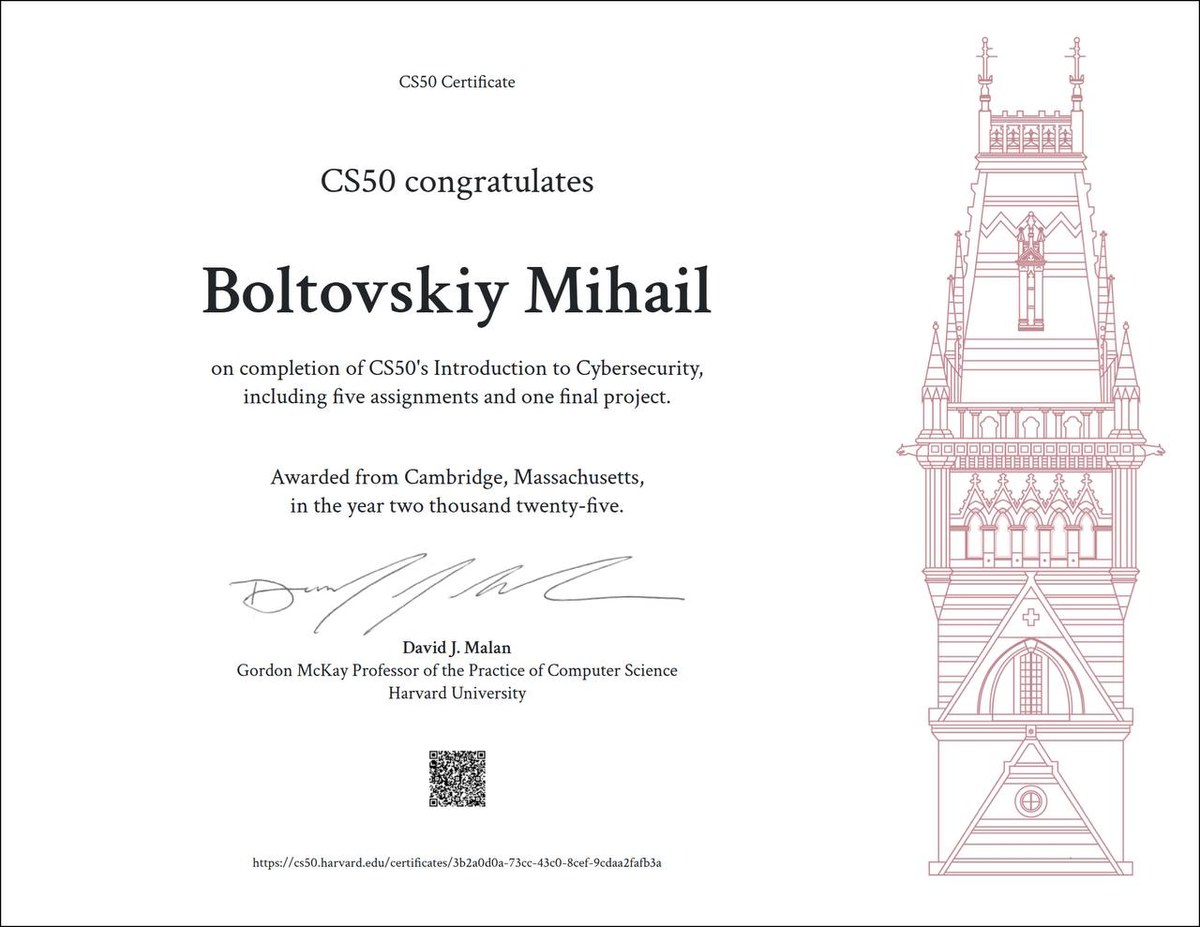
At the age of 14, a turning point occurred when I faced a devastating situation in my environment. I was left alone and realized that I needed to move forward. I found a free course from Harvard (CS50 Introduction to Programming with Python) and started taking it. Yes, the course was in English, and I, surprisingly, had no problems with it. Each lecture was like a drop of motivation to keep moving forward, because each time the professor made complex things simpler and always explained them in simple, understandable language.
Studying at Harvard was a pleasure. After every lecture, I was given problems to solve. And these problems were significantly different from the ones I was given at school.
They used a situation with a character, and it made completing the tasks more interesting. I didn’t have thoughts like, «Oh, damn, it’s time to do my homework.» I thought, «Yes! I want to solve this. This is interesting.» And with each problem solution, I wanted to learn even more. The tasks were like fuel that constantly fueled my interest in the course and the direction I was studying. Yes, there were some difficult topics, but the approach to explanations was top-notch. And in the end, I completed the course, received a certificate, and started looking for freelance work.
After Harvard, I had the opportunity to join another conversation club with Americans. I was already 15 years old at the time, and I thought it would be a good chance to make new friends, and I met a mini-club with only 2 girls. We found common interests and often talked about deep topics like: psychology, the future and the past, relationships between people, and finances.
Bet on IT
After going through some personal dramas and family problems, I decided to focus on IT. I just started doing projects and practicing — the Harvard course helped a lot. I googled, watched YouTube videos, talked to AI about Python. I studied everything about it and what libraries there are and what I can learn to be a problem solver for the client.
I put all my projects on Github so I had something to show potential clients. I also used several Telegram channels that helped me find libraries to study. Each time I picked an interesting one and just studied it.
If we talk about the technologies I have, the list is long. I often had to work with databases (Google Firebase, MySQL, SQLite, MongoDB), web automation (Selenium, BeautifulSoup4, DrissionPage, Helium), Windows software development with a graphical interface (CustomTkinter), Telegram and Discord bot development (Aiogram, Discord API), and web applications (Flask). Some combined several technologies (for example, a bot with a database or a Discord bot with web automation).
Although my stack is growing step by step, I can currently offer various automated solutions for business purposes: creating Telegram and Discord bots, scraping and mass data collection, I can automate processes, create web applications using the Flask microframework. In general, you can find a solution for every problem, Python is universal in this — I even made a game for a customer.
First $20
After the Harvard course, I decided to earn money, and I started by searching for popular freelance exchanges and started testing where I could get my first order and get paid for it. Sometimes freelance exchanges had age restrictions, and I’m currently looking for solutions to this.
Getting my first order at the age of 14 was a real jackpot for me. On the freelance exchange, I wrote to everyone with a proposal to solve their problem, and when the first client responded, I was happy — I needed to create a parser that would extract data from Instagram by geolocation and pack everything into a CSV file. Since Instagram did not have such an option, I found a solution using hashtags from the desired geolocation. There were a lot of problems with parsing, because every time Instagram limited requests and the bot would break, but in the end I managed to recruit 4,000 people, which were used for analytics. The client liked it and wrote a review.
Even though I earned $20, which is very little considering the work I do now, my emotions were running high. I was jumping, laughing, and rejoicing at my first money I earned from freelancing. By the way, I used that money to eat at McDonalds.
Sometimes I used Discord to search for orders. There I came across a channel that allows you to post your offer. I got most of the interesting projects from the foreign market. There is no need to dump there and there are no commissions. Yes, without a secure deal, but in 90% of cases the clients were adequate and trusted me. Now I want to distance myself from freelance exchanges and start looking for clients in a slightly different way — on social networks or maybe get a job in some company.
I changed the sites that presented me as a developer several times, tested different platforms, and worked with foreign customers who found me precisely through business card sites.
Level Up
Over the past two years, the cost of my services has increased significantly. My stack and approach have changed with each project, and little by little I have forced myself to raise prices. Currently, the cost of my services is as follows: web automation can start from $100, UI integration — $200. Telegram bot development — from $70 and above. If something is more large-scale in implementation, the price can start from $300+. In general, there were times when I would catch two or three orders per month, and sometimes only one. I receive funds via PayPal, crypto, and direct transfers.
I don’t have a sole proprietorship yet, but I plan to get one when I turn 18. I believe that proper money management is the key to an independent life.
Along with private assignments, I worked at a QA agency. It was my first experience of permanent work. I got there through word of mouth. My father works there as a web designer and he recommended me. That’s how I started working at Icebreaker Agency. I worked on a tracker for $5 an hour, which was normal for a QA. After a few months, my rate was raised to $6 an hour.
Three projects of Mikhail that the young IT worker is proud of
1. This was a foreign customer and he needed to create a solution for Roblox. The task was to create new accounts, and then use cookies under different accounts and like accessories.
Using Python and web automation, the guy first implemented the process of registering temporary accounts. He also set time limits so that automation would not turn into a DoS attack on Roblox servers. Then he implemented the ability to like accessories and created a graphical interface for the program. Also, thanks to this project, the young developer was able to buy an electric scooter, which is very helpful even now.
2. A client from Ukraine needed a Telegram bot that helps organize meetings in various cities with the ability to add new locations and re-vote on times and days.
3. For a foreign customer, it was necessary to create a Discord bot that could collect all games from Roblox, taking into account the criteria, and drop the found ones into the group. Everything happens in a loop and only the admin can finish the search. The bot also remembers the found games and does not post duplicates. The guy was interested in implementing the correct search and data extraction logic in the first place. Also, a little later, he found the Roblox API and even then accelerated and reworked some parts of the code.
Life plans
Courses from Harvard, freelancing — that’s good, but I think it’s worth getting a professional higher education and having some kind of «insurance». I would like to enter a higher education institution in the field of «Cybersecurity». I’m already slowly digging in this direction and almost have another course from Harvard on cybersecurity. I really want to take the position of Penetration Tester — it’s interesting to look for holes in security, because even a corporation can have them. In the meantime, I’ll go to a cyber specialist, I would like to develop myself in terms of selling ready-made solutions using Digital shops like Ko-fi, Gumroad, BuyMeACoffee, etc.
I dream of making my own product that will passively generate money that I can then invest in cybersecurity training or another path that can significantly increase my income.
At 11, he fell in love with IT, at 14 he built his first computer, at 16 he worked as a sysadmin, and at 20 he was already DevOps. The story of a 20-year-old IT guy who breaks stereotypes