Хочете будувати кар’єру в Data Science та AI? Vodafone Big Data Lab відкриває новий набір —>
Марія БровінськаStartup
22 October 2026, 16:12
2026-10-22
Ukrainian Mosqitter presents AI system for predicting risks of mosquito-borne diseases. Startup enters top 20 TechCrunch Disrupt
Mosqitter, a Ukrainian deep-tech company founded by women, has unveiled the Febris Monitoring System™, an artificial intelligence-based platform that tracks mosquito populations and helps assess the risks of spreading diseases they carry. The system is ready to go on the market, the company announced.
Mosqitter, a Ukrainian deep-tech company founded by women, has unveiled the Febris Monitoring System™, an artificial intelligence-based platform that tracks mosquito populations and helps assess the risks of spreading diseases they carry. The system is ready to go on the market, the company announced.
Last week, Mosqitter was named one of the top 20 startups in the Startup Battlefield competition at TechCrunch Disrupt 2026 in San Francisco. The TechCrunch selection featured the company as a developer of a platform that transforms data from a network of sensors into an early warning system for health authorities.
How Febris Monitoring System works
The company describes Febris as a kind of "weather forecast, but for mosquitoes": the system should show where the number of insects is increasing and, accordingly, the risk of spreading related diseases may increase.
The platform combines field sensors, artificial intelligence algorithms, and an interactive dashboard. The sensors autonomously detect mosquitoes that enter the device and transmit detection data, GPS coordinates, and local microclimate to the cloud via LTE or Wi-Fi.
The company’s own neural networks then classify the insects by genus. The information about their presence is combined with weather and other environmental indicators to assess risks and track trends. According to Mosqitter, it takes less than two minutes from the moment a mosquito is detected to the moment it is alerted.
The system helps identify mosquito genera associated with the transmission of pathogens such as West Nile fever, Japanese encephalitis, dengue, chikungunya, Zika virus, and malaria.
At the same time, Febris does not diagnose disease or determine for sure whether a particular mosquito is a carrier of infection. Its task is to detect the presence of relevant insect species and help assess potential risks to public health.
Why is mosquito monitoring needed?
Mosquitoes can carry dangerous diseases, and changes in climate, rainfall and international travel are affecting the areas where they can survive and spread. According to the World Health Organization, the number of reported dengue cases worldwide rose from 6.5 million in 2023 to a record 14.6 million in 2024.
Mosqitter believes that traditional approaches to mosquito monitoring do not always allow for quick detection of changes in their numbers and timely assessment of the potential threat.
“It’s impossible to react to what you can’t see. Monitoring that lasts for several days shows where the threat was, not where it’s moving. Every morning we look at the weather forecast and plan the day around it — it should be the same with mosquito-borne diseases,” explained Anastasia Romanova, CEO and co-founder of Mosqitter.
According to her, the company seeks to create an infrastructure that will allow it to monitor the situation in almost real time and notice changes in advance that may indicate increased risks.
Where will the system be used?
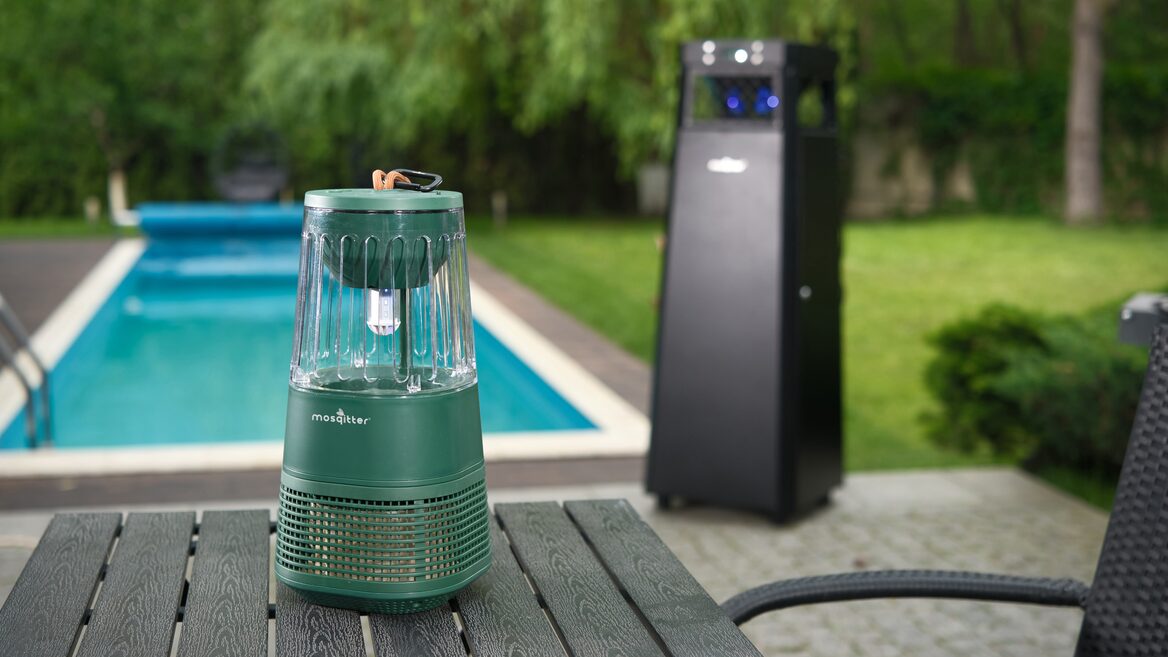
Febris Monitoring System integrates with Mosqitter mosquito control devices — Mini and Grand models. This allows you to combine monitoring with insect population control within the same ecosystem.
According to the company, the system is already being used in the field, in particular in work with the following institutions:
UK Healthcare Safety Agency (UKHSA);
PARAVEC laboratory at the University of Nevada, Las Vegas, USA;
D. K. Zabolotny Institute of Microbiology and Virology of the National Academy of Sciences of Ukraine.
Potential users of Febris include airports, military bases, ports, municipalities, hospitals, schools, and other public spaces where it is important to constantly monitor mosquito populations and the risks associated with them.
In a comment to TechCrunch, the company’s co-founders also spoke about plans to develop an international direction. In particular, Mosqitter is looking for B2B partners who have experience working with government agencies, public health organizations, and retail chains. Potential customers for the system include state and local governments, healthcare institutions, airports, and universities.
About Mosqitter
Mosqitter is a deep-tech company that develops chemical-free mosquito control and monitoring systems. Its Mosqitter Grand and Mosqitter Mini devices use signals that mimic human presence to attract and trap insects.
The Febris Monitoring System was the next stage in the company’s product development: instead of just monitoring the number of mosquitoes, Mosqitter also aims to collect and analyze data on their presence and possible risks of disease spread.
On October 13, TechCrunch announced Mosqitter as one of 20 startups selected for Startup Battlefield 2026. Contestants will present their developments to a jury and compete for the grand prize of $100,000 and the Disrupt Cup.