Хочете будувати кар’єру в Data Science та AI? Vodafone Big Data Lab відкриває новий набір —>
Олександр КузьменкоAround IT
13 May 2025, 12:00
2025-05-13
“‘Cyberspace’ is an eternal struggle between developers and testers”. A board game about IT has been released in Ukraine
Ukrainian IT professional Oleksiy Borunov announced the release of his board game «Cyberspace» about the confrontation between hackers, developers, and testers.
dev.ua talked to Oleksiy and learned details about the project.
Ukrainian IT professional Oleksiy Borunov announced the release of his board game «Cyberspace» about the confrontation between hackers, developers, and testers.
dev.ua talked to Oleksiy and learned details about the project.
Tell us a little about yourself. How long have you been playing board games, what are your favorites? Have you had any similar experience developing board games?
My name is Oleksiy, I have been working in the IT field for over 6 years. My path began with QA engineering, where I worked for 2.5 years, and later completely switched to iOS development, to which I have already devoted over 3.5 years (Oleksiy’s LinkedIn indicates that he works at Ajax Systems — ed. note). Programming for me is not just a job, but a way to create new, useful and convenient products.
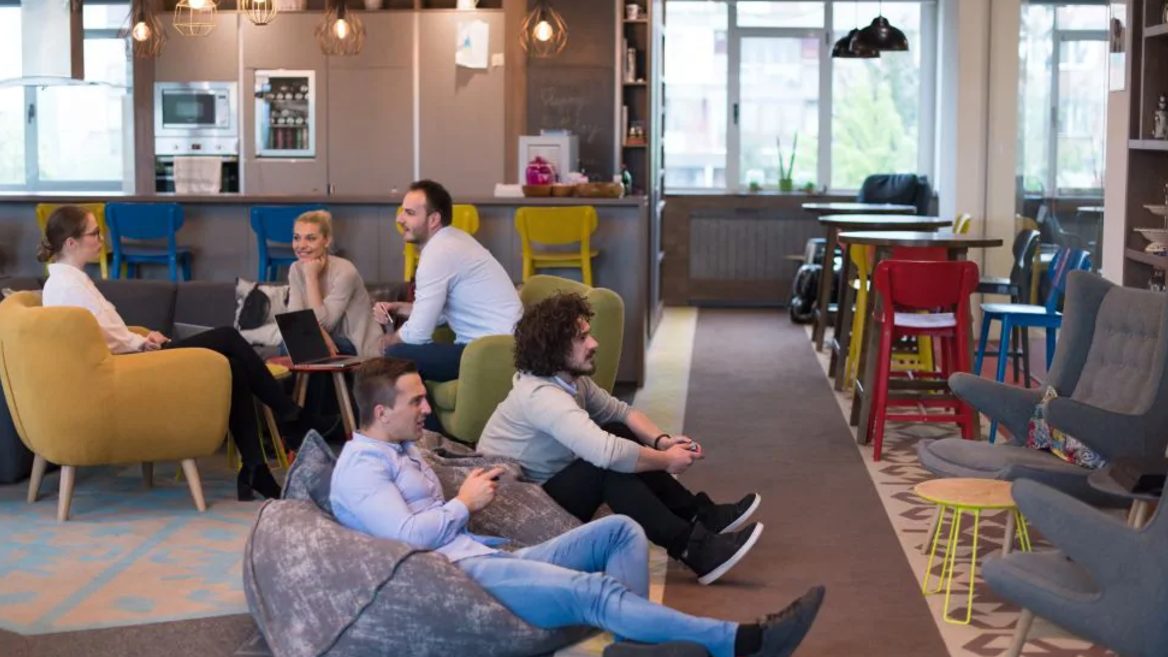
In my free time, I am passionate about board games. I have been playing since school, and this passion has remained with me to this day. I especially like games that combine dynamics, communication, and simplicity of rules — for example, «Explosive Kittens» (along with all the additions) and «UNO». I like the opportunity to actively interact with other players, trade, joke, and create an atmosphere of lively communication — even though in real life I almost never trade.
The Cyberspace project is my first experience creating my own board game. I had never done game design before, but I was so fascinated by the idea that I took on the entire process: from concept and mechanics to the final implementation. I am especially proud of the illustrations, which were created not by a neural network, but by a real talented artist, with whom I was lucky enough to work. I am very grateful to her for the visual style that breathed life into the game.
Tell us about «Cyberspace». How did the idea to make such a game come about? Why did you choose the IT theme?
«Cyberspace» is an eternal struggle between developers and testers. Both in the game and in real life.
This conflict is familiar to anyone who works in IT. I also added hackers in the game — both white and black — because they often intersect with developers in a professional environment.
The idea arose spontaneously. I was just sitting at home, playing something on the console and thinking about what interesting things to do. At some point, it dawned on me: why not transfer this eternal confrontation between IT professions into the format of a board game? And not just any game, but one that uses familiar terminology, a cyberpunk style and the atmosphere of the technological future. From that moment on, I started jotting down ideas for cards, mechanics, factions and visual solutions.
I paid special attention to the style. I was lucky: during the previous project with audiobooks, I collaborated with the artist Darynka, who created illustrations for me in an art style close to «Cyberspace». I wrote to her on Telegram — and after a few messages she agreed to become the game’s illustrator. So I had not just a designer, but a partner in the visual world of the game.
The IT subject matter was a completely organic choice for me. I work in this field myself, and I encountered typical «combat» situations between developers and QA specialists. It was this experience that inspired me to turn professional jargon and inside jokes into a full-fledged game universe.
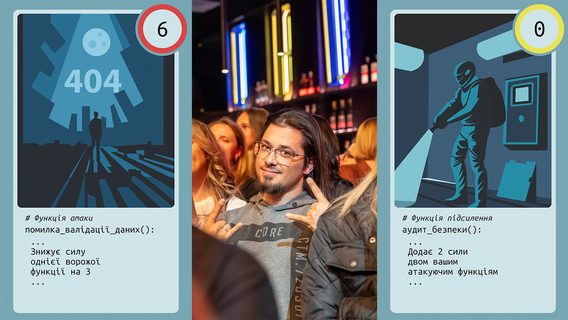
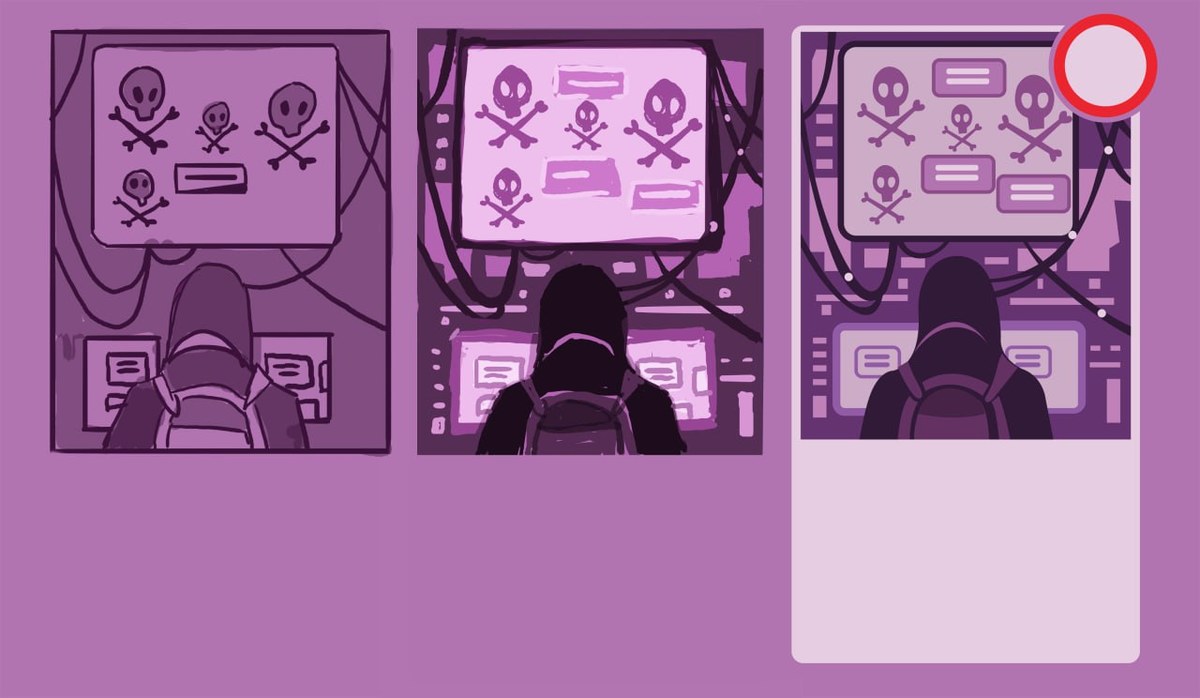
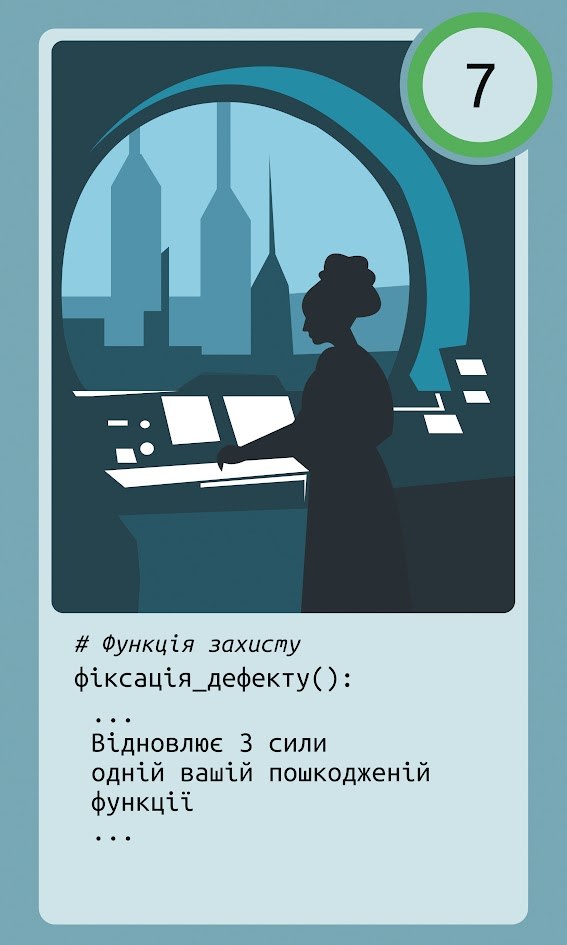
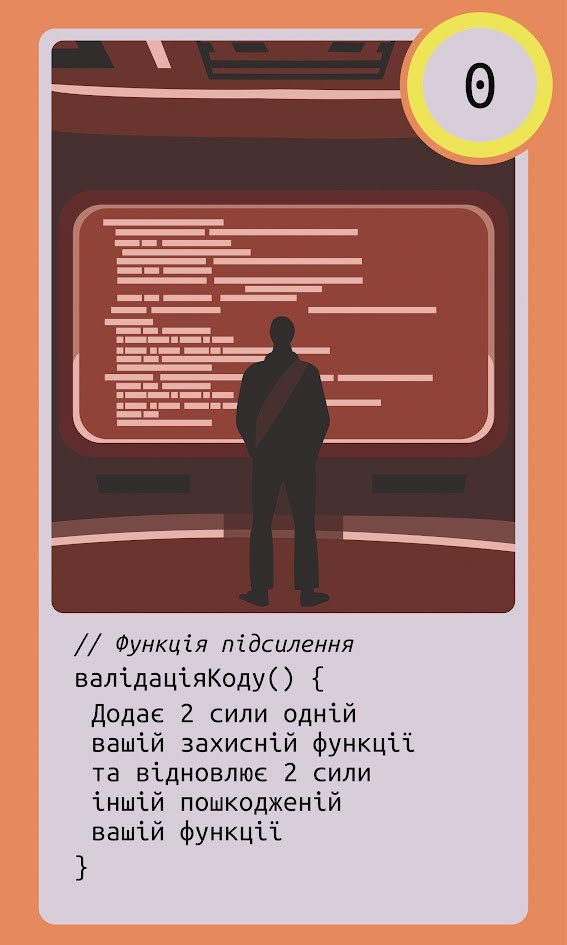
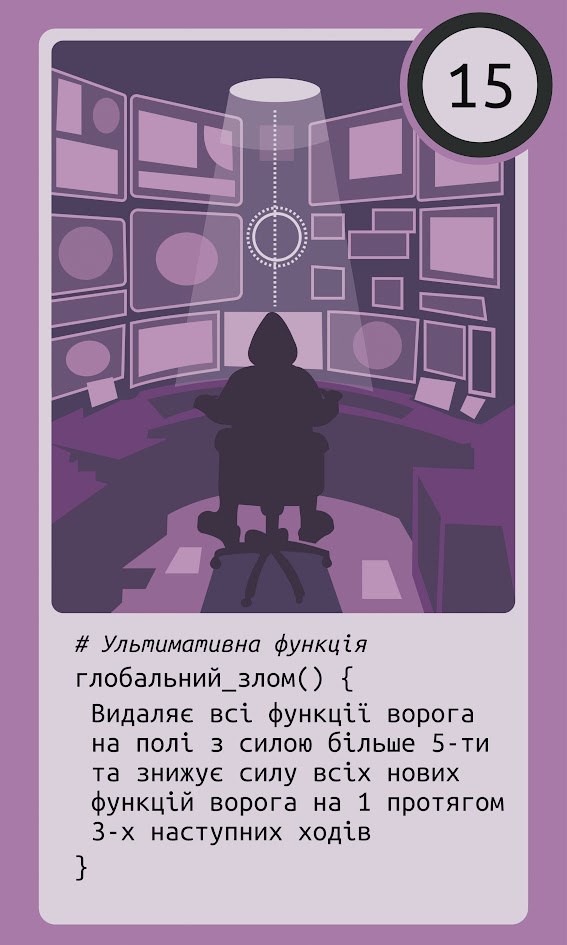
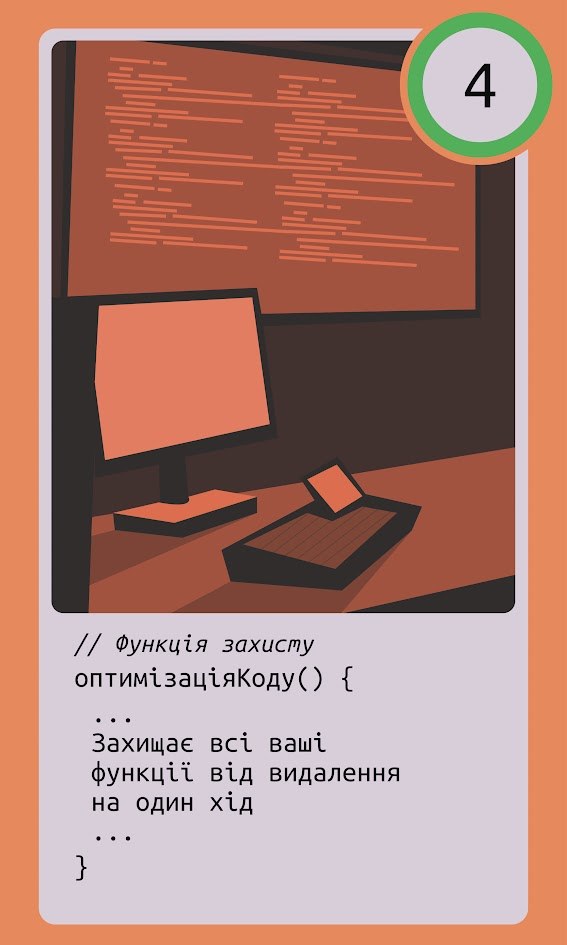
Art of the board game «Cyberspace». Image: Alexey Borunov
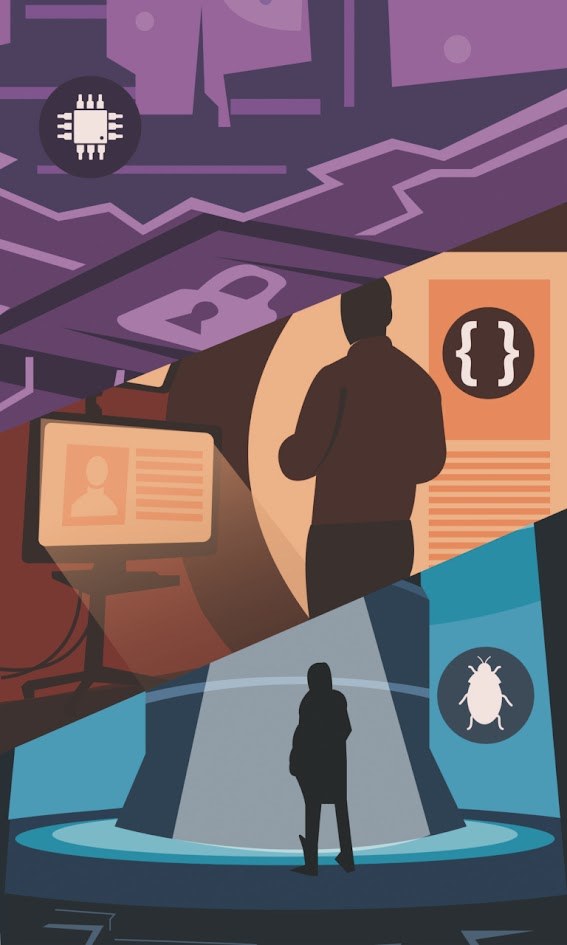
There are three factions available in Cyberspace: developers, hackers, and testers. Why did you choose them, and were there any other options you considered? Could these options appear in expansions?
The factions that are currently in the game are the result of my personal experience and observations of typical «combat» situations in IT. Developers, testers, hackers are the roles that are most often encountered in joint projects, and therefore they became the basis for the starting set.
I deliberately didn’t focus on dozens of other professions at once. The main task was to create a balanced and interesting base set of cards, not 50 «raw» decks without character. So I started with the core — the conflict between key technical specialists.
But in the future, I plan to add new factions to the game that will expand the IT universe of «Cyberspace.» These could be designers, business analysts, project managers, and other roles.
The expansions will be released as separate decks, and each player will decide which professions to add to their base version. This approach provides flexibility and allows you to build your own game configuration, depending on the company’s preferences and play style.
What is the essence of the game, what is the goal of the players? How many people is it designed for?
The essence of «Cyberspace» is in entertainment, in escaping from everyday life and immersing yourself in the atmosphere of the post-apocalyptic world of cyberpunk. It is an opportunity to abstract from real problems and simply enjoy the game, where familiar IT professions are transformed into factions with unique capabilities and play styles.
The basic version is designed for 2-3 players, who play in turns in an individual format. However, in the future I plan to add team battle modes — for example, 2 vs. 2 — thanks to additions with new professions. Thus, the more factions a player has, the more flexibly he will be able to form teams and customize the game for his own company. This will allow to expand the gaming experience and introduce new interaction mechanics.
Why did you choose a desktop format? Did you consider making it digital?
I’ve always wanted to create something physical—something I could hold in my hands, give to friends, and keep as a keepsake. During the blackouts, I especially felt how dependent we are on digital entertainment, and how quickly it can become unavailable. That’s when the idea of creating a board game took on a new meaning: the opportunity to get together with friends or colleagues and have fun—without electricity, the Internet, or screens—became a real value.
As for the digital version of the game, there are already such thoughts. But so far I do not have enough knowledge in this area, and for a high-quality implementation you need a whole team of specialists. At the moment it exceeds my capabilities — both in terms of resources and in terms of time. But who knows — maybe in the future «Cyberspace» will also receive a digital form.
How many people worked on the game? How long did it take to develop and how much did it cost?
A small but very dedicated team of 2–3 people worked on the development of Cyberspace. I was responsible for the idea, gameplay mechanics, terminology, faction structure, and overall concept. The visual part was entirely created by Darynka, an illustrator I had worked with before. She drew almost a hundred unique cards, and I reviewed the sketches, raved, and gave feedback during the process. Thanks to her ability to capture the style and atmosphere of cyberpunk, the game acquired a recognizable visual signature.
My wife also played an important role in this process. She was my moral support, supporting me in the most difficult moments, when it seemed that nothing was going well. Her faith in me was no less important than the technical work.
The entire creation of the game took over half a year. In about 1–1.5 months, I developed the basic mechanics and structure of the game, and about 5 months more were spent on illustrating the cards — this was the most laborious part. Yes, using artificial intelligence could speed up the process and reduce costs, but I deliberately chose the path of «manual» work. Because it is living creativity that gives the game soul and character.
The cost of developing the game was about $2000. The bulk of the budget went to the illustrations — and I believe that it was a completely justified investment. This project is not just a set of cards, but the result of a lot of work, inspiration, and faith in the idea.
How much does the game cost, where can it be purchased? What is the circulation and how many copies have been sold so far?
The game «Cyberspace» will be available for 600 UAH. The main platforms for ordering are Rozetka, OLX (via a business account), as well as directly through the Telegram manager. We also tried to get in touch with large board game stores, but, unfortunately, such indie projects often go unnoticed. Responses to letters either did not come at all, or were limited to formalities. So we decided to move on on our own.
The game manual is available digitally via a QR code on each box. It takes you to a special page with a full description of the rules, game lore, examples of game situations, and links to services where you can purchase the game. This makes it easy for players to share the link with friends or acquaintances by simply sending the QR code.
The first batch printed was 150 boxes, and we managed to sell 6 copies on the first day, which, for a completely independent launch, I think is a good start. I hope that feedback, recommendations, and an active community will help move the game forward — and we will move on to developing add-ons as soon as possible.
How do you plan to support the game after release? Do you have any ideas for additions?
Cyberspace already has its own Telegram community, which anyone can join. There, players can share their impressions, express ideas for improving the game, discuss balance, and suggest new factions. We are open to feedback and really listen — it’s part of the spirit of an indie project.
Another advantage is the digital instructions — they are available via QR code and are constantly updated. This allows you to quickly respond to players' questions, make corrections, add new examples, lore, and other materials. So each player always has access to the current version of the rules.
As I mentioned, in the future we plan to release expansions with new professions. We will decide which factions these will be, either independently or together with the community. Thus, the development of Cyberspace will become a true collaborative project.
Do you think they will play Cyberspace at corporate events in Ukrainian IT companies?
I would be extremely pleased if «Cyberspace» became a part of live communication in companies, startups, or corporate events. After all, this is exactly the audience for which the game was created — for people from the IT environment, who are familiar with the inside jokes, terminology, and professional conflicts that we have turned into a fun game.
However, I am not limiting myself to just one topic or niche. In the future, it is quite possible to create other games with new worlds, rules, and approaches. It all depends on the desire to move forward, create, and inspire. In the meantime, I will happily watch Cyberspace come to life in the hands of players.
You mentioned earlier that you plan tournaments and collaborations with tabletop clubs after the release. When can we expect the first tournament for Cyberspace?
I am currently actively seeking contacts from gaming spaces to arrange to make Cyberspace freely available. The idea is simple: leave one or two boxes of the game so that anyone can sit down, try it out, and decide for themselves whether it is «theirs.» This is both free advertising and an honest way to let players experience the game before they buy.
As for tournaments and events, for now I want to slow down a bit after the release, get the logistics and distribution in order, and then decide together with the community about the format of tournaments and other activities. Because, as I said, the community is the heart of Cyberspace .
The game world is only alive if people live in it. That’s why I plan to involve players in making key decisions: which factions to add, how to change the balance, what events to hold. Cyberspace is not just a box of cards, it’s a shared story that we write together.
And finally:
I am sincerely glad that I managed to go this way — from idea to full-fledged release of the game — without any outside investment. Cyberspace was created thanks to self-investment: I simply saved part of my salary, invested in illustrations, printing, packaging — and assembled this world step by step.
Thank you to everyone who read this story to the end. Thank you to everyone who has joined or will join our community. I invite you to the cyberpunk universe, where professions are factions and rules are tools for fun and intelligent confrontation.
I wish everyone a good day, inspiration, inner light, and safe skies — now and in our digital future.
Професії у геймдеві. Хто такий левел-дизайнер і як ним стати?
Ми продовжуємо нашу рубрику, присвячену професіям у геймдеві. Тема нового матеріалу в ній — левел-дизайн. Його вважають підвидом геймдизайну, але все-таки практично кожна студія хоче окрему людину на позицію левел-дизайнера. Адже у цій спеціальності вистачає своїх нюансів та особливостей.
Розібратися з ними всіма нам допоміг досвідчений левел-дизайнер зі студії Fractured Byte Дмитро Нестеренко. Також він веде свій блог Game Designer Notes про геймдизайн в цілому, в якому розбирає багато цікавих нюансів розробки ігор.