North Korea launders stolen crypto on Binance through its own memecoins
Instead of traditional crypto mixers, attackers are mass-creating their own useless memecoins to transfer funds through decentralized exchanges without being noticed.


Instead of traditional crypto mixers, attackers are mass-creating their own useless memecoins to transfer funds through decentralized exchanges without being noticed.
Instead of traditional crypto mixers, attackers are mass-creating their own useless memecoins to transfer funds through decentralized exchanges without being noticed.
As Elliptic analysts note , a new tactic was spotted while tracking funds stolen from the Binance crypto exchange. Hackers are creating ephemeral tokens with typical memecoin logos (monkeys, animals, or even images of Elon Musk) and using them as a tool to cover their tracks.
The scheme itself works in four stages. First, the attackers generate a new token using publicly available tools and create a liquidity pool on a decentralized exchange by combining the memecoin with a real asset (for example, the NEAR token). Then, one group of wallets controlled by the hackers dumps the stolen crypto into the pool, buying new memecoins. Immediately after that, another group of wallets sells the same memecoins back into the pool, withdrawing "clean" funds.
The main trick is that the stolen cryptocurrency never moves directly between the criminals' wallets. To an outside observer or automated security systems, the final account looks like a regular trader who successfully speculated on a new token. The coin itself, after a few hours of activity, is simply dumped and never traded again.
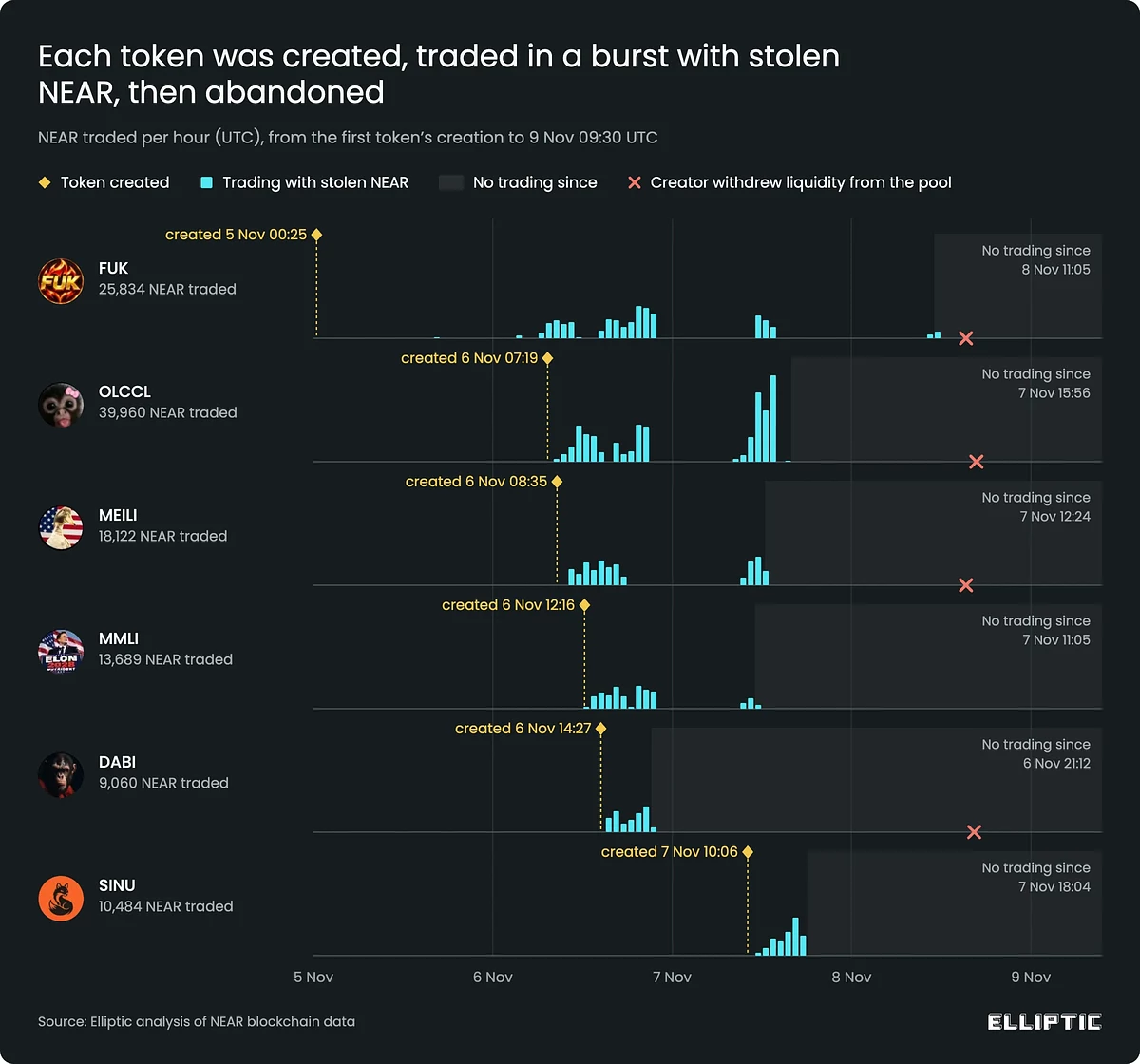
According to researchers, about $430,000 has already been laundered in this way on the NEAR network. Although the amounts are still small, the scheme is extremely profitable for attackers. Creating one token on this network costs about $90, which allows hackers to generate hundreds of them. Similar operations have also been recorded on the Tron and Solana networks, when attackers tried to launder funds after the Bybit exchange hack.
Cybersecurity experts warn that such manipulations do not make transactions completely invisible, but significantly slow down the work of investigators. Compliance departments of crypto exchanges are advised to more carefully check funds coming from liquidity pools, especially if they are related to newly created tokens traded by a suspiciously small number of wallets.
Earlier, dev.ua wrote that the FBI officially accused North Korea of the attack on Binance, during which they stole more than $6 billion. According to the bureau, the hacker group TraderTraitor is behind the hack. The attackers mainly transferred the stolen assets to Ethereum in order to further launder them through cryptocurrency services.
Binance compensated 95% of losses after the security incident and restored confirmation of reserves.