Редакція dev.uaGadgets
10 November 2026, 10:00
2026-11-10
NVIDIA Jetson on board: autonomous vision, computer vision, and edge-AI for drones
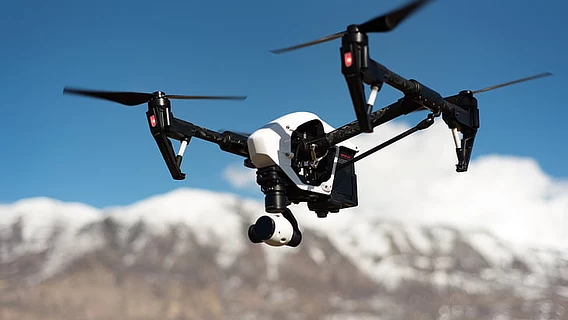
A modern drone can not only simply obey the pilot's commands, but also independently analyze and "understand" the surrounding situation during the flight using AI: recognize targets, avoid obstacles, make autonomous decisions. Cloud processing is not suitable for this due to significant delays and dependence on communication, which can drown out electronic warfare. Therefore, neural networks are increasingly being launched directly on board, using compact and energy-efficient modules, such as NVIDIA Jetson.
A modern drone can not only simply obey the pilot's commands, but also independently analyze and "understand" the surrounding situation during the flight using AI: recognize targets, avoid obstacles, make autonomous decisions. Cloud processing is not suitable for this due to significant delays and dependence on communication, which can drown out electronic warfare. Therefore, neural networks are increasingly being launched directly on board, using compact and energy-efficient modules, such as NVIDIA Jetson.
NVIDIA Jetson for autonomous vision on a drone
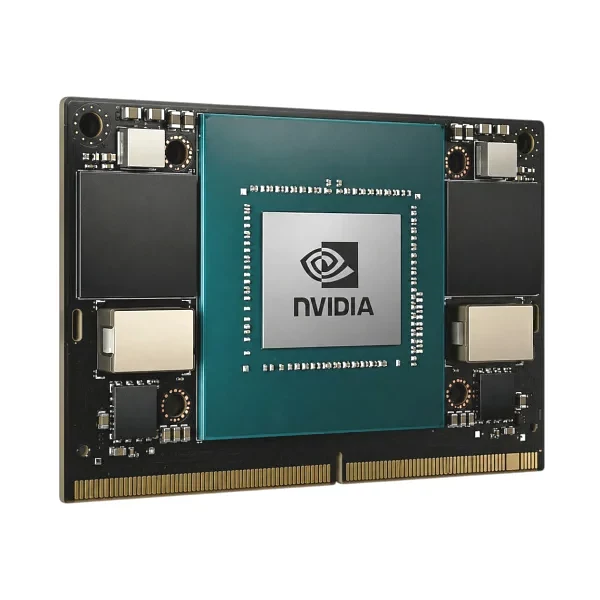
The Jetson line includes different power modules that can be selected for a variety of tasks. All versions of the boards work on the basis of a single JetPack system. It combines three main tools for AI:
CUDA — performs thousands of calculations simultaneously;
TensorRT — maximizes the speed of neural networks;
DeepStream is a separate SDK for processing and analyzing video streams in real time.
Thanks to this, optimized neural networks (for example, YOLO) can detect objects, track them and analyze the environment directly on board the copter through cameras during flight. Accordingly, NVIDIA microcomputers for drones become an ideal solution if you need to configure autonomous navigation of UAVs. The main advantage of using this particular module on board is its minimal weight and extremely high computing power.
How to choose a Jetson board model for a UAV
First, determine the application of the drone. This will determine four defining characteristics of the board:
Computing power — maximum values (up to 100–275 TOPS) are required for autonomous flight without GPS (under conditions of electronic warfare), where the drone must build a 3D map of the space every second. Medium and minimum numbers (20–40 TOPS) are suitable for reconnaissance.
Power consumption - minimum consumption (5–15 W) is critical for long distances, where flight duration is key.
RAM (Random Access Memory) – High levels (8–16 GB or more) are required when mapping.
Number and types of supported cameras — many fast connection interfaces are needed for use in search and rescue missions (to simultaneously connect a daytime camera, thermal imager, and LiDAR). One or two connectors are sufficient for reconnaissance, where only one front or heading camera is used.
You can get advice on choosing a specific version of the module at the specialized electronics store Zelen Store. Specialists will also help you select other compatible components for your UAV, if necessary.