Стас ЮрасовWeapon
14 October 2026, 10:00
2026-10-14
"No European Ministry of Defense will order as many FPV or UGVs as Ukraine is now." We talked about the prospects of the industry with a "bounty hunter"
The Ukrainian defense industry is undergoing a large-scale transformation. Alongside traditional enterprises, a new private MilTech sector is rapidly developing, generating demand for engineers, managers, and international investments.
The Ukrainian defense industry is undergoing a large-scale transformation. Alongside traditional enterprises, a new private MilTech sector is rapidly developing, generating demand for engineers, managers, and international investments.
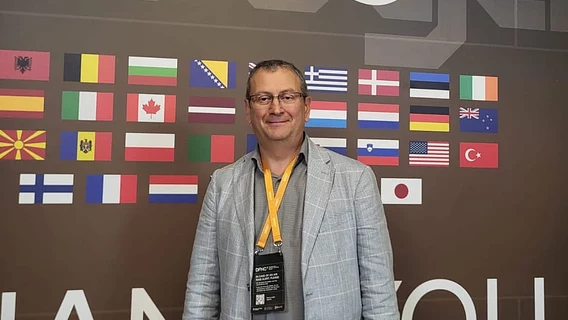
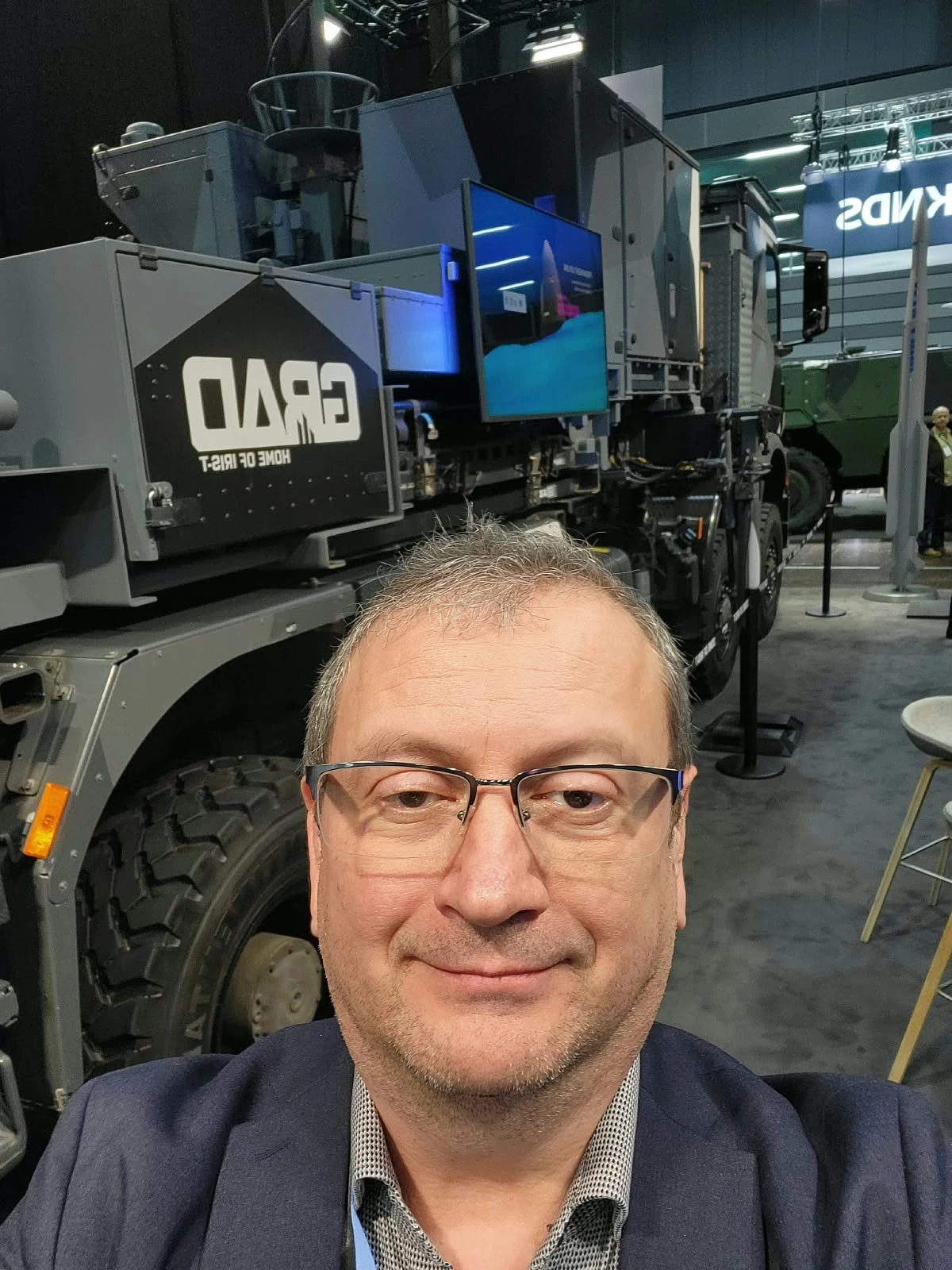
What does Ukraine’s defense sector consist of, why Western investments still remain a "drop in the ocean", where to look for unique engineers, and whether domestic companies are ready to enter European stock exchanges — this is discussed in a conversation with Alex Ulanovich, partner at Amrop Ukraine.
— Alex, how would you describe the current business landscape of Ukraine’s defense industry?
— I would highlight two main segments of the Ukrainian defense industry:
Legacy is a largely public sector inherited from the Soviet Union. It has a large scientific base and competitive products if developed properly, but is bound by bureaucratic procedures.
New Defense — companies created from scratch after 2022 (with the exception of a few pioneers, such as Ukrainian Armored Vehicles). This is a startup approach: speed, flexibility, instant feedback from the front. Most of the founders here had no previous experience in the defense industry.
Both classes have their pros and cons, and this balance will change over the years.
— What are the main HR trends you are currently observing between Legacy and New Defense?
— New Defense often lacks a fundamental scientific base. We are now seeing a clear trend: as their products become more complex, there is a huge demand for specialists with decades of scientific experience from the public sector or related industries — this is aerodynamics, avionics, engine engineering, complex electronic warfare systems and communications.
— How difficult is it to find such narrow-profile specialists and do you attract foreigners?
— These are scarce specialties, but it is possible to find them if you act unconventionally. We are looking for people both within the country (in related civilian areas) and abroad through the Amrop network in 60 countries around the world (including NATO countries and North America). A new trend in Ukrainian MilTech is that companies are already ready to invite and relocate foreign specialists to Ukraine for specific tasks (for example, to increase the range or flight speed of drones).
— Is there a difference in salaries between Ukrainian and foreign specialists of this level?
— The check does not necessarily double. There are many cases when the level of compensation of Ukrainian candidates is equal to the European one. The defense industry of Ukraine is developing so quickly that there is no longer a gap in salaries for similar positions.
— What about finding R&D leaders? What’s the difficulty here?
— There is a conflict of approaches here. If you take a person with a traditional scientific base (from state-owned enterprises or even giants like Boeing or General Electric), they may have a super-powerful technical background, but weak soft skills for quickly managing a team in a startup environment. You need to find a balance.
— Is there a reverse trend — when Western companies hunt for Ukrainian experts with real combat experience?
— Western companies (both old giants and funded startups) are more likely to open their offices and R&D in Ukraine. This is a way to get local expertise and integrate battle-tested solutions. At the same time, Western startups are often looking for “a person who can do everything, not too expensive and for tomorrow,” while large corporations act slowly due to bureaucracy and compliance.
— How important is the security background check factor for candidates during war?
— This is a critical stage. We have had cases where very strong candidates have “flipped off” at the final stage of the verification. The most common reason is the risk that the candidate’s family members could become hostages in occupied territories or in an aggressor country.
— Western investors (Eric Schmidt, Buntar Airspace fund for $16 million, etc.) have become more active. How do you assess the real volume of foreign investments?
— The current volume of investments in Ukrainian MilTech (about $100 million per year) is peanuts compared to what is happening in the world. For comparison: in Europe, just one SAFE program is 150 billion euros, and in the US, venture funds operate with tens of billions. The investors who come to us now are very brave individual players.
For a mass inflow of capital, Ukraine does not yet have the usual rules, compliance, and a developed stock market.
— What about Ukrainian technology companies such as Swarmer (which recently bought Rattel and went public), Vyriy, or General Chereshnya? What is their real value?
— It is very difficult to say the exact value now. The first question for an investor is not an abstract assessment, but what contracts do you have and how much do you supply. But the example of Swarmer (with their assessment, the purchase of Rattel and specific results that can be evaluated) shows that the market is developing.
The next big thing for Ukrainian defense is preparing for and entering an IPO in Europe. My colleagues and I are already working on such tools and even presented ways to enter European stock exchanges for Ukrainian defense companies during the Eurosatory exhibition in Paris. Vyriy, General Chereshnya, and other major players also have the potential for this.
— What is the main risk that investors see in Ukrainian companies after the end of the war?
— Currently, the largest customer is the Ministry of Defense and the Armed Forces of Ukraine. After the cessation of hostilities, the situation will change, because no European Ministry of Defense will order as many FPV or UGVs as Ukraine is now. Therefore, companies need to integrate into international procurement systems and look for sales channels abroad.
— What do you think about ambitious projects to develop military humanoid robots ("Terminators")?
— Robotic systems (for example, robot dogs) are already a regular part of the Israeli army. But in our realities, everything is decided by the economics of efficiency: how much does one strike cost and how much damage is inflicted on the enemy.
If 4 UGVs and 10 FPV drones are cheaper and solve the problem better than one complex robot, the choice will be in favor of simpler systems. However, it is definitely necessary to experiment and look for new technological solutions.
— The number of vacancies at MilTech is growing (almost 1,400 in September — DOU). Is the market already reaching a plateau or will growth continue?
— We definitely haven’t reached a plateau. Several trends are at work: on the one hand, automation of production (replacing people with robotic lines), on the other, decentralization of workshops for the sake of safety from shelling, transferring part of the capacity to Europe, and increasing defense budgets.
That is, personnel tasks may change, but the overall demand for personnel continues to grow.
— Is it realistic to find a top manager (C-level) for a MilTech company in Ukraine now?
— You can always find a C-level — it’s a matter of price. But it’s important for owners to understand their business model. For example, a CTO who really knows how to build airplanes from scratch will most likely be under 60 years old, and there are only a few of them. Sometimes it’s more profitable for a company to invest in a robotic line or outsourcing than to buy overpriced specialists.
— And what is the situation with non-technical specialties — marketing, PR, Sales?
— It’s easier with marketing and PR — companies are happy to hire strong people from the civil sector and IT. But there’s a nuance in Sales: there’s only one big customer within the country (the state), so it’s more of a procurement and BizDev job. Instead, there’s a huge demand for international Sales/BizDev specialists who are able to bring Ukrainian products to foreign markets.